Baltimore archbishop pens pastoral letter on renewing political culture
As the United States approaches its 250th anniversary, Baltimore Archbishop William Lori urged Catholics to see the milestone both as “a moment of grace” and responsibility to renew a fractured political culture.

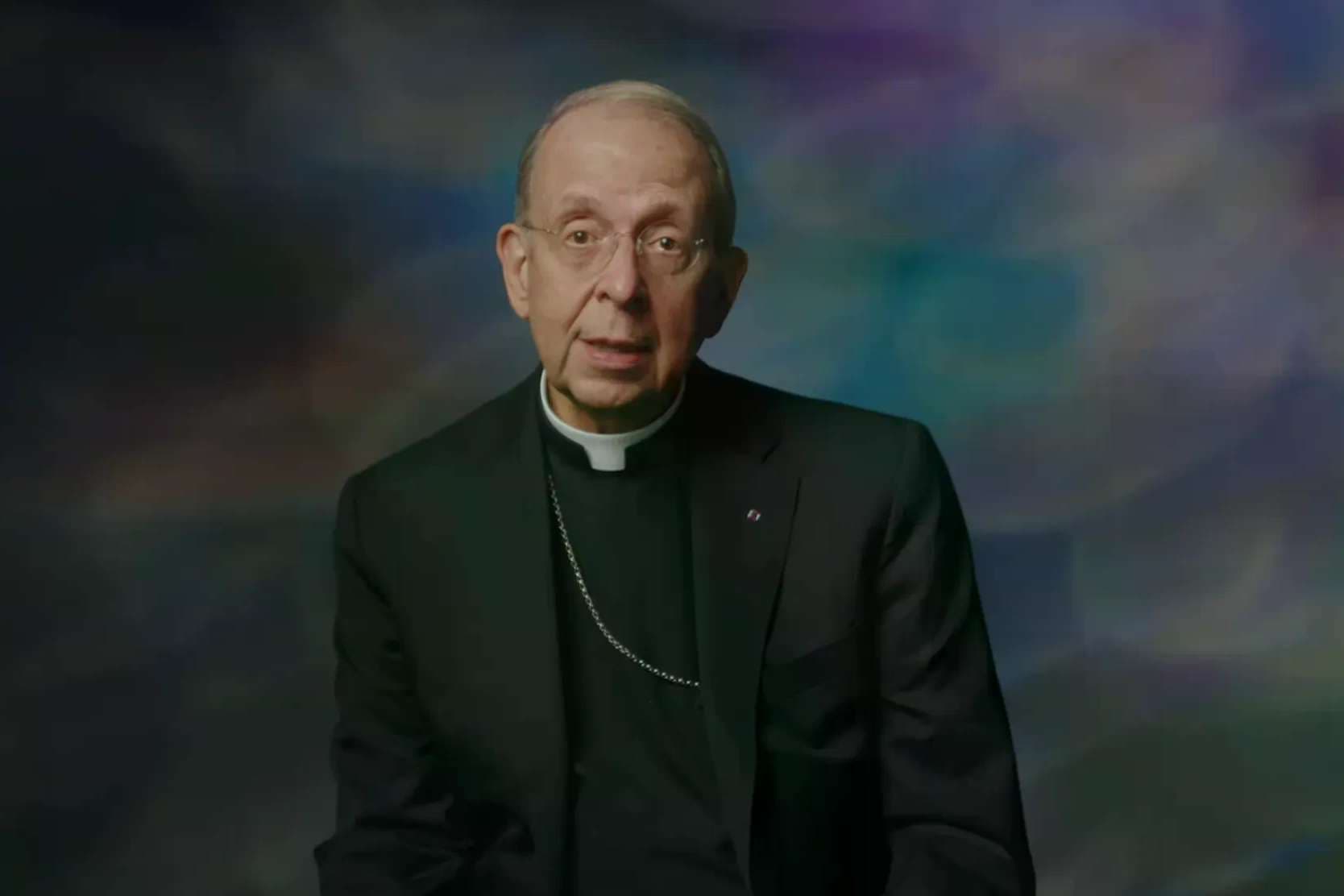
As the United States approaches its 250th anniversary, Baltimore Archbishop William Lori urged Catholics to see the milestone both as “a moment of grace” and responsibility to renew a fractured political culture.
In a 32-page pastoral letter titled “In Charity & Truth: Toward a Renewed Political Culture” released Feb. 9, the archbishop described the nation’s political atmosphere as “polluted, even toxic,” marked by polarization, ideological extremes, and an “epidemic of loneliness and isolation.” He called on Catholics to resist partisan identities that eclipse their faith and to ground civic engagement in Jesus Christ and the Church’s moral tradition.
“Authentic remembrance always orients us toward renewal,” he wrote. “It calls us to consider not only who we have been, and who we are becoming — but, by God’s grace, who we are called to be.”
The archbishop framed the anniversary through a Christian understanding of the human person. Citing the Second Vatican Council’s teaching that Christ “fully reveals man to man himself,” he argued that political reflection must begin with a clear view of human dignity: that every person is created in God’s image and made for communion, not conflict.
“Our reflections on politics, culture, unity, and civic responsibility must therefore begin — and end — with Christ, who reveals both the dignity of the human person and the path to authentic freedom,” he wrote.
A toxic political climate
Archbishop Lori did not shy away from naming what he sees as a “spiritual crisis beneath the political crisis.” Political discourse, he wrote, has grown more vitriolic, with violence and threats of violence erupting amid deep polarization.
“Political life then becomes a contest of power rather than a shared pursuit of the common good,” he said.
The divisions in public life, he added, reflect “a wounded understanding of the human person.” When society forgets that each person bears God-given dignity, neighbors become “obstacles and threats.”
Drawing on Dante’s Divine Comedy, he likened the current moment to a pilgrim lost in a dark wood — disoriented and isolated — who must confront brokenness before beginning the ascent toward renewal.
“The way up was down,” he wrote, suggesting that honest reckoning with sin and failure is a precondition for healing.
He also cautioned against romanticizing either the nation’s founding or the Church’s history. The Declaration of Independence proclaimed equality even as many were excluded from its promises, he noted. The Church, too, has been “radiant with holiness and often disfigured by sin.”
“To love one’s homeland and one’s Church is not to ignore their faults,” he wrote, “but to commit oneself to their renewal — always in light of the Gospel.”
Synodality and civic life
A central theme of the letter was “synodality,” a term popularized under Pope Francis to describe a Church that listens, discerns, and walks together. While rooted in ecclesial life, Archbishop Lori suggested its spirit offers wisdom for civic engagement.
“Synodality is, at its heart, a commitment to listening with humility, speaking with honesty, and discerning with the Holy Spirit — all while walking together, not apart,” he said.
Applied to politics, that would mean a renewed willingness to listen to opponents, a refusal to demonize, and a rejection of “easy answers of ideological rigidity.” Unity, he said, is not uniformity but “harmony in diversity,” grounded in Christ rather than party loyalty.
He warned that many Catholics today identify first as Americans, Democrats, or Republicans and only second as Catholics. When that happens, he said, “the Gospel is easily overshadowed by partisanship — or even a rigid ideology that demands more loyalty than the Word of God.”
A politics rooted in virtue
The archbishop argued that the nation’s political crisis is, at its root, spiritual. Citing Saint Augustine’s contrast between the “earthly city” built on self-love and the “City of God” built on love of God, he contended that disordered politics flow from disordered hearts.
“Political reform without spiritual renewal is a city built on sand,” he wrote. “To renew our politics, we must therefore renew our souls.”
Archbishop Lori called for a politics grounded not in power but in the truth of the human person revealed in Christ — one that “resists the idolatry of ideology,” honors life from conception to natural death, protects the vulnerable, and places the common good above partisan loyalty.
A healthy republic, he added, depends not only on institutions but on virtue. Echoing John Adams’ warning that the Constitution is suited “only for a moral and religious people,” the archbishop outlined the four cardinal virtues — prudence, justice, fortitude, and temperance — as essential for public life.
Prudence, he wrote, is “the virtue of clear-eyed discernment,” enabling citizens “to perceive reality truthfully, to judge rightly what should be done, and to act in a way that advances genuine good.” Justice, he said, is “the virtue that moves us to honor the dignity of every human person,” requiring a society to “safeguard life at every stage — the unborn, the elderly, the sick, the disabled, and the vulnerable” and to acknowledge how “historical sins — such as racism, exploitation, and exclusion — continue to wound communities.”
Fortitude, he said, “strengthens us to pursue what is right despite fear, intimidation, or difficulty,” while temperance “moderates our impulses” and “invites us to slow down, to choose words carefully, to avoid rash judgments and to discipline the desire to ‘win’ at the expense of relationship, truth or the common good.”
“These virtues do not belong only to one party or ideology,” Archbishop Lori wrote. “They are the shared moral grammar that enables people of goodwill to work together for the common good.”
American Catholic witness
The archbishop also pointed to American Catholic figures such as Blessed Michael McGivney, founder of the Knights of Columbus, and St. Frances Xavier Cabrini as models of faithful civic engagement. Their lives, he said, show that love of country and fidelity to Christ need not be rivals.
“Catholic citizenship is not about aligning the Church with one party or another,” he said. “It is about witnessing to the Gospel in the public square.”
In practical terms, the archbishop urged Catholics to pray for those in authority — and for those with whom they disagree — to practice civil dialogue, reject hatred and violence, serve their communities, and form their consciences through Catholic social teaching.
The Church’s mission, he said, is “not to win elections but to form saints.”
“Our nation needs Catholics who embody this mission — women and men whose lives witness to the dignity of every human person, whose love bridges divides, whose courage resists hatred and whose faith insists that despair does not have the final word,” Archbishop Lori wrote.
As the country nears its semiquincentennial, the archbishop framed the anniversary as both celebration and summons.
“Moments of crisis can become moments of renewal,” he said. “May the next 250 years of our nation be marked by greater justice, deeper solidarity, renewed trust, and a profound respect for the dignity of every human person.”



Comments