EXCLUSIVE: Catholic family makes film about beauty, sequestering of Latin Mass in Diocese of Charlotte
EXCLUSIVE: Catholic family makes film about beauty, sequestering of Latin Mass in Diocese of Charlotte

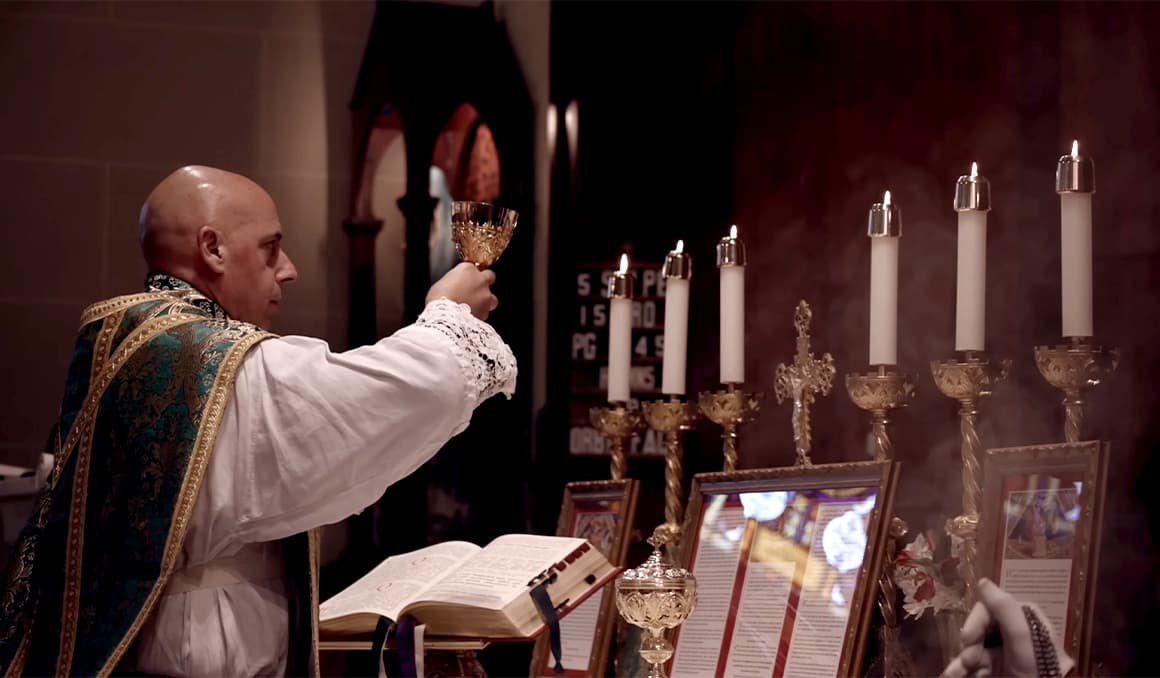
About a month before parish-based offerings of the Traditional Latin Mass (TLM) are set to end in the Diocese of Charlotte, REGINA magazine has released a documentary about the ancient liturgy’s presence in the western half of North Carolina.
Made by a South Carolina couple and their teens, the film is one of two recent efforts to persuade North Carolina’s Bishop Michael Martin to keep the rite at four churches in the diocese.
Another attempt was a meeting last week between the bishop and the pastors of the affected parishes, which are located in Charlotte, Greensboro, and Tryon.
According to the Charlotte Latin Mass Community on X, the pastors met with Bishop Martin Aug. 28. Three days later, the group posted that the pastors informed their congregations that the Oct. 2 expiration date of parish-based Latin Masses remained. The group added that only an intervention from Pope Leo XIV could help them now.
The October end date was an extension Bishop Peter Jugis, the diocese’s previous bishop, requested and received from the Vatican after Pope Francis’ motu proprio Traditionis Custodes sought to limit the traditional liturgy. The fall date was moved up to July 8 in May when Bishop Martin released a pastoral letter announcing the end of the parish-based Latin Masses.
The letter sparked a controversy that has drawn international attention, which intensified after sources leaked a draft of a slate of additional proposed liturgical changes in the diocese, as CatholicVote reported at the time. Bishop Martin later moved the end date back to Oct. 2 out of pastoral concerns and to allow more time to prepare for the TLM to be held at a single chapel in Mooresville. On Aug. 29, The Catholic Herald reported that the bishop was banning the altar rail used during daily Mass at Charlotte Catholic High School.
>> Liturgical controversy unfolds in North Carolina <<
Meanwhile, “Bread Not Stones” — the documentary about the history of the TLM in the diocese — continues to garner attention. Released last week, the film created by Sean and Tracy O’Halloran and their children, Ava and Elijah, has gained traction with national and international audiences. Sean shot and directed the film while Tracy was a producer and off-camera interviewer. Their teens were the production assistants, tech, and sound crew. The O’Hallorans paused briefly Sept. 2 from translating the film into French to talk with CatholicVote.
Though living in South Carolina, the couple has roots across the state border in North Carolina. For seven years, they noted, they traveled as a family to the Charlotte diocese’s St. Ann Parish to attend the TLM. Tracy also said she converted to the Catholic faith in the North Carolina diocese. Now they attend the Latin Mass a little closer to home, traveling 50 minutes to Our Lady of the Lake Church in South Carolina.
In making the film, Sean said they hope “to show how unified the parish communities have been and how harmful breaking them up will be, to soften hearts of those, including Bishop Martin, who seem to be against the TLM or are unaware of what the big deal is about it and why it matters so much.”
“And above all,” the O’Hallorans added, “to bridge the gap between Catholics where there might be division on this matter. Perhaps even the Holy Father himself might view our film and be moved to consider a way to clear the confusion and create a path to unify us.”
After years of traveling to St. Ann in Charlotte, Tracy said they can empathize with the feeling of Charlotte diocese parishioners not having a full connection to a parish home once they begin to worship at the Mooresville chapel.
“Their experience is different though because they had it and it was glorious, and it is now being ripped away for reasons that are difficult to understand,” Tracy added. “We hoped to tell their story but also the story of how the TLM affects souls and impacts families and show the good fruits of having the Mass, which the majority of the Saints we venerate attended, available to all.”
She also noted that some Catholics may assume the intent of the film’s title or some of the reflections of its interviewees is a slight against the Ordinary Form of the Mass.
“That is not at all what we intended,” she said. “We are very aware, however, that people will make of it what they choose and if our prayers that come with our film don’t soften their hearts, perhaps they just choose to not see.”
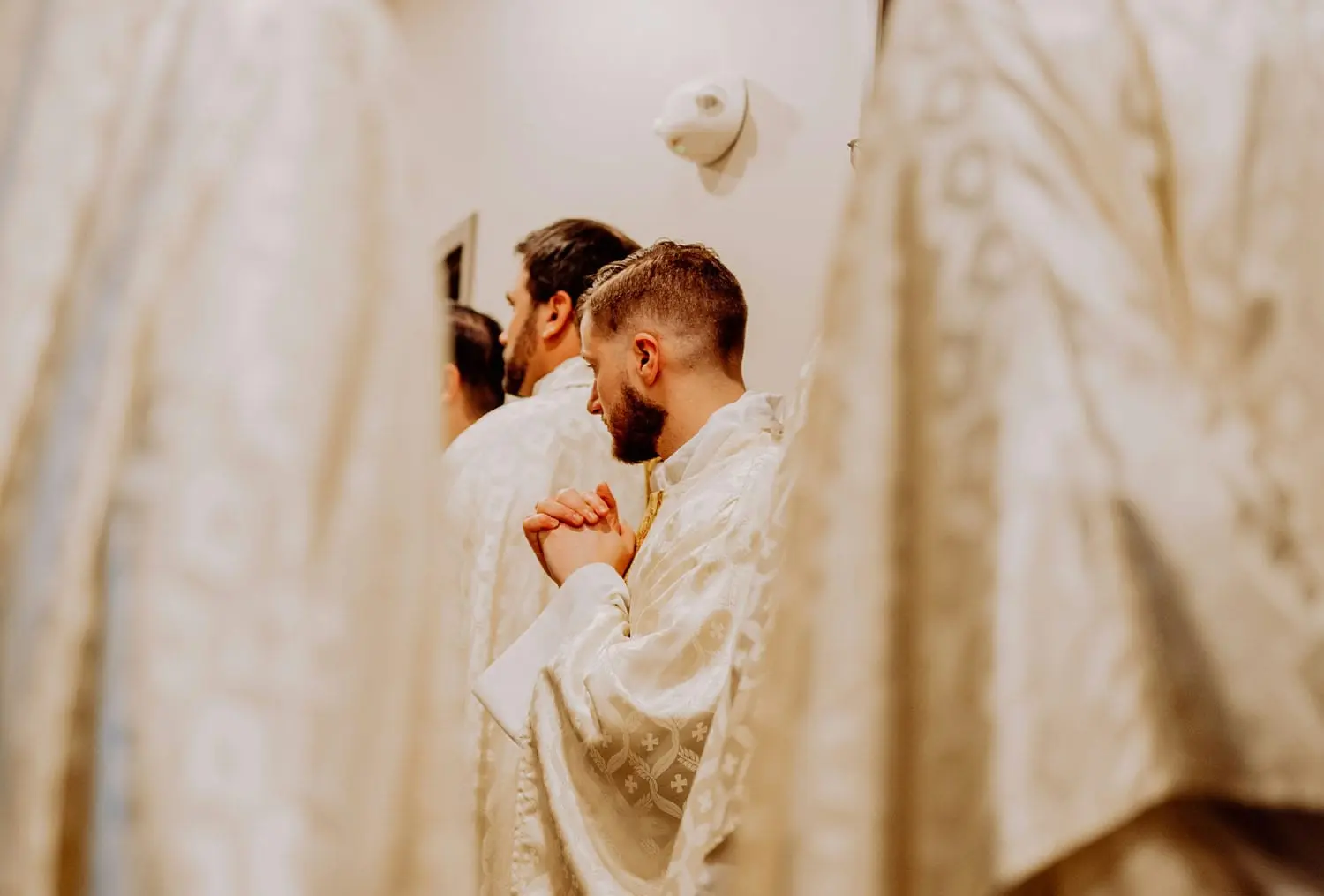
The 52-minute film features Latin chant from several choirs, including the Our Lady of Guadalupe Seminary – Priestly Fraternity of St. Peter, St. Gregory Ensemble of Our Lady of the Lake, and St. Ann Choir of Charlotte, as well as high-quality cinematography. Priests and laypeople in the film describe the spiritual benefits of the ancient rite and how Bishop Martin’s changes are affecting them.
According to REGINA magazine’s website, the production is “a testimony to what has happened in the Diocese of Charlotte, North Carolina, but it is dedicated to all parishes throughout the world suffering the loss of their beloved form of worship.”
One couple at St. Thomas Aquinas Parish in Charlotte said in the film that they were previously headed for divorce, and the TLM saved their marriage. A young man at St. John the Baptist Parish in Tryon said the liturgy fueled his conversion as a teen. Others noted that the reverence of the liturgy drew them closer to God.
The second part of the production focuses on how relocating the Mass affects parishioners and priests. One woman described the change as heartbreaking and said she cried when she heard the news. Another parishioner said he believed each rite has a place in the Church.
Father Joseph Wasswa, a former parochial vicar of Our Lady of Grace Parish in Greensboro, said that “mutual enrichment,” an expression regarding the role of the TLM that he picked up from Pope Benedict XVI, has proven true in his experience with the Ordinary and Extraordinary forms of the Mass.
“The more I celebrated the Latin Mass, I discovered the benefit, lots of benefits, that then helped in the way that I approached the Novus Ordo,” he said in the film. “So I consider that I have benefited in that sense — both in my priesthood and then of course in my spiritual life.”
Tracy O’Halloran said the Diocese of Charlotte is the ideal execution of Pope Benedict XVI’s vision of Summorum Pontificum, the 2007 motu proprio allowing expansion of the TLM.
“It is living testimony of the mutual benefit it brings to the parishes and to the priests who offer it,” she added. “What is happening in Charlotte now is the ideal execution of Pope Francis’ Traditionis Custodes with no effort made to consider how the current Holy Father, Pope Leo XV, might view it now especially after the very big news regarding the inauthentic depiction of how bishops felt about the results of Summorum Pontificum which led to Traditionis Custodes.”
>> Vatican correspondent releases further evidence challenging Traditionis Custodes rationale <<
Some of the interviewees said that moving to the Mooresville chapel made them feel scattered from their shepherds. The pastors said they also feel pain over the impending split from their flocks.
Father Matthew Codd, pastor of St. Thomas Aquinas, said part of what he enjoys about being a priest is fostering vocations among his altar servers.
“On paper they’re still my parishioners, and I do appreciate that,” he said in the film. “But in practice they’re going to always be at this chapel in Mooresville, so I feel like I just won’t ever see them again, and that separation being forced by this makes me really sad.”
A St. Ann parishioner said in the film that she teaches her children to love the bishop and that she is asking for him to love them back. She also described her first thought upon hearing the news of the changes to the TLM in the diocese.
“What good father gives their children stones when they’re asking for bread, what good father gives them a serpent when they’re asking for fish?” she asks. “If my children come to me and say, ‘Mom, I’m hungry,’ I’m not going to tell them to go outside and eat a rock.”
In the documentary, Father Timothy Reid, pastor of St. Ann Parish in Charlotte, shared his first introduction to the TLM, how it has uplifted him in his ministry, and what he sees for its future.
“Even though things are changing, even though it appears we are going to lose the Latin Mass in our parish, I refuse to be downtrodden,” he says in the film. “I honestly think it’ll be back. I do. I think that this time of having the Latin Mass only in the chapel in Mooresville — this is sort of like a Babylonian exile.”
He continued to emphasize that he believes the Latin Mass will return.
“Even if it’s sequestered into certain corners of certain dioceses right now, it’s going to come back,” he said. “And I’m hopeful, I have faith in God, and I just pray that I can walk through this transition well and that I can walk my parish — shepherd my parish — through this time of transition well, so that we can grow in virtue through all of this.”
>> Cardinal Burke asks Pope Leo to act on behalf of Traditional Latin Mass faithful <<

Comments