Catholic scholar Gavin D’Costa outlines ‘minimal Catholic Zionism’ that can oppose Israeli injustices while remaining open to core Zionist claims
Catholic scholar Gavin D’Costa made a case for a “minimalist Catholic Zionism," which leaves Catholics free to entertain Zionism while also being able to join Pope Leo XIV in denouncing Israeli injustices.
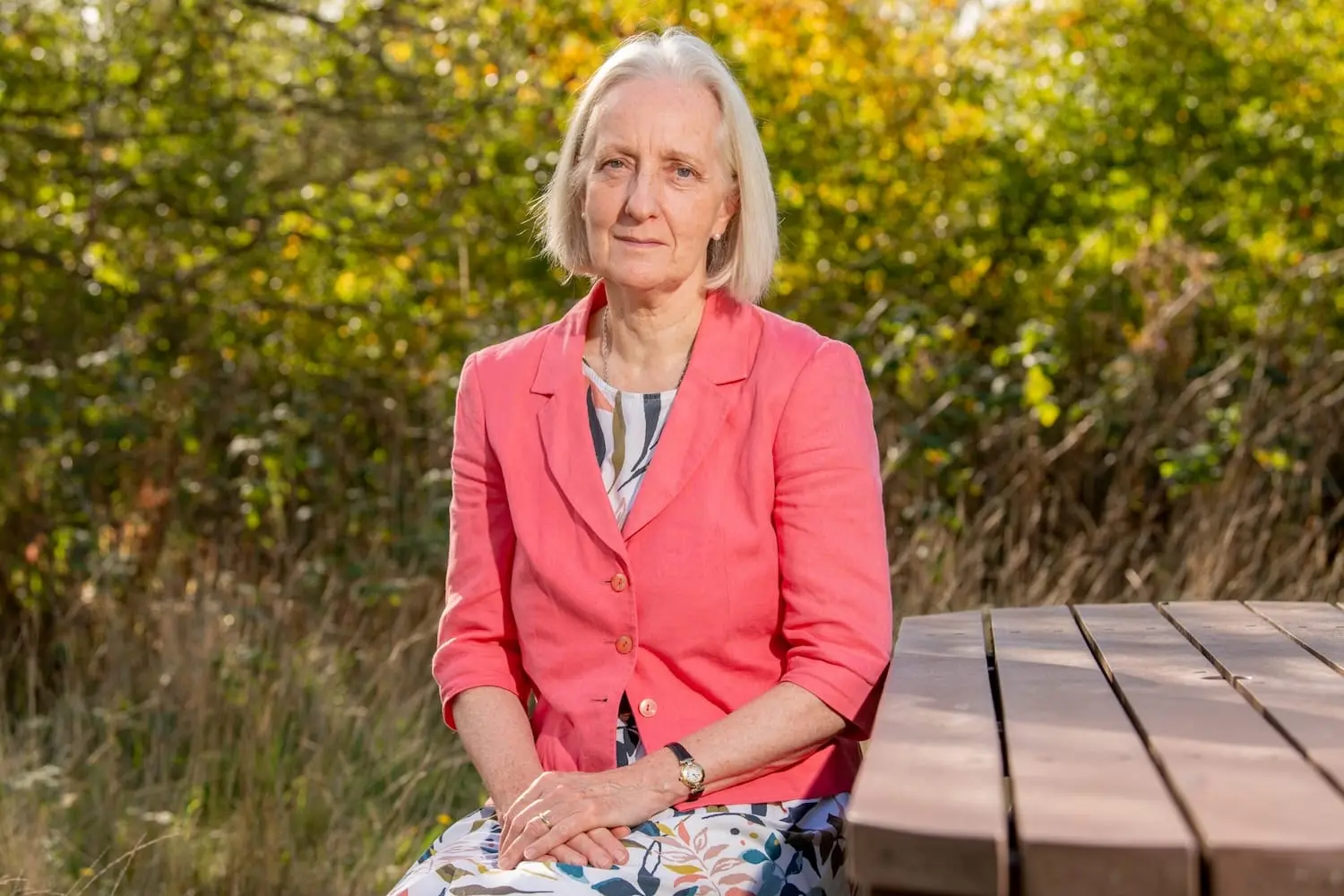
Professor Gavin D’Costa is a Catholic scholar and theologian known for his expertise on Catholicism in relation to Zionism. When I spoke with him Feb. 19 via video conference, he made a case for what he calls a “minimalist Catholic Zionism,” outlining an approach that leaves Catholics free to entertain the fundamental tenets of Zionism while also being able to join Pope Leo XIV and Latin Patriarch of Jerusalem Cardinal Pierbattista Pizzaballa in denouncing Israeli injustices.
D’Costa is a professor at the Pontifical University of St. Thomas Aquinas in Rome. He has written extensively on Catholic doctrine and its relationship to Jewish and Zionist thought, including in the 2019 book “Catholic Doctrines on the Jewish People after Vatican II” (Oxford University Press). He recently delivered a lecture for Philos Catholic, now calling itself Two Hammers, on Catholicism and Zionism.
A lightly edited transcription of our conversation can be found below.
Herreid
Briefly, what is supersessionism and what is dispensationalism? And if you could please give me a quick overview on your position, dispensationalism, and what you would what you call a minimal Catholic Zionism – a view as I understand it shared by a number of post-Vatican-II figures, arguably including Pope Benedict XVI.
D'Costa
Okay, supersessionism is generally understood as the view that after Jesus Christ came, the old law and the Old Covenant is now redundant. And, if you like, the inheritance of Israel is transferred to the New Israel called the Church. So the Church supersedes – or the other term that is often used, “replaces” – Israel. And therefore we find in the Christian tradition a number of kind of Church Fathers and venerated figures saying, you know, basically, “The Jews are a scandal, they refuse to accept their Savior, they kill God, they incur a curse upon them,” etc.
Okay, so that's supersessionism.
And its relationship to Zionism is one that obviously means Zionism has no theological validity at all. And there's a wonderful exchange that took place between [Theodor] Herzl and [Saint] Pius [X] when they met in the Vatican. And Herzl was kind of advocating or trying to get the Holy See's support. And he had enough connections to get an audience.
And Pius responded to him, “Since the Jews have rejected our Lord, we must reject them. And I am not against Jewish people being safe, moving to Palestine, but they cannot claim a spiritual homeland, for that is ours.”
Okay, so supersessionism [is] roughly on those contours.
Dispensationalism is a very interesting view that arose from 18th-, 19th-century Protestant thinkers, initially in England, but that then got transferred to the U.S. through, if you like, a migration there, but most importantly, the Scofield Bible translation. And essentially the view there is that there are certain steps that we can find in the Bible which we can see literally foreseen such that, number one, the Jews’ return to the land and the State of Israel follows as part of that prediction. The second step is that the Jewish people become a nation. The third step is that there is opposition to them.
And then dispensationalism breaks up into different scenarios.
One is that all the Christians are removed from the earth and there is a kind of violent and huge struggle between the forces of the Antichrist and the Jewish people. And, if you like, the Christians are out of the picture. But after that struggle they return, and then begins a messianic age, which will take up a millennium.
Now that view, dispensationalism … when you turn it to Christian Zionism, basically is the driving motor of mainstream American evangelical Protestant Christian Zionism that translates into unconditional support in some of its forms for the State of Israel, because that is actually God's plan. Of course, the temple needs to be rebuilt for part of that scenario to work. And the interesting thing about this type of Christian Zionism is that in the end, the Jews are once more pawns in the game, which leads to, if you like, the Jewish conversion back to Christ, either all of the Jews or just a remnant who will come into the Church.
Okay, so that's the main player on the field. But, interestingly, things are changing in the field.
So then you asked me to define Catholic minimalist Zionism, which is the position I hold and is held by a number of others with variations. And the position here is actually, if you like, what's called “post-supercessionist” Catholic theology.
So at the [Second Vatican] Council, there were two important moves made. One is to recognize the validity of the Jewish covenant – deriving from [Saint] Paul, Romans 11, where Paul says the gifts and the promises made by God are irrevocable. That means in effect that the Jewish covenant is still valid. It doesn't finish. It doesn't just get kaput.
Now the second very important element that develops is that the Catholic Church has argued since 1980 that this covenant, the Jewish covenant, which of course the Church also inherits, but the Jewish covenant is also inherited by rabbinic Judaism and therefore, if you like, gives a validity to rabbinic Judaism, but not [as] an end in itself – the whole picture is still Christological.
So my Catholic Zionism fits into that intersection. It argues that unquestionably and, if you like, unremittingly, in the Old Testament we find the promise made to the Jewish people … and as part of the covenant is the land.
Now there's lots of different maps that could be drawn of what this land is. Okay, so we leave that aside. But it means that if the Jewish covenant is valid, then this promise still exists. And then one might say the in-gathering of the people, of the Jewish people, to the land of Israel could be – notice my delicate expression could be – part of God's plan.
Now, that would mean the people, the Jewish people, do have a theological connection with the land, but my position is very, very reticent about giving a blank check to Israel as a state. Catholic theology has never divinized the state and has criticized all attempts to do so. So that's one part of the minimalism.
The other part of the minimalism – and I use that term not in any way to denigrate or say this is less value for your money, but it is in contrast to the dispensational type of position – the other side of it is to also say, based on natural law and the respect for international law that the Church has had, that the UN mandate to share the land between the Jewish people and the Palestinians has a legal and lawful claim.
So historically, the Church has definitely supported Palestinian refugees and supported the Palestinian right to a homeland. And without in any way, and I have to underline this, without in any way supporting Palestinian forms of terrorism, which should include Hamas right now, which would include the development on the Northern borders and supported by Syria of the militias that are there, which have some Palestinian content, but also Syrian content.
So the kind of Catholic Zionism I'm advocating is maneuvering between natural law to argue for Palestinian rights, [and] theological, biblical affirmation of the Jewish right to a homeland.
And that's where my position is, and I think [it] is gaining some traction between … by those who are in support of post-supersessionist Catholic theology.
Herreid
Right. Well … St. Pius's interaction with Theodor Herzl, when he expressed that, when he famously gave that saying, speaking for the Church, “The Jews have not recognized Our Lord and therefore we cannot recognize the Jewish people,” he was expressing, I think you've said, basically just Catholic thinking as it stood at the time. So I'm wondering how long was that supersessionist way of thinking the normative position of the Church? From the very start until the 20th century?
D'Costa
I would say it began to develop in the fourth and fifth centuries when the Church was being emptied of Jewish followers of Jesus.
Because if you think about it, the early Church was a Jewish messianic sect. The Jewish Messiah had come and all His disciples and followers were Jewish. Mary His Mother was Jewish. And in that sense, it was a Jewish group, as St. Paul recognizes, which was opening to the Gentiles so that they too could share the gift of the Covenant and God's relationship. So in that period, there was absolutely no thought of, if you like, negating Judaism, because it was itself part of Judaism.
Of course, throughout the history of Judaism, there had been … groups saying “You're not following the right way,” just as there has been with Christianity. So I would say from the fourth century onwards, when Gentiles begin to pack the aisles, and there are fewer and fewer Jews present, slowly, a lot of the intra-Jewish vitriol, which is found in Scripture, is suddenly taken on by a non-Jewish group against Jews.
And then we have the beginning of, if you like, the supersessionist attitude.
And if I can just make one other thing clear, while Pius' words are reported in Theodor Herzl's diary, they ultimately have no magisterial authority. So in a way, what we do find is a kind of tradition of theology and culture which carries on supersessionism, but no formal magisterial underwriting of it. And that's really important because, just to make this point, it's really important because the argument [that] Vatican II overturns traditional teachings and therefore is a problem I don't think can be validated because it may overturn teachings, theological teachings … sentiments by individuals and communities, but it never overturns the magisterium's formal teachings.
Herreid
….On the other hand … has the Church formally embraced a Zionism at all?
D'Costa
No, absolutely not. I mean really the factors that would stop the Church going that direction – and these have to be taken seriously as kind of pragmatic social political factors – one is that there are many Christians in the Middle East that the Church has, if you like, a communal protective relationship with.
If the church ever affirmed any type of Zionism, those communities would come under attack in those parts of the world. So most Middle Eastern Christians are deeply, deeply anti the steps that myself and some others are taking. They see this as, if you like, trading them under the bus and totally unacceptable. It's put very well, “If,” you know, “D'Costa's right, it means God's plan is to destroy the Palestinian people.”
Now obviously I'm saying that's not the case, but that's how the argument is read by a lot of Middle Eastern Christians. So one reason why the Church won't ever go this way is that its own community would be under attack.
The second reason, which is also very important, is that for many, many years, pretty well since the Council, since the formal accords with Israel, the Church has felt not well-treated in the development of relationships with Israel. So there's not a kind of political motive or momentum to cement things. There are on the theological level, and that continues. But once you use the “Z word,” you're really talking politics. And that's too dangerous.
Herreid
Right. Well even this though, what about just plain post-supercessionism? Has the Church definitively, authoritatively taught post-supercessionism, or is the whole thing still more or less up for debate among Catholics?
D'Costa
Yeah, that's a great question because in 2015 an official document came out from the Secretariat for Religious Relations with the Jews, and in the introduction to that document they make clear that what they say in that document has no formal authority. It's there more as an expression of where the Church has arrived at and is thinking in terms of moving forward. So as a number of Catholics I know say, “I don't even have to read that document – it can go in the shredder.” It's got no authority. So that's one issue.
But the other point is that 2015 formal reflection by a Catholic magisterial organ, which is what that committee is. And it passed the document through the Congregation of the Doctrine of Faith (at the time, they've all been renamed), [and] officially, said [that] replacement theology, supersessionism, doesn't work, it has no mandate in Christian thinking.
So that's pretty near to coming towards magisterial authority. But it would be wrong to say there is clear, unambiguous magisterial authority behind the position of post-supersessionism.
One of the reasons is that there have been lots of speeches which underwrite a post-supercessionist view, right from [Pope Saint] John Paul II to Benedict, to Francis, to Leo. Four popes have all repeatedly said that the council has brought us to recognize our Jewish brothers and sisters are in an authentic covenant with God. That's it.
Herreid
So critics would say … the post-supersessionist view would be, is, a novelty, so to speak, and it would differ from most of Catholic thought historically on the topic.
D'Costa
Yeah, they've got a good point. And I think I mean, in a way, I, you know, I think at the Council [in] 65, there was a sudden waking up partly – mainly because of the Holocaust, where Christian culture actually had almost come to a genocidal eradication of the Jewish people. I mean, Lutherans and Catholics constituted the majority of the German population. Poland, which had the highest rate of murdering Jews, was a Catholic country.
Now I'm not saying, and the Church doesn't say, that the theology, the supersessionist theology leads to the murder of Jews. That's too simple an equation. And one can easily argue that neo-paganism was behind Hitler because he wanted to destroy the Christian Church as well – first the Jews, then the Christians. So there's something a bit complicated going on here.
But I think …if a Catholic comes across this position and says, “Hey, how can suddenly after 2000 years of us saying the Jews rejected Jesus, they deserve punishment, blah, blah, blah, we are now saying they have an authentic covenant with God?” That's a genuinely good question. And the answer is: It is to some extent a novelty.
Because it's a retrieval of traditions that have been suppressed. So that's why, in the teachings of the Second Vatican Council, it goes back to Paul. I mean, the Church's only duty is to expose and practice Scripture faithfully. Now, I guess my argument is that, you know, this element of Scripture had not yet been mined in such a positive way, and it now is. And the implications of it, we don't know.
But if you look at the length of history, 2000 years is a long time because that's how we think, you know, like the start of our origins and traditions. [But the] doctrine of the Immaculate Conception took hundreds and hundreds of years to develop out of the basic insight that Mary is the Mother of God, the Theotokos. So we get a constant unfolding of the implications of Revelation going on.
I would say to any traditionalist or other Catholic who said, “Hey, you're balmy, this is crazy,” I would simply say, “Let's sit down and look at the evidence and the text.”
Herreid
…There's been a lot of debate on the topic of Zionism among American Catholics because Carrie Prejean Boller, a Catholic member of the White House's Religious Liberty advisory Board, the Religious Liberty Commission, at a panel about anti-Semitism, made a case that … promoters of Zionism will fail to make a clear distinction between anti-Zionism and anti-Semitism. So hatred of Zionism or dislike of Zionism will be conflated with a disagreeableness toward Jewry itself. And she brought up, by the way, Scripture. She brought up that quote from Thessalonians. So it refers to “the Jews who killed Jesus.” (1 Thessalonians 2:14-15)
But more fundamentally, I guess a more bird's-eye view of what she said is she said, “I'm a Catholic, and Catholics do not embrace Zionism, just so you know. So are all Catholics anti-Semites?”
And so a lot of people, Catholics, some Catholics in some Catholic quarters, responded to her, and they said, “She's wrong to say Catholics reject Zionism. She doesn't speak for Catholics.”
But to sum up based on what you've told me, your view of Zionism or post-supercessionism really is a new way of thinking, it's still working itself out, [it’s] something of a novelty, as I put it, and it differs from a lot of Catholic thought, or most Catholic thought, historically, on the topic.
So, I mean, how would you navigate her [point]? In other words, there's some validity, or what would be the validity of her saying that?
D'Costa
Yeah. Okay, so I think breaking it down into component levels, first of all, I would say it's very difficult to argue that somebody who is not a Christian Zionist is therefore supersessionist or anti-Jewish – an anti-Semite.
[Editorial note: After the interview, I contacted Prof. D’Costa via email with a followup question: When he said "It's very difficult to argue that somebody who is not a Christian Zionist is therefore supersessionist or anti-Jewish – an anti-semite...." he seemed to contrast merely not being a Christian Zionist on the one hand with being "supercessionist or anti-Jewish – an anti-semite” on the other. I asked him: “Could you please clarify: Is being a supercessionist, in your view, to be anti-Jewish and an anti-semite? Or put another way, is the supercessionist position anti-semitic?” D’Costa replied by email: “I think being anti-Zionist does not amount to anti-Jewishness or anti-Semitism, unless one is anti-Zionist because one thinks Jews should be wiped out (Hamas, Iran, etc). So the outcome is not per se problematic, but the motive is. I think being supersessionist does not amount to anti-Jewishness or anti-Semitism in a like manner, unless the intention and grounds of holding that view entails the view that Jews don't have the right to exist.”]
D’Costa (continued)
I think there's a good case because we've got lots of Jews who are not Zionists and if we say they are anti-Semites – okay, I mean, the concept of a self-hating Jew is quite clear and possible – but it seems to me it becomes a kind of rhetorical way of disposing of your opponents. [Israeli Prime Minister] Benjamin Netanyahu kind of trolleys it out almost every time anyone says anything negative about him that they're antisemitic, or about his government's policy, and that closes down the conversation.
So I think in a way [Prejean Boller] has a point. One can say, “I'm a Zionist, but I can't be accused of being an antisemite because of it.” Okay, legitimate point.
Now the second issue is this: that the theology that she has developed – from the little I've read, so I have to be said to be guilty, I don't follow the American media as closely as I should – but it seems to me to rely on an understanding of the Jews as guilty of killing Christ and therefore there is what's called punitive supersessionism, right? They did something wrong, they deserve a punishment, they do not deserve legitimate rights, etc.
Now, this is where I have a real problem with her position. The Council is clear that of course it was Jews who handed over Jesus, and the biblical accounts are clear that, even though it was the Roman authorities, the narrative says, Pilate said to them, “Hey, I'll let this guy go and we can kill someone else,” and the crowd say, “No, no, let His blood be upon us and our children.” This is the famous section.
Now the Council said, and this is where I feel she doesn't bring in the nuance: Not all Jews then at the time of Jesus nor subsequently Jews after that time can be held guilty for the death of Christ.
Herreid
I don't think [Prejean Boller] would argue they can be. There's no evidence she would. I think the suggestion that she would say so might be an example of what she was critiquing: …The suggestion that she, by quoting Thessalonians and saying, “Is this antisemitic?” was suggesting that she believes Jews killed Christ and are guilty and should be punished. I think that's a stretch, isn't it?
D'Costa
Right, right. Okay, so in one sense, I suppose the question would be to her, “Do Jews have any legitimate way of understanding that their covenant is still valid?” And part of that covenant is connected with the land. And as a Catholic, I am saying we have to take seriously the Jewish covenant.
So that's where I find that there's not enough air space. But you know, if the Catholic view questions Zionism full stop, I would say “Why? How?” It doesn't in itself negate any of the central Catholic claims. It doesn't in itself question that the salvific centrality of Christ is being, you know, put aside. And the position that I'm putting forward doesn't argue that Judaism is another path of salvation. The Magisterium have made that totally clear in every document on the matter. There can be no two paths to salvation. Christ alone is, if you like, the Savior. So, I mean, so I'm saying, yeah, she has some points.
And then there are some that open up a further discussion that needs to be had. But … while she can't speak for all Catholics, neither can I. I think we're a community in the middle of a very tumultuous debate, which has historically been exaggerated because of the Middle Eastern political events. I don't mean exaggerated in a bad sense, but it's just got a lot of headlines.
Herreid
…I want to bring in the perspective of the Catholics in the Holy Land and in Gaza, both in Gaza itself and in the West Bank and in Jerusalem. Because I read their statements, I've spoken with some Catholics in the Holy Land, and I can definitely say their view would be jarring to some Christians in the West, including some Catholics.
As we've recently reported even in Zeale News, for example, Mayor [Maher Nicola] Canawati, the mayor of Bethlehem, who's himself a Palestinian Christian, he said last month, “We have no problem with the Jewish people. We have a problem with Zionism. We have a problem with those who want to kick us out, who want us gone.”
Pope Leo as well as the Patriarchs and Heads of Churches in Jerusalem have been similarly outspoken against radical Jewish settler activity, saying that they're trying to drive Palestinians out of the West Bank. In January, the patriarchs issued a statement describing “Christian Zionism” as a “damaging ideology.”
And you wrote a response to that statement at First Things titled “The Problem with the Jerusalem Statement Against Christian Zionism.” And one of the questions you posed against the statement was: Why did it reject Christian Zionism “while remaining silent about political Islamist ideologies that also seriously threaten Christian life and institutions across the region?”
So what would you say to critics who might say on behalf of the leaders of the Church in the Holy Land, “Hey, this is a statement on Zionism. Can't they talk about Zionism without first proving they're not pro-Islamist terror? Do Christian Zionists like D'Costa put too much onus on them to defend themselves against basically being [considered] ill-motivated?”
D'Costa
Yeah, now I can see that. The reason why I put that particular sentence is that their main concern in the statement, and I say “they” – there is some controversy as to whether all of the actual patriarchs signed up. You know about that? I mean, there's an argument that this was driven mainly by the Armenian community and [Latin Patriarch of Jerusalem Cardinal Pierbattista] Pizzaballa didn't technically have an agreement that this would go ahead as a joint statement. But put that aside because it's out there in public as a patriarch statement. Yeah. Okay. But anyway, let's go back to your question for a minute. So I put that up because their main concern was Christian communities in the Middle East, in Gaza, in the West Bank, in Israel, and their argument was the depletion of the number of Christians in the West Bank and Gaza is in part due to Christian Zionism.
Now, actually, I kind of think they're absolutely right. They've got a good argument. If you look at the Zionism of the present government, it's really out clearly and it's unfolding to get rid of the Palestinians. And if you look at the main Christian Zionist groups who support the present Israeli government, that's part of their agenda too. So, great, the patriarch’s statement [is] true to some extent.
…So in a way, my objection was one is like, don't lump it all together. There are different types of Christian Zionism. But if your real concern of Christian populations in the Middle East and especially in those regions, if you talk to any Christian, not on the record, they will tell you that Islam and radical Islam is a huge threat to their existence. Why is it that so many Christians are migrating? Answer, yeah, could be Christian Zionism as well. I'm not negating that, but it's certainly also radical Islam. And if the Church doesn't speak out against that group unequivocally and clearly when they are talking about population, then they lose integrity in the eyes of many.
So you're right, you know, if you say we're making a statement on Christian Zionism's impact on population, fair enough, you don't have to mention everything else. I plead guilty.
But my concern is that if you really are concerned about Christian population in the Middle East, then there's more than one enemy around.
Herreid
Well, I think to be fair, I think a big part of it is that we are not, as you mentioned, we are in a tumultuous time. There is what many would agree is an ethnic cleansing going on in Gaza at the hands of the current administration, the Benjamin Netanyahu regime. And also there's been a lot of aggression in the West Bank by the settler movement. And that I would think ought to color, in fairness and justice, a lot of our discussion of these questions.
…In the same column at First Things, you also … asked why that statement from the Patriarchs and Heads of Churches “leaves unanswered a fundamental question.” And that question, you said, is “Is there any legitimate place for Israel at all….?”
And I think because we're not speaking in a vacuum, critics would say that you would be suggesting that it's incumbent upon critics of Zionism essentially to prove that they don't secretly harbor a desire to wipe Israel off the map – which, you know, wouldn't that fall right into what Prejean Boller was claiming? That Zionists suggest their opponents are anti-Jewish out of the gate? Does that put too much onus on them? Wouldn't you say that?
I mean, what they're thinking is that “Zionists tend to not fully address an actual ethnic cleansing being done in Zionism's name, but then … they give the impression that those who want to talk about that fact are themselves somehow pro-ethnic cleansing against the Jews.” Like in theory that they want an ethnic cleansing when in fact there is a non-theoretical ethnic cleansing happening. Does that make sense?
D'Costa
Yeah, yeah, yeah, it makes a lot of sense. And I think that's why going back to my definition of minimalist Catholic Zionism is that that position formally is absolutely committed to a Palestinian homeland and the rights of the Palestinian people in that land, not that they get shipped off, not that they get a great, you know, kind of deal where Gaza is sold to whom for what, but basically get the Palestinians out of the picture.
So in one sense, I, for a critic of my position, which, you know, quite legitimate, I would say “Look, I'm totally committed to the Palestinian rights there, and I am a Christian or Catholic minimalist Zionist, so I'm committed to Israel's rights. And it's not an either-or, and that's, you know, that's the difficulty of this debate.”
If you're a Christian Zionist, and to be honest, … not the hardcore dispensationalist millennial Zionists, people that I meet in certain Catholic circles, I'm kind of thinking “Why aren't you talking about Palestinian rights based on natural justice and international law as much as you are talking about the other issues?”
I think both sides have the danger of erasing.
Now the reason why I put that statement in First Things, one thing that I'm … very puzzled about is when I look at, say, Palestinian Christians’ statements about what's going on there, and you quoted it, “We don't mind Jews, we don't like Zionism” – in brackets, “the state of Israel” – I fully understand that existentially.
I can't imagine being an Arab right now and liking the state of Israel. You know, they're being obliterated, they're being cleansed, they're being moved out, they're being persecuted in cruel and illegitimate ways. And I want to say that clearly and unambiguously.
But long-term-wise, there can be no solution. No solution unless both groups accept the right of the other to share the land while ensuring safety for the other. And that's where we've got into an intractable mess.
Every Jew I've ever spoken to in Israel says “How can you be advocating a two-state solution? They just use it as ways of shooting more missiles at us!” And every Palestinian I ever speak to says “You've to be crazy! If you allow Israel as a state to continue, they will do nothing but try and get the land. We won't last!”
So both groups have become distrustful of each other. And you know, [what] we do need, in my view, is leadership in the Palestinian community and within Israel that shifts the mold. I.e. Hamas do not constitute every Palestinian that exists. Most Palestinians have increasing sympathy for them because they're the only ones who seem to be fighting the cause of the Palestinian people, although I would question they are.
Herreid
Yeah, well, and also some Gaza expats who are Catholic-educated commentators in the U.S. are great opponents of Hamas. And their big thing is to say “Look, we need a divorce there, urgently.” …And I'm glad to hear a lot of what you're saying actually reminds me of what's been coming out of the Holy See. Pope Leo has spoken out very clearly against Israel's campaign in Gaza, as well as the expansion of Jewish settlements in the West Bank, which are illegal under international law.
And so last month Pope Leo actually raised the alarm [in his] address to the diplomatic corps. He raised alarm over what he called “an increase in violence in the West Bank against the Palestinian civilian population, which has the right to live in peace on its own land.”
Should Catholics join the Holy Father in condemning that?
D’Costa
Well, I mean, my view is yes – but this is important: this is a kind of prudential decision being made by the Church, the Holy See. He isn't arguing this as part of the biblical necessity. And this is why I think we have a kind of complicated situation. The defense of the Palestinians and the things that the Holy See have been saying about it derive from natural law and international law. Now, in one sense, I think a good Catholic is committed to listen to the Holy See respectfully and ask themselves why these things are being said. But we are not being told that this is a matter of faith and morals which must be accepted. So my answer is yeah, you know, any person should be, who's a Catholic, should be asking the question “Why is the Pope, why has the Holy See consistently had this opinion?”
The answer, for me, is that because natural justice delivers what our religion requires of us, which is fidelity to God.
Herreid
…The aChord Center at the Hebrew University of Jerusalem put out a poll that found [June 2025] that 62% of Israelis agreed with the statement “There are no innocents in Gaza.”
Among Israeli Jews specifically the agreement rate was even higher, at approximately 76%. And that, unfortunately, matches with a disturbing amount of rhetoric we've heard from Israeli officials with a direct hand in how Israel executes its military actions.
Surely Christians should condemn that, right?
D'Costa
Yeah. …You know, to protect the innocent is really one of the most fundamental impulses in natural law. And what we are seeing is that's being stepped on time and time again. But it is also very difficult because who is innocent in this situation?
And as you pointed out, the polls show that the support for Hamas amongst Palestinians in Gaza is high because, as I repeat, they seem to be the only group who are fighting on behalf of the Palestinian people, although I think that's a smokescreen [and they] are not. It's part of the destruction of the Zionist community, which is central to the Islamic religious radical views that they hold.
If you ask, similarly to Gazans, do they want to live in peace? Do they want to bring up their children and give them an education and a decent standard of living? And if that was possible with Israel living next door, we would get, you know, 80% support of that.
…I think one of the things that I find so perplexing is the sense in which the debate is polarised. If you don't support group A, you must be wanting to annihilate group B. And in a way, I think that the Catholic position that I represent and is to be found in the impulse of the Holy See, maybe not Catholic Zionism, [is that] there's a recognition that Israel has a right to exist and the state of Israel, according to the UN boundaries as a legitimate state, there's always been a kind of big question about Jerusalem. So you cannot have a helpful, constructive discussion about the future if your premise is the other person is entirely to be demonized, and all their associates.
…I'm sure this must be your experience – it certainly is mine: When I meet Palestinians and Jews out of each other's company, a lot of them are really decent human beings who want the best for their kids, their families, their society, and not at the cost of wiping some other group out.
So the the task, and I think the Church is one of the, you know, beacons here, along with the European community, in saying something along the lines of the two-state solution has to be up there and that's the one thing that doesn't demonize each group.
Herreid
…In the context of what many people consider to be a genocide, a really out-of-control Netanyahu regime and its military actions, its inveigling of other nations in its actions, which is increasingly unpopular among Americans … could it be said that right now is a good time to reexamine Zionism? Does Zionism as it currently is constituted in those who advocate for it in the public square – is Zionism in need of reform or reexamination?
Couldn't it be possible, in other words, to turn around and instead of a predominant Zionist view holding the feet of critics to the fire and saying “Wait, are you anti-Jewish?” could there also be a reform of Zionism where it's, “Well, no, actually, Zionism itself needs to be examined and defended more responsibly in light of the fact that we have some people in its name doing things that are are “morally indefensible,” to borrow a phrase from Cardinal Pizzaballa?
D'Costa
I think absolutely.
And [what] we've got to remember when we use the word Zionism of either Christian Zionism or Jewish is that historically there are very, very different forms of it. So that early Zionism, which was totally secular, actually some of the founding fathers of secular Zionism had a view of sharing the land with the Palestinian people quite different from what Zionism in its majority political sense has morphed into.
So there's no kind of like essence of Zionism that we see in someone like [Israeli Finance Minister Bezalel] Smotrich, Netanyahu, etc. These are extreme forms, and you know we've got to remember these people had been declared unsafe to hold office and declared to have terrorist opinions. Now they're running the place!
So definitely return to Zionism, look at the different types, point out the dangers of certain sorts, but [do] not throw the entire baby out with the bathwater. Why? Because I'm saying this is part of a biblical theological legacy that the Church needs to retrieve in its understanding of the Jewish people. This is not just being kind of pro-Jewish, pro-right-wing, pro-whatever. I'm saying this is a biblically oriented concern, which has also equal concern for the rights of the Palestinians and their future.
Herreid
Yes, well and there needs to be a return to some of the … perhaps I might use the word tenderness, expressed by the Church.
…Directly following the Nakba, the great catastrophe which is certainly remembered by every Christian in the Middle East, but some people in the U.S. have never even heard of it. It was essentially, would you describe it as an ethnic cleansing? It was very violent.
D'Costa
Yeah.
Herreid
Many Palestinians driven out of their homelands forever. I recently looked up how Pope Pius XII responded to that. And he wrote in 1949, right after that, he says “But although the actual fighting is over… piteous appeals still reach Us from numerous refugees, of every age and condition, who have been forced by the disastrous war to emigrate and even live in exile in concentration camps, the prey to destitution, contagious disease and perils of every sort.
“…the condition of these exiles is so critical and unstable that it cannot longer be permitted to continue.… We make an earnest appeal to those responsible that justice may be rendered to all who have been driven far from their homes….”
And earlier, in October 1948, he similarly said – he lamented: “…in the land in which our Lord Jesus Christ shed His blood to bring redemption and salvation to all mankind, the blood of man continues to flow; and … beneath the skies which echoed on that fateful night with the Gospel tidings of peace, men continue to fight and to increase the distress of the unfortunate and the fear of the terrorized, while thousands of refugees, homeless and driven, wander from their fatherland in search of shelter and food.”
That's how he would describe the Nakba. It sounds more like a Palestinian Christian would say that today than anyone else….
D'Costa
Yeah. Well, I mean, who am I to say anything after such a magnificent statement by a pope? Those are very moving and powerful words. I would just say one thing: it’s that while the Nakba was a disaster and actually a massive human tragedy, one also has to recognize at that very time, all of the Middle Eastern states surrounding the newly formed Israel turned against them to destroy them totally. So a lot of events are going on all at the same time. This isn't just simply, you know, kind of armed-to-the-teeth Jews getting rid of the Palestinians – end of story. This is also a story at the same time that Syria, Lebanon, Egypt, Jordan all sent military forces and planes to try and wipe out a newly established state.
In that instance, we have a catastrophe that's happening to the actual Palestinian people. No question. But this isn't quite a straightforward story. It's a more complicated one. But, you know, human suffering has to have the last word. So, you know, the words are wise. And I say amen to it, having added my little codicil.


Comments