CatholicVote president urges bishops to confront immigration with 'Catholic realism'
CatholicVote president urges bishops to examine immigration patterns and cultural integration rather than rely on "superficial slogans" about human dignity.
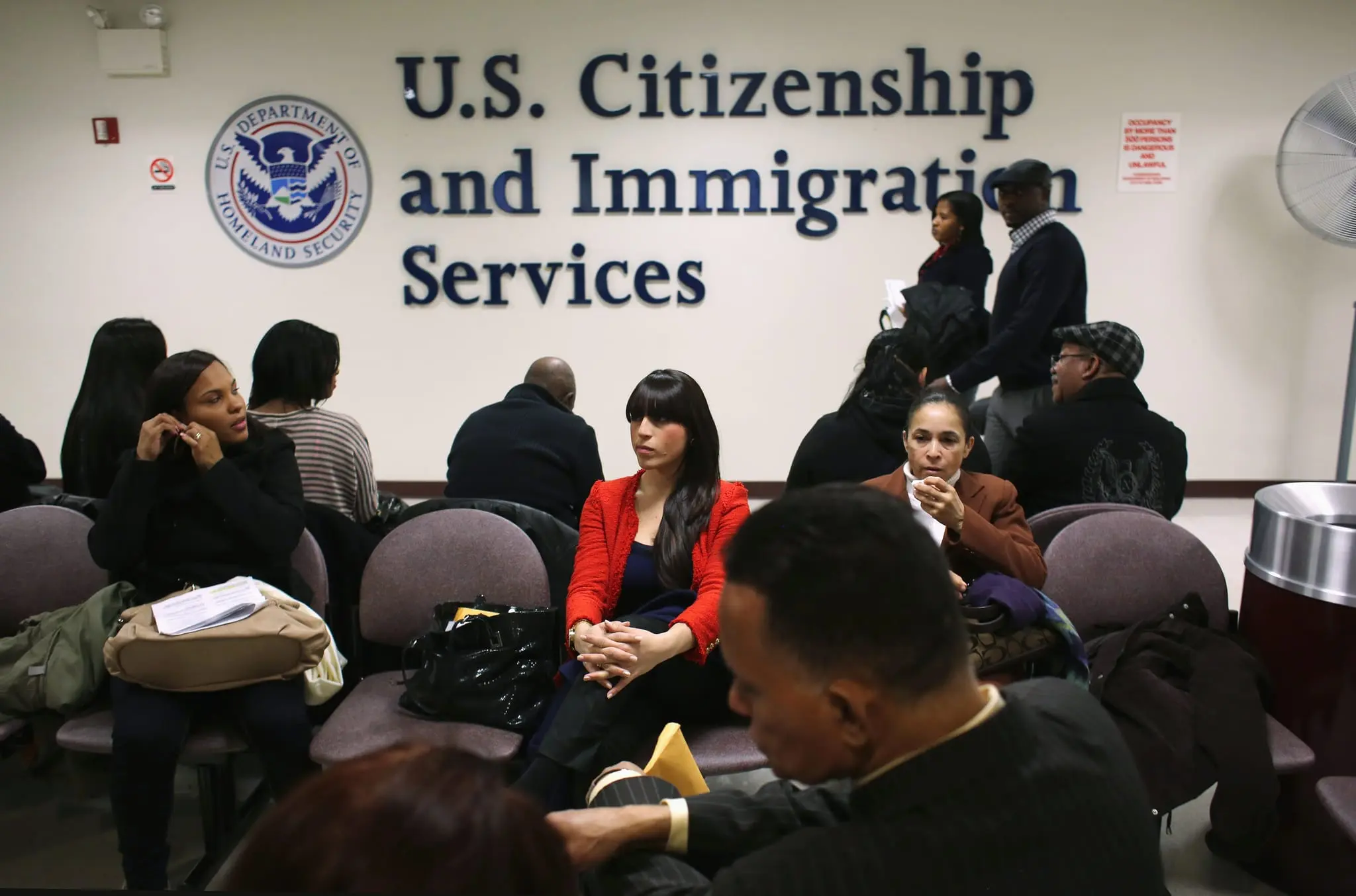
In a July 23 letter, CatholicVote President and CEO Kelsey Reinhardt called on U.S. Catholic bishops to address immigration with what she described as "Catholic realism," arguing that some bishops have relied on "superficial slogans" instead of confronting harder questions about culture, security, and assimilation.
Reinhardt, who previously worked as a legislative correspondent for the United States Conference of Catholic Bishops (USCCB) on immigration and refugee issues, wrote that she is "not talking about panic, contempt or cruelty" toward migrants, and she affirmed that "active and effective charity towards the needy of any kind is an unavoidable duty to all Catholics."
However, she argued that many bishops have avoided a harder question.
"The difficult question is not whether immigrants possess inherent human dignity," she wrote. “They do. And this truism is repeated as if the vast majority of Catholics are not aware of it. The difficult question is whether every pattern of migration, every country of origin, every ideology, every cultural formation, and every legal pathway serves the common good of our nation."
Cardinal Biffi’s ‘prophetic’ warning
Reinhardt built her argument around concerns expressed by the late Cardinal Giacomo Biffi, archbishop of Bologna, Italy, at an Italian bishops' seminar in 2000. CatholicVote published an English translation of Cardinal Biffi's address earlier this year.
“Speaking about Italy’s growing immigration in 2000, he warned that different immigrant communities do not arrive with identical capacities for integration,” Reinhardt wrote. “He did not say this as a racist. He did not say it as a partisan. He said it as a Catholic bishop concerned for the future of Christian people living in a nation and a culture shaped by Christianity.”
Reinhardt noted that the cardinal had argued, most controversially, that Muslim immigration in particular needed to be examined "with eyes open and without illusions."
“That sentence proved remarkably prophetic for Europe, even if the prophet was not accepted in his own homeland,” Reinhardt wrote. “The shocking reports recently released in the United Kingdom documenting the widespread sexual exploitation of over two hundred thousand English girls by organized grooming gangs, the absolute majority of whose members were of Pakistani Muslim background, illustrate just one aspect of the devastation that can result when cultural norms fundamentally incompatible with the core values of Western civilization take root.”
>> UK inquiry: 250,000 girls raped by grooming gangs as police, politicians looked away <<
Reinhardt wrote that a free society "can welcome people of every faith only insofar as they accept the moral and civic foundations of that freedom," which she identified as equal dignity before the law, freedom of religious conversion, and rejection of political violence."That is not a religious test," she wrote. "It is a civic test."
"That is what we call Catholic realism," she added. "And it is time for our bishops to speak with that realism before it is too late."
On national identity and assimilation
Reinhardt wrote that "Cardinal Biffi's observations are no less relevant in America today," arguing they apply to "every assault on the common good brought about by large-scale demographic changes that overwhelm communities by imposing cultures fundamentally at odds with America's civic inheritance."
Reinhardt pointed to domestic examples of the pattern she attributed to Cardinal Biffi's warning. She wrote that some foreign communities in the U.S., "once they reach a critical mass, deliberately and systematically import disorder and cultural contradictions — not to mention, all too often, crime and corruption." According to Reinhardt, these communities create "areas where America ceases to function as America, and sometimes even against America.”
"America has no obligation to import anti-American hatreds," she wrote, adding that religious freedom "is not a weapon to be exploited by those who reject religious liberty itself."
Reinhardt argued the tools available to address immigration, including both integration and deportation, "can each be just, and lawful, provided they are guided by sound moral principles and carried out with compassion and respect for human dignity."
Recent bishops' statements on immigration
Reinhardt's op-ed follows several recent statements from U.S. bishops on immigration enforcement. In November 2025, the USCCB issued a special pastoral message on immigration, the first time the conference had used that formal designation in 12 years, calling for a "meaningful path" to immigration reform while affirming the government's right to regulate borders.
More recently, Bishops Daniel García and Brendan Cahill, chairmen of the USCCB's racial justice and migration committees, issued a joint pastoral reflection July 20 following "several recent immigration enforcement encounters resulting in the loss of life,” calling for immigration enforcement that "always respects the God-given dignity of every person.” They also denounced both the dehumanization of immigrants and the vilification of law enforcement officers as affronts to human dignity.
As the national conversation continues, Reinhardt encouraged bishops to be courageous in the debate. "Our bishops do not need to become political operatives," she wrote in the letter. "They do, however, need to exercise the courage proper to shepherds."
"That may mean reassuring elected officials — not merely mentioning in passing — that secure borders matter," she wrote. "Better yet, it may mean refraining from chastising the faithful whenever they seek a serious discussion about the limits of accepting those whose cultural and religious beliefs prove difficult — or even impossible — to assimilate into our constitutional order."
Reinhardt argued the country still has a window to have an honest debate about immigration before it's too late, pointing again to the U.K. grooming-gang reports and Western Europe's broader experience as a warning of how quickly that window can close.
“We can defend religious liberty while rejecting ideologies that seek to undermine it. We can welcome the stranger while also asking whether certain forms of migration may harm the common good,” she wrote. “None of this implies a lack of charity or compassion toward those who seek to come to our country.”



Comments