Catholic University professor: Predicting elections is ‘both an art and a science’
Matthew Green explains the methods behind election forecasts and the human judgment that shapes the predictions.

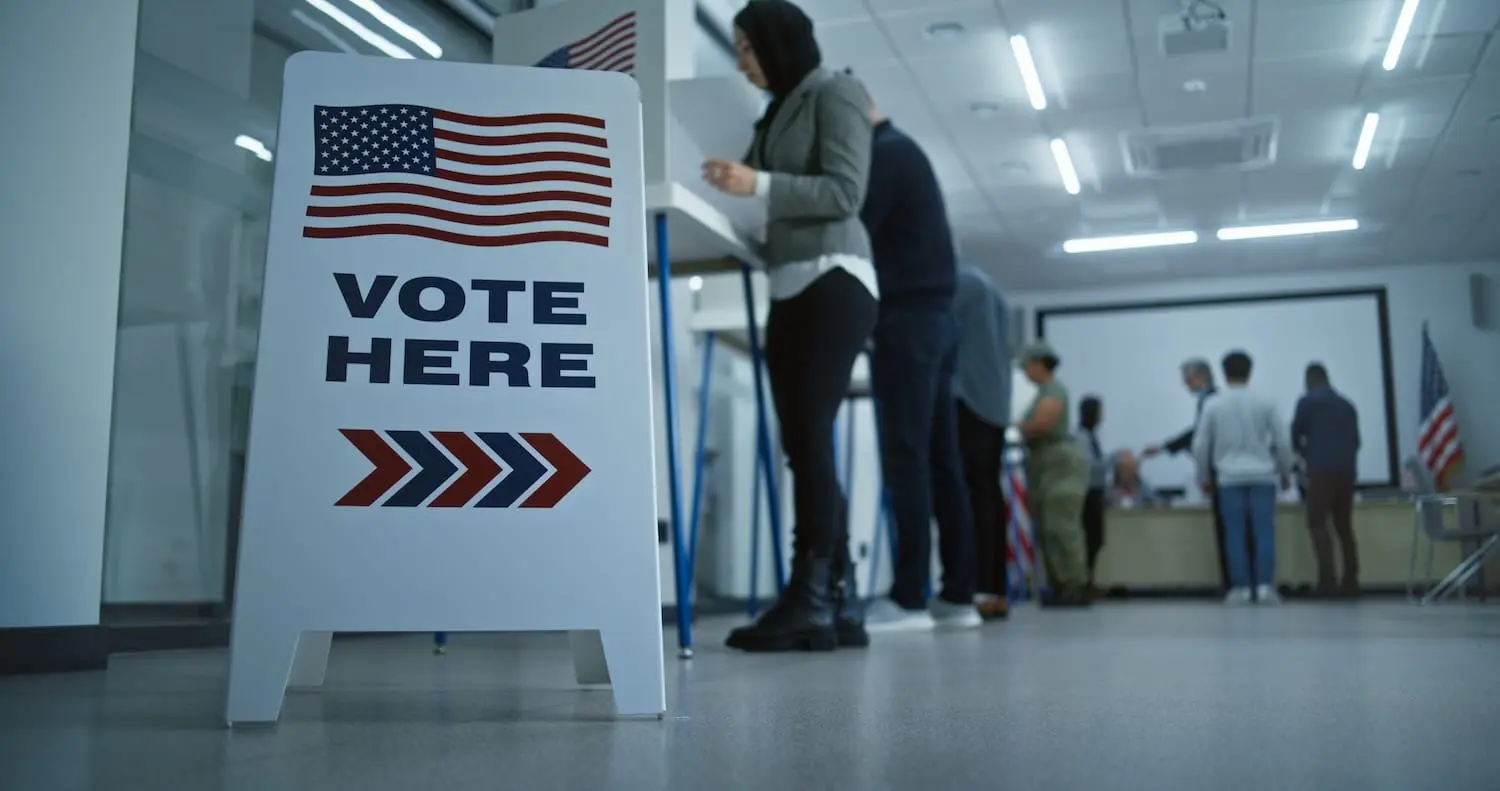
A Catholic University of America professor is cautioning against sweeping predictions for the Nov. 3 midterms based on a single poll or a sense of the political climate.
Matthew Green, a professor of politics who studies Congress and elections, discussed how to evaluate forecasts in an Oct. 19 Q&A published by the university. The interview followed a September presentation he made in Washington, D.C., on predicting November’s midterm results.
“Some pundits are predicting a very big election night for Democrats, what many call a ‘blue wave’ or even a ‘blue tsunami’ election,” Green said. “Some of them make that claim based on a single survey or even a ‘vibe,’ which I would caution against.”
Green explained that methods of predicting election results have become “increasingly sophisticated,” with complex models drawing on polling, economic conditions, and other factors.
“But even these models involve some human guesswork, like deciding which variables to include or how to properly weigh their contribution to outcomes,” he said. “Thus, predicting elections is both an art and a science.”
>> Polling industry scrutinized after firm admits it ‘fabricated’ data <<
Green outlined three forecasting approaches: simple statistical models, comprehensive statistical models, and assessments of individual races.
Simpler models use a few factors, such as economic growth and presidential popularity, to predict seat totals but carry greater uncertainty, he explained. Forecasts of individual races consider national and local conditions but rely heavily on analysts’ expertise, he said.
More comprehensive models combine many factors to predict how many seats each party will win.
“They are often the most accurate, but they are more difficult to understand, and they rely on the decisions of modelers about which variables to choose and how to weigh them,” Green said.
Turning to November’s outlook, Green said forecasting models generally pointed toward Democratic gains in both chambers and enough seats to take control of the House. The size of a potential House majority and whether Democrats would also win the Senate were less certain, he said.
Green also pointed to Trump’s election in discussing how American politics has changed over the past decade.
“The election of Donald Trump in particular brought about a new, more populist and nationalist strain of domestic politics,” he said. “It may have also durably shifted the balance of power between the branches, empowering the presidency while weakening Congress.”
Asked what unexpected factor could alter the results, Green emphasized the limits of forecasting.
“It’s impossible to know what might make an election turn out differently than experts predict,” he said. “If we knew what that X factor was, it would already be incorporated into the models.”



Comments