Polling industry scrutinized after firm admits it ‘fabricated’ data
Wedgewood Polls claimed that it manufactured fraudulent polling data as part of a social experiment to demonstrate the lack of verification in the polling industry and mainstream media.
Just two weeks before midterm elections on Nov. 3, a polling firm widely cited by mainstream news outlets admitted that it fabricated polling data.
Wedgewood Polls confirmed in an Oct. 20 press release that it is a “fictional entity” that published “fabricated numbers” and “unverified figures,” claiming that the polling firm was created as “an experimental project to demonstrate the vulnerabilities, lack of oversight, and overall low barrier to entry in the modern political polling industry.”
The 17 polls manufactured by Wedgewood since June were cited in outlets such as The New York Times and MSNOW and included in polling aggregators such as Decision Desk HQ, VoteHub, and FiftyPlusOne.
Decision Desk HQ reported afterward that it has removed all 17 Wedgewood polls cited in its aggregates, but added that the “removal of these polls has not changed the projected seat totals or chamber control probabilities in the Senate or House.”
FiftyPlusOne reported that it had questioned Wedgewood Polling Oct. 20 as part of “an investigation we had conducted into their alleged survey research,” prior to the fake polling firm posting its press release. Wedgewood reportedly responded to FiftyPlusOne via social media saying, “F*** you.”
According to its report, FiftyPlusOne attempted to verify Wedgewood Polls’ legitimacy, concluding that its lead pollster was an industry veteran and even reviewing raw data shared on Oct. 15. FiftyPlusOne found that Wedgewood relied on a survey website, Pollfish, to collect data. However, when FiftyPlusOne conducted its own polling via Pollfish, it discovered that the Pollfish transaction identifiers listed in Wedgewood’s data were fake.
Wedgewood’s press release labeling itself “an experimental project” aimed at exposing how easily manipulated the polling industry is was simply a means of getting ahead of bad publicity, FiftyPlusOne suggested.
In August, The Guardian exposed another purported polling firm, Median Strategies, as fake. Managed by 21-year-old Rahil Prakash, Median Strategies published fabricated data that was cited by mainstream news outlets and even Democratic political candidates.
In a subsequent statement, Prakash described Median Strategies and its fabricated polls as a “short-term social experiment” studying how fake polling “could enter and spread through the political information ecosystem without independent verification.”
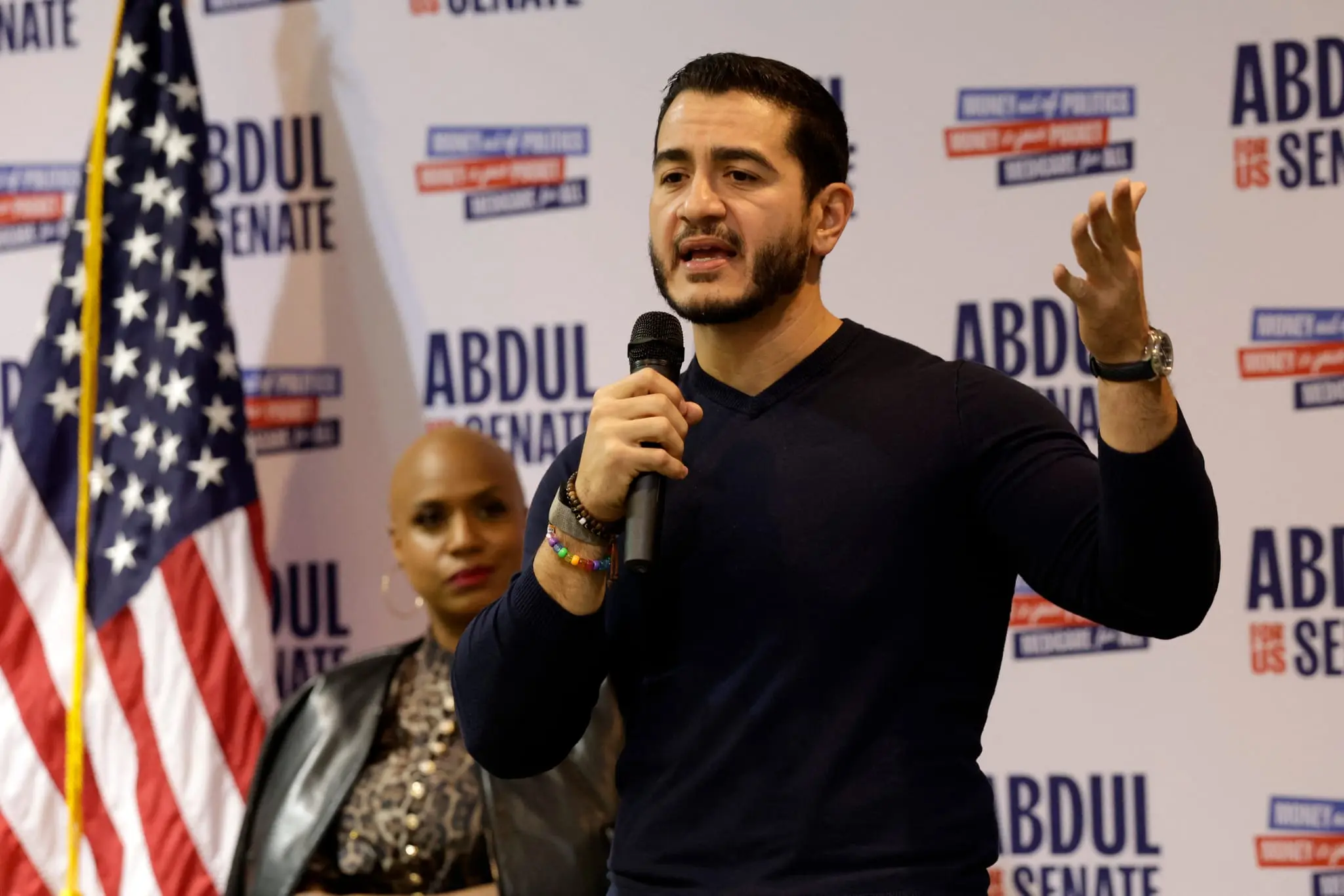
Prakash told the Guardian that he was inspired to launch his “experiment” after Detroit and Wayne County Health Director Abdul El-Sayed defeated Rep. Haley Stevens in the Democratic primary for Michigan’s Senate race. Polling had initially shown El-Sayed leading Stevens by as much as 20 points, although he eventually defeated Stevens by less than one full percentage point.
“I wanted to see if fake polls could really penetrate the ecosystem that easily,” Prakash said. “And as it turned out, it could.”
Conservative voices have cast Wedgewood Polls and Median Strategies as elements of a left-wing demoralization campaign to artificially inflate Democratic candidates’ perceived favorability and discourage Republican voters from casting their ballots.
“This is the second left-wing polling psy-op exposed during this election cycle,” Heritage Foundation President Kevin Roberts said in an X post responding to Wedgewood Polls’ admission of fabricating polling.
“There is a coordinated effort to demoralize conservative voters and keep them away from the polls,” he continued. “Don’t fall for it. Your ballot is the only poll that ultimately matters. Go vote.”
Federal Communications Commission (FCC) Chairman Brendan Carr said in an X post that the “surge” in fake and fraudulent polling is “designed to do nothing more than interfere with the regular functioning of the electoral process and alter the normal patterns of voter turnout and enthusiasm,” faulting media outlets for “amplifying or airing these Polls without regard to basic journalistic ethics and without informing the public that those Polls lack a scientific, accurate, or even real basis.”
“The FCC takes these issues seriously. Broadcasters are prohibited by the terms of their federal licenses from engaging in News Distortion or promoting Broadcast Hoaxes,” he said.
“It is important that broadcasters comply with their public interest obligations. After all, the country benefits greatly when Americans can trust and rely on the media to report the news fairly and accurately,” Carr continued. “Broadcasters are advised to avoid engaging in News Distortions or running Broadcast Hoaxes by airing Polls that would violate their regulatory obligations.”
Political consultant and former Republican campaign staffer Josh Holmes said in a Fox News interview that fake polling is “not a victimless crime,” pointing to both Wedgewood Polls and Median Strategies as examples.
“The problem is when you get the fake polls out in the public, what happens is fundraising starts to dry up, volunteers become dispirited,” he added. “They create and blunt any momentum a campaign would have with artificial data, and it becomes really important as a campaign to try to counteract all that as aggressively as you can.”
Democratic Michigan state legislator Mallory McMorrow also criticized Wedgewood Polls’ “experiment,” pointing to the negative effect the fabricated polling had on her campaign against El-Sayed and Stevens in Michigan’s Democratic Senate primary. She reported that once the Wedgewood data showed her trailing behind El-Sayed and Stevens, donations and volunteers grew scarce and reporters “hounded” her with “calls to drop out,” which she eventually did.
“Sure, a point was proven. Polling is broken,” she said in an X post late Oct. 20. “But tens of thousands of people poured their hearts, time, energy, hard-earned money into something they believed in - for a year-and-a-half, and it was treated like a game. Our volunteers gave their all. And then some. I felt like I had let so many of them down.”
McMorrow also called on media outlets to “take a hard look at what's legitimate and what's not.”



Comments