EXCLUSIVE | Auxiliary bishop of Latin Patriarchate describes state of Christians in the Palestinian territories
Speaking with journalist Sanad Sahelia, Bishop William Shomali, general vicar and patriarchal vicar for Jerusalem and Palestine, explained the spiritual and human situation of Christians in Gaza, Jerusalem, the West Bank and Israel, how Catholics in the U.S. can show solidarity with the Church in the Holy Land, and what change is needed for peace to become possible. Sanad Sahelia is a Catholic Palestinian journalist who works for the Patriarchate in the West Bank Christian town of Taybeh.
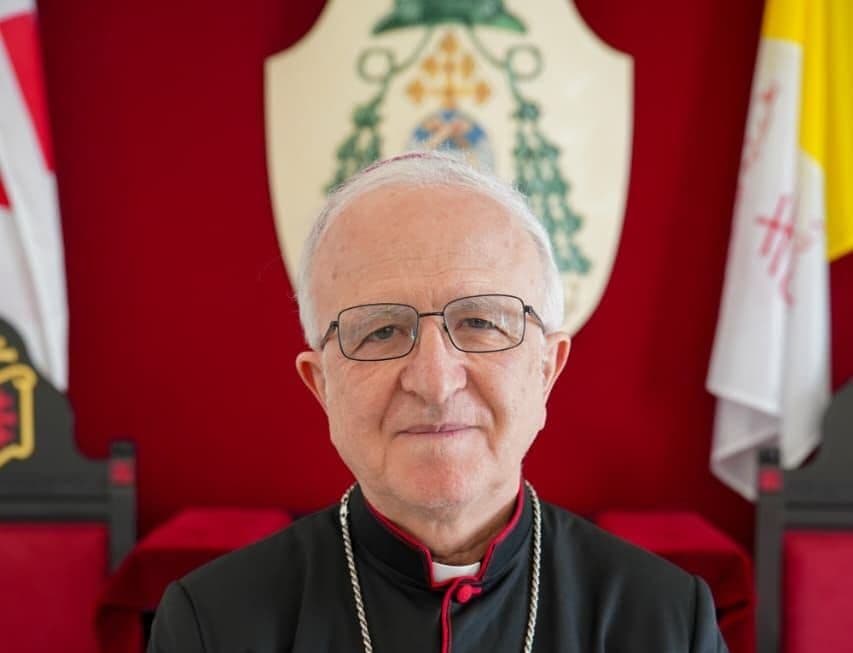
1. Your Excellency, after years of war, killing, displacement, fear and anger, what does it practically mean for a Christian in the Holy Land to live Christ’s command, “Love your enemies”? How can a believer love his enemy without denying injustice, justifying violence, or abandoning truth and justice?
Loving enemies means following Christ, who “when he was insulted, did not return the insult” (1 Peter 2:23). It does not mean surrendering to injustice or denying the truth. Rather, it first means freeing oneself from hatred and the desire for revenge.
A person has the right to defend himself and to seek justice through the courts and legitimate means to recover his rights. But the distinction between defending one’s rights and seeking revenge remains a delicate one that requires spiritual discernment and the light of the Holy Spirit.
Loving enemies also means praying for them and for their conversion and change of heart. This is what the deacon Saint Stephen did when he prayed for those who were stoning him, saying, “Lord, do not hold this sin against them.”
Saul, who later became the Apostle Paul, was present during the stoning. By the grace of God, he was transformed from a persecutor of Christians into a great apostle of Christ. In this way, we see the power of prayer and love to transform yesterday’s enemy into tomorrow’s friend.
We also have examples from modern history. After two devastating world wars that claimed the lives of tens of millions of people, the peoples of Europe were able to overcome hatred and build a project of peace and cooperation that continues to this day through the European Union. This confirms that reconciliation is not an impossible dream, but a choice that can create a better future for peoples.
Therefore, Christ’s command to love our enemies does not mean abandoning justice or remaining silent in the face of evil. Rather, it means rejecting hatred and revenge, seeking justice through legitimate means, while keeping our hearts open to reconciliation whenever it becomes possible.
Justice and mercy are not contradictory. In the Gospel vision, they complement one another.
2. How would you describe the spiritual and human situation of Christians in Gaza, Jerusalem, the West Bank and Israel today? To what extent has the very survival of Christian presence become threatened by war, emigration, fear, and economic and social pressures? What can the Church do to preserve faith and hope and convince Christian young people that they have a future in the Holy Land?
There is no doubt that the Christian presence in the West Bank and Gaza, and even in Israel, is going through an extremely difficult period because of war, violence, economic deterioration and insecurity.
In Gaza, the situation is even more tragic. Life has become almost impossible because of severe shortages of food and medicine, constant fear, and the widespread destruction that has affected the Strip.
The explosives, rubble and environmental contamination left by the war will also have serious long-term health consequences, particularly for children and the most vulnerable groups.
In the West Bank, people are suffering from fear, poverty and uncertainty about the future. The economy has deteriorated significantly because of the absence of tourism and the decline in employment opportunities, particularly because thousands of workers lost the ability to work inside Israel, where wages had been relatively higher.
In addition, some Palestinian communities are facing increasing pressure because of settlement expansion and what sometimes accompanies it in the form of attacks or restrictions on access to agricultural land and sources of livelihood.
It is true that Christian emigration from the Holy Land is not a new phenomenon. It has continued for more than a century, but today it has reached an alarming stage.
If Christians in Gaza are able to leave the Strip, many of them are unlikely to be able to return, and we would then risk losing a Christian community that has preserved its presence and witness of faith over many centuries.
Many Christian families in the West Bank are also considering emigration if they have the legal and financial means to do so.
As for the role of the Church, it begins with prayer for a just and lasting peace, because prayer gives believers strength and hope and opens hearts to reconciliation.
At the same time, the Church continues its humanitarian mission by assisting families in need and supporting those affected.
However, material assistance, important as it is, is not enough on its own to address the deep fear experienced by people or remove their anxiety about their future and the future of their children.
Therefore, the greatest challenge is to help our young people discover that remaining in the Holy Land is not merely a personal choice, but also a vocation and a mission.
We must provide them with employment opportunities, support them in facing difficulties, and give them genuine reasons for hope.
We should also recognize that every family that leaves further weakens the Christian presence rooted in this land for two thousand years. This presence bears witness to the Incarnation, teaching, Passion, death and Resurrection of the Lord Jesus in the places that witnessed the events of salvation.
Preserving Christian presence in the Holy Land is not merely a demographic issue. It is a spiritual, historical and ecclesial responsibility, because these Christian communities are the living stones that keep the witness to Christ alive in the land where he walked.
3. In light of what the Church describes as the danger of dehumanizing the other, what do you see happening in the hearts of ordinary Palestinians and Israelis after years of violence and fear? How can the Church help people recover their ability to see the other as a human being, indeed as someone made in the image of God, while acknowledging Palestinian suffering and Israeli fears?
No people reaches the stage of dehumanizing another people overnight. Rather, it happens as a result of many years of accumulated fear, violence and suffering.
When a person is subjected to killing, displacement or humiliation, feelings of anger and bitterness arise, and it becomes easier for him to see the other as a threat or an adversary rather than as a human being who shares the same human dignity.
But the Christian faith calls us to a different vision. The other person, regardless of his identity or position, remains a creature made in the image and likeness of God, with a dignity and rights that cannot be denied.
This conviction is not merely a theoretical principle. It is the necessary foundation for any genuine and lasting peace.
In the reality of the Holy Land, we find ourselves facing two different narratives and two different collective memories.
Israelis carry within their collective consciousness historical suffering and deep existential fears, while Palestinians hold on to their national and historical rights and suffer from occupation, violence, displacement and ongoing hardship.
A future cannot be built if each side remains imprisoned within its own narrative and unable to hear the narrative of the other.
Therefore, the first step is to establish justice and respect the rights of peoples in accordance with international law.
True peace cannot be based on injustice. At the same time, justice alone is not enough if it is not followed by a process of healing for emotions and memory.
After justice comes forgiveness.
Forgiveness does not mean forgetting, justifying what happened, or abandoning one’s rights. Rather, it means placing our wounds in God’s hands and abandoning the logic of revenge.
The believer trusts that God is the just judge, and therefore refuses to make pain a justification for permanent hatred.
Then comes reconciliation. It is a long journey that requires dialogue, encounter, cooperation and education in respect for the other.
In reconciliation, we acknowledge the suffering of the other as we ask him to acknowledge our suffering. We recognize his dignity as we ask him to recognize ours.
The role of the Church is to continually remind everyone that every human being, whether Palestinian or Israeli, is a beloved child in the heart of God and is created in his image.
The Church is called to defend truth and justice while at the same time building bridges of encounter, dialogue and reconciliation.
When we succeed in seeing the face of God in the other person, we have truly begun the path out of the cycle of fear and hatred toward a more peaceful and humane future.
4. For Catholics in the United States and outside the Holy Land, how can they approach this conflict as Christians without falling into political polarization or indifference? What do you specifically ask of them, beyond prayer and humanitarian assistance, in terms of solidarity with the Church in the Holy Land and defending human dignity, justice and peace?
The United States has a pivotal role in the Middle East, particularly with regard to the Israeli-Palestinian conflict.
The Catholic Church in the United States also includes millions of faithful, and many Catholics hold influential positions in political and public life. This gives them a real ability to contribute to promoting peace and justice.
What we ask of Catholics in the United States and outside the Holy Land is, first, to look at this conflict through the eyes of faith and conscience, rather than through political or ideological polarization.
Christians are called to name things as they are and to condemn injustice and violence wherever they occur and whoever commits them.
We condemned the attacks that targeted Israeli civilians on October 7, and we have repeatedly expressed our sorrow over the enormous human toll suffered by Palestinian civilians during the war.
Human dignity is indivisible, and every human life is sacred in the eyes of God.
We believe that one of the main reasons for the continuation of this conflict is the absence of a just and lasting political solution that guarantees the legitimate rights of both sides.
Therefore, we continue to believe that a two-state solution based on international law remains the most realistic framework for achieving a just and sustainable peace, so that Israelis can enjoy security and Palestinians can enjoy freedom and dignity in their independent state.
We also ask Catholics around the world to show solidarity with the Church in the Holy Land through prayer, pilgrimage when circumstances allow, support for Church and humanitarian institutions that serve local communities, and by raising their voices in defense of human dignity and fundamental rights.
Christian solidarity is not limited to humanitarian assistance. It also includes a commitment to truth, justice and peace.
At the present time, we hope that the international community, particularly the United States, will make every possible effort to protect civilians, reduce acts of violence and abuses, and create the conditions that allow trust to be rebuilt and a serious political process to be launched toward lasting peace between the two peoples.
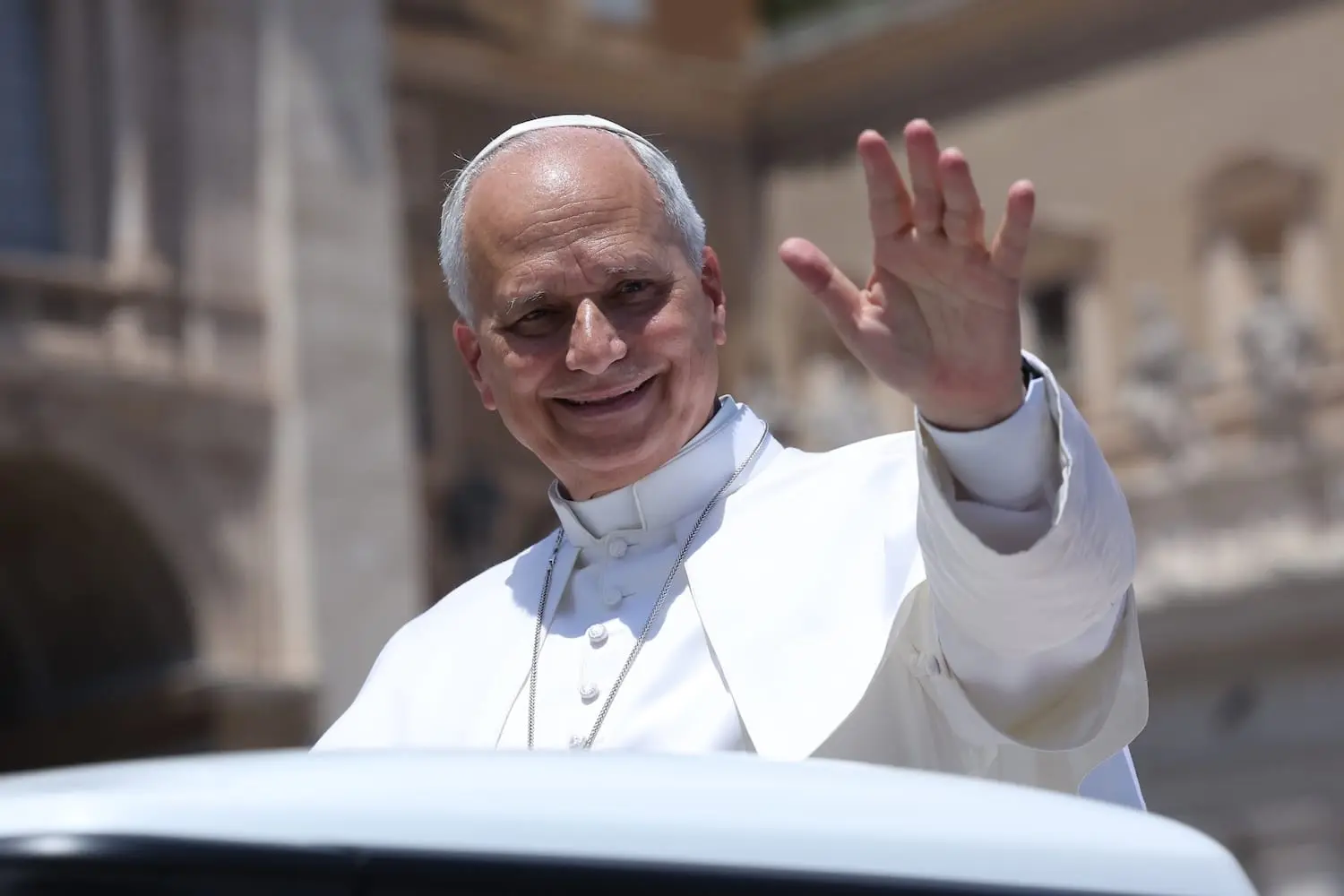
5. Pope Leo XIV speaks of a just and lasting peace, and there has also been discussion about the possibility of a papal visit to the Holy Land. From your pastoral experience, what needs to change on the ground, politically, humanely and spiritually, for peace to become possible? And if the Pope visits the Holy Land, how can his visit become part of a genuine process of reconciliation and healing rather than simply an international event?
The Holy See has consistently called for a just and lasting peace in the Holy Land based on respect for human dignity, the rights of peoples and the security of all.
From this perspective, it has continued to support a two-state solution, in which Israelis live in security and peace within internationally recognized borders, while Palestinians are able to enjoy freedom and dignity in an independent and viable state.
However, peace is not achieved through political agreements alone. It also requires addressing the deep human wounds left by many years of violence, fear and lack of trust.
Therefore, the application of the principles of international law must be accompanied by education in dialogue and mutual respect, and by a willingness to practice forgiveness and reconciliation.
We have heard about the possibility that His Holiness the Pope might visit the Holy Land on the occasion of the Jubilee of Redemption in 2033. We hope that the coming years will provide an opportunity to move beyond the cycle of war toward a new horizon of peace and stability.
If such a visit takes place, its importance would not lie only in its symbolic or diplomatic dimension, but also in its spiritual and human message.
The Pope would come first as a pilgrim to the places that witnessed the great mysteries of our faith: the Incarnation, Redemption and Resurrection.
He would also come as a messenger of peace, carrying a word of hope to all the inhabitants of this land, Palestinians and Israelis.
We hope that such a visit would contribute to encouraging leaders and peoples to choose the path of dialogue instead of confrontation, and the path of reconciliation instead of hatred.
True peace is built not only through treaties, but also through a change of hearts and by seeing the other as a partner in humanity and as a person created in the image of God.
And we say to His Holiness from now:
Welcome to the Holy Land, the land of mission and Resurrection, which continues to await the day when justice and peace meet, and when reconciliation triumphs over division and fear.



Comments