Federal Reserve Chairman seeks to reassure markets as inflation remains elevated
The Fed chairman said recent data had not shown meaningful improvement in underlying inflation but maintained that investors remain confident the central bank will restore price stability.

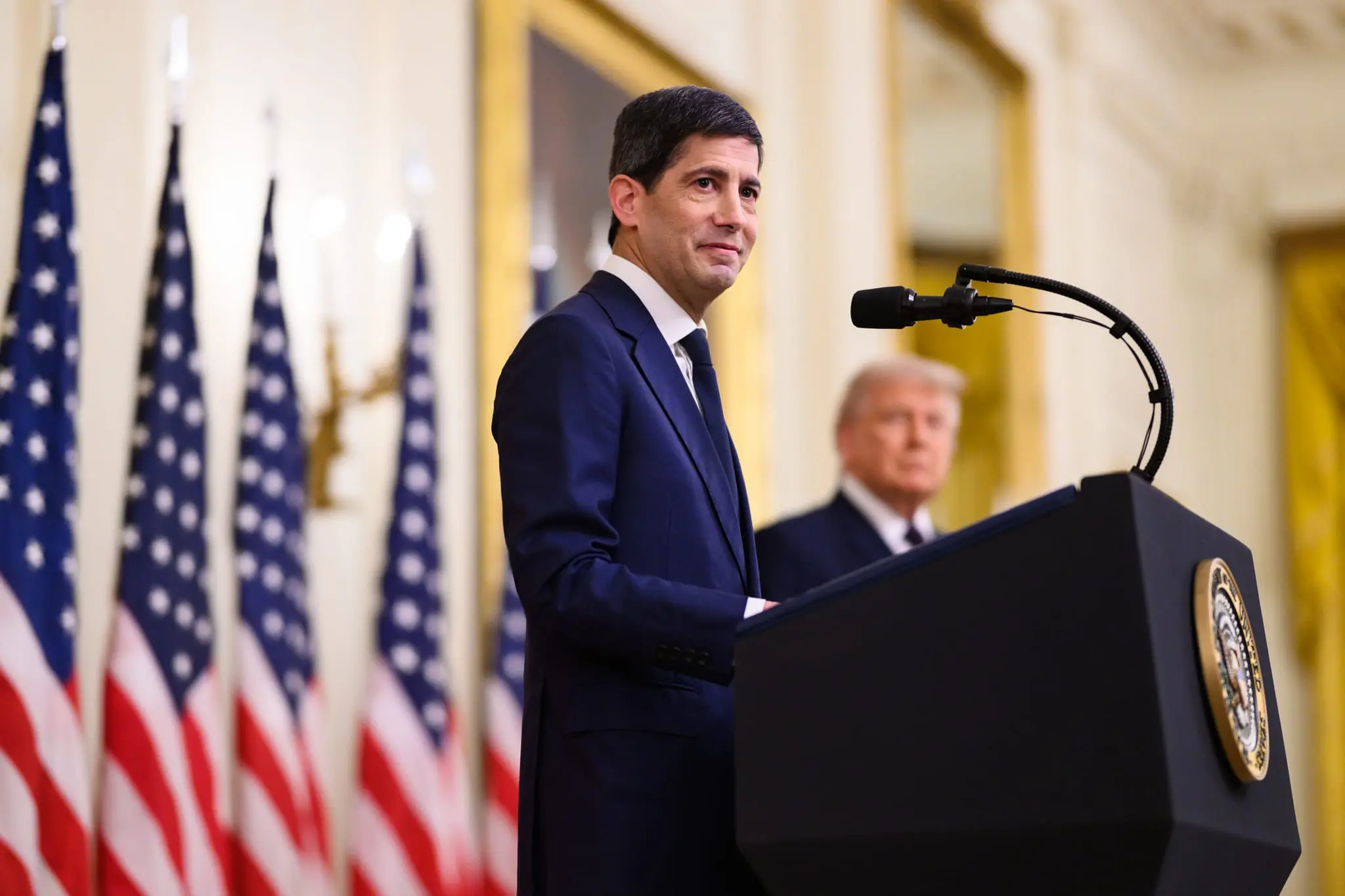
Federal Reserve Chairman Kevin Warsh sought to reassure financial markets Aug. 28, reaffirming the central bank’s commitment to bring inflation back to its 2% target while leaving open the possibility that higher interest rates could be necessary if price pressures do not ease.
Speaking at the Federal Reserve Bank of Kansas City’s annual economic policy symposium in Jackson Hole, Wyoming, Warsh acknowledged that the inflation outlook remained concerning but said financial markets continued to show confidence in the central bank’s ability to restore price stability.
“It is a credit to the Fed as an institution — and consistent with the best of the Fed’s traditions — that market prices show confidence that we will deliver price stability,” Warsh said, according to prepared remarks published by CNBC. “And I can assure you… they’re right.”
Warsh’s remarks came as the Fed’s preferred inflation gauge continued to run well above the central bank’s goal. The personal consumption expenditures price index showed that prices rose 3.7% in July compared with a year earlier, while prices excluding food and energy rose 3.3%, according to the Bureau of Economic Analysis.
Warsh, who became Fed chairman in May, said that although recent inflation readings were “better than expected,” they did not show that underlying trends had “meaningfully improved.” He said inflation had fallen substantially from its 2022 peak but had made only modest progress during the previous two years.
Price increases also remained widespread. Warsh said 54% of the goods and services in the personal consumption expenditures basket showed increases above 3% during the previous 12 months. That figure is below the post-pandemic high of approximately 77% but remains well above the 32% average recorded during the two decades before the pandemic.
Warsh emphasized that the Fed’s 2% inflation target is “firm” and said the central bank cannot assume inflation will fall on its own.
“Price stability is not self-executing, nor is inflation necessarily mean-reverting,” he said. “It is the Fed’s job to deliver stable prices.”
The Fed’s “predominant focus right now should be on prices,” Warsh added.
Despite his concern about current price increases, Warsh said measures of medium-term inflation expectations remained stable, including indicators drawn from financial markets. Those measures suggested that investors generally expected the Fed to bring inflation under control rather than allowing it to remain persistently elevated.
Warsh cautioned, however, that the Fed must remain vigilant because those expectations can change quickly.
“It’s the Fed’s job to make sure that inflation expectations do not get unanchored,” he said.
Warsh suggested that current interest rates might not be slowing borrowing and spending sufficiently to bring inflation back to target. He pointed to the economy’s resilience and the continued availability of credit as evidence that monetary policy might not be restraining demand enough.
He said unemployment remained low at 4.1%, business investment was rising rapidly, corporate profits were strong, and the labor market appeared consistent with full employment.
Warsh also pointed to artificial intelligence (AI) as a potential source of substantially higher long-term economic growth, estimating that investment in AI-related infrastructure accounted for more than half of the increase in business capital spending so far this year.
While emphasizing the need to control inflation, Warsh stopped short of committing to a particular interest-rate decision, saying that he is “committed to a discipline, not to a decision.”
“Here is my standard: We must be confident that underlying inflation is moving to our objective, clearly and at sufficient speed,” he said. “Otherwise, we have work to do. That’s our job… our mandate… and our charge to keep.”



Comments