‘Go to hell … I represent Americans first’: Vance blasts Israeli influence campaign ‘attacking me obsessively’
Vance defends his handling of Iran talks, accusing an Israel-linked influence campaign of trying to derail the deal while admitting that the administration 'screwed up' with the Epstein files release.

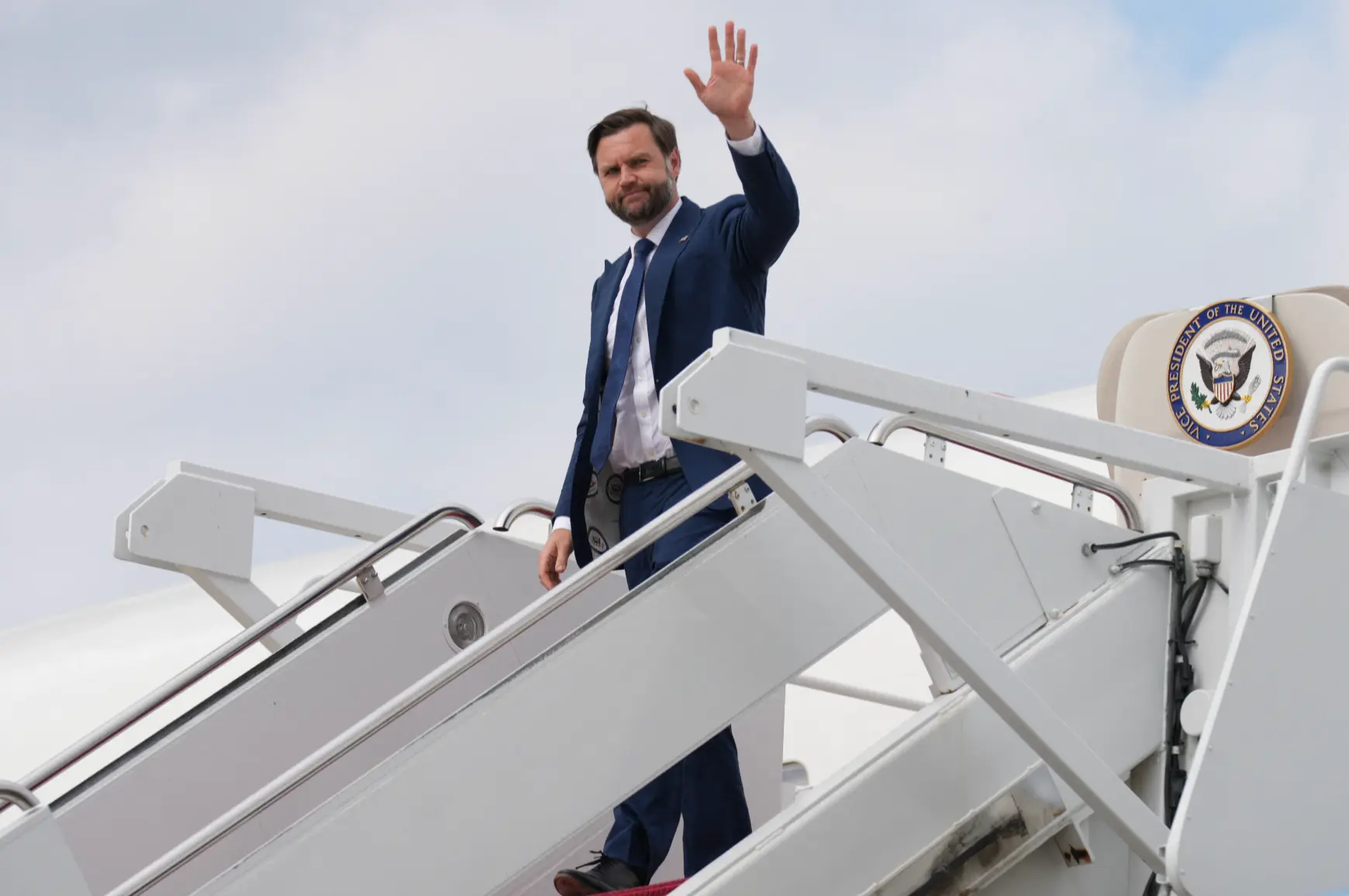
Vice President JD Vance sat down with podcast host Joe Rogan in a July 15 interview that covered topics ranging from Iran nuclear negotiations to the Epstein files. Here are the highlights of the conversation.
A 'well-funded' Israeli campaign aimed to sink the Iran deal
Vance pushed back against months of criticism over his handling of talks to end the Iran war, saying there's "this very discreet, extremely well-funded campaign to try to derail the negotiation and try to derail the deal."
He pointed to a Time magazine article he said a friend had sent him.
"It's worth reading because it lists a bunch of people who have quite literally been paid by a former Trump campaign person who was himself paid by certain elements within the Israeli government," Vance said. "And those people are attacking me viciously for quite literally trying to accomplish the negotiation objective that's set for the country.”
Asked what form the attacks take, Vance said, "Oh, it's social media posts, they're leaking to reporters – they're attacking me obsessively, saying that we should not be negotiating with Iran, that we should just keep the military campaign going indefinitely, and that is their explicit position." He said he's also faced accusations that he's influenced by Qatar and by commentator Tucker Carlson.
"There's just so much bulls**t out there when what I'm actually trying to do is accomplish what the President of the United States told me to accomplish, which is a settlement of this that accomplishes our objectives: Iran doesn't have a nuclear weapon, and we have the free flow of oil and gas," Vance said.
He was careful to draw a distinction between mere criticism of the deal on the one hand and improper interference with the administration on the other.
Vance said he doesn't object to Israeli officials disagreeing with the agreement or to foreign governments trying to influence U.S. policy in general. "Israel does it, other countries do it, and it's just sort of the nature of the beast," he said. What troubles him, he said, is "when Americans allow — meaning American leadership allows — that influence to affect their judgment and to affect what they are advocating for."
Vance again defended his own conduct and said, "When I open up the pages of Time magazine and I see that there's a literal foreign influence campaign being funded to tank the very deal that I was pursuing, and, oh, by the way, many of the people who are receiving that money were actually attacking me in completely dishonest ways, my response to that is, well, go to hell," he said. "I'm going to do what I have to do for the American people. I represent Americans first."
Iran split between hardliners and pragmatists
Rogan asked why U.S.-Iran negotiations keep appearing to succeed before collapsing into renewed bombing.
Vance told him it's important to understand the U.S. is dealing with "two elements within the Iranian system," split between religious hardliners and pragmatists.
"My summary view, Joe, is that I can't, of course, predict the future, but fundamentally I think we are on the right trajectory. It's just going to be really messy, and there's going to be a lot of stops and starts," Vance said.
He said that dynamic became clear soon after a memorandum of understanding was signed in June: 20 million barrels of oil began leaving the Strait of Hormuz and oil prices dropped to pre-war levels, a shift he said caused Iranian hardliners to "freak out a little bit" over having given up a major point of leverage.
"They're like, 'Oh s**t, did we just give away our major leverage points?'" Vance said. That, he said, led Iran to violate the ceasefire and attack ships, prompting U.S. retaliatory strikes — strikes that were in their fifth consecutive day when the interview was released.
Vance described the overall approach as "a delicate diplomatic dance, where we're using economic leverage points, we're using carrots and sticks, we're talking to the pragmatists, and then of course when they commit acts of violence, we're responding to it. And all of those things are happening simultaneously."
Dismissing war hawks who want to 'bomb and bomb and bomb'
Rogan asked Vance what Republican war hawks who oppose negotiating with Iran actually want instead.
"I think that their proposal is to bomb and bomb and bomb," Vance said. "And the honest view, Joe, is that they do not actually have a solution. If you actually ask them, what do you want us to do? What is the goal that you're trying to achieve? They'll say things like, we'll just bomb them to oblivion. Okay? We can do that. We can drop a lot of bombs, but what does that accomplish if there's still a crazy person who's still willing to shoot a few drones at the Strait of Hormuz?"
He said Trump's approach has instead been to tie military force to a specific objective: "If you shoot at ships, we're gonna shoot at the facilities at which you used to shoot at the ships, but we're not just gonna do something open-ended indefinitely. We're not just gonna bomb and bomb and bomb."
Vance said hawkish critics, specifically Republicans who "voted for us but have been very critical" of the administration, favor an indefinite military campaign without being able to articulate a real objective. He added at one point that the U.S. would not send in ground troops "regardless."
He also warned against what he called the "Libya outcome," pointing to Libya’s collapse into a failed state and the refugee crisis that followed the Obama administration’s decision to help remove Muammar Gaddafi – a move Vance called “very stupid.” He said some critics want a similar result in Iran, but argued that such an outcome would not serve U.S. interests. Rather, he said, the current strategy is to use "the tools of diplomacy and military power” to keep the strait open, ensure the free flow of oil and gas, and prevent Iran from obtaining a nuclear weapon.
Vance calls himself a 'reasonable moderate' on Israel
Vance said he sees himself as caught in the midst of a "massive pro-Israel, anti-Israel debate in the United States of America."
"I'm like the reasonable moderate," he said, adding that he's been accused of antisemitism and of insulting the Jewish religion. "This is insane. I have a ton of respect for the Jewish religion.”
He argued Israel should be treated as a normal ally rather than a special case.
"Israel is an ally, like France or like the United Kingdom,” Vance said. “We're gonna have disagreements with them. We're gonna have agreements with them. There are areas where we're going to have similar interests and areas where interests are going to diverge."
When Rogan asked about Israel losing public support in the U.S. amid growing concerns that “Israel has a very disproportionate effect on American politics," Vance acknowledged that Israel does try to influence U.S. politics.
"I think the Israelis were definitely more effective at it than most," he said, while noting other countries do the same. "It's a country of nine million people. We have 330 million people. And so, of course, they're gonna try to persuade Americans," he said.
When Rogan pressed further, raising concerns about spying, funding, and whether American politicians are "aligned with Israel or whether they're aligned with the United States first," Vance said, "I definitely get those concerns, but my sense is that the way that all foreign influence works in the United States is people try to manipulate American public opinion, and then from manipulating public opinion, they try to get the outcomes that they want. And this thing is a very good example of this."
The White House 'screwed up' on the Epstein files
Vance acknowledged that the Trump administration botched its rollout of classified files related to child sex offender Jeffrey Epstein, going further than the administration's earlier public defense of the release.
"If people want to say we mishandled the Epstein release – guilty: we did mishandled it, especially the communications of it," Vance said. He added that the White House "absolutely screwed up" the rollout of the files.
He said the missteps weren't an effort to conceal anything, however. "Do I think the reason we screwed up the comms was because we were trying to hide something? No," Vance said. He told Rogan that mounting political pressure over the files led then-Attorney General Pam Bondi to make some ill-advised calls. "Pam was trying to respond to the political moment," Vance said.
Vance also addressed allegations about Epstein's intelligence ties directly, saying Epstein "clearly had connections to the highest levels of American intelligence" and "the highest levels of Israeli intelligence." He said the case is part of why he's careful to specify that only "some elements within the Israeli government" oppose the Iran peace process, since he said other elements support it and recognize an indefinite military campaign isn't in their interest either.
"The Epstein thing is interesting because, as much as I know — you know, Prime Minister Netanyahu, not a particularly popular person in the United States of America right now — Epstein seemed to be connected to the elements of the Israeli deep state that were left-of-center," Vance said. "I've always found that fascinating. It wasn't like he was super connected to the right-of-center of Israeli politics." Vance said Epstein's ties instead spanned the political spectrum.
Israeli government pushing to keep the war going indefinitely
Vance said the U.S. approach in Iran has been to respond to specific provocations rather than pursue open-ended military action.
“With limitations, like when the Iranians hit ships, the President has been willing to knock the hell out of the Iranians in response. This is not just a negotiation. It's negotiations with militaries, all these things,” he said.
Vance said he’s confident some Israeli officials are working to steer the U.S. away from that approach.
“I know beyond a shadow of a doubt that there have been people within the Israeli government who are trying to, like, actually shift us away from that policy because they wanna continue the military campaign,” Vance said.
Vance was careful to say he wasn't accusing Israel's government as a whole, noting he has close relationships with some officials there, including Israel's ambassador to the U.S. Still, Vance maintained that a subset of Israeli officials is actively working to keep the war ongoing.
“There are some people within their system we know beyond a shadow of a doubt who are manipulating and trying to change American public opinion to keep the war going on indefinitely,” he said. “Again, not towards any objective, but just indefinitely."



Comments