Hamas agrees to surrender control of weapons under Trump Gaza plan, but Israel has not signed on
A 15-point roadmap would dismantle Hamas’ military infrastructure, transfer power to a Palestinian technocratic government, and pair each stage of demilitarization with a verified Israeli withdrawal.
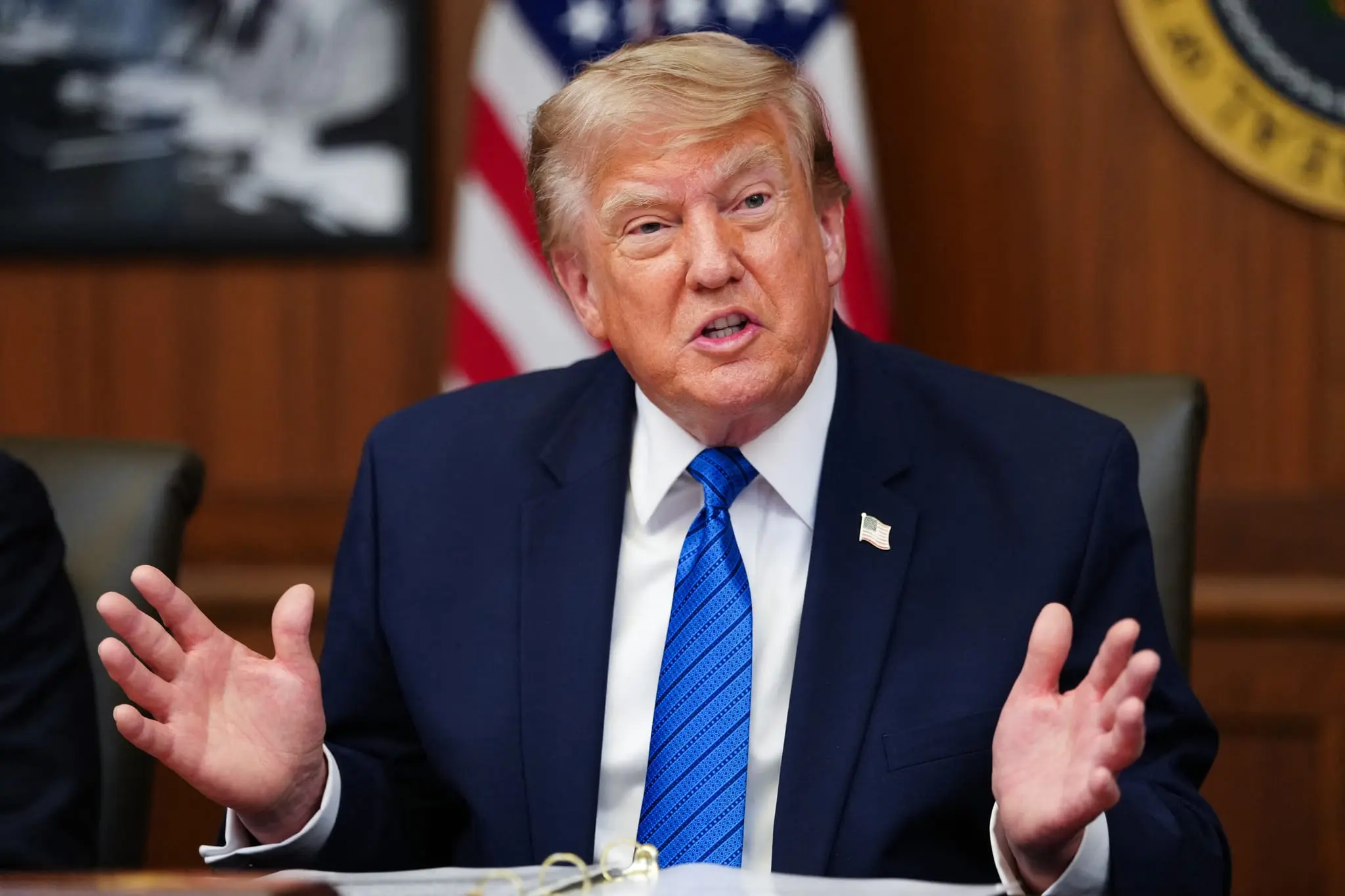
President Donald Trump announced July 30 that Hamas and other Palestinian armed factions have agreed to relinquish their weapons and control over Gaza under a phased plan intended to end the war, secure an Israeli withdrawal, and permit the territory’s reconstruction.
“Today, the Board of Peace reached a HISTORIC agreement for the COMPLETE DISARMAMENT of Hamas and all other armed groups in Gaza,” Trump announced, calling the agreement a “monumental step toward lasting PEACE and SECURITY.”
Hamas confirmed Friday that months of negotiations involving the U.S., Egypt, Qatar, and Turkey had produced an agreement. Ghazi Hamad, a senior Hamas official who participated in the talks, described it as a “difficult and painful” framework but insisted that Hamas would not begin surrendering control of its weapons until Israel stops its attacks, withdraws its forces, and fulfills other commitments from the October 2025 ceasefire.
Israel had not formally endorsed the new roadmap as of Friday afternoon. Trump nevertheless said that Israel was “very happy” with the agreement, while acknowledging that the process could encounter “ups and downs,” according to a July 31 Reuters report.
In a dispute that has stalled the peace process for months, Israel has maintained that its forces will not withdraw until Hamas has disarmed, while Hamas maintains that it will not disarm until Israel has withdrawn.
How the surrender plan would work
The 15-point roadmap calls for Gaza to operate under the principle of “One Authority, One Law, One Weapon.”
Hamas and other factions would surrender all civilian, administrative, policing, and security authority to the National Committee for the Administration of Gaza, or NCAG, a Palestinian technocratic body operating under the supervision of Trump’s Board of Peace.
When the committee enters Gaza, all weapons belonging to the Hamas-run police would be transferred to its authority. Police officers would undergo vetting, with qualified personnel incorporated into the new force and others offered civilian employment or retirement.
A second, more difficult stage would address Hamas’ military arsenal. Heavy weapons, weapons factories, storage depots, and tunnels would be decommissioned and placed under the Palestinian committee’s control. Other militias, including anti-Hamas groups armed by Israel during the war, would also be required to surrender their weapons.
No weapons would be transferred to Israel or to any other non-Palestinian body. Personal weapons would instead be registered and regulated under Palestinian law, with the NCAG serving as the only authority permitted to license or control them.
An International Stabilization Force would deploy between Israeli troops and Palestinian-controlled areas, help train a new police force, protect humanitarian deliveries, and support the weapons-transfer process. It would not perform ordinary policing duties among Gaza’s population.
Each stage would have to be certified by an International Verification Committee representing the ceasefire guarantors, the Board of Peace, and the stabilization force. Israeli troops would withdraw in phases as the committee verified that Hamas and other factions had fulfilled their corresponding obligations.
A Board of Peace official told National Public Radio that dismantling the military infrastructure could take between 200 and 350 days, though that estimate does not appear in the written agreement.
Israel’s opposition could still derail agreement
An Israeli official said the country would make “no withdrawal whatsoever” from its current positions unless Hamas first undergoes genuine disarmament, the Independent reported. Israeli National Security Minister Itamar Ben-Gvir called the proposal “unacceptable” and urged Israel to continue assassinating Hamas members and promoting Palestinian emigration from Gaza.
Israeli Prime Minister Benjamin Netanyahu has remained publicly silent. His government faces elections in October, and several members of his right-wing coalition oppose both a complete withdrawal from Gaza and the roadmap’s stated goal of creating a credible path toward Palestinian statehood.
The roadmap plan builds on the second phase of the Gaza ceasefire, which the Trump administration formally launched in January. That phase was intended to move beyond the hostage exchanges toward demilitarization, transitional Palestinian government, and reconstruction, but it stalled as Israel and Hamas accused each other of continuing violations.
Cardinal Pierbattista Pizzaballa, the Latin Patriarch of Jerusalem, warned earlier this year that peace initiatives would remain slogans unless accompanied by “concrete actions” capable of rebuilding trust.
The immediate test is whether Israel formally approves the roadmap. Only after all parties accept it does the agreement’s 14-day deadline begin for negotiators to establish a detailed timetable and implementation mechanism.




Comments