How a Virginia diocese is engaging with ‘data center alley’
As data centers introduce benefits and concerns, one diocesan official told Zeale News that leaning on Catholic principles and virtues can help approach the discussion from a place of confidence rather than fear.

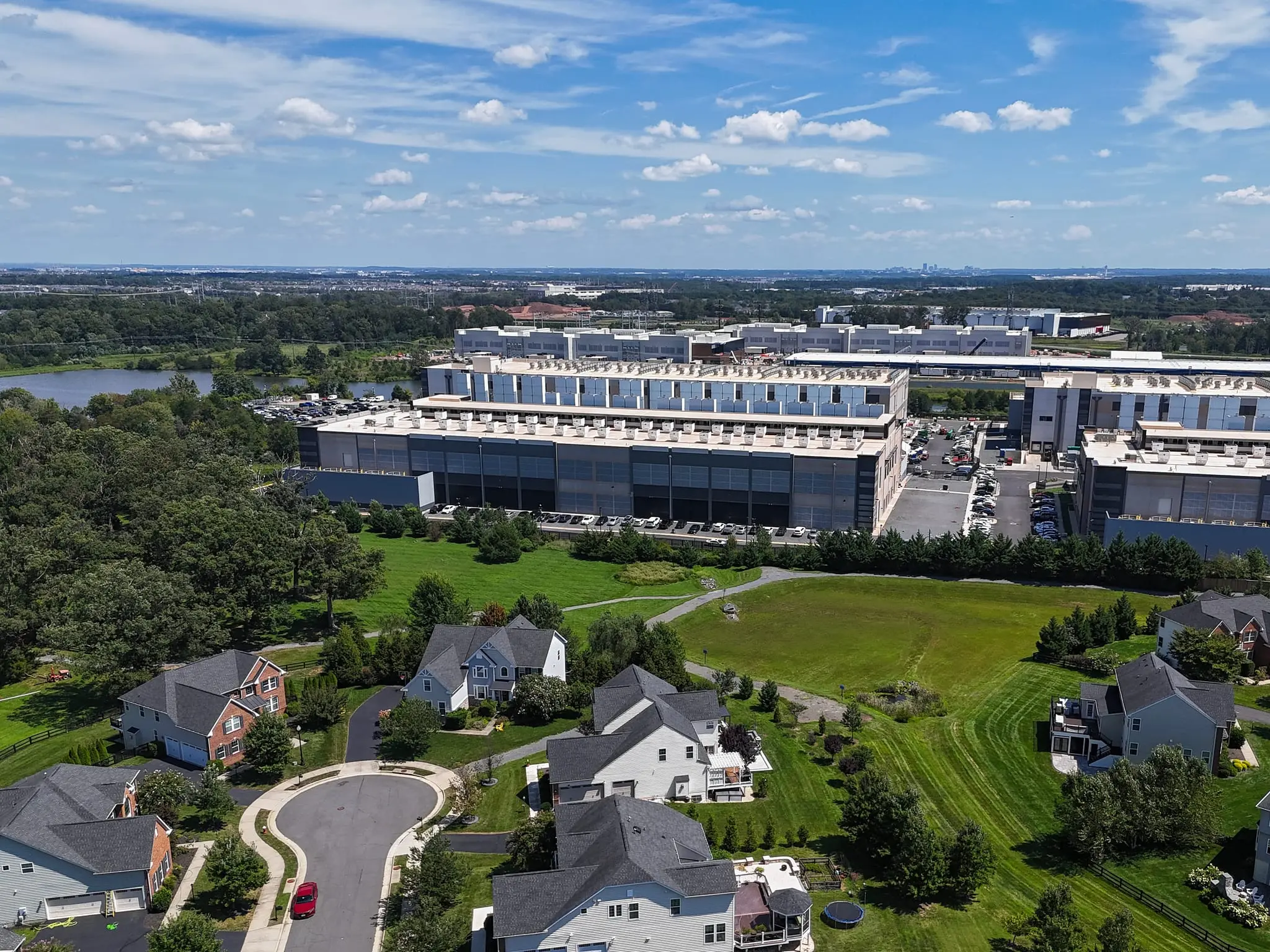
Residents of Northern Virginia share their landscape with more than 250 data centers. The noise, new jobs, and other factors introduced by these facilities have not gone unnoticed by local Catholics and their parishes, raising a new discussion around responsibility, virtue, and Catholic Social Teaching.
The Arlington Catholic Herald reported in early September how the presence of data centers — which have earned the area the colloquial name “data center alley” — has impacted parishes. Corpus Christi Church in Aldie, for example, is across the street from where a new data center is being built.
The church’s pastor Father Michael Taylor told the Herald he has heard “from parishioners who live close to the structures that the noise associated with the data center operation is constant — enough so that they are considering moving. There is an element of the unknown that can be unsettling.”
He also commented on the visual effect — describing how the massive, windowless buildings are replacing wooded areas and fields. In the neighboring county of Prince William, Holy Trinity Church parishioner Ken McCormack told the Herald that since 2022 he has noticed the increase in the buildings, adding that they are more than an “eyesore.”
“I understand the need for technological infrastructure — assuming we actually needed it — but it’d be nice if we benefited more directly from it,” he told the outlet. “The feeling I get is that the people in charge are making decisions regardless of public feedback.”
On occasion, data centers’ physical impact on a community extends beyond their walls. According to the Herald, a project is underway to build transmission powerlines connecting West Virginia’s Putnam County West with Frederick County, Maryland, to support data centers — and one of the lines would intersect the property of a century-old farm owned by a Catholic family in Winchester, Virginia. Chris and Carrie Bright told the outlet they have protested the proposal at public comment meetings and that they do not want to see a large powerline tower at the top of a hill near their property.
The powerlines would also go past St. Bridget of Ireland Church, whose pastor, Father Paul Grankauskas, told the Herald he thinks many people in Clarke County, including one of its governing boards, are “all dead set against this project.”
“People worry about the health issues, too,” he said. “What’s the result of having these big power lines run through here?”
Chris Bright told the Herald, “God gave man a mandate to be good stewards (of) the earth,” and warned that when construction developments trump conservation, “we’re not taking care of our planet and our environment.”
Seeing data centers as a necessity in the modern world
The Herald also spotlighted several local Catholics who work in the data center industry, noting that a number of them commented that the environmental concerns are improving and that they see the centers as necessary in the modern world. James Senson, a data center employee who formerly worked at a local church, told the outlet, “Anything you do in the first hours of waking up most likely involves a data center,” pointing to using a GPS or a weather app.
According to Senson, centers are improving their efficiency as well, pointing to how some have implemented diesel exhaust mitigating systems. “There are some data centers that still use water,” he said, “but it’s actually a closed loop, with the system designed to be more efficient to not waste water.”
Viviane Gbegnon, a parishioner of St. Mark Church who works at a data center in Ashburn, told the Herald that the idea of a data center simply containing computers and operating with minimal human oversight is an incomplete picture.
“It’s like a normal workspace,” she said, sharing that data centers have office spaces and a lunchroom, and her workplace has a composting system. She estimated that some data centers may have around 100 employees, and noted that she has seen her own coworkers benefit from the job opportunity.
“Before, people were working at McDonalds; they were not well paid,” she said, explaining that the new positions have better pay and benefits that help support their families.
Diocesan response: Embrace virtue, community, and responsibility
As the conversation continues, the Diocese of Arlington is looking to offer faith-based resources for Catholics to reference. Diocesan official Anna Knier told Zeale News the diocese has chosen artificial intelligence (AI) as the topic for the 2027 Peace and Justice Conference, an annual event open to the public. Knier is the coordinator for the diocese’s Peace and Justice Commission, which is tasked with informing the local faithful about Catholic Social Teaching and serving the bishop as a consultant.
She explained that Catholic Social Doctrine is especially helpful for engaging in discussion about data centers and AI, emphasizing that amid the fear introduced by major changes, one can stay grounded in faith.
“In every situation, large or small, principles and virtues can help us act with confidence,” she told Zeale News. “We group some of these principles into a category called ‘Catholic Social Doctrine,’ and it will be worth it for each of us to develop a working understanding of these principles, for example: human dignity, solidarity, and subsidiarity. We can measure policy proposals against real principles — as Catholics have been doing for generations. Rooting ourselves this way will be a consolation in a whirlwind of change.”
She pointed to Pope Leo XIV’s first encyclical Magnifica Humantias, which focused especially on the human person and AI.
“If we focus only on contingencies, we risk letting the succession of emergencies dictate the direction of our path,” the Pope wrote. “We are living through a rapid phase of transition, a ‘change of era,’ in which — while some are vying for the future of new technologies and others dedicate themselves to reflecting on the matter — most people are watching and waiting, observing from afar and merely hoping for the best.”
Knier continued, “The way we talk about it matters. Pope Leo emphasized this, ‘We must avoid humiliating or antagonistic words, opting rather for a clarity that sheds light and a frankness that unlocks new possibilities. We cannot condone naïve enthusiasms, nor fuel unfounded fears.’”
On the diocese’s part, she noted that there are about 20 parishes across Loudoun and Prince William Counties, and a number of them have ministries that parishioners serve at to take care of God’s creation. Further, clergy “are thinking carefully and deeply about AI,” she said, adding that leaning on the cardinal and supernatural virtues is important as well.
“People respond when something they value is under threat,” Knier continued. “Read the headlines about data centers, and you’ll see words like opposition, backlash, and pushback. Strain on the power grid, water shortages, e-waste, noise, job security, and land use all come up. Some people feel betrayed, and politicians are paying attention. Is it possible to redeem data centers from all that baggage?”
People have a responsibility amid this question to prioritize justice and protection of the human person, trusting in God’s grace and providence, according to Knier. She pointed to when Pope Leo wrote, “Each generation inherits the task of shaping its own era, of guiding history to become a place where the dignity of every person is safeguarded, justice is promoted and fraternity is made possible.”
“We ought to spare nothing in our attempt,” Knier concluded.
Maryland Catholic Conference supported a bill regarding data center development
Though Northern Virginia faces a uniquely challenging situation, the expansion of data centers is a reality for communities across the U.S. Earlier this year in the neighboring state of Maryland, the Catholic bishops’ public policy representative expressed support for HB 1534, a bill addressing data center operation. According to the Maryland Catholic Conference, the bill would regulate the expansion of digital infrastructure to protect communities, natural resources, and local economies.
“Data centers can bring economic benefits and technological advancement, but without proper standards, their construction and operation can create environmental challenges, excessive noise, and increased strain on infrastructure,” the conference said in a March 10 statement. “This bill provides clear guidelines to help balance economic growth with responsible land use and environmental protection.”
The bill would safeguard neighborhoods from disruptive noise and vibration, the conference added, and ensure energy and backup power systems are responsibly managed.
Like Knier, the conference also pointed to Catholic Social Teaching, saying it calls the faithful “to care for creation and to pursue development that respects both people and the environment.”
“The principle of stewardship reminds us that the Earth and its resources are gifts entrusted to our care, and we must use them responsibly for the benefit of present and future generations,” the conference continued. “By protecting agricultural land, addressing environmental impacts, and ensuring responsible oversight of large-scale infrastructure, this bill reflects a commitment to the common good and the dignity of all people who depend on healthy communities and ecosystems.”
Concluding, the conference emphasized that protection of agricultural land maintains rural communities’ character and supports the state’s economy and food system.
“Families benefit when development decisions prioritize public health, environmental stability, and long-term sustainability,” it said. “These protections help ensure that technological progress does not come at the expense of community well-being or environmental health.”
>> US bishops establish AI task force, urge safeguards on Capitol Hill <<
.jpg&w=3840&q=75)

Comments