Kelsey Reinhardt at Zeale for America 250: American Catholics, ‘Do not be afraid to be saints’
American Catholics are called to not merely admire the saints who trailblazed through U.S. history, but to “be the ones who come next,” Kelsey Reinhardt, president and CEO of CatholicVote, said at a patriotic prayer rally June 13.
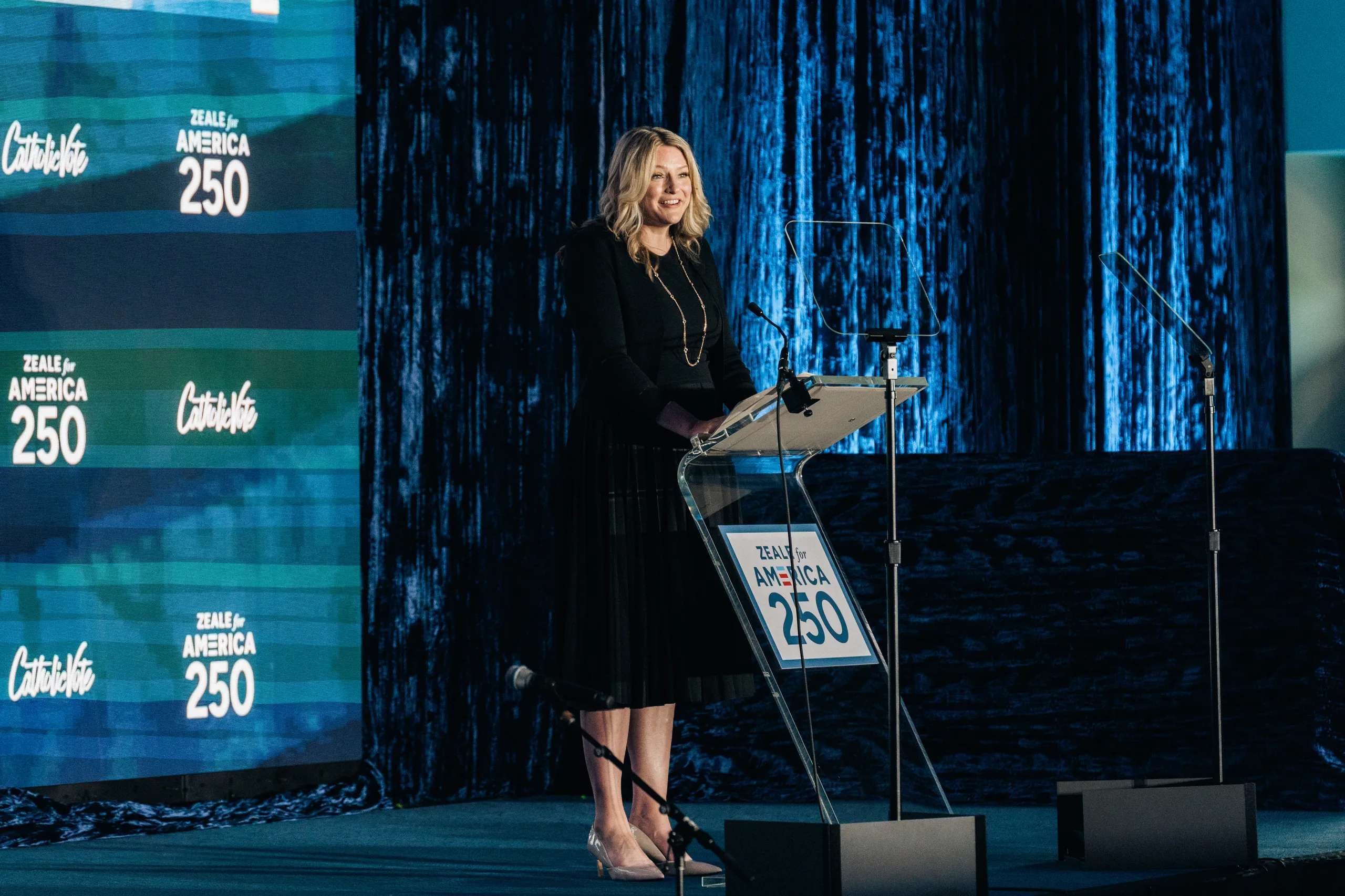
American Catholics are called to not merely admire the saints who trailblazed through U.S. history, but to “be the ones who come next,” Kelsey Reinhardt, president and CEO of CatholicVote, said at a patriotic prayer rally June 13.
Speaking to more than 700 people gathered for the Zeale for America 250 Rally in the La Crosse Center, Reinhardt — who previously spent nearly a decade with the Dominican Sisters in Nashville before discerning out and entering the world of Catholic media — began by sharing a core memory from the first year in the convent.
What she encountered that day, she said, marks the reason for the June 13 gathering in La Crosse, where prayer and patriotism converged for a historic moment of asking God’s blessing during the nation’s 250th anniversary.
Her address was met with a rousing standing ovation.
Read Reinhardt’s full address below:
It's a great day to be with you here in Wisconsin, celebrating America, and I'd like to begin with a little bit of a story. As many of you know, I spent a number of years discerning religious life with the Nashville Dominicans, so let me set the stage.
It was my postulant year, that year that you're filled with the fire of first love, with St. Francis-like abandon, you give away everything that you own, enter the convent, and take on its asceticisms. You wake up at 5am every morning, you go to sleep at 10pm, you live your life in silence.
And so, after a number of months, the sisters decided that they would take us to a home in Nashville, along the river, for a day of respite, sort of like after taking on all this asceticism, you just need a little bit of a break, so we go for our day off from our early religious life.
But the rain had other plans.
We were forced indoors, and a couple of us who had started a book club on ‘Witness to Hope,’ the definitive biography of John Paul II, decided to do a little reading, as you would imagine aspiring nuns would do. It was my turn when the chapter on World Youth Day began. I read the iconic words out loud as the rain somewhat softly drummed outside:
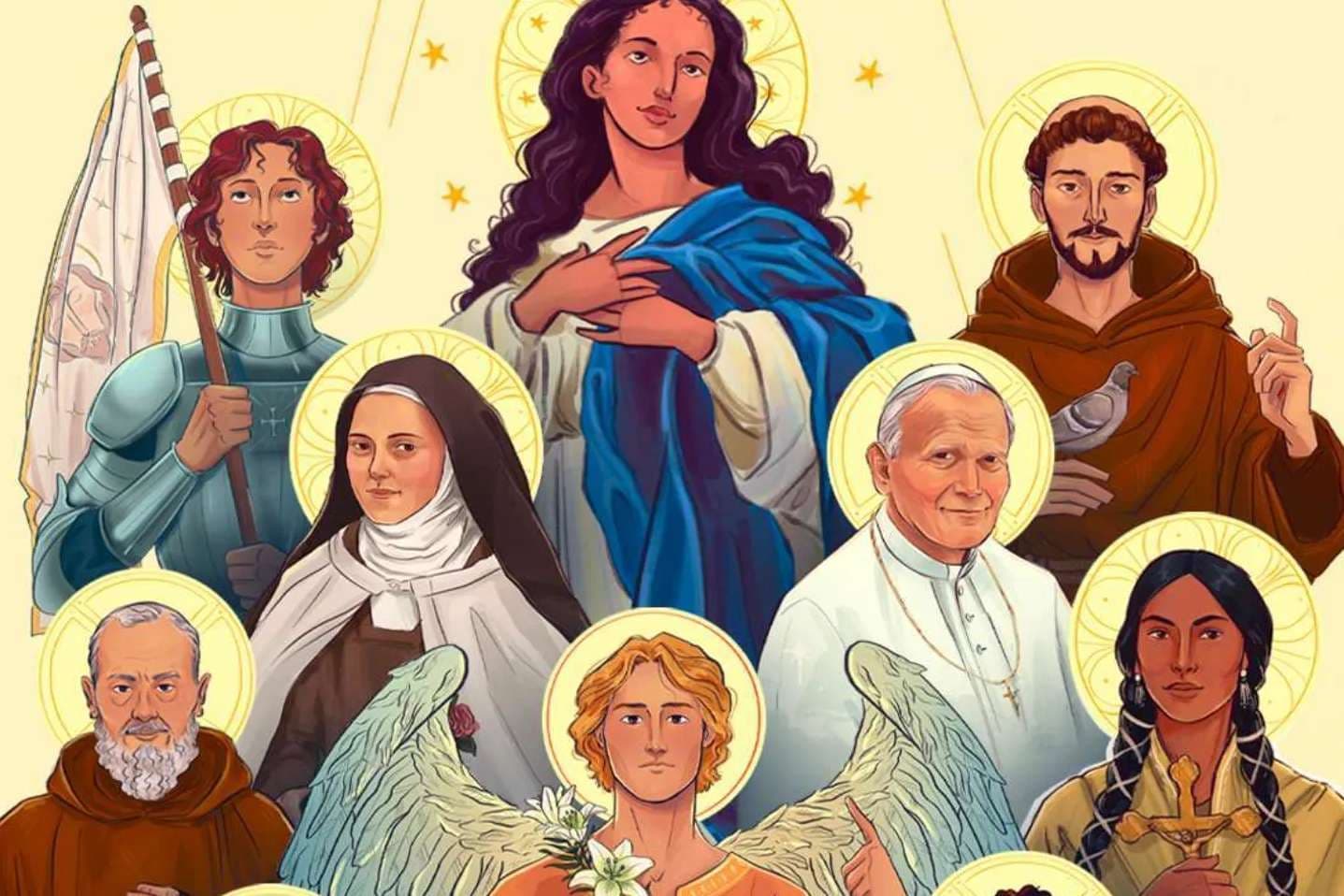
“Dear young people, do not be afraid to be saints!”
At that precise moment, the lightning crashed right outside the window, thunder rattled the roof, and the electricity went off.
Now, I don’t need to tell you, dear friends, what this wannabe nun made of that moment.
It was John Paul II speaking to us through the storm, calling us forward into the great mission of our lives, lighting again in our hearts that fire that had made us willing to lose everything in order to gain Christ.
Those words… and that moment, are why we are here today.
To dare to be saints.
As Leon Bloy once wrote with his characteristic ferocity:
“The only real sadness in life, the only real failure, the only great tragedy in life, is not to become a saint.”
Now, some of you may be thinking — and I wouldn’t blame you — that as important as that subject is, it belongs in a homily or a spiritual retreat, not in a speech at a patriotic gathering, and not in a reflection of America at 250. Bear with me. Because I believe these things are not separate. I believe they are, in fact, the very same thing.
So: what does it mean to become a saint? And why is it a tragedy not to become one?
When I taught in Catholic schools as a sister, my students had a recurring image of the saints: stained glass heroes, smooth, remote, lacking the beating heart of humanity, more or less predestined from birth — almost as if the angel had announced, “It’s a boy! It’s a girl! It’s a saint!”
But the word “saint,” it simply means holy — consecrated: someone set apart for Jesus Christ. Someone who has such a conformity with Christ that we recognize in his life Christ’s virtues lived to a heroic degree, Christ’s love made visible and particular, Christ’s kingdom advanced in ways that only that specific person, in that place and time, could have advanced it.
Most of us live in the gap between the person we are and the person we are meant to be. Saints live closer to closing that gap — closer to revealing to the world who man truly is.
And this is why it is a tragedy not to become a saint. Not because of some abstract standard of perfection, but because to refuse the saint’s path is to settle for a lesser version of yourself — the version that keeps you up at night, the version that whispers you could have been more, done more, loved more.
The real history of the world, as John Paul II once intimated, is not written in the chronicles of kings and empires. It is written on the conscience of human beings, to be fully revealed on the last day — where grace moved and was welcomed, where it was offered and turned away. That history is the only history that will ultimately matter. And its heroes are often not who we expect: Think of the hero in C.S. Lewis “Great Divorce”: the ordinary Sarah, who is given a seat of honor, while we can imagine, Monsignor So-and-So sits very down low at the end of the table.
What does this have to do with America?
Everything.
Because if you want to know what saints do to a nation — look at what they have already done.
And as Catholics, we know a little secret: this country is far more Catholic than we get credit for.
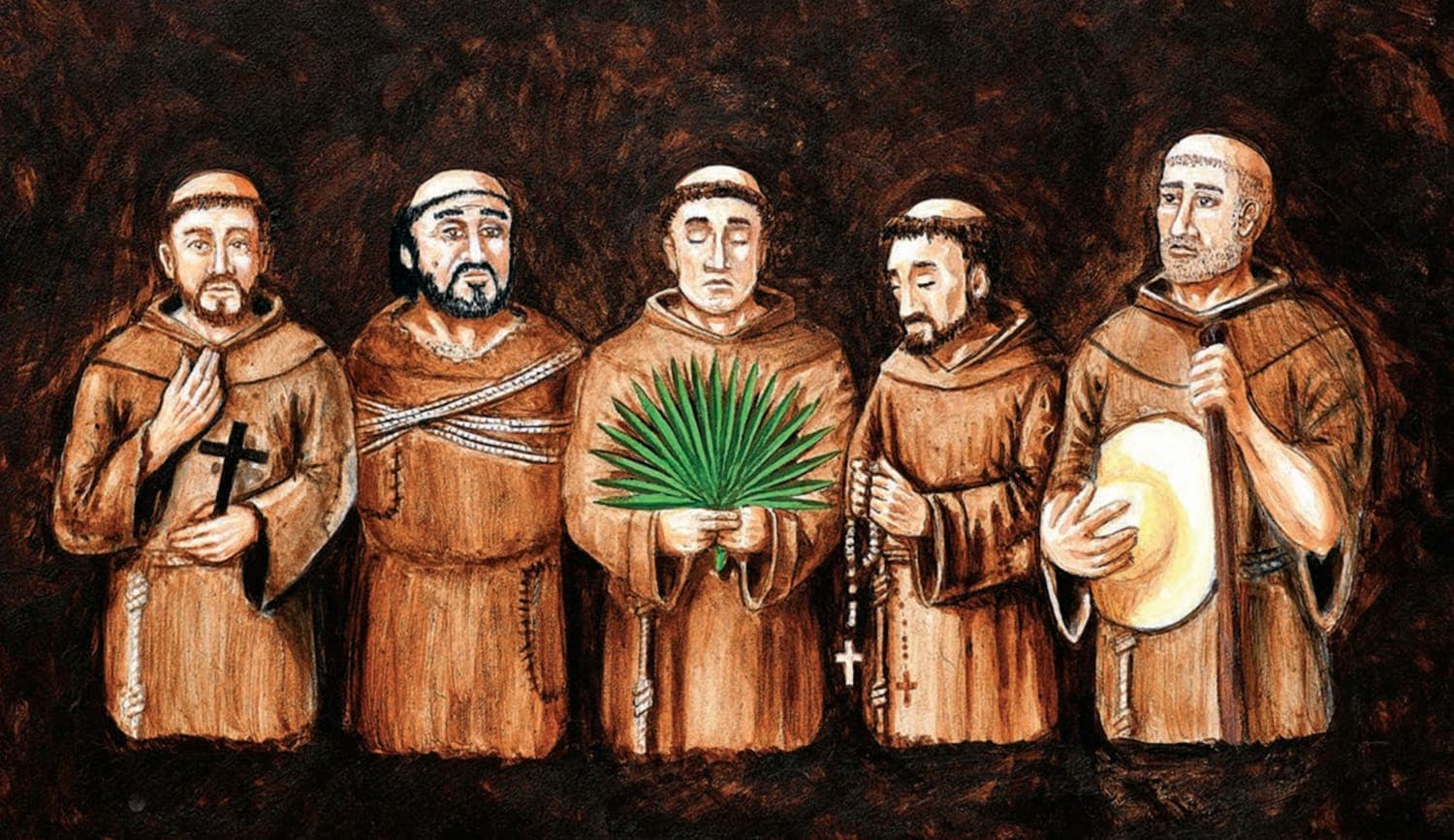
The Wall Street Journal editorial page reminds us every Thanksgiving of the story of Squanto — a deeply Catholic story — one in which providence moved through a single baptized native to preserve the fragile colony and set in motion a civilization. Squanto, you may remember, was kidnapped in 1608 and taken back to England; there he was bought by the Franciscans, baptized and freed; and made his way back to Plymouth in the ship that would be the first to survive the winter. How did they survive? Because Squanto had grown up there. And in his perfect English, he told them how to survive the winter.
Our Secretary of State recently invited us to take a look at the very names on the land and remember how deeply Catholic this country is. Saint Louis, Missouri. Saint Augustine, Florida. Sacramento, California. The Spanish and French missionaries who gave these names were not being sentimental. They were performing an act of consecration — claiming the continent, one place at a time, for the kingdom of God.
And let’s not forget St. Nazianz, St. Cloud, St. Germain, and St. Marie, testimonies of Catholic histories here in Minnesota and Wisconsin.
And as fate would have it, we are in the city of La Crosse, named after the traditional Native American game. Why was it named that? Because the curved wooden sticks used by the players reminded the French of a bishop's crosier, and they referred to the game as "la crosse". I mean, can we get more crypto-Catholic than that?
We have French Jesuit explorers whose names are now mostly unknown. I grew up 45 minutes from Lake De Smet in Wyoming, named for the great Jesuit priest who evangelized the Crow and the Blackfoot — a man who once rode alone into a gathering of thousands of Sioux warriors to broker peace. Father Marquette, who paddled the Mississippi with Jolliet and planted the Cross at the continent’s heart.
How can we forget Father Jogues and his companions in New York and the beautiful fruit of those deaths, the Lily of the Mohawks, Kateri Tekakwitha?
And then there are the institutions that built America. How many of the great colleges and universities of this republic arose through the labor of priests and religious? The Georgetowns and Notre Dames, the Gonzagas and the Colleges of the Holy Cross — centers of learning built not from government endowments but from the sacrificial love of men and women who believed, at least at their founding, that truth, beauty, goodness and the Gospel belonged to every American child.
Consider Vince Lombardi — the son of a Brooklyn butcher, a product of minor seminary, shaped from boyhood by the Jesuit tradition. He built his entire coaching philosophy on that Jesuit tradition: principles of discipline, character, and sacrificial excellence, and became the man after whom the Super Bowl trophy is named. A daily communicant, his grandson is with us here today — carrying on not just the coaching legacy, but, most importantly, the faith that made it possible.
So returning to the saints that built America, after Elizabeth Ann Seton crossed the Tiber, Catholic schools began to spread across this young republic: the mother of four giving all American children not just education but formation. Katharine Drexel — heiress to a Philadelphia fortune — went to Rome to plead with Pope Leo XIII about the lack of Catholic education for Black and Native Americans. The Pope’s answer was simple and devastating:
“Why not become a missionary yourself?”
So she gave away every dollar of her inheritance and founded a religious order. On the backs of women like her, the hospitals rose, orphanages opened, and the most abandoned souls in America were claimed as children of God.
Through cholera outbreaks and yellow fever plagues, the nuns came — wave after wave. In Memphis, until just a generation ago, all religious could ride the city bus system for free, in permanent recognition of the sisters who had volunteered by the hundreds to nurse dying patients during the epidemics of the 1850s and 1870s, many of them dying themselves. The city did not forget. It could not.
In the growing urban America, the Venerable Father Augustus Tolton would launch, against all odds, a ministry focused on serving the spiritual and physical needs of African Americans, championing racial reconciliation, beginning the first African American parish, a parish that stands still to this day, St. Monica’s.
In the Southwest, one of my favorite saints, at least on her way, Sister Blandina Segale was — quite literally — taming Billy the Kid. After unknowingly tending the wounds of his fellow gang member, she was able to save the lives of four doctors from being scalped, when she asked a favor from him in return for caring for his fellow robber. At the same moment, across the continent, Frances Xavier Cabrini was founding orphanages in New York City for the abandoned children of immigrants, calling them to the Sacred Heart — a devotion that would echo, decades later, in Father Flanagan’s Boys Town.
And then the great leaders-saints: Bishop John Neumann, following Elizabeth Ann Seton, became the architect of the American Catholic school system. Father Francis Seelos, the gentle Redemptorist serving immigrant communities in Louisiana. Father Damien de Veuster, the hero priest who volunteered to minister to a leper colony on the Hawaiian island of Molokai, knowing full well he would never leave. Neumann from what is now the Czech Republic; Seelos from Germany; Damien from Belgium — the providence of God drafted them all into the service of this land, and in spending themselves entirely for it, they made it holy.
Everywhere, at every turn, in every age and in every corner of this republic, the American saint plowed and planted, dedicated and determined to remind men and women that they are made in the image of God and therefore capable of becoming like Him.
And let’s not forget the faithful army of silent Catholics who also shaped the history of America: the soldier, the mother, the barber, the hardworking dad. Greatness is also found in the ordinary, as Chesterton so often reminds. Our beloved Bishop Fulton Sheen, soon to be beatified, always stressed the importance of the faithful filling the pews; the “saints next door,” especially in times of crisis in the Church.
This is what he said:
“Who’s going to save our Church? It’s not our bishops, it’s not our priests and it is not religious. It is up to you, the people. You have the minds, ears, and the eyes to save the Church. Your mission is to see that the priests act like priests, your bishops act like bishops and the religious act like religious.”
And all of this brings us to now.
To this moment.
To yesterday. And to tomorrow in your office, your home, your parish, and every corner you can reach, when you consecrate your heart and your loved ones and your work to the Sacred Heart of Jesus.
I want you to hear me when I say this: the consecration of this nation to the Sacred Heart of Jesus may be the most important moment in the history of the United States since its founding.
That is not hyperbole. It is history — the history of what consecrations do, and what their absence costs.
When Our Lord appeared to Saint Margaret Mary Alacoque in seventeenth-century France, he begged for Louis XIV to consecrate France to his Sacred Heart. The request was received, acknowledged, and never completed. In the centuries that followed, the streets of Paris ran red with blood six different times. France paid a terrible and prolonged price for what was left undone.
When Our Lady appeared to three shepherd children at Fatima, she requested the consecration of Russia to her Immaculate Heart. For decades, the request was deferred. Pope St. John Paul II completed that consecration in 1984. Within just five years, the Berlin Wall fell — not through war, not through bloodshed, not through anything other than a revolution of truth and prayer. An empire built on lies was not defeated by armies. It was defeated by grace — grace that had been formally, publicly, solemnly invited.
That is what consecration does.
We stand here today fully aware that much in our own land is darkness. The explosion of pornography. Legalized sanction of the killing of innocents. The devastation of no-fault divorce, which scattered a generation of children like seeds on concrete. The ideological capture of schools and institutions. The promotion of inanity, vulgarity, and blasphemy as entertainment. These things are not exaggerations. They are the landscape of a culture that has become like cut flowers: still retaining some beauty on the surface, but severed from the roots that gave it life, and beginning to wilt.
It is easy to despair. More than easy — it is tempting, reasonable, understandable.
But let us, for a moment, anchor our hope not in present circumstances but in proven reality. Let us remember when The Bells of Saint Mary’s and The Song of Bernadette represented the highest artistry in our land. When Catholic schools turned out not just scholars but citizens, gentlemen, and gentlewomen. Let us go further back — to when Los Angeles was truly a city meant to honor the angels, to when the streets of San Francisco were consecrated ground before they were gold rush territory. Let us go all the way back to that first Mass offered on a beach in Saint Augustine, Florida, on a September day in 1565, with broken shells scattered across the sand — when someone knelt before the Blessed Sacrament and called down upon this new land the graces purchased by the Precious Blood of Jesus Christ.
That prayer was heard and answered in the abundant fruit we see across three centuries and a continent.
I bring this past up not merely as nostalgia but as evidence that evil is not inevitable. Wherever evil had its way — in leper colonies and broken cities, in plague wards and the frontier, in Hollywood or the home — grace came, saints came, and beat it back, and made justice flourish. Every hospital, every school, every orphanage, every peace treaty brokered by a Jesuit in a war canoe — yes, that happened — every nighttime prayer of children tucked in by mother and father is proof: the future is not one of inevitable decline.
It is not.
Despair simply has no calculus for change.
But grace does.
The saint is simply a person who has allowed God to do something in him that he could never do alone. He does not know quite how it happened. He only knows that what was once impossible has become possible — and so he stands in the breach and does what no one believes can be done. He becomes Christ to his neighbor. He kneels in adoration before God and commits his small, faithful, unremarkable undertakings to the God who desires salvation — and miracles result.
This is how nations are built, this is how nations are transformed. This is how my patron saint, St. Joan of Arc, won back France. And today, is the path to a genuine renewal — one that reaches deeper than politics and rises higher than any election.
My friends, we began this evening under a stormy sky in Nashville, where lightning flashed and the lights went out and a young postulant heard, in thunder, a voice calling her forward.
Let yesterday’s consecration be today’s lightning strike.
Let the Sacred Heart, now formally claimed as the heart of this nation, set the rhythm by which we live and act and love.
And let justice — true justice, the justice of the saints — roll like thunder across this land for the next 250 years.
My dear fellow Americans, I will borrow a line from St. John Paul II: Do not be afraid to be saints.
It is the only adventure worth living. It is the adventure that built the best of what this country has ever been — from its fight for life, to its football trophies, to its quiet daily Masses. And it is the adventure — the only adventure — that will ultimately rebuild this nation at the top of God’s hill.
The beauty of it — the extraordinary, overwhelming beauty — is this: you and I are not called to admire the American saints who came before us.
We are called to be the ones who come next. Go forward bravely!



Comments