Op-ed: The late Scott Adams: Genius? Racist? Christian?
Dilbert’s cartoonist is called everything from a genius to a racist, and many have difficulty explaining his late — and idiosyncratic — conversion to Christianity
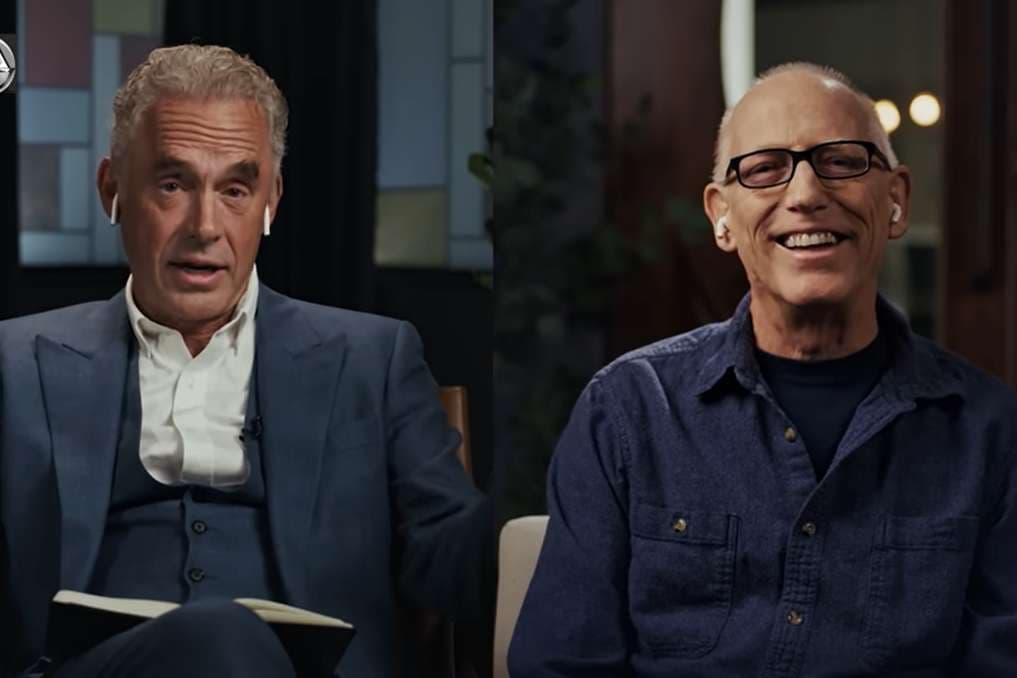
The many obituaries of the recently departed Scott Adams present Dilbert’s cartoonist as everything from a genius to a vile racist, and many display difficulty explaining his late — and idiosyncratic — conversion to Christianity.
I share in the general confusion. As a long-time fan of his work, I can say with certitude that Adams was not a simple man, and any attempt to fit him into a box proves foolhardy.
Adams began a corporate career in 1979 with hopes of rising through the ranks of management. He quickly came to think that professional life is full of annoyances, incompetence, and stupidity. Adams channeled his professional frustrations into Dilbert, which began publication in 1989 while he was still working at Pacific Bell. It depicted the trials of Dilbert, the everyman employee who is constantly faced with exaggerated forms of the byzantine bone headedness every office worker knows well.
By his own account, Adams’ success in comics is thanks to two experiences of racial profiling. He was told by bosses on two occasions that, while they appreciated his work, they weren’t able to promote him further at that time. They explained that corporate rules stipulated the need to have more diverse managerial staff, meaning, in effect, that they were not allowed to promote white men at that time.
In 1995, Adams quit his job and threw himself into cartooning full time. Adams’ work struck a chord, and today Dilbert is beloved by millions around the world, spawning a cult-classic cartoon and an astounding amount of licensed merchandise.
In addition to more than 50 Dilbert collections, Adams authored about a dozen books of prose (often accompanied by illustrations or Dilbert strips). Some published in the 1990s and early 2000s, like The Dilbert Principle, The Joy of Work, and (my personal favorite) The Dilbert Future, made use of Adams’ most famous creation’s likeness to sell books about office life. Over time, Adams began to branch out from his original wheelhouse, publishing two philosophical novels and several self-help books.
Adams’ fame grew further in 2015, when he began writing about politics. Adams applied his razor-sharp wit to Donald Trump’s presidential campaign. Alternatingly hilariously insightful and bewilderingly strange, Adams argued that Trump was a “clown genius” and “master persuader” who was capable of driving the conversation about any topic. In 2017, he published a book version of his reflections, Win Bigly: Persuasion in a World Where Facts Don't Matter.
A unique blend of cynic, pragmatist, and positivity guru, Adams outlined his personal philosophy across several other books, chiefly 2013’s How to Fail at Almost Everything and Still Win Big and 2023’s Reframe Your Brain: The User Interface for Happiness and Success.
In 2018, he began a daily podcast, initially on YouTube, called “Real Coffee with Scott Adams.” Each morning, Adams would sit down with his cup of coffee and discuss everything from world events and cartooning to the power of personal affirmations and his theory that the world is a simulation.
In 2023, his professional life came crashing down because of comments about race he made on the podcast. Adams made these comments in response to a poll about the statement “It’s okay to be white.” Forty-seven percent of black respondents said that they either disagreed with or were unsure about the statement. He argued that, if half of a group supports — or at least refuses to oppose — hateful rhetoric, that group is, by definition, a hate group. He then said that his advice to white Americans was to “get the hell away from black people… because there’s no fixing this… You just have to escape.”
Within a week, newspapers across the country had dropped Dilbert, and Adams’ syndicate announced they would no longer distribute his comics.
In response, Adams told Chris Cuomo that he was not a racist, and that it would be “stupid” to be racist because people should be judged as individuals. He explained that he was using a rhetorical strategy to encourage a more serious conversation about race relations in America.
Adams, who said he lost 80% of his income because of backlash to the comments, continued to host “Real Coffee with Scott Adams,” write non-fiction, and publish his comics online as Dilbert Reborn.
In May 2025, Adams announced that he had been diagnosed with prostate cancer and that it had spread to his bones. The disease took his life earlier this month.
As his friend and musical collaborator, Akira the Don noted in his musical tribute to Adams’ life that Adams went through his battle with cancer in public, working through the pain to give his followers the same message of hope that he had always tried to communicate.
In his tribute, Akira spoke about how, in the contemporary world, we are afraid of death and try to hide it away from view.
“Scott showed us something that we rarely see in our modern world,” he said.
“Scott showed us the bravery of a man staring the unknown directly in the eyes — unflinchingly, unafraid... What a privilege to exist at the time of such a man.”
Mere weeks before his death, Adams announced, in his characteristically tongue-in-cheek way, his intention to become Christian. Using the logic of Pascal’s Wager, he said that the “risk-reward” calculation made the decision easy.
In a final letter posted on X Jan. 13 after his death, he said, “I am not a believer,” but explained the risk calculation and that he was nonetheless placing his hope in Christ.
“I accept Jesus Christ as my lord and savior, and I look forward to spending an eternity with him,” he wrote. “The part about me not being a believer should be quickly resolved if I wake up in heaven. I won't need any more convincing than that. And I hope I am still qualified for entry.”
Christian social media users have been hotly debating whether or not this represented a genuine conversion. But, in my view, it is not for us to say.
Adams’ soul is in God’s hands. All we can do is be grateful for Adams’ life and work and pray for the repose of his soul.
Requiescat in pace.



Comments