Ortega vows to end elections in Nicaragua; Rubio calls for international isolation
The Sandinista leader said the opposition will never again be allowed to seek power at the ballot box, extending an authoritarian project that has also devastated the country’s Catholic Church.
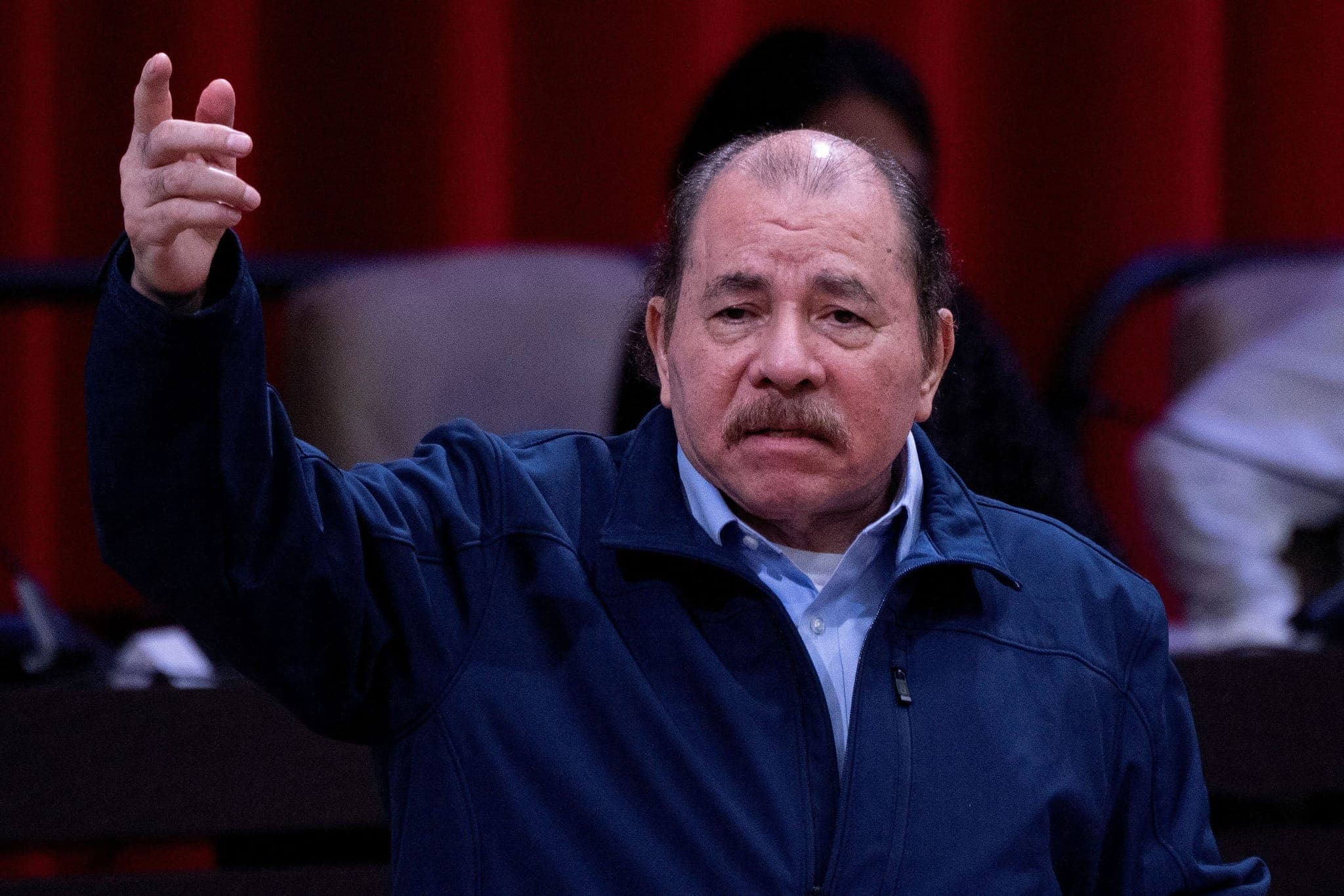
Nicaraguan President Daniel Ortega declared July 19 that his government will no longer hold elections, placing the country’s scheduled 2027 vote in doubt and closing the last nominal path for opponents to challenge the family dictatorship he leads with his wife, co-President Rosario Murillo.
“There won’t be any more elections here for them to try to seize the government and seize power,” Ortega said during a ceremony marking the 47th anniversary of the Sandinista Revolution.
The 80-year-old leader, making his first public appearance in two months, said the days when U.S.-backed parties or supporters of the former Somoza dictatorship could return to power were over.
Ortega provided no detailed legal mechanism for abolishing elections. Nicaragua’s Constitution still requires general elections every six years, but Ortega said his government would work with the Sandinista-controlled National Assembly to enact laws placing a “wall” between opposition parties and political power.
The declaration follows sweeping constitutional changes approved in 2025 that elevated Murillo from vice president to co-president, extended presidential terms from five to six years, and placed Nicaragua’s legislative, judicial, and electoral institutions under the presidency’s authority.
The reforms extended Ortega and Murillo’s current term until 2028, moving the next scheduled election from 2026 to November 2027.
Ortega had already virtually eliminated electoral competition before making his latest declaration. Ahead of Nicaragua’s disputed 2021 election, his government arrested dozens of opponents, including seven potential presidential challengers. Ortega and Murillo subsequently claimed nearly 76% of the vote in an election the U.S. government and other international observers refused to recognize.
Rubio calls for international isolation
U.S. Secretary of State Marco Rubio responded July 21 by urging other governments to isolate the Ortega-Murillo regime.
Ortega’s latest statement “lays bare their true authoritarian nature,” Rubio said in a State Department statement. “Daniel Ortega and Rosario Murillo have abandoned even the pretense of popular consent.”
Rubio said the Nicaraguan people have a right to choose their leaders through democratic elections and called on the international community to show that the dictatorship “cannot expect to maintain business as usual with other nations” while attacking democratic principles.
In a separate post on X, Rubio said the Trump administration and international community “will not stand by” as the regime deepens domestic repression and creates instability threatening U.S. national security. Ortega’s announcement, he added, demonstrates “his cowardice and fear of the will of the Nicaraguan people.”
Rubio did not immediately announce additional sanctions. The U.S. government imposed visa restrictions on more than 100 Nicaraguan officials and their relatives in June.
Catholic persecution continues
Ortega’s declaration comes amid renewed alarm over the persecution of the Catholic Church and the unknown whereabouts of Bishop Emeritus Juan Abelardo Mata of Estelí.
Bishop Mata, 80, was repeatedly detained after he celebrated a June 28 Mass and prayed for Nicaragua’s persecuted Church and exiled clergy. Although the government claims it returned him to his residence, relatives and Church sources have said they are unable to see him or independently verify his condition.
Exiled Auxiliary Bishop Silvio Báez of Managua condemned the police action against Bishop Mata, saying the regime’s “cowardly actions only demonstrate the weakness and irrationality of a criminal dictatorship.”
The persecution extends well beyond individual clerics. Christian Solidarity Worldwide documented 309 religious-freedom cases during 2025, up from 222 the previous year. The organization reported that religious leaders have been forced to report weekly to police, request government permission for ordinary activities, endure surveillance inside churches, and face arbitrary detention.
Since the 2018 uprising against Ortega, Nicaragua has also closed more than 5,000 organizations, many of them religious, and forced thousands of Nicaraguans into exile.
Earlier reports from CatholicVote document the regime’s seizure of a Catholic seminary and pastoral center, its expulsion of Nicaraguan Episcopal Conference President Bishop Carlos Herrera, and its reported ban on priests administering Last Rites in public hospitals.
The regime also imprisoned Bishop Rolando Álvarez, sentencing him to 26 years for “treason” after he refused exile. Bishop Álvarez spent more than 500 days in custody before being released and exiled to Rome in January 2024.
.jpg&w=3840&q=75)

.jpg&w=3840&q=75)

Comments