Pope Leo calls Catholics to defend the God-given dignity of every person
Drawing on Vatican II, the Holy Father traced the worth of every person to God’s love and called the faithful to protect it in themselves and others.

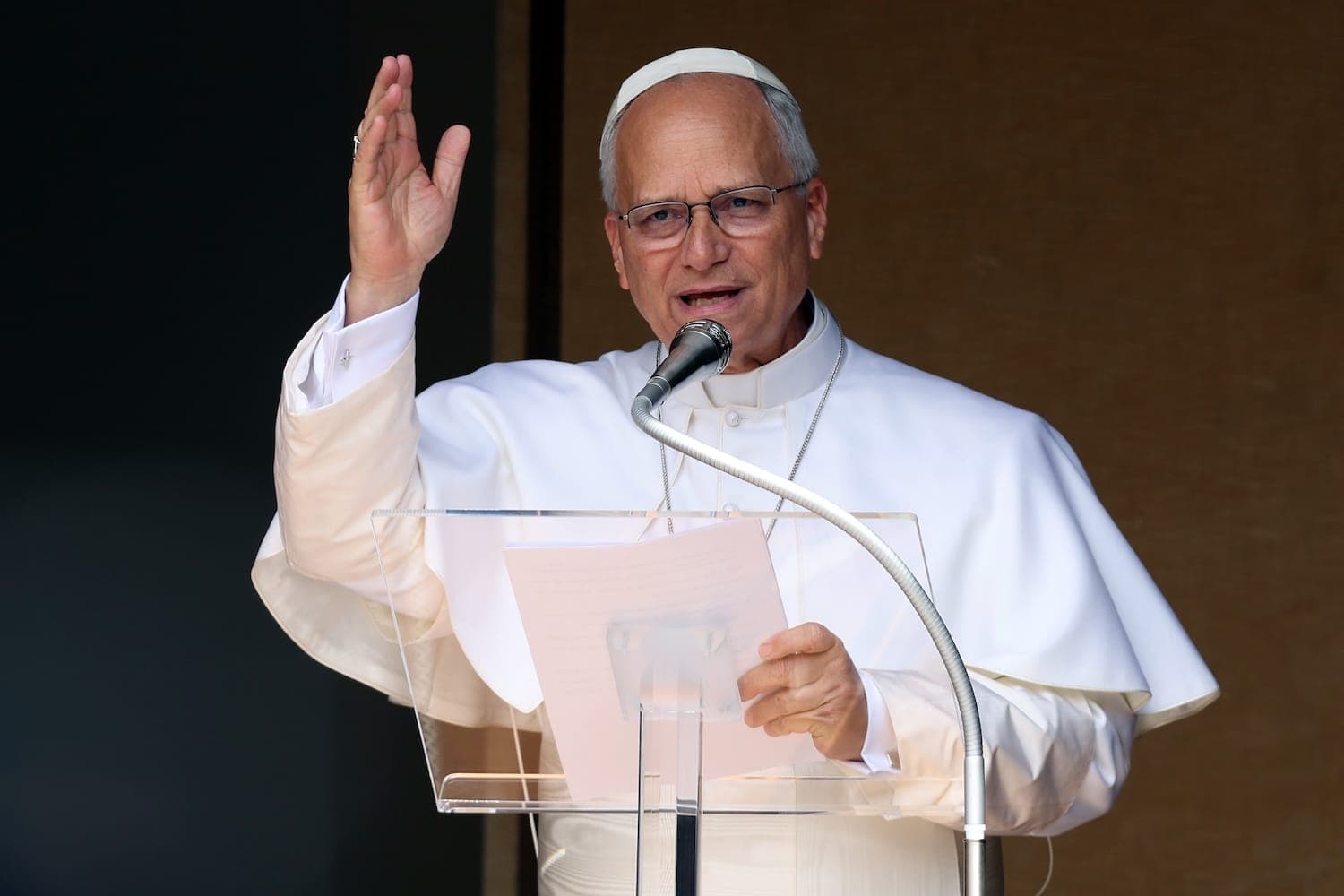
The human person is made not for self-focused isolation, but for communion, and is called to give of oneself through relationships and service to others, Pope Leo XIV said in his Sept. 9 General Audience.
The Pope continued his catechesis on the Second Vatican Council’s pastoral constitution Gaudium et Spes, focusing on its teaching that human dignity is both a gift and entails responsibility.
“Every human person is planned and willed by God to enter into communion with Him, with others and with creation. Human dignity does not depend on a person’s abilities, wealth or position in life, nor on the right or wrong choices made; instead, it is a gift that precedes and transcends each person, endowed by God as an expression of His unfailing love,” the Holy Father said, citing his recent encyclical, Magnifica Humanitas.
That God-given identity, Pope Leo explained, shapes how people understand themselves and relate to others.
“The person always implies relationship, communion and participation in relation to God and to others; hence, a filial relationship with God the Father and a fraternal relationship with Christ and with all humankind,” he said. “It excludes self-centred isolation. To be a person means to perceive oneself as a gift to be shared, growing and maturing through acceptance, reciprocity and service.”
That gift also carries a responsibility to recognize and defend the dignity of others.
“This dignity is entrusted to the responsibility of each person: at the same time, it also demands solidarity and mutual care, overcoming the many falsifications and manipulations that still disfigure our perception of it and hinder its realization,” Pope Leo said.
Turning to the dignity of the whole person, the Holy Father emphasized the unity of body and soul taught in Gaudium et Spes, denouncing objectification of persons.
“Reducing the body to an ‘object’ to be disposed of arbitrarily is always a denial of the dignity of the person: ‘man is not allowed to despise his bodily life’ and ‘is obliged to regard his body as good and honourable since God has created it and will raise it up on the last day,’ while ensuring that it does not become enslaved by ‘the evil inclinations of his heart,’ since we are all wounded by sin,” he said.
Pope Leo then pointed to the work of the Holy Spirit in the lives of the faithful.
“The Holy Spirit, who gives life in Christ, makes us free and constantly assures us of our dignity as children of God, delivering us from fear and guiding us towards the ultimate goal, that life in its fullness beyond death which Christ has promised us,” he said. “It is only in Him that the mystery of the human person finds true light; from Him we receive light on the enigma of suffering and death; and with Him we journey towards the Resurrection.”
The Holy Father concluded with a call to defend that dignity, urging: “Let us commit ourselves to promoting and defending it always, with the light and strength of the Gospel.”





Comments