Santa Fe archbishop releases statement on Muslim neighbors' right to worship amid mosque controversy
The archbishop argued that supporting the right to the construction of a mosque is consistent with the Church’s tradition on the importance of religious liberty.

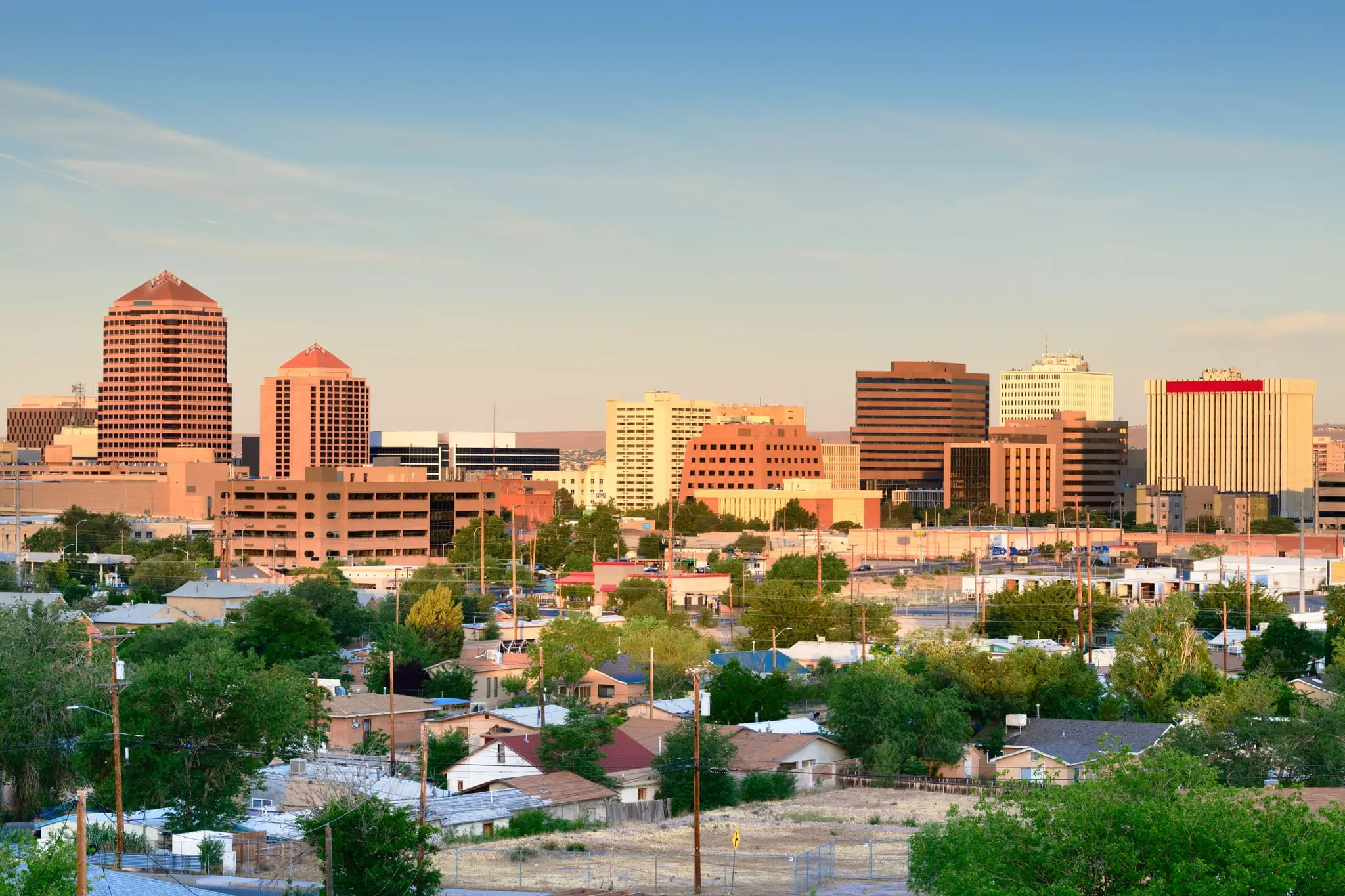
Amid community controversy over the construction of a mosque in Albuquerque, New Mexico, the Catholic bishop of Santa Fe issued a statement this week in support of Muslims’ right to worship.
Archbishop John Wester, who has served as Albuquerque’s archbishop since 2015, said in the July 27 statement that he has heard concerns from some residents in recent weeks regarding a proposal to build a mosque and community center in the North Valley of Albuquerque.
He said that as the local archbishop and a resident of the city, “I feel compelled to speak clearly and pastorally: our Muslim neighbors have the same God-given and constitutionally protected right to worship freely as every other faith community, including our own.”
“Defending that right is not only a civic duty but a core element of Catholic teaching,” he added.
According to a July 3 report from news outlet KOAT, an affiliate of ABC and CBS, the proposed mosque had been met with an appeal from a North Valley neighborhood association, spearheaded by resident Patrick Hauser. In a statement, Hauser cited concern for traffic safety, infrastructure, zoning law, and planning policies.
Another person, who was not named in KOAT’s report, expressed opposition to the proposal saying, “It's written in the Bible that Satan will have authority to come and behead the Christians, and if anybody is going to do it, it's gonna be the Muslims.”
According to the outlet, the mosque’s construction was ultimately approved to proceed during a planning commission July 1. The outlet added that plans for the construction can still be appealed.
Archbishop Wester cited the Catholic Church’s teaching on religious liberty to support the mosque’s construction. In his statement, he said the Church’s teaching has long been affirmed “as essential to human dignity.” He said that Vatican II taught in Dignitatis Humanae that “every person ‘must be free from coercion’ in matters of faith,” and added that this principle “applies universally.”
“It is not limited to Catholics or Christians; it extends fully to Muslims, Jews, and all people who seek to worship according to their conscience,” he wrote. “Supporting the construction of a mosque is therefore entirely consistent with our own tradition and moral commitments.”
“At a time when divisions can easily deepen, I urge our community to choose respect, dialogue, and peaceful coexistence,” he continued. “We do not need to share the same beliefs to share the same neighborhood. What we do need is a willingness to listen, to learn, and to recognize the face of a neighbor rather than a stranger. Interfaith relationships enrich our civic life and strengthen the social fabric we all depend on.”
The archbishop also denounced anti-Muslim sentiment and encouraged people to foster the virtue of hospitality.
“I must also speak plainly: anti-Muslim sentiment has no place in the heart of a Christian,” he said. “Any hostility toward Muslims — whether expressed through rhetoric, suspicion, or opposition to their places of worship — is incompatible with the Gospel of Jesus Christ, who commands us to love our neighbor without exception.”
“Fear of the other is not a Christian virtue. Hospitality is. Our Muslim brothers and sisters have faced discrimination and hostility in many parts of the country,” he concluded. “When such prejudice arises, Catholics are called to stand beside them, not apart from them. Supporting their right to build a mosque is one concrete way to affirm their dignity and to reject the forces that seek to marginalize them. I encourage us all to welcome this project with goodwill. A neighborhood that makes room for the prayers of many is stronger, more compassionate, and more reflective of the values we claim to uphold.”
The Council on American-Islamic Relations (CAIR), which is described on its website as the nation’s largest Muslim civil rights and advocacy organization, issued a press release July 28 in appreciation of the archbishop’s remarks.
“We welcome Archbishop Wester’s principled statement defending religious freedom and thank him for speaking out,” Ibrahim Hooper, the national communications director for CAIR, said in the release. “The freedom to worship is a fundamental and inalienable right of every American and every human being. As anti-Muslim bigotry rises throughout our nation, people of conscience and faith must stand together to encourage mutual respect.”


.jpg&w=3840&q=75)



Comments