Sixth circuit lets Ohio enforce citizenship proof for voter registration
A divided panel found the challengers likely lacked standing, clearing the way for the BMV requirement to remain in effect ahead of the state’s Oct. 5 registration deadline for voting in the upcoming November elections.
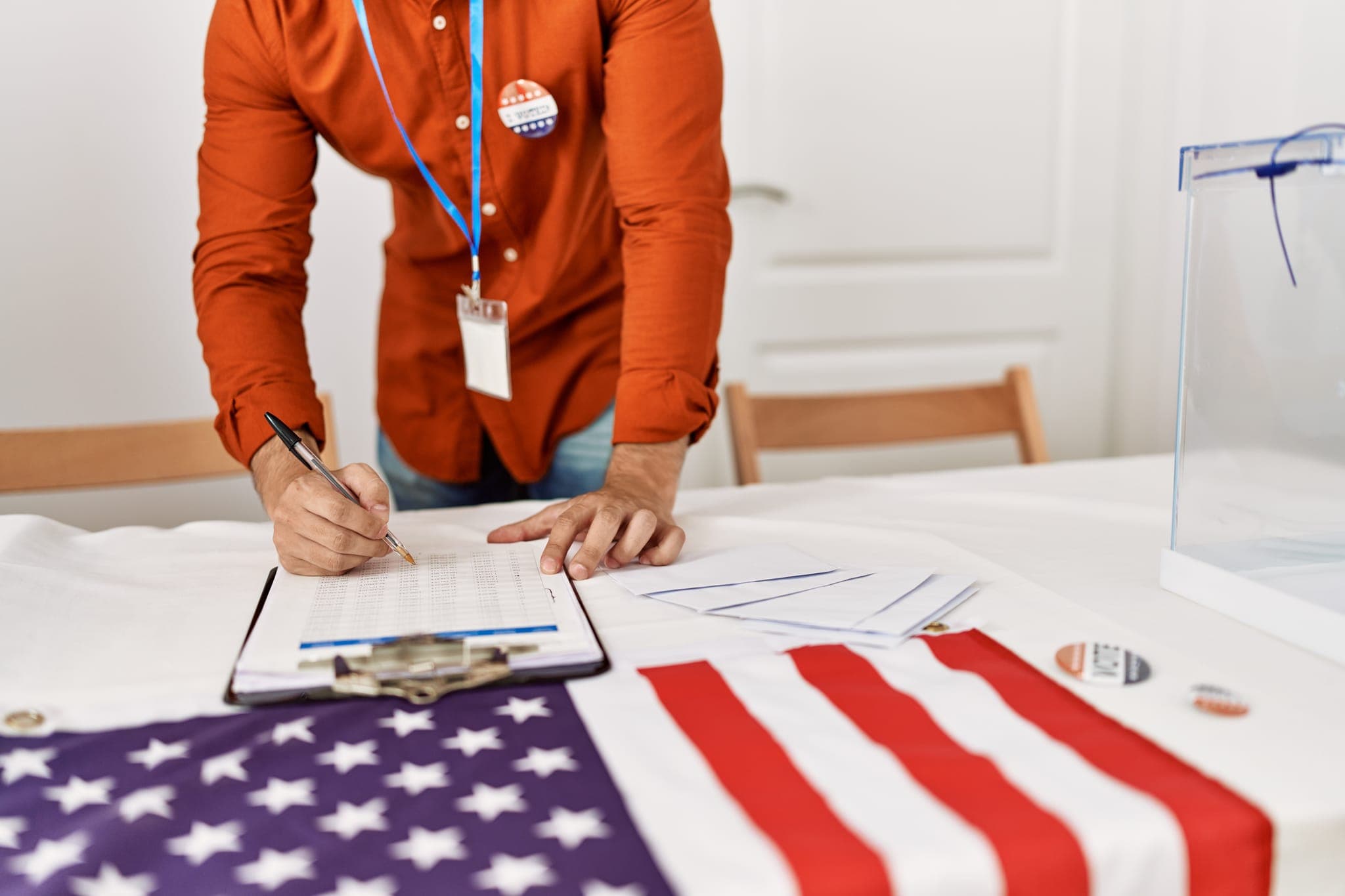
A divided panel of the Sixth U.S. Circuit Court of Appeals stayed a lower court injunction Sept. 23, allowing Ohio to continue enforcing a law requiring documentary proof of citizenship before Bureau of Motor Vehicles (BMV) workers offer voter registration forms to driver’s license applicants.
The 2-1 order in Red Wine & Blue v. LaRose came from Circuit Judges John Nalbandian and Whitney Hermandorfer, over the dissent of Judge Kevin Ritz. It puts on hold a preliminary injunction that a federal district court issued Aug. 25 blocking statewide enforcement of Ohio H.B. 54, which requires BMV workers to offer voter registration only to driver’s license applicants who present proof of citizenship.
The majority found the plaintiffs, Red Wine & Blue and the Ohio Alliance for Retired Americans, likely lack standing to bring the challenge. The two members the groups pointed to, Margaret Dutcher and Gianina Fazio, were turned away when they tried to get Ohio driver’s licenses at the BMV — but for reasons unrelated to the citizenship-proof requirement for voter registration. Dutcher’s Social Security card didn’t reflect her current name, and Fazio had the same problem and couldn’t locate her birth certificate. Because neither woman’s rejection had anything to do with H.B. 54’s citizenship proof requirement, the court held they “can’t demonstrate causation and redressability,” and blocking that part of the law “seems to solve nothing for them.” Both women later obtained licenses and registered to vote, which the panel said also undermined their request for preliminary relief.
The panel additionally found the timing favored a stay under Purcell v. Gonzalez, the legal ruling discouraging courts from altering election rules close to a vote. The plaintiffs waited eight months after filing suit, and 10 months after H.B. 54 took effect, before seeking an injunction, pushing the district court’s order to within six weeks of Ohio’s Oct. 5 voter registration deadline. Complying would also cost the state, the court said, citing a BMV official’s estimate that overhauling Ohio’s electronic registration system could take a year and cost up to $1 million.
Judge Ritz dissented, writing that he would have denied “the state’s emergency motion for a stay of the district court’s carefully reasoned order.” He argued the two women were harmed regardless of why their license bids failed, since Ohio law barred BMV registrars from offering them a registration form “unless the individuals first produced documentary proof of citizenship.” He also called the majority’s election-timing concerns overstated, noting the injunction requires BMV clerks only to hand out paper forms “already available at the BMV,” not any change to who can vote or how ballots are cast.
The underlying dispute turns on the National Voter Registration Act’s “motor-voter” provision, which requires states to offer people the opportunity to register to vote when they apply for or renew a driver’s license. Ohio fulfills this by first guiding an applicant through the driver’s license process before offering a separate voter registration process. Ohio argues its citizenship-proof requirement doesn’t conflict with that law, while the plaintiffs and Judge Ritz argue it does. That question remains before the 6th Circuit on the merits of Ohio’s appeal.
The Ohio case is one of several nationwide over documentary proof-of-citizenship requirements for voter registration. The U.S. Supreme Court has agreed to hear a related challenge, Republican National Committee v. Mi Familia Vota, over a similar Arizona law, with oral arguments scheduled for Dec. 8. That case asks whether the National Voting Rights Act prevents Arizona from demanding citizenship evidence with its state voter registration form or from purging suspected noncitizens from the rolls close to an election.
.jpg&w=3840&q=75)
.jpg&w=3840&q=75)

Comments