Supreme Court allows Trump’s mail-in ballot security rule to be halted
The justices largely agreed that an election rule could not go into effect so close to the midterm elections, but legal experts hope that the provision will be implemented in time for 2028.
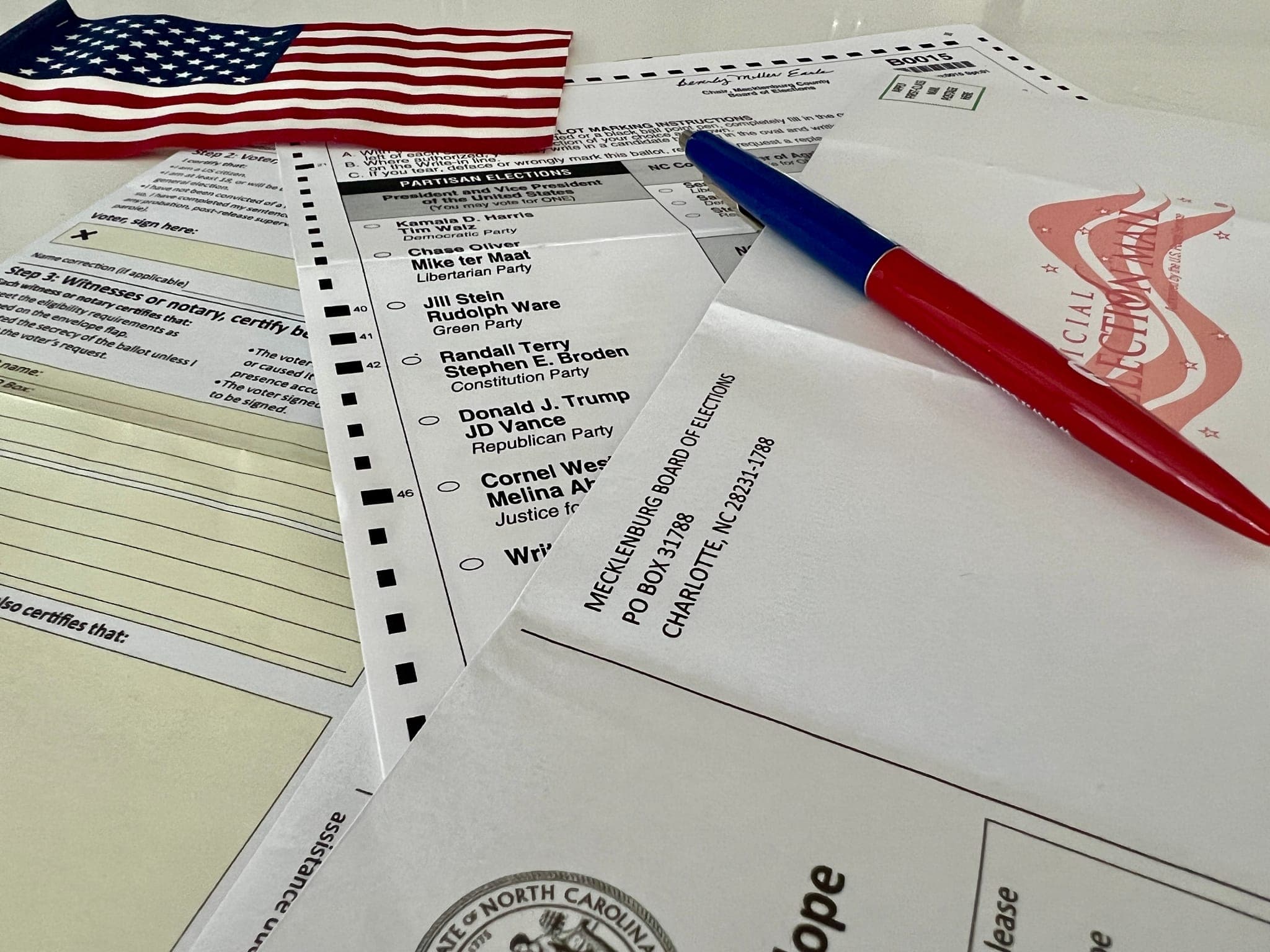
The U.S. Supreme Court is refusing to intervene in a critical election integrity case, effectively permitting Democratic jurisdictions to mail ballots to noncitizens and illegal aliens. In an unsigned Sept. 14 order, the nation’s high court denied President Donald Trump’s request for a stay to allow the U.S. Postal Service (USPS) to enact new mail-in ballot rules.
Those new rules would require states requesting mail-in ballots to coordinate with the U.S. Department of Homeland Security (DHS) to ensure that voter rolls do not contain noncitizens.
California was joined by 22 other states in suing to block the rule from going into effect. A federal judge in Massachusetts, Indira Talwai, initially barred the Trump administration from finalizing the rule, a decision which the Supreme Court quickly reversed, as Zeale News reported at the time.
Talwani issued a subsequent order prohibiting the administration from enforcing the rule once finalized. The Supreme Court’s Sept. 14 order allowed that ruling to stand.
>> Trump signs executive order restricting mail-in voting ahead of 2026 midterms <<
In a brief concurring opinion, Justice Brett Kavanaugh concluded that the USPS rule is likely legally sound, but that longstanding rules prohibiting significant changes too close to an election would block the administration from enforcing the rule.
Justice Samuel Alito, joined by Justice Clarence Thomas, issued a stern dissent. Some of the plaintiffs, Alito and Thomas said, lack standing to even challenge the rule in the first place, while the others are engaged in a “Hail Mary pass” that the justices said “rarely succeeds.”
The claim that the USPS rule violates the Constitution’s Elections Clause “collapses into an inquiry about whether the Postal Service has statutory authority to promulgate the rule,” Alito wrote.
“In sum, the plaintiff States’ statutory claim is based on a contestable reading of a broadly drawn statute empowering the Postal Service to regulate the mail,” he continued. “That Hail Mary pass is unlikely to be successfully completed here. The Postal Service has broad authority to regulate the mail.”
>> Gallup: Americans fear potential election fraud ahead of midterms <<
Notably, Alito also argued that the Trump administration would have been within the appropriate timeframe to implement the USPS rule had it not been for the repeated intervention of federal courts.
Don Palmer, a senior legal fellow for election integrity at the Heritage Foundation, told Zeale News, “By allowing these delay tactics, the courts inappropriately placed their finger on the scales of justice.”
While the Trump administration may not be able to implement the USPS rule in time for the midterm elections in November, Palmer suggested that the rule will likely stand up to future review.
“The Supreme Court may not have had any other option with the election only 49 days away, but the new security, transparency, and integrity measures with mail ballots will be beneficial to the American people,” he said. “We must demand more of the USPS other than 1-2% error rates. The Trump Administration will eventually have an opportunity to be heard in the nation's highest court and there will be more time for implementation by election officials.”
Ken Cuccinelli, chairman of the Heritage Foundation’s Election Transparency Initiative and a former Trump administration DHS official, told Zeale News that timing proved to be the stumbling block for the new rule.
“A proposed rule coming out this close to the election was always going to present a challenge for the Trump administration in the courts (and frankly, at the Post Office. Have they ever done anything fast and right?),” he said. “But if they ultimately succeed, then the Post Office will — perhaps ironically — end up playing a significant role in establishing election integrity in 2028 and beyond.”
Trump himself lashed out at the Supreme Court in a Sept. 15 Truth Social post, faulting the justices for taking “forever” to address the issue, resulting in a “horrible, highly political” ruling.
“It is a big loss for Republicans, and America itself, and makes cheating by the Radical Left ‘Dumocrats,’ on Mail-In Ballots, a much easier thing to do — And now they have an open field to do so,” he said of the court’s decision.
Trump thanked Alito and Thomas for their dissent, referring to the two justices as “legends,” before lambasting the remaining members of the court, including the three justices he appointed during his first term — Kavanaugh and Justices Neil Gorsuch and Amy Coney Barrett — for the USPS rule decision and decisions on birthright citizenship and tariffs.
“Certain Justices are petrified of these crazed and depraved Democrats, and are totally unable to show the courage necessary to save our America,” he said. “These are not the people I interviewed to serve on the United States Supreme Court, they are merely a shell of their original selves, a Court that is costing the United States Trillions of Dollars with shockingly bad rulings that are of such magnitude that it won’t be easily possible for our Country to recover or heal.”

Comments