U.S. Ambassador to the Holy See hosts Latin American diplomats on Cuba crisis
U.S. Ambassador to the Holy See Brian Burch hosted a high-level meeting Friday, February 20, at his Rome residence focused on the future of Cuba, as the island nation teeters on the edge of economic and humanitarian collapse.
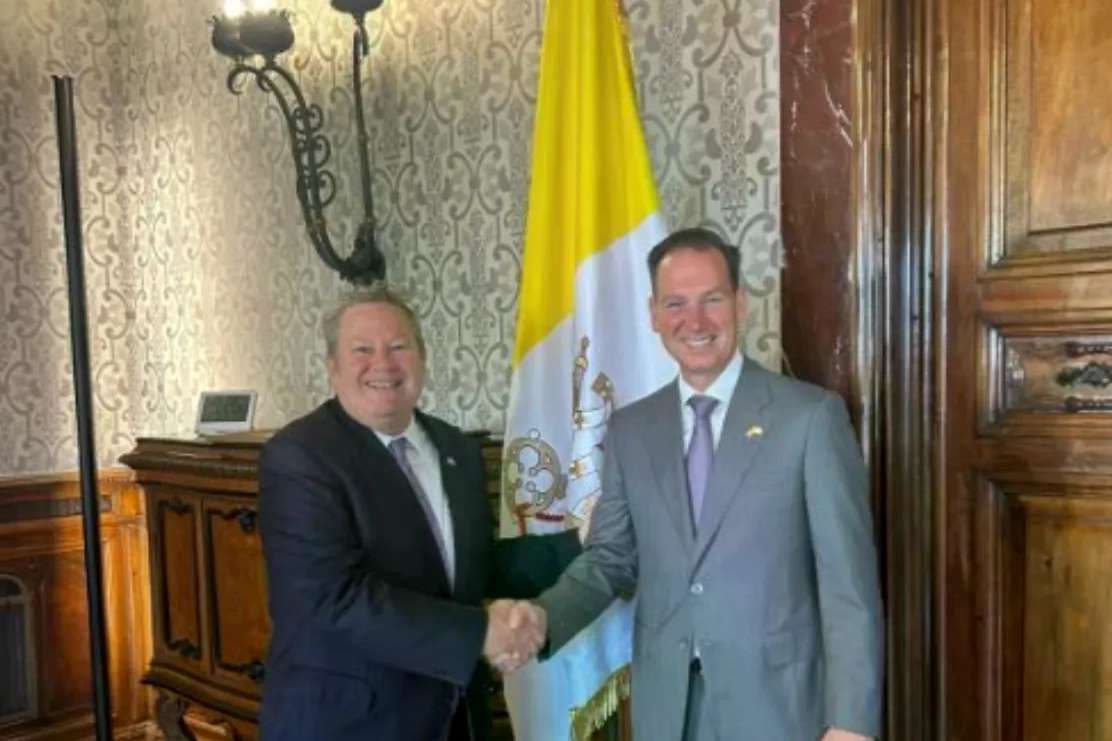
U.S. Ambassador to the Holy See Brian Burch hosted a high-level meeting Friday, February 20, at his Rome residence focused on the future of Cuba, as the island nation teeters on the edge of economic and humanitarian collapse.
Burch received Mike Hammer, Chief of Mission at the U.S. Embassy in Cuba, for an afternoon of discussions with several Latin American diplomats accredited to the Holy See.
The conversation centered on the Trump administration’s efforts to support the Cuban people in their “quest for freedom” amid deepening instability on the island.
The US Embassy's weekly report posted on Instagram also shows Ambassador Burch meeting at the Vatican with Archbishop Paul Richard Gallagher, Secretary for Relations with States within the Holy See's Secretariat of State, the equivalent to a foreign minister.
That same week, Pope Leo XIV had been scheduled to receive the 12 Cuban Catholic bishops in their Ad Limina visit to Rome; but the Cuban regime abruptly canceled the trip, citing a lack of fuel.
In the end, also on Friday 20, the Holy Father received only Bishop Silvano Pedroso Montalvo of Guantánamo-Baracoa, who is not part of the leadership of the Cuban Bishops’ Conference.
Cuba is facing its gravest crisis since the 1959 revolution that took Communism to power. The collapse is driven in large part by a catastrophic energy shortfall. After U.S. military action in Venezuela led to the ousting of Nicolás Maduro and the effective cutoff of Venezuelan oil shipments to Havana, Cuba lost a primary source of subsidized crude.
Washington has also threatened tariffs on countries supplying oil to the island, dramatically reducing imports by some estimates between 75 and 90 percent. Cuba requires roughly 100,000 barrels of oil per day but produces only about 40,000 domestically.
The consequences have been severe and immediate. Nationwide blackouts now regularly affect more than half the country during peak hours, crippling an electrical grid heavily dependent on oil-fired plants. Fuel rationing has paralyzed transportation, aviation, and supply chains. Food production has suffered as irrigation systems fail and harvests go uncollected. Water systems and hospitals are operating under emergency conditions.
Tourism, one of Cuba’s few reliable sources of hard currency, has nearly ground to a halt, with airlines canceling routes and visitor numbers in 2025 falling to roughly 1.8 million, far below pre-pandemic levels.
The broader economy has been in sustained decline. Independent research centers estimate GDP contracted by around 5 percent in 2025 alone, with a cumulative drop of more than 10 percent since 2020. Official inflation figures hover around 14 percent, but independent analysts place real inflation far higher, closer to 70 percent, as the Cuban peso has plunged in informal markets to around 500 pesos per U.S. dollar.
International bodies, including United Nations agencies, have warned of mounting risks to food security, public health, and basic human safety. Cuban officials themselves have acknowledged that the health system is on the brink. Analysts describe the country as approaching a “point of no return” absent major external relief or internal reforms. Acute shortages of food, medicine, and fuel continue to drive mass emigration and social deterioration.
The Trump administration has framed its policy as a means of supporting the Cuban people while isolating what it calls an illegitimate regime. On January 14, 2026, U.S. Secretary of State Marco Rubio officially announced $3 million in disaster assistance following Hurricane Melissa. The aid, consisting in food, hygiene kits, and emergency supplies, was delivered “directly to the Cuban people” through the Catholic Church to prevent diversion by the government.


Comments