Vance sharply rebukes Israeli critics as Iran agrees to inspections under U.S. deal
Vice President JD Vance issued a pointed rebuke against Israeli critics of the U.S.-Iran nuclear agreement June 18, saying President Donald Trump is "the only head of state in the entire world who is sympathetic to the nation of Israel" and Israeli politicians should not risk alienating their “only powerful ally in the entire world.”

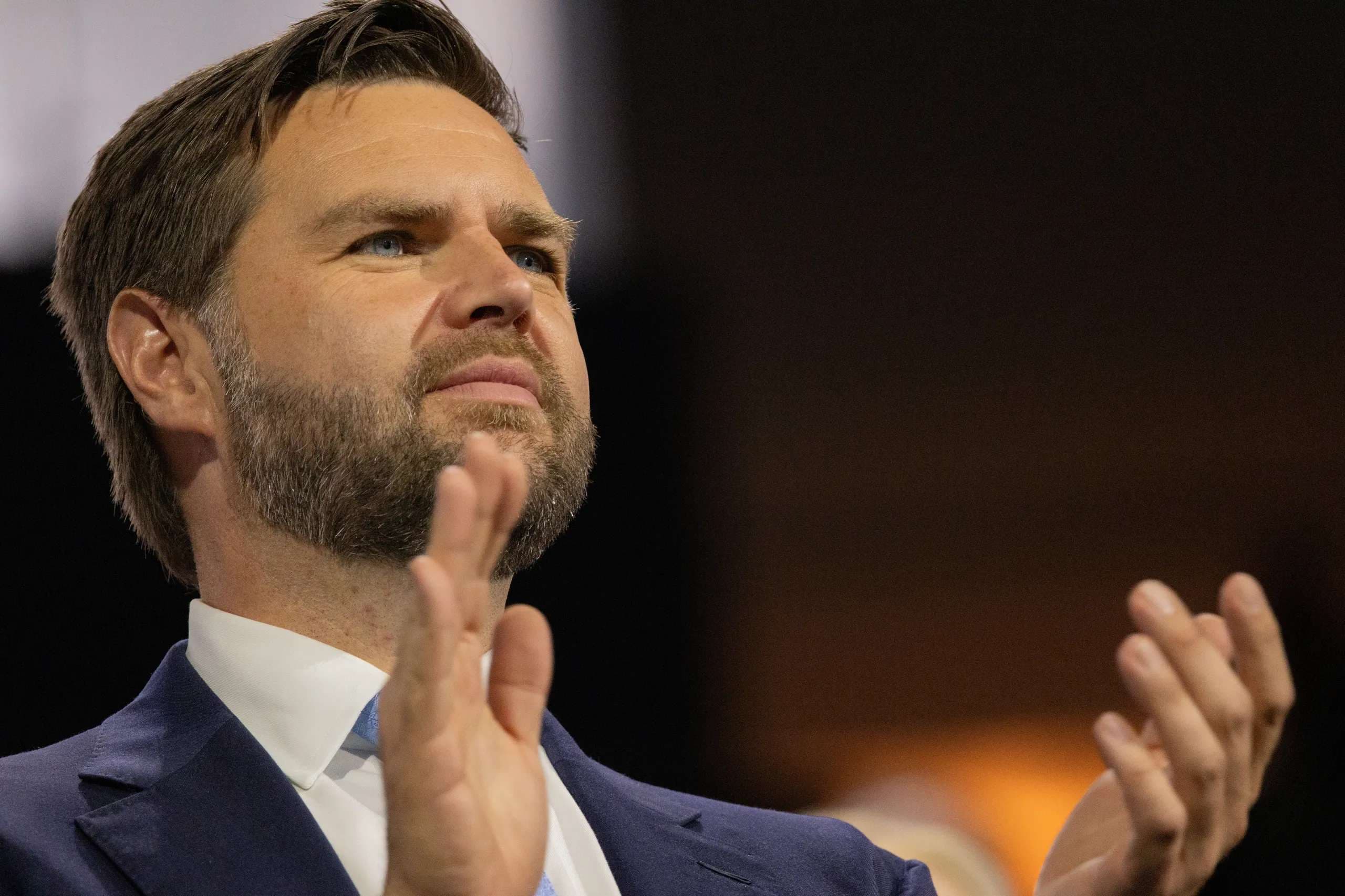
Vice President JD Vance issued a pointed rebuke against Israeli critics of the U.S.-Iran nuclear agreement June 18, saying President Donald Trump is "the only head of state in the entire world who is sympathetic to the nation of Israel" and Israeli politicians should not risk alienating their “only powerful ally in the entire world.”
Vance warns Israel's critics
Vance, who has increasingly become the administration's public face on the agreement, directed his sharpest remarks at Israeli far-right ministers Itamar Ben-Gvir and Bezalel Smotrich in an interview with The New York Times after both ministers publicly attacked the deal.
"What is your exact proposal?" Vance said, according to video posted by The New York Times. "You're a country of nine million people. You can't just kill your way out of solving every single national security problem that you have."
At a White House briefing with reporters, the Vice President also discussed Trump's frustration with Israeli military operations that he said have not only threatened to derail the peace process, but killed numerous innocent civilians.
"What the President is getting frustrated by sometimes is we seem to be right on the cusp of a major breakthrough in the agreement, and all of a sudden, a major explosion goes off in a civilian population center in Beirut, and a lot of people who have nothing to do with Hezbollah lose their lives," Vance said. "That's not acceptable."
Vance said Israel "has the right to defend itself" but that "the Israelis, just like everybody else, have to respect this peace process that is fundamentally good for them and good for the entire region."
Trump "is the only head of state in the entire world who is sympathetic to the nation of Israel at this moment in time," Vance said. "And he happens to be the head of state of the world's superpower."
What’s in the agreement: Nuclear oversight measures
In a private briefing with congressional leaders and members of national security committees, U.S. envoy Steve Witkoff said Iran would invite inspectors from the International Atomic Energy Agency (IAEA) to visit its nuclear sites and begin identifying the locations of its enriched uranium stockpile, which U.S. officials believe remains buried at some facilities, according to two people familiar with the briefing who spoke on condition of anonymity to the Associated Press.
The Associated Press reported that Witkoff told lawmakers the agreement contains no side deals, but that a separate letter between Tehran and the IAEA had been drafted to formalize the invitation for inspectors. The letter, addressed to IAEA Director-General Rafael Mariano Grossi, would allow U.S. nuclear experts to participate in inspection efforts.
Under the agreement, Iran's stockpile of highly enriched uranium must be diluted under international supervision. The pact also requires Iran not to pursue or develop nuclear weapons, reaffirming commitments Tehran has made in previous agreements.
Trump signed the agreement during a meeting with French President Emmanuel Macron at the Palace of Versailles. The accord extends the current ceasefire and gives the parties 60 days to negotiate a broader arrangement. Trump said the deal would help avert what he described as an "economic catastrophe" and argued it would prevent a deeper downturn in global markets.
Strait of Hormuz reopens
The agreement's effects were immediate at sea. The U.S. lifted its blockade of Iran June 18, allowing oil tankers to resume transiting the Strait of Hormuz after more than 100 days of disruption.
At least two oil tankers crossed the former blockade line carrying a combined 3.8 million barrels of Iranian crude without being stopped, according to ship-tracking data. Vice President JD Vance said more than 12.5 million barrels had passed through the strait overnight on June 17.
"We are honoring our end of the early part of the agreement on the military side," Vance said.
Richard Meade, editor-in-chief of Lloyd's List, a maritime trade publication, said it was the first time in 110 days that vessels operated by major shipping companies had transited the waterway.
The strait's main shipping channel remains closed, with about 80 mines still needing to be cleared, according to Phillip Belcher, marine director of Intertanko, a trade association representing independent tanker owners. Ships have instead been using a northern route through Iranian waters and a southern route through Omani waters.
Lloyd's List estimated that about 550 merchant vessels remain inside the Persian Gulf and will need to transit out, a process that could take weeks or months.
U.S. Central Command said American warships would "remain in the general area to make sure that all aspects of the agreement are adhered to, obeyed and in full force and effect."
Iran's supreme leader responds
Iranian Supreme Leader Ayatollah Mojtaba Khamenei revealed June 18 that he initially disagreed with the memorandum of understanding but ultimately approved it after President Masoud Pezeshkian and other Iranian officials pledged to safeguard "the rights of the Iranian nation and the resistance front" and accepted personal responsibility for the deal.
"I had a different opinion," Khamenei said in a written statement carried by Iranian state media, his first public reaction to the agreement.
But Khamenei also endorsed direct negotiations with the U.S., saying: "It is obvious that the face-to-face negotiations that will be held in the future will not mean accepting the enemy's opinion."
Khamenei has not appeared in public since he was wounded in a strike at the start of the war.
It remains uncertain whether Iranian officials will travel to Switzerland for follow-on talks. Iran's semi-official Tasnim news agency, citing a source familiar with the matter, reported that Tehran had not made a final decision on sending a delegation and that consultations were ongoing. Switzerland's Federal Department of Foreign Affairs said the talks were expected to proceed as planned.





Comments