Wall Street Journal spotlights California parents’ challenge to mandatory school gender lessons
The newspaper cast the lawsuit as an early test of whether public school districts will honor the Supreme Court’s 2025 ruling protecting religious opt-outs.
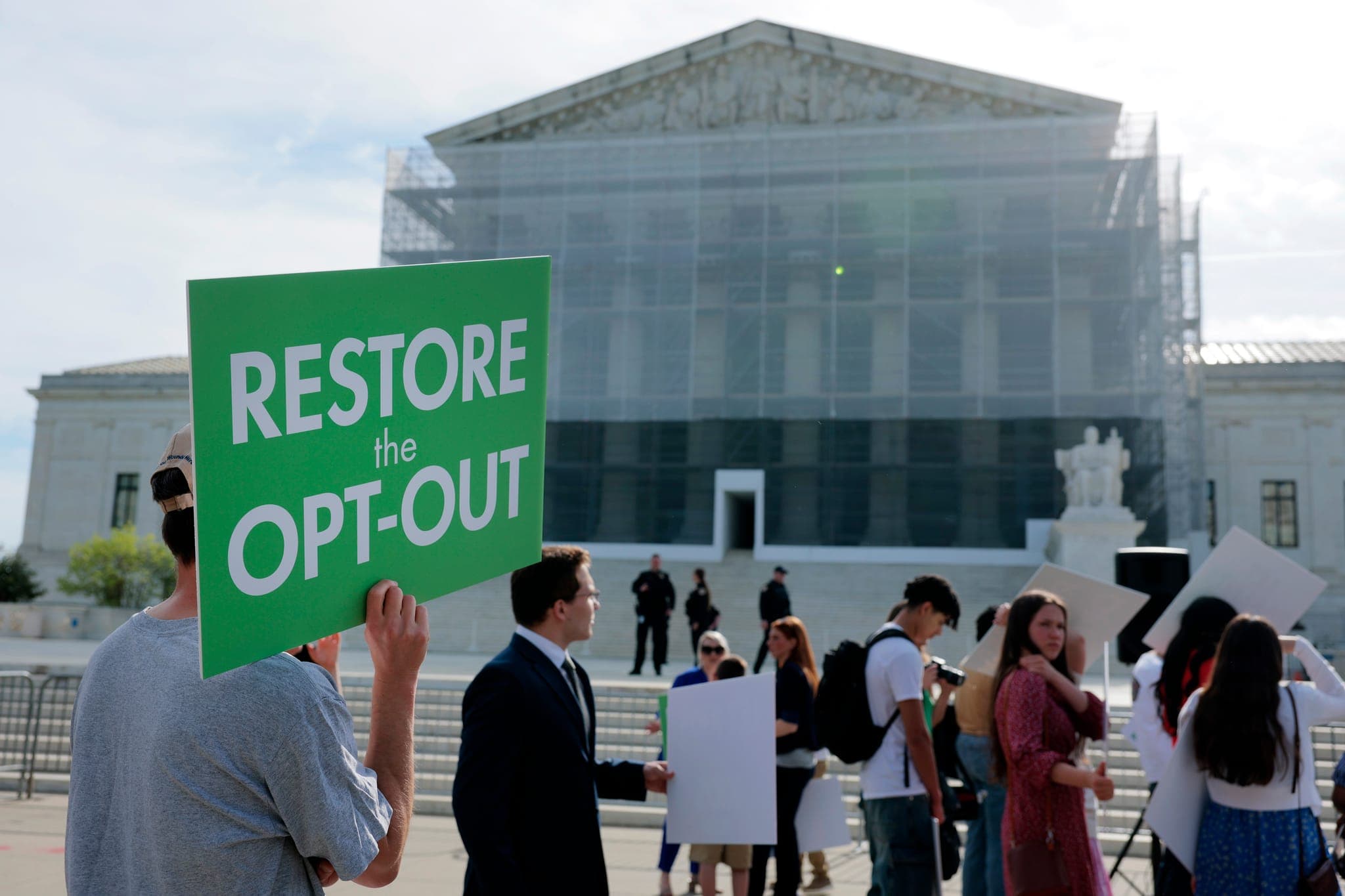
The Wall Street Journal’s editorial page on July 19 drew national attention to a California couple’s lawsuit alleging their public school district refused to provide notice or an opt-out from lessons on sexuality and “gender identity” that conflict with their Christian beliefs.
In an editorial titled “A New Lawsuit on School Gender Lessons,” the Journal presented Taylor v. Sunnyvale School District as a test of whether school systems may sidestep the Supreme Court’s landmark 2025 religious-liberty ruling in Mahmoud v. Taylor.
Justin and Rose Taylor filed the lawsuit June 22 in the U.S. District Court for the Northern District of California. The couple, who belong to The Church of Jesus Christ of Latter-Day Saints, have a son entering third grade and a daughter entering first grade at Cumberland Elementary School.
The Taylors believe God created human beings male and female, that biological sex is a God-given part of a person’s identity, and that parents have a religious obligation to oversee their children’s moral formation.
According to the lawsuit and the Taylors’ attorneys at Becket, the parents asked the district in September 2025 to notify them before lessons involving same-sex relationships, “gender identity,” or similar subjects and to excuse their children from those lessons.
The request did not ask the district to remove the materials or prevent other children from receiving the instruction.
District allegedly reversed course on accommodation
Sunnyvale initially appeared willing to accommodate the family, the plaintiffs argued in the June suit. The district had provided the Taylors with a form that identified religious or moral conflicts as possible grounds for opting out of instructional materials. Cumberland Elementary also reportedly told school librarians not to check out LGBT-related materials to the children.
But, according to the suit, the district “abruptly” reversed course.
In a letter quoted in the lawsuit, school officials said Sunnyvale was “not granting opt-outs from LGBTQ+-inclusive curriculum or storybooks that are part of our adopted educational program.”
The letter maintained that Mahmoud “does not override California’s statutory requirements governing instructional content” and described the Supreme Court dispute as a case arising in “another state.”
Michael O’Brien, Becket counsel and the Taylors’ lead attorney, criticized the letter’s claim in a June 23 press release published when the lawsuit was first announced.
“The Constitution doesn’t come with a California carveout,” O’Brien said, accusing Sunnyvale of attempting “to sidestep Mahmoud and override the Taylors’ clearly protected parental rights.”
The Journal highlighted the breadth of the instruction described in the complaint. A teaching guide from the Santa Clara County Office of Education says health and science lessons should “explicitly teach about gender identity and sexual orientation.”
A sample fourth-grade history lesson titled “Two Spirit and Non-Traditional Families” says students should examine how such identities “disrupt traditional definitions of the family.” The guide also encourages math teachers to use problems involving “marriage equality, gender-neutral bathrooms, and LGBTQ+ rights,” according to the complaint.
Other recommended materials allegedly include some of the same books involved in Mahmoud, including stories about pride parades, gender “transitions,” drag queens, and same-sex relationships.
The district had not filed an answer to the lawsuit and did not respond to the Journal’s request for comment before the editorial was published.
Supreme Court recognized parents’ religious rights
In Mahmoud v. Taylor, a religiously diverse coalition of Muslim, Catholic, and Ukrainian Orthodox parents challenged a Maryland school district’s decision to eliminate opt-outs from elementary-school lessons using LGBT-themed storybooks.
The Supreme Court ruled 6-3 in June 2025 that the parents were “likely to succeed in their challenge to the Board’s policies” because the policies burdened their religious exercise clause.
Writing for the majority, Justice Samuel Alito said the government burdens parents’ religious exercise when it requires children to participate in instruction posing “a very real threat of undermining” the beliefs and practices their parents seek to instill.
The court ordered the Maryland district to notify the families before using the disputed books or similar materials and to allow their children to be excused while the litigation continued.
Sunnyvale’s position raises the question of whether California curricular requirements can narrow a religious protection grounded in the federal Constitution. The Taylors also argue that the district cannot deny religious exemptions while permitting opt-outs for sexual-health instruction and other activities.
The parents filed a motion for a preliminary injunction July 2, asking the court to require notice and opt-outs before the new school year proceeds. U.S. District Judge Noël Wise has scheduled a hearing for Sept. 30.
A ruling for the Taylors could prompt school districts across California and elsewhere to revise their notification and religious-accommodation policies.
.jpg&w=3840&q=75)
.jpg&w=3840&q=75)


.jpg&w=3840&q=75)
Comments