In Catholic history’s first recorded Eucharistic miracle, a priest in the throes of distressing doubt about the real Presence of Christ in the Eucharist looked on in awe as the power behind transubstantiation made itself known in no uncertain terms.
Transcript
Read the full transcriptAuto-generated · 467 words
We are around the year 750 AD in Lanciano, a small town in central Italy, in a monastery dedicated to St. Longinus, the centurion who, according to tradition, pierced the side of Christ. This is where a story begins, one destined to endure through the centuries, an event that blends faith and mystery, science and the sacred.
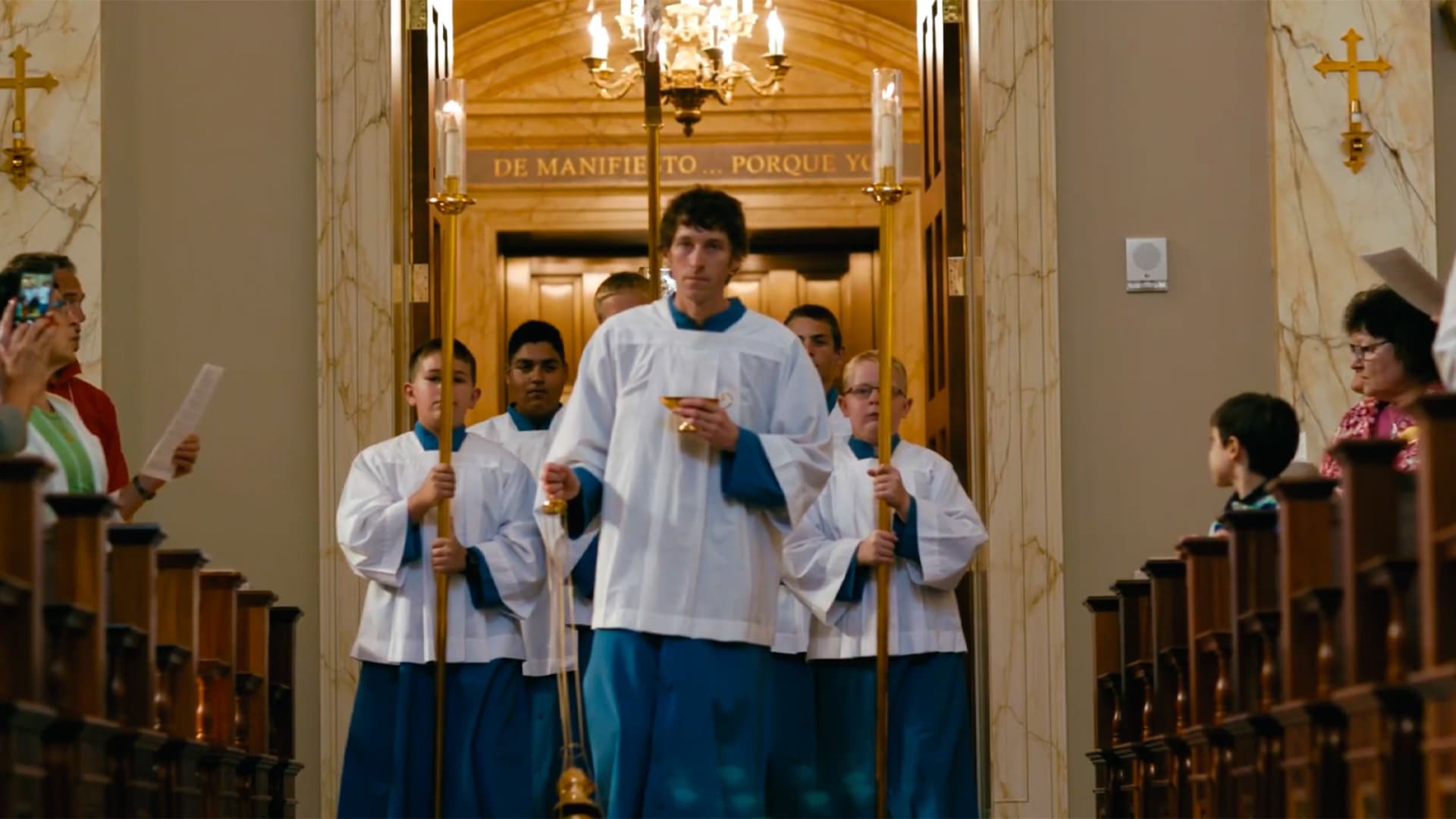
A monk from the Basilica of St. Basil, whose name we don't know, was going through a deep crisis. Despite his vows, his faith in transubstantiation, the dogma that the bread and wine become the body and blood of Christ during Mass, was faltering. Silent doubts tormented him through sleepless nights, and one day they came to a head while he was celebrating Mass. At the moment of consecration, something astonishing occurred. The host visibly turned into flesh. The wine in the chalice became blood.
The priest froze, breathless, his hands trembling. An ancient chronicle recalls his words. O fortunate witnesses, to whom the blessed God has wished to reveal himself to dispel my unbelief. News of the event spread rapidly. The church filled with believers eager to see with their own eyes what the priest now showed with tears in his eyes, a piece of flesh and five blood clots, irregular in shape, but surprisingly distinct. An ecclesiastical investigation was launched. The relics were carefully preserved, but the mystery was far from over.
Centuries later. In 1574, something happened that deepened the enigma even further. During an official inspection, the five clots of blood were weighed, and here came the shock. Each clot weighed the same as all five together. A mystery that defies logic, so much so that it was inscribed on a marble plaque still visible in the church today.
But it was in 1970 that the case of Lanciano entered a new dimension. The Vatican authorized scientific analysis of the relics. Professor Odoardo Linoli, an expert in anatomy and pathological histology, was entrusted with the task. His mission? To determine the nature of the relics, and perhaps offer answers to centuries-old questions.
The test results were astounding. The flesh was identified as human myocardial tissue, heart muscle, showing clear signs of trauma and suffering. The blood was type AB, the same blood found on the Shroud of Turin. And what's more, even after more than a thousand years, no traces of chemical preservatives were found. How could human flesh and blood exposed to the elements have avoided decomposition?
The case of Lanciano remains an unsolved mystery. For believers, it's a tangible sign of Christ's presence in the Eucharist. For skeptics, it's a phenomenon that challenges the limits of science. Whatever the truth may be, one thing is certain. This small town in Abruzzo holds a story that continues to raise questions, fascinate hearts, and inspire souls.