Bishop Barron, Welding, and the American Dream — with Congressman Riley Moore
On this episode of The LOOPcast, Tom is joined by Congressman Riley Moore of West Virginia for a conversation on faith, work, and America’s economic future. They dive into Bishop Barron’s vision, the dignity of hands-on trades like welding, and what a healthy economy built on real work should look like. Plus: Congressman Moore weighs in on violence against Christians in Nigeria, the challenge of balancing foreign intervention, and even gives his prediction for when the government shutdown will finally end.
Timestamps
00:00 Bishop Barron in Congress
3:17 Welding
6:32 Trades Savings Account
10:32 Unique Politics in West Virginia
16:00 Economic Vision For America
19:30 Labor Unions
22:39 Christians In Nigeria
27:22 Foreign Policy Philosophy
31:19 Government Shutdown Real Story
34:06 When Will It End?
EMAIL US: [email protected]
SUPPORT LOOPCAST: www.loopcast.org
Subscribe to the LOOP today!
https://catholicvote.org/getloop
Transcript
Read the full transcriptAuto-generated · 6,173 words
Pleasure being joined by Congressman Riley Moore. He's representing the great state of West Virginia, and pretty Catholic from what I understand. Yes, that is true. Yes, very much so. Awesome. I think you first came on my radar when you invited Bishop Barron to the State of the Union. I imagine that was probably a pretty good time. That was incredible for me.
A long-time listener, first-time asker of Bishop Barron, and, you know, he is kind of hard to put in words how instrumental he's been in deepening my faith, my wife's, just my family in general. I mean, he is just a prolific evangelist in the Catholic faith, and so I didn't know him. At all. I've read his works. I listen to him all the time. Sunday sermon, always has that great homily. He puts it out a few days before Sunday, which is always nice.
Also, listen to everything, Word on Fire, all that stuff. So, as you can tell, I'm a big fan, and so I just kind of shot in the dark, send an email, and hey, I'm allowed to bring a guest to the State of the Union. Would Bishop Barron be interested?
We waited, and somebody got back and said, yes, he'd love to. I'm like, oh my gosh, this is unbelievable. Bishop Barron's coming, and it was just incredible for me. He's just such a... Large figure in basically my every day. I mean, I wake up in the morning with the Halo app. He's reading a psalm. I hear his voice probably every day. And so, yeah, it was really incredible to be able to meet him, speak with him, and have him there at the State of the Union.
And I think he had a great time. He got to meet the Speaker of the House, and he was very popular. Members of Congress. All over the place, wanting to meet and talk with him, and then he did celebrate a mass in the capital the day of the...
Of the State of the Union, and it is actually the Joint Session of Congress. Thanks for the correction. For the real political heads, yes. Yes, yes, yes. I know somebody on there is in the comments. It is not the State of the Union. I know it is not. Totally. I got in trouble for that, too. Generally known as, but yes, Joint Session of Congress. Got it.
But in any event, so celebrated mass, I mean, we probably had close to... I'd say somewhere around 75, it looked like, 60, 75 people, staff, members of Congress, all attended this Mass celebrated by Bishop Barron in the... Longworth House Office Building, which was great, and it actually was just preceded that joint address, Ash Wednesday. And so, he was doing ashes in the Capitol the next day as well. So, it was just a tremendous experience. It was just amazing. That is awesome.
I mean, that gets into a few threads I was hoping to talk to you about. I mean, my first, I think you might be the only member of Congress capable of pulling off a spot well. Is that correct? Yes, yes, that is correct. Yes, my first career. Tell me a little bit about your journey to public service. I mean, I feel like you don't get too many guys that go blue-collar then to politics, so I feel like that probably informs how you kind of conduct yourself, I imagine, maybe what you care about coming from West Virginia and having that type of lifestyle.
So, how'd you make your way to the halls of Congress? Yeah, so my mother's family, they're... So, everyone in my mom's family were welders, and I had decided during high school to go to vocational school half-time, so you could go to—it's really great. A lot of states do this, where you can go part-time to vocational school and then part-time high school, and so I started to learn how to weld. I was encouraged by my grandfather in particular, who was a welder.
All of my— Mother's family are all union labor welders, probably very familiar for some of your audience. Historically, my family, Irish, Catholic, Democrat, union members. Sounds like West Virginia, yeah. Yeah, and so that was – well, my mom's family is actually not from West Virginia. I met my dad and moved to West Virginia.
They originally came over from Ireland, lived in Scranton. Oh, yeah. Yeah, mining coal, and then moved out to California at one point, started the local steamfitters union out there, actually, and like in the 1930s. And so, in any event.
I really ended up liking it. I worked in a mining operation right after high school. Not coal, but kind of like rock quarry, like open pit mine type work, maintenance mining equipment, and I loved it. It was a great profession. I have done a lot of things in it, steel structural. I worked in a machine shop as well, which was really interesting, making parts and components for the military. That was really interesting work as well. Steel structural is great, though. I mean, you're building buildings, but you're out there on these I-beams, and if you're scared of heights, probably not the job for you.
Probably not for you. It reminds me of those old pictures of New York City, where the guys are just kind of sitting on the beams. It's a little safer than that these days. You're wearing harnesses and stuff, but yeah, I mean, you're up there, and I just loved it. I loved the work. It was great. It really formed who I am as a policymaker. In West Virginia, I started this program called the Jumpstart Savings Program, which seems kind of like, duh, why didn't we do this before?
But it's the only kind of its sort in the country, and what it does, it allows individuals who have gone to a trade school. Or union apprenticeship, to be able to start a savings account. Because we have savings accounts for college. This isn't for the education piece of it. It's what I found in my own life. When you got out of trade school and you had kind of these hopes and dreams of maybe perhaps starting your own business or getting into different types of jobs, the expense was on the back end, getting into the job, which was buying tools, equipment, licenses, certifications, things like that, new business startup costs.
And so, at one point, I wanted to start my own mobile welding business, and it was I had no credit. It was very cost prohibitive, and I did not end up doing that. I still wish I maybe would have done that. I think it would have been a lot of fun, because you could have gone to different mining operations, stuff like that, and maintenance equipment, but in any event.
I said, man, we should do something about this. So, it kind of functions a little bit like a 529, except it's more like a flex spending account. The 529 aspect of it is similar because you don't pay capital gains tax in the state, which in a 529, you don't do that either. And so, the qualified expenses in this are tools, equipment, licenses, certifications, and new business startup costs. And so, I started that in West Virginia. It's called the Jumpstart Savings Program.
I've introduced, almost introduced, we're working on legislation right now, the federal version of that bill to help people in this country that want to get in trades and vocations. A lot of people don't think about, I'll give you a good example, the cost that can be associated with getting into this.
If you go to school to become an auto mechanic, and you go work at a dealership, or you're going to work at some auto body shop or something like that, You have to buy all your own tools, and that's really- Yeah, you do. I've talked to guys who are like, it's shocking how expensive. You have to get a loan to go get that amount of tools. It is really expensive, but what this would allow them to do is to open up that savings account years before that, so they could save money without paying the capital gains tax, just like in a 529, and then spend that money down to buy those tools, which the money has grown over time, and those qualified expenses are then going to be covered so they can start their vocation and career.
So, that is the idea of it. That is kind of the jumpstart aspect. So, people can jumpstart their career in the trades and vocations. I think there's a, unfortunately, in most recent decades. Not the amount of utility that there used to be in going to college. I think there's a lot of opportunity in trades and vocations. The folks that we have going to trade schools in West Virginia, and it's great. I'll show up to these trade schools, not dressed like this, but just in more kind of my previous career outfit, more kind of A construction worker get up, and I'll bring my own welding shield and all that and jump in there and like weld with the students and stuff.
And so they get a kick out of that. And but a lot of them there, like in West Virginia, they're going to go work on pipelines. Some of these kids are making $200,000 a year, $150,000 a year, and it's no debt. And you're making $150,000, $200,000 a year or something like that. Does that make sense, or does it make sense to go get, I don't know, a degree in Russian literature and become a barista with $250,000 in debt? You know, I don't know.
I mean, the jokes write themselves. I mean, the jokes write themselves, and I feel like it's a real problem, but if I could ask more of a philosophical question, you mentioned that your family is historic Democrat, teamsters, pipe fitters. I believe I heard you in another interview say you didn't fit in with, say, the Bush-Cheney economic model of the Republican Party. You're talking about starting this jumpstart program in West Virginia, bringing it to the federal level, talking about the trades. These were all historically Democrat initiatives, and you yourself are a Republican right now.
So, what do you think? How did you end up there? Like, how did you end up in this new coalition? Where do you see the future of where you're trying to go, basically? You know, I was always a Republican. My father's family is from West Virginia. I mean, we're seven generations deep in West Virginia.
Always been Republican the whole time. West Virginia is very unique in that regard, though, is that it's always been a blue-collar state. We're culturally a southern state. That has a lot of labor union presence, which makes us very unique, I think, in that regard, and look, this is a state that previously was 70% registered Democrat at one point prior to Obama.
We only had one member of Congress, Shelley Moore Capito, as a Republican, and they had everything else. They had House and Senate, state legislature, governor's mansion, all the Board of Public Works, every congressional seat, every Senate seat, everything, and we didn't get the state legislature back until 2014. There are 83 years of Democrat control in West Virginia, and just consistent. The whole time. And folks just started leaving the Democrat Party in West Virginia. I mean, in mass. A lot of that driven by coal, and the war on coal, and what was going on there.
But then, particularly as President Trump came along, who, I mean, this is a great indicator. In 2016, Democrats still had the majority registration. In the state of West Virginia, Trump won the state 70% of the vote. In West Virginia, he won all 55 counties, 70% of the vote, and he has done that three times in a row now, but back in 2016, all these Democrats were voting for him. Everybody was voting for him, and it was this America First, which it is now still today, America First movement, putting the American worker first, and putting our needs here at home first, which is what they've been asking for the entire ...time, which the Republican Party had not been about at all.
And no, I think one of the worst chapters in the Republican Party was the Bush-Cheney era. And I think that's kind of like the bookend of the neocon movement in this country, which has been certainly dying a slow death. I wish it was a little bit faster. But, you know, it's... I talked about Pat Buchanan here just recently, because I want him to get the Presidential Medal of Freedom, and I wrote a letter to President Trump about this. He gave a speech, Weirton, West Virginia, where we had Weirton Steel, which still exists to a much smaller degree today.
This was mid-'90s. He's running for president, comes to give a speech at Weirton, and this was right after NAFTA. And he says, NAFTA, and then they were talking about, and it hadn't happened yet, but China, and opening up China, and China was not the World Trade Organization yet, and as you know, Clinton pushed for that, Bush sealed the deal on it, but Buchanan says, at that point, there's 10,000 workers here at this steel plant. Things like NAFTA, and what the Republican Party is doing.
There will only be a fraction of these jobs left when you flash forward 10, 20 years from now, and he ended up being 100% right. There's a couple thousand jobs left there now. That's it. And when China started dumping cheap steel into the marketplace, NAFTA and everything else, just the whole globalist regime that was put in place by the neocons, you know.
The bottom line ended up being more important than the folks who were at the bottom of the line, and what I mean by that, the American people and the workers. So, he ended up being totally correct on that, and we paid the price in places like West Virginia, and we are still paying that price, but luckily, President Trump and the Republican Party We are now starting to help turn that around. Yeah, it excites me to hear you talk about the trades and opportunities for, I think, especially young men, young Americans in general, but I think a lot of young men feel very disillusioned with the job market that they're facing.
And for the first time ever, I think bachelor degree holding men have a higher unemployment rate than non-bachelor degree holding men. And to your point, it isn't really about that. Uh, like, it seems like it's all been made about the bottom line, and that big-time capital is more important. It's more important that you have cheap stuff than good jobs, and I think that was historically a Democrat talking point, but It almost seems like it's now the Republican Party kind of has the mantle of maybe a more populist vision for the country, and breaking from the Bush-Cheney mold, creating those opportunities for young men in the future to have jobs with dignity, like a word that comes up often in Catholic social teaching, making a living wage, being able to own a home, being able to have a family.
I mean, just speaking for myself, those are all goals, I think. What myself, but also my generation want. So, it seems like you're offering, say, a new vision forward, maybe more into the Trump mold for America in that regard. Yeah, I would say it's more of a return than a new vision. I think it's a return to the way things used to be. So, in Weirton, West Virginia, or any places in West Virginia, it has been typical that somebody who's like a United Steelworker in Weirton, they're making $120,000 a year.
The average home in Weirton is probably $200,000 a year or something like that. The steel worker works, the mother stays at home, raises the kids, and so we're not having to sacrifice time with our families and actually have faith formation and community and all these good things that come along with that, and actual dignity and work. And, you know, Republicans always talk about jobs, jobs, jobs.
Yes, yes, jobs, but good paying jobs, jobs that make a difference. And look, are things cheaper under globalization? Sure, sure, I guess. Yeah, I'll concede that point. I guess the products got cheaper at Walmart, but instead of being a United Steel worker now or a coal miner, those folks are the people working at Walmart. So, their buying power has been greatly diminished.
Yeah, the product at Walmart is cheaper, but I'm making $12 an hour instead of $120,000 an hour. So, it doesn't really matter, right? I mean, it's not even a wash. It's just the person's life has gotten much worse. And, you know, why do people join unions? What's the compulsion around that or the interest in it?
It's salary, benefits, and retirement are main drivers in that, which obviously, as you just mentioned, Catholic social teaching goes to that issue of dignity and human dignity of the worker and their ability to support a family. And why would we not want strong, healthy families in this country where people are making good wages, a good living, jobs they can be proud of? Actually contributing to a society and a community rather than having both spouses working or, which is more common now, a single parent working, kids living in daycare and aftercare for basically their whole lives without having their parents' time and nurturing and care.
Look, I know some people have to do that, and God bless them, and I hope. And pray that things are going to work out well, and I know it does work out well many times for them, but why we have moved to this model that is completely antithetical to human nature and God's design for His creation here on Earth, us, human beings, I have no idea. And so, it's not shocking that it leads to depression and despair and drug addiction and all these other things that happen.
Yeah, I appreciate it. I feel like you almost just gave us a… Maybe life through the eyes of someone that lives in West Virginia, because often you hear the coastal perspective, say California or Ivy League perspective in New York Times or whatnot, but I think that almost gets lost in the conversation, and I'm excited that there are people like you, and I saw even Josh Hawley was talking to the head of the team, Sir Sean O'Brien, about Amazon, and personally, from people my age, I think if someone doesn't take up that economic populist mantle, the other party will.
You're just leaving a huge opportunity. Because unions, yes, in certain cases, they certainly go too far. I grew up in Michigan. Sure, absolutely. That would be a great example of that. But at its core, what they're advocating for, if it's done correctly, is actually a really good thing, not a dirty word. And then you just don't leave all of this power, say, to the next monopoly to decide whether or not you get health care, or whether or not you get breaks on the job, or whether or not you get paid an actual wage that makes sense to raise a family.
Those decisions can happen. At the ground level, and then also from the political party, and you're just kind of leaving it to people. If you don't speak to people on that, I think there's been a lot of races that feel like have kind of become that. You could even say, Mamdani in New York City, that's kind of become a referendum on speaking to the real concerns of the citizens. And whether or not you agree with all the other things that he has coming along with it, that's the point.
Like, someone on the right needs to make that point, otherwise someone on the left will, and they're going to... Probably when on it would be my guess. Yeah, and look, you know, we always say this. It's, you know, of course, there are cases of the union going too far. I'm guilty of that as well. Of course, there is, right? Just like with anything. Yes, did they go too far at times? But in that same sentence, I think it's fair to say, has capitalism gone too far?
Yes. Yes, it has. But does it make capitalism bad? Right? Like, no. At its core, It can lift people out of poverty, and it is the best system for organizing an economy. That is true, but does it go too far, right? This globalization trend that we were stuck in for decades? Yes. Yes, it does, and it strips people of their dignity.
Turns them into cogs in a machine rather than having purpose and fulfillment within their community and their lives. And so, yes, with both, they can go too far. The point is that they can check each other. And that is what is important in this. Yeah, I really appreciate hearing you say that because I think there are some people that reflexively kind of worship at the altar of capitalism when, of course, laissez-faire capitalism in many cases have gone too far and actually violated human dignity.
Does that mean it is all bad? Does that mean you need to throw it out? No, of course not. But to have healthy discussions about what does the family unit look like in America? What does our dream unit look like? It is a very Catholic concept, in my opinion. It has been referenced many times. Rerum Novarum talks about it often. So, anyway, I only have a certain amount of time. I would love to talk to you for two hours about all this, but the other thing that really came on my radar, I appreciate, and I feel like you've done a lot of research into, we're joining you in signing a letter, I believe it's going to come out today, about designating Nigeria as a particular country of concern.
I see over 58,000 or more have died since 2008. As Christians, it's just not a safe place to be, and it doesn't get enough attention. So, why did you feel the need to put this forward to President Trump, release this? Well, yes. I mean, look, it is a tragedy what is happening over there, and it's not getting any attention. And obviously, I'm in my first year here in Congress, and this is something I've been reading about since I started here, and it is heartbreaking.
In Trump's first term, Nigeria was designated a country of particular concern. The Biden administration repealed that. And what I'm asking for is Secretary Marco Rubio is to put that designation back on. Now, why is that important? During that time period that Trump had that designation, talking to people who have been on the ground there and have been following this for a long time, it did diminish the amount of violence and killings against Christians during that time period. Once it was taken off, it started back up again.
And so, part of the leverage in there is the United States government has security assistance programs with Nigeria. Which security assistance is arm sales, train and equip, and training programs. And the point of that was for them to go and stop Boko Haram, who is one of the Islamist terrorist organizations who is perpetrating some of these crimes. But it's not just them. You have IS, West Africa, which is more ISIS-aligned, Boko Haram, more al-Qaeda-aligned, and then you have this tribal group there, the Fulani.
Which generally tend to be more type of farmers, but that ethnic group generally is predominantly Muslim, and that is where you get a lot of the indiscriminate killings that are happening in kind of that middle band of the country. But our brothers and sisters in Christ are currently being martyred over there for their faith and their belief in our Lord and Savior Jesus Christ. So, if we as Catholics and Christians are not going to stand up for that when we have the opportunity to, then why am I even doing this job?
Like, why am I even here? Why am I even, you know, we can't as Christians, as Catholics, particularly as Catholics, and I think for many years we had done things like this, like keep our faith in a shoebox that we put under our bed. And we pull out at night when we're going to pray. We need to be more vocal and public and upfront about this, particularly when we have atrocities happening like this. Now, the breakup of this Christian population is about a third, a third, a third.
It's about a third Catholic. Third Anglican and third Evangelical, and so this has got to stop, and we have to put an end to what seems to be to be extremely targeted for just being Christian, and we have seen priests kidnapped and murdered. We've had a priest was kidnapped and murdered here just this year. We had just over 50 people martyred on Palm Sunday. They've had 7,000, over 7,000 now, killed this year, Christians in Nigeria. It's about 35 a day, and it's time to ring the alarm bell on this.
This is a country, the United States of America, this great country that we live in, and I'm not— Anyway, advocating for this, but we went to war in the 90s and intervened in the Balkans when an ethnic minority, a Muslim ethnic minority, was being, a genocide was being perpetrated on them, as you might remember, in Serbia and Srebrenica, where, and I've been to Srebrenica, where you had 8,000 people massacred in a day, and Bosniaks within Bosnia and all this. I'm Croatian, actually.
Yeah. All of that that was going on during that time, and Croatia and everything else, we intervened in that. Now, I'm not saying let's go put boots on the ground in Nigeria, but it is time to escalate and ratchet up what is happening there. Yeah, if I could ask a quick distinction, because I think, especially for this younger generation, and just vote for Trump, no new wars. We don't want to continue to be the world's police. We need to be a bit more pragmatic, seemed like the message.
And I think... A lot of people my age probably share, especially with what is going on in Ukraine, what just happened in Gaza. Hopefully, we have a peace deal that holds there. Yes, God willing. How do you distinguish between legitimate state use of force for the United States interacting overseas, and then justifying that kind of like, we do not want to be the world police, but we do want to act when necessary? Because I think with the USAID situation, it just was kind of revealed to the world, like, we had our fingers.
In just about every pie possible, and we really never want to get back there. So, how do you think about that use of force? Yeah, look, the way I view it is, and I wrote an op-ed on this, an article on kind of what I call prioritized deterrence, and that's kind of the defense posture, our strategic defense posture. That's what I believe it should be. And so, essentially, it's recognizing that we have a limited industrial capacity and Political will and all the other calculations that go into being able to deter and prioritizing where we need to deter and how we need to do that.
Now, deterrence is not credible if there is not a credible threat of force. The point of deterrence is trying to prevent conflict, not enter into them. And so, I do think that this strike on Iran was a good example of that. No one lost their lives. They were able to degrade this nuclear enrichment facility that the Iranians had, and has, I think, really reset the entire region and the conversation, and has opened up some roads to peace here. I think that is absolutely...
Part of this, and so for us, I think as the United States, it's a credible force. Is part of that. That has to be part of it, but it has to always be a last resort. We are not the world's police. We can't go around trying to fix everywhere and everybody, and there are times, though, where it is necessary for us what I think would be justified, what I think is right and just, which would be this example in Nigeria. Now, I'm not saying to use force.
But I think the threat of force to deter the violence that is happening there, I think, is certainly warranted, and we do need to prioritize what our threats are out there. China is the biggest. We have things going on in Ukraine, Middle East, this, that, the other. We have to prioritize our threats. We can't get into games of brinksmanship with every foreign nation out there in the world because of the threat of escalation. And so, we don't want that either, right?
So, prioritizing our threats and trying to deter them and really the military, the end of the day, yes. Are they there to go fight and win wars? Yes. But really, the end of the day, they're there to deter us from ever having to get into a conflict to begin with. So, that's the way I kind of view it.
People said this, very much true. If you want peace, prepare for war. And I don't view that, you know, often quoted line there as, you know, let's start building more tanks and planes and everything else. That is part of it, but it's not in totality. And it goes back to our first point we were talking about. If we don't have a strong industrial base, Then we're not able to deter. And if we don't have a strong, and I'm not talking defense industrial base, just industrial base on its own, we're not able to deter.
So, there's a deterrent effect in that in itself. One final question for you. I know that you're on the House Appropriations Committee, which determines basically how we spend money. We're currently in a government shutdown because we can't fund the government. So, I think that the big talking point going around is about these COVID era Obamacare subsidies is kind of the big boogeyman. Like, all of a sudden, premium rates are going to go up, and that's why we can't fund the government.
I know some of it's funding to illegal immigrants. So, what is the sticking point from your vantage point? Why can't we get the government funded here, and then what do you think is going to happen going forward? Yeah, I don't think it's any of those things. So, the House, all we're trying to do here We pass a clean CR, which we passed in the House. Even a Democrat supported bipartisan support there. We passed a clean CR that's supposed to go seven weeks so we can negotiate out the rest of the appropriations bills, which the American people have told us they are tired of omnibuses and all these other things.
They want regular order, and we're trying to bring back regular order through the budgeting process. So, we just needed an additional seven weeks at that time. So, we could start to work through the rest of these bills. That's it. This is a clean CR. There's nothing in the CR the Republicans could pull out as some gimmick or something like that as a fig leaf over to the Democrats. They just want to add things in. Tax credits and these tax credits for Obamacare subsidies, that's a ways and means issue.
It's not an appropriations issue. That's not an appropriations issue at all. Trying to give Medicaid to illegal immigrants in the United States because we took the verification or put the verification back in in the one big, beautiful bill, they want to take that back out. That'll cost us $1.5 trillion over the 10-year window. No, we're not doing that. That has nothing to do with the appropriations process at all. What this whole thing has to do with Chuck Schumer is scared to death of a primary and have an AOC run against him in 2028.
So, this country is being held hostage because of one man's political ambition, and if he can't lead, leaders have to take hard votes. He did that earlier this year and voted for this exact same CR. He voted for this exact same one. He won't do it now because he's scared of a primary challenge, and if he can't lead, somebody else should be doing it, and he should step down. So, you do have Democrats in the Senate that have voted for this CR.
So, bipartisan support in the House? It's passed already in the House. You've had bipartisan support in the Senate? We just need a few more Democrat senators to come over and do the right thing. This whole, we're going to negotiate these other things? No.
No, we're not doing that. We're not doing that at all. No way. That's not what this is about. So, not to get you on record, but predictions. How long do you think this goes on? Do you think we're going to get the government running again soon, or is this going to be a long-term thing?
I will predict this. The Democrats will not vote to open the government back up before that No Kings rally that they're having in Washington, D.C. on October 18th. Okay. They're not going to fold before that rally. Wow, okay. That's crazy. I didn't even know about that before you said that, but of course, that makes total sense. That's my prediction for you. I don't think they fold before that. I don't think so. So, we got that prediction, and then any predictions on the Mountaineer success this year?
I hear you're a big football guy. Yeah, it's not going well. This is a building year. Look, we beat... Pit and backyard brawl. I was there. Overtime win. Me, my wife, my kids. It was a great, great game. I'm just going to replay that game in my memory for the rest of the season. It's a building year. We're going to have some more scholarships. Any four-star recruits out there listening to this? More scholarships coming for WVU. We're going to have some more money that we're raising in for the NIL and all this.
NIL is just terrible, but anyway. That's another podcast, Congressman. That's another podcast. Look, it's a building year. We've got Rich Rodriguez back. And I'm confident he's done this at the highest levels. He was our former coach, then went to Michigan, and Michigan is, look, Michigan is a premier football program, like, for all time, right?
Spawn of Satan, depending on who you ask, because my mom went to Michigan State. Yeah, yes, yes, but you can't deny that they got a lot of wins there. So, he's done it at that level. He's done it at one of the highest levels, and I got A ton of faith in Rich Rodriguez to be able to bring us back to the promised land and hopefully win a Big 12 championship and get us on the way down the road here and bring us back to glory.
Okay, confirmed. Congressman Riley Moore knows ball. Awesome. Thank you so much for your time. I know you had a hard out here at two, but if people want to follow your work and support what you got going, especially the thing with Nigeria, where can they go and find more information? Yeah, so you have my official at-rep, Riley Moore, and then all my other, like my political handle and all that personal stuff is Riley Moore WV, and that is across all platforms, Riley Moore WV.
But look, really appreciate you having me on. God bless you. God bless all of your listeners. Keep praying for these folks in Nigeria, and hopefully we will get some relief there soon. Absolutely. Thank you, Congressman.
More from LOOPcast
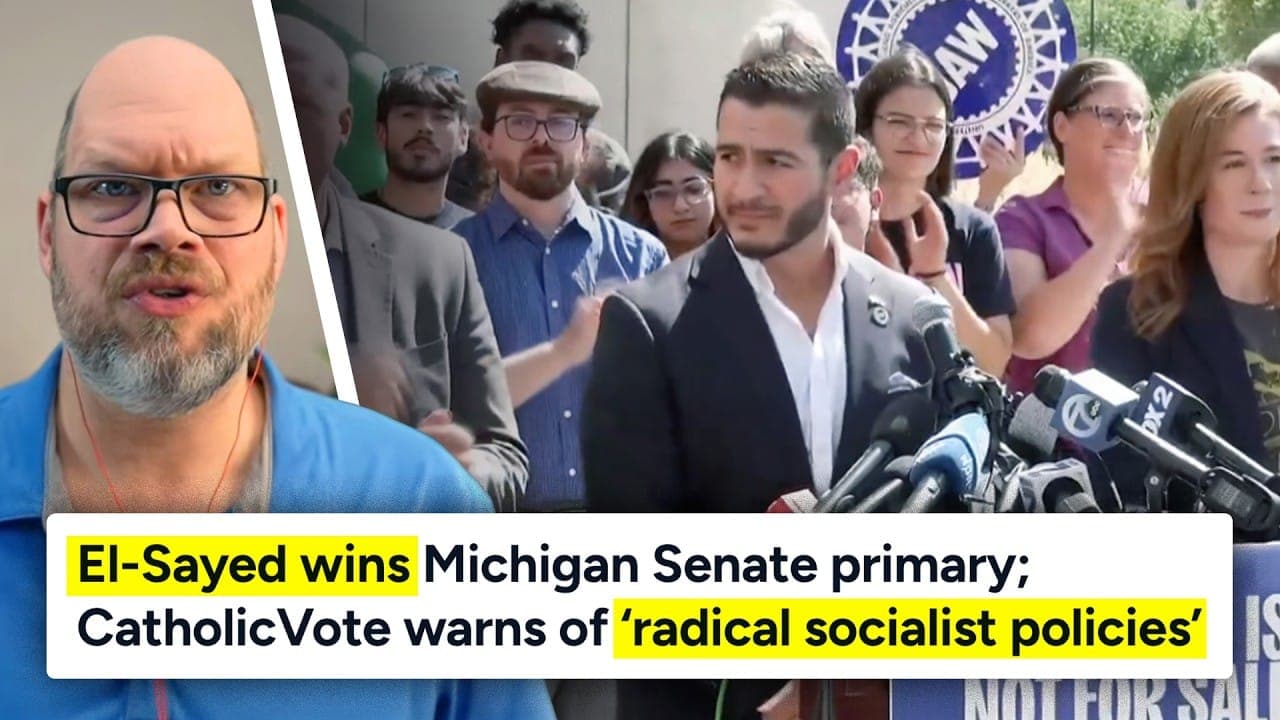
El-Sayed Stuns Dems in MI, Europe's New Migration Crisis, And The WNBA

Fauci Pleads the Fifth in Explosive Senate Hearing, Mamdani's Grocery Stores, And Gen X Bishops
Iran: Trump Vows Revenge for 4 Soldiers KIA, Tom's Backyard Data Center, And Vance x Barron