Beyond the Gate: The Abbey of the Three Fountains
Right beside a busy Roman roadway there sits an oasis of greenery, peace, and quiet that seems many miles and many centuries removed from the hectic world just beyond its walls. It is the Abbey of the Three Fountains, where you can visit the spot where St. Paul died and where devout Trappists live a unique life of work and prayer.
Transcript
Read the full transcriptAuto-generated · 1,119 words
Imagine you are standing in the frantic heart of southern Rome, between high-tech skyscrapers and the non-stop traffic of the EUR business district. A gate opens that feels like a portal through time. Stepping into the three fountains is like putting on a pair of noise-cancelling headphones. The roar of the 21st century city vanishes.
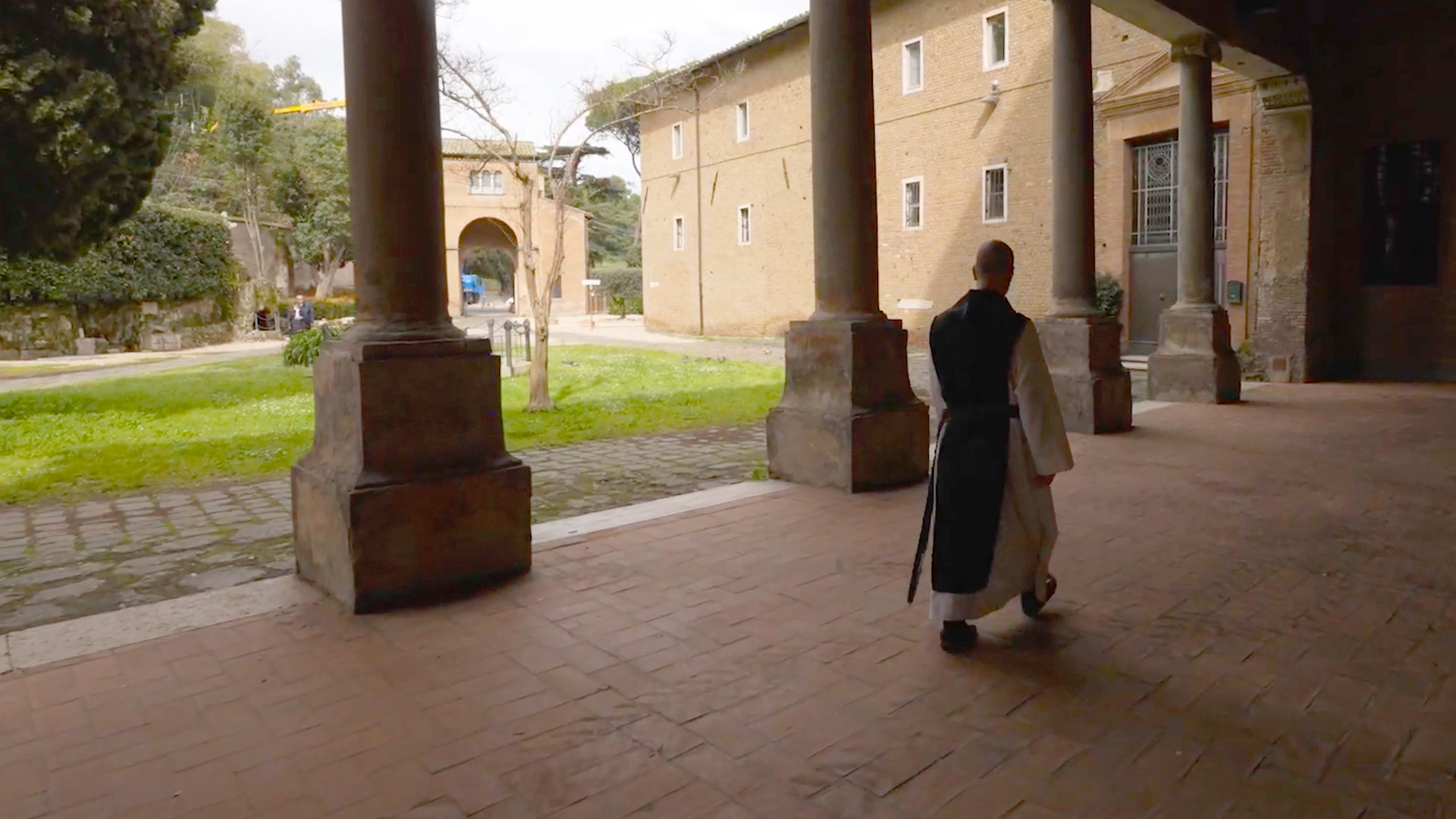
Replaced by the wind, rustling through eucalyptus trees. This is the Valley of the Salvian Waters, a 12-hectare oasis where a secret has been kept for nearly 2,000 years. This is not just any park. It's a sacred complex, housing three distinct churches, and it holds a unique title. It's the only Trappist abbey in the city of Rome. To most of the world, Rome is a collage of honking horns and crowded monuments, but here, inside this bubble of silence, time has simply stopped.
This is a truly special and unique place, because we are located in the heart of the city. Yet the moment you enter, you realize you are in a true oasis. It is so peaceful. You can't hear the noise from outside at all.
It is a wonderful experience because of this disconnect, this total break from the world, despite being surrounded by the city. For me, it is a beautiful experience on several levels. To understand the weight of this silence, we must travel back to the year 67 AD.
Under the rule of the Emperor Nero, Christians were a target, including a man who changed the course of history, Paul of Tarsus, the apostle to the Gentiles. Paul was led here to be executed. Let's walk toward the Church of the Martyrdom.
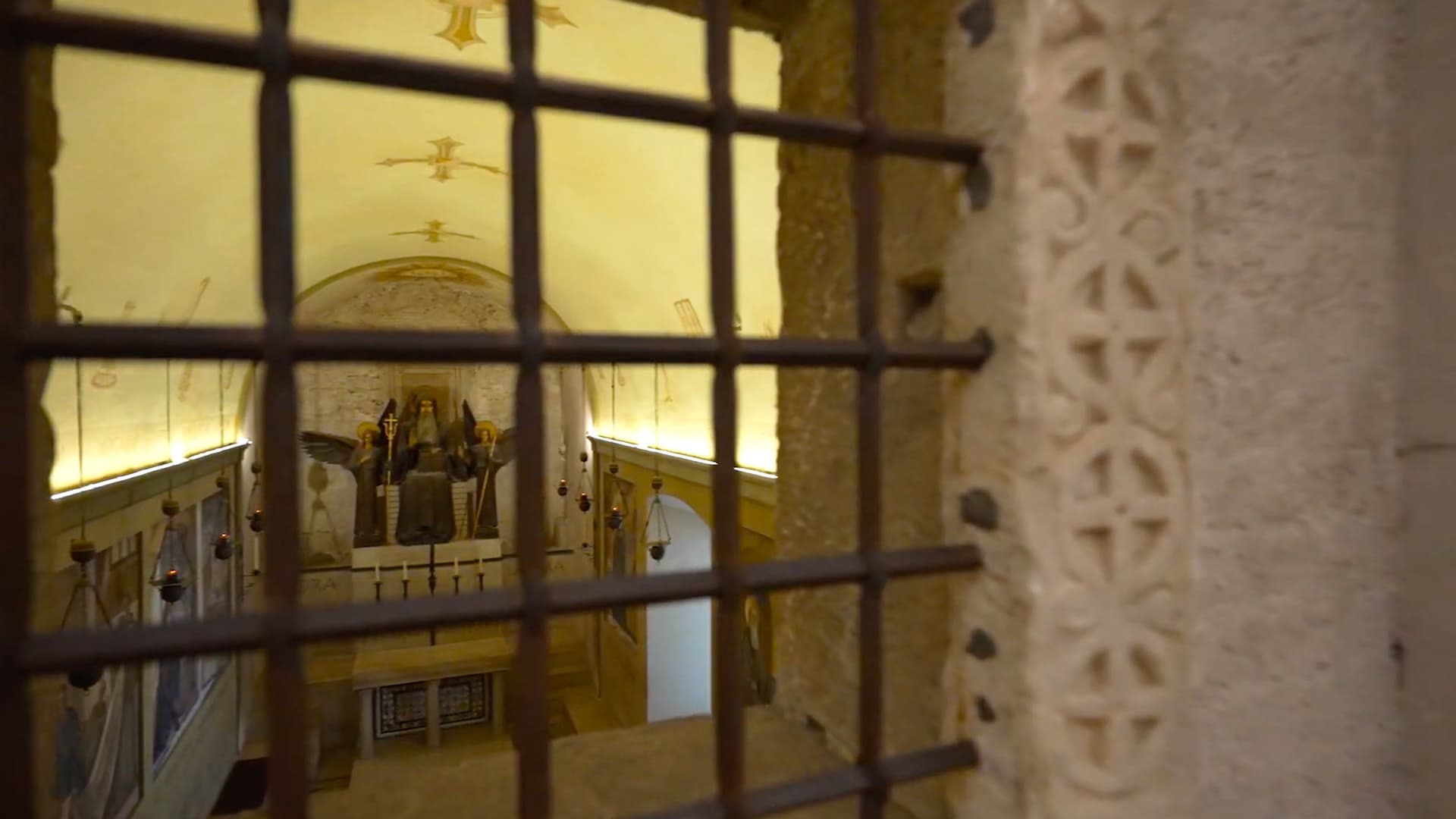
Inside this solemn space, you'll find the very column where tradition says Paul was bound and beheaded. Legend tells us that once his head fell, it bounced three times on the ground. In each of those three spots, a spring of water miraculously bubbled up.
The first hot, the second lukewarm, and the third cold. Today, three shrines still mark those exact spots. It is impossible to overstate the power of this presence and this charism. It belongs to an apostle who truly gave his life right here.
But this place is also important because St. Bernard spent time here in the 12th century. It was here, at the church of Santa Maria Scalaceli, that he had a vision of souls from purgatory ascending toward heaven. This atmosphere invites us to internalize the life of these saints, St. Paul, St. Bernard.
I truly believe they have left an imprint that invites us to follow Jesus in their footsteps. While the rest of Rome is rushing toward the office, the day here begins in the deep dark of 3.45 a.m. In a world dominated by constant notifications, the Trappist monks offer the ultimate digital detox.
They follow the ancient rule of St. Benedict, Ora et Labora. Pray and work. We wake up at 3.45 a.m. every day. Our first communal prayer service is the office of vigils at 4 a.m., followed by a time of silent prayer.
After breakfast, we have a period for prayer and Bible study, Lectio Divina, until 6.45 a.m., when we celebrate the office of Lauds and Holy Mass. Our community is somewhat unique. Currently, we are ten monks from seven different monasteries around the world, and there are also four sisters. We come together to pray, to work, and for communal dialogues.
All these activities are carried out together, brothers and sisters alike. For these monks, work is an extension of prayer. Whether it's cleaning or tending the grounds, every action is performed with a different kind of intention. We do a bit of everything, from cleaning and cooking to working in the brewery, the shop, or the café.
Trappist labor must be simple to foster prayer. It must be performed in communion. Simple work allows one to focus on a specific intention, as if the task is done with more love because it is done prayerfully, with a spirit of intercession. This is vital. A Trappist product isn't just something made in a monastery. It is a product made with love.
The Trappists are also masters of craftsmanship. Their secret is literally rooted in the soil. In the 19th century, this area was a swamp cursed by malaria. To reclaim the land, the monks planted thousands of eucalyptus trees. Those trees are now the soul of the abbey's production.
Historically, the monks discovered that eucalyptus trees had the property of draining the soil by absorbing large amounts of water. Following this, we began to develop products based on eucalyptus, such as liqueurs, extracts, and candies. To be granted the authentic Trappist product label, a product must meet three essential conditions. First, it must be produced 100% within the monastery by the monks, or in the immediate vicinity. Second, the management and production must be under the responsibility of the monastic community.
Third, the profits must be used for the support of the monks and the upkeep of the monastery. With the remainder donated to the poor and social work. These are the three pillars that define a true Trappist product. The authentic Trappist product logo is one of the most exclusive quality brands in the world.
Produce three different types of beer. And all three feature an ingredient grown right here on our grounds. For example, our Tertia beer includes olive leaves cultivated by the community. The Scala Celi includes orange peel from our own orange trees.
Finally, the Triple has hints of eucalyptus leaves from the property. These three beers are 100% made here in our monastery. We also produce honey from our beehives. Lastly, we produce our own olive oil. We have 3,000 olive trees on the property and produce three varieties, all of which are 100% organic.
Currently, our main challenge is volume because we are a small community. Even though our products are of high quality, we do not work solely to make money. We always take the community's capacity into account. We have no desire to become a massive commercial corporation. That is not our intention.
Our journey ends back at the ancient gate. Beyond the wall, cars continue to speed down the Via Laurentina. The Abbey of the Three Fountains remains there, motionless. A reminder that you don't need to travel thousands of miles to find another world. Sometimes all it takes is a door left slightly ajar in a modern summer.
Whether you come for the history of St. Paul, the unique Trappist beer, or the peace of the three churches, this place leaves you with a rare feeling, the memory of who we are when we finally, for a moment, stop running.