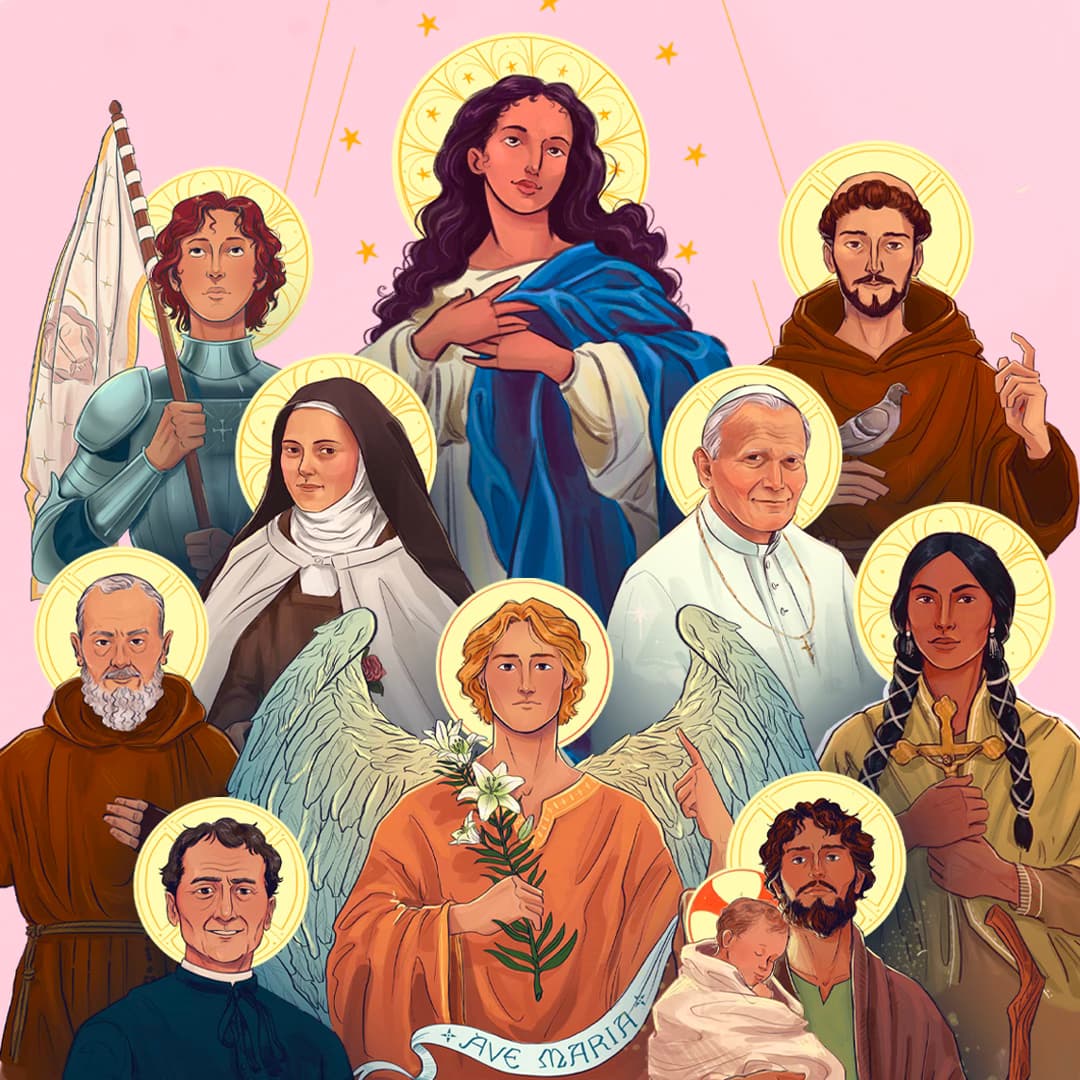
In this episode, we’ll explore the extraordinary life of Saint Vincent of Saragossa.
Transcript
Read the full transcriptAuto-generated · 821 words
Welcome, young history buffs and curious minds, to My Daily Saint, the podcast that digs deep into the incredible lives of the saints, those remarkable people who shaped history and continue to inspire us today. Forget dusty old portraits and boring stories. Today, we're looking out at the choppy waters of the ocean off the coast of Spain. Bobbing in the waves is the body of a man who has just been thrown away by the Roman Empire, hoping he would be forgotten forever, that something strange is happening.
Instead of being lost to the sea or eaten by predators, a flock of ravens, usually the birds associated with death and bad omens, begins to circle him. They aren't there to hurt him, they are there to protect him. They dive and swoop, keeping other creatures away until his friends can rescue him from the waves. This is the dramatic finale of the life of the man we are celebrating today, St. Vincent of Saragassa. To understand Vincent, we have to go back to the year 304.
We are in Spain, which at the time was under the control of the Roman Empire. Now, Vincent wasn't just a random citizen. He was a deacon, ordained by his good friend, Bishop Valerius. Valerius was a holy man, but he needed help communicating with the people. So the young and articulate Vincent became the bishop's spokesperson, preaching all over the diocese for him. But the year 304 was a dangerous time to the allowed voice for Christianity. The Roman emperor Diocletian had decided it was time to wipe out the faith.
He ordered that Vincent and Bishop Valerius be arrested and thrown into prison. The Romans had a strategy. They thought if they tortured the leaders, the followers would give up. But they underestimated our saint. The Roman governor, a cruel man named Dacian, tried to break them. Eventually, Bishop Valerius was exiled, sent away to live in banishment. This left Vincent all alone to face the full fury of the Roman Empire. Dacian figured that without the bishop, the young deacon would crumble. He was wrong.
Dacian did everything he could to crush Vincent's spirit. The historical accounts of what happened next are intense. Vincent was stretched out on a torture device called the rack, and his skin was torn with iron hooks. But Vincent didn't crack. Dacian got angrier. He ordered that salt be rubbed into Vincent's wounds to increase the pain. And then he had Vincent burned alive on a red hot gridiron.
Throughout all of this, Dacian had one specific demand. He wanted Vincent to hand over the scriptures, the holy books of the Bible, and burn them according to the emperor's orders. Imagine the scene. Vincent is in agony, physically broken, facing a powerful governor who holds his life in his hands. All Vincent has to do is burn a book, and the pain stops. But Vincent looked at the governor and refused. He would not betray his faith or destroy the word of God. Dacian was furious.
He had Vincent thrown back into a dark prison cell. But even there, locked in the dark, Vincent won. Vincent actually converted his jailer to Christianity. Imagine that. You are the guard watching a prisoner who has been tortured within an inch of his life, and that prisoner has so much peace and strength that you decide, I want to believe in whatever he believes in. Vincent eventually died in that prison in 304 AD. Now, remember the beginning of our story. The Romans of Dacian threw his body into the ocean to ensure he wouldn't have a grave, but the faithful Christians recovered him, thanks to those protective ravens, and buried him at what is now known as Cape St.
Vincent. St. Vincent is the patron saint of a very wide variety of people. Because of where he lived and died, he is the patron saint of Valencia, Saragossa, and Portugal, but he is also the patron saint of sailors, brickmakers, and, perhaps surprisingly, vinegar makers and winemakers. Vincent used his voice to help someone else and to spread the truth. Then, when the pressure was on, he refused to stay silent or give in to a bully like Governor Dacian. You, too, can be a spokesperson for good.
Is there someone in your life who is quiet, shy, or perhaps being picked on? Be their voice. Speak up for them when they can't speak for themselves. Or, like Vincent refusing to burn the scriptures, speak up for what you know is right, even when others are pressuring you to do something wrong. St. Vincent showed us that you can hurt the body, but you cannot break a spirit that is dedicated to the truth. Thank you for joining us on My Daily Saint. We look forward to sharing another incredible story of faith and courage with you tomorrow.
More from My Daily Saint

Listen Next

September 26: The Troublesome Dominicans
The American Catholic Daily Reader Podcast

Women of Chivalry: The Genius of Courage
The Shield and the Cross
The Virgin of the Poor: Mary's Smile in the Cold of Banneux
Mother's Mantle

Hallowed Hollows: From Hidden Gems to Discovered Treasures
Hollows of the Faithful