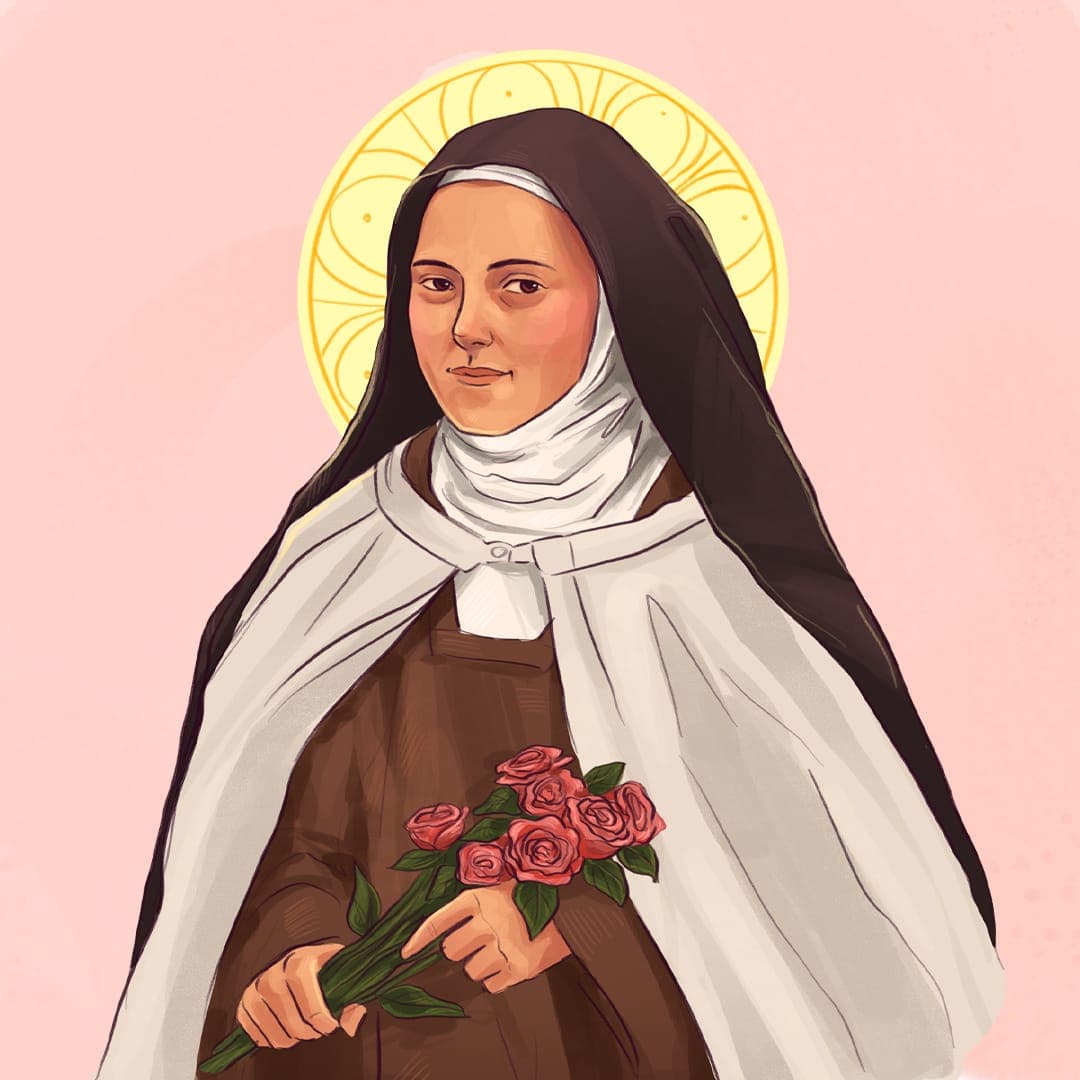
In this episode, we’ll explore the extraordinary life of Saint Thérèse of Lisieux.
Transcript
Read the full transcriptAuto-generated · 848 words
Welcome, young history buffs and curious minds, to My Daily Saint, the podcast that digs deep into the incredible lives of the saints, those remarkable people who shaped history and continue to inspire us today. Forget dusty old portraits and boring stories. Today, imagine that you are 15 years old. You have traveled hundreds of miles across Europe to Rome. You are standing face to face with the most powerful leader in the world, Pope Leo XIII.
Guards are watching you. Adults are whispering, telling you to stay quiet and follow the rules. But you don't. Instead, you break protocol and beg him for the one thing you want more than anything else in the world. You are begging him to let you enter a strict, silent, and hidden monastery. That is exactly what a young girl from France did. Her name? Therese Martin.
Before she was a bold teenager staring down the Pope, Therese was a girl struggling with a lot of heavy sadness. She was born in Normandy into a deeply devout family. In fact, both of her parents, Louis and Zelie Martin, were so incredibly holy that they were actually later canonized as saints themselves.
But growing up wasn't easy. When Therese was just four years old, her mother died. She became incredibly sensitive and was constantly prone to tears. If someone looked at her the wrong way or criticized her even a little bit, she was devastated. She became completely dependent on the approval of everyone around her just to feel okay. Have you ever felt like your emotions are totally controlling you? Therese knew that feeling well. The turning point came on Christmas in 1886. Therese was a young teenager, and something shifted inside her.
She later described this exact moment as her complete conversion. She made a firm, deliberate choice to overcome her emotional fragility. She decided she wasn't going to be ruled by her tears or her desperate need for attention anymore. This was the quiet spark of what became a deliberate, incredibly disciplined interior life. Armed with this new strength, she made that extraordinary effort to appeal directly to the Pope, and at 15, she successfully entered the Carmelite convent at Lisieux. Now, you might think a convent is full of angels floating around, or a place where grand miracles happen every day, but it wasn't like that at all.
Instead, it offered a daily boring routine. It offered clashing personalities and annoying people. Above all, it was a completely hidden life. But this hidden, routine place was exactly where her life's calling unfolded. Therese came to a massive realization.
She knew she was never going to perform great, headline-making, external works. She wasn't going to be a heroic missionary traveling the globe, a martyr facing down wild beasts, or the famous founder of a new religious order. So, how could she be great? She developed a totally unique spiritual insight that she later called her Little Way. This wasn't a shortcut or a reduction of holiness. It was a concentration of it. Her strategy was this. She would do the smallest, most ordinary things with complete, intentional love.
She wouldn't ask for any recognition. She wouldn't look for any emotional reward. She would just love, without exception. When a sister in the convent irritated her, and trust me, there were a lot of them, Therese didn't snap back or gossip. She deliberately chose kindness. She took on the chores and tasks that went completely unnoticed by everyone else. She actively resisted the desire for comfort and consolation. Her holiness wasn't based on warm, fuzzy feelings. It was based entirely on the strong choices of her will.
But the story takes a dark and tragic turn. In her final years, Therese contracted tuberculosis, a terrible and painful disease. As her body suffered, her mind and spirit did too. She experienced what she called a darkness of faith, a terrifying, isolating sense that God was completely absent.
Did she get a magical happy ending where the darkness vanished before she died? No. But she continued. She pushed through the darkness. Before her death, she wrote her autobiography, Story of a Soul, because she was ordered to do so by her superiors. That book went on to become one of the most famous and influential spiritual texts in modern Christianity.
St. Therese was named the patron saint of missionaries, florists, and those who suffer from illnesses like tuberculosis. Your challenge this week is to practice the little way. Think of a small, everyday task that usually annoys you. Maybe it's taking out the trash, unloading the dishwasher, or maybe it's just holding your tongue when someone gets on your nerves. Instead of sighing or complaining, do it with complete, intentional love. Don't announce it to your parents or friends so they'll praise you. Do it in secret.
Do a hidden, small thing with great love, just like Therese. Thank you for joining us on My Daily Saint. We look forward to sharing another incredible story of faith and courage with you tomorrow.