Join us for a story of faith and courage in America on this episode of the American Catholic Daily Reader podcast.
Transcript
Read the full transcriptAuto-generated · 463 words
Welcome to the American Catholic Daily Reader podcast. Today is October 7th, and our story is A Show of Unity. The American Civil War fractured more than the North and South. It fractured families, communities, and churches. Afterward, many doubted whether those breaks could heal. But not Baltimore's Archbishop Martin Spalding. As Spalding saw it, what the nation needed was hope. Moreover, he believed the best way to give it hope was to provide a demonstration of unity, to show the country that men from north and south, east and west, could come together and speak as one.
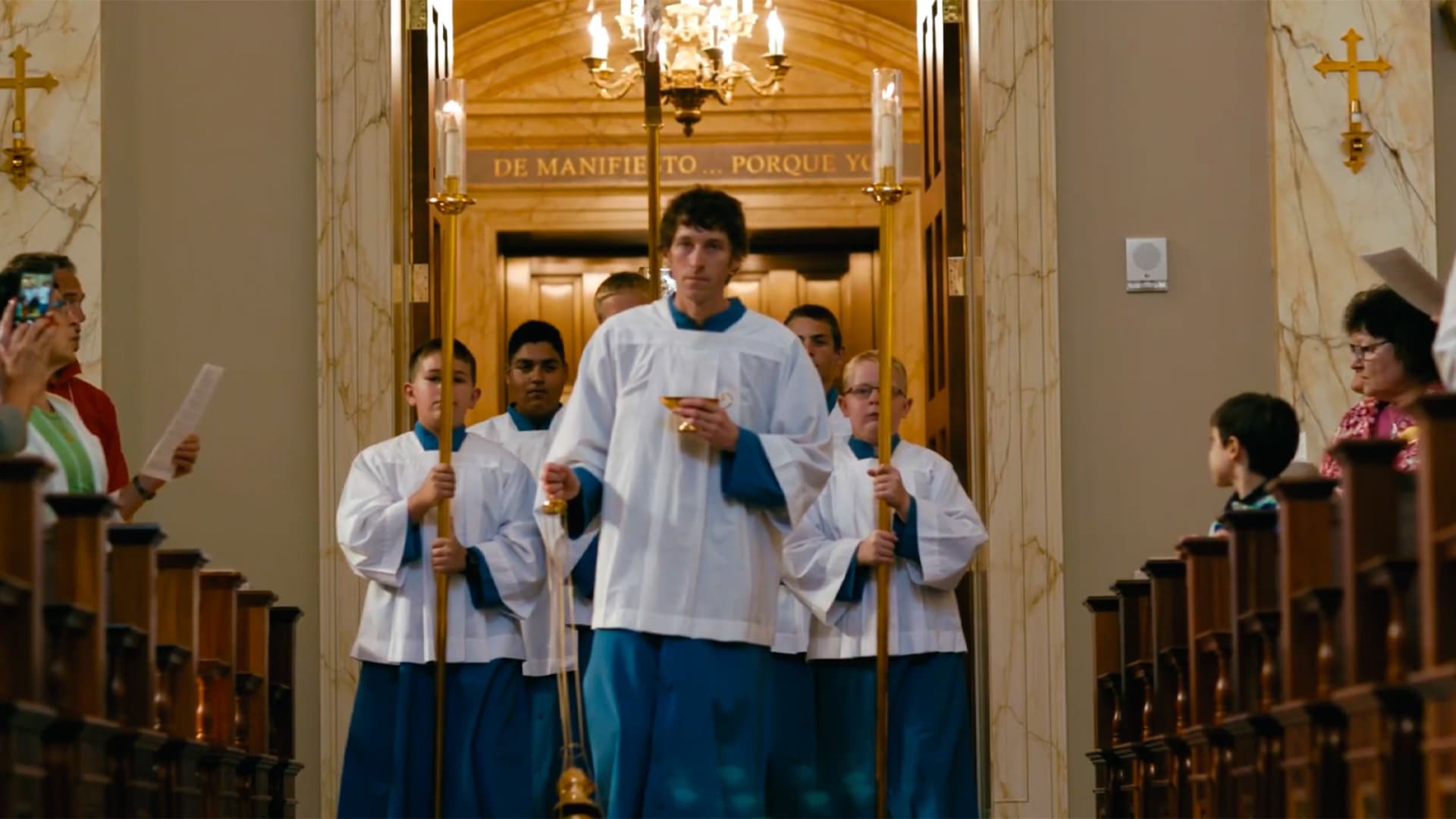
And so, a year after the war ended, the Second Plenary Council of Baltimore convened. On October 7, 1866, thousands of onlookers stood in the streets of Baltimore to watch seven archbishops, 38 bishops, three abbots, and 120 theologians, all dressed in full regalia, solemnly process into the Cathedral of the Assumption of the Blessed Virgin Mary. The bishops came from Alabama and New York, Georgia and Ohio.
Some, such as Natchez, Mississippi's William Elder, had championed the Confederate cause. Others, such as Cincinnati's John Baptist Purcell, supported the Union with equal fervor. But they marched side by side into the cathedral. Once inside, the bishops tackled an agenda equally shaped by the war.
If not for the onset of fighting in 1861, the bishops would have met as scheduled in 1862 and discussed questions of doctrine, liturgy, and ecclesiastical policy. They still had those questions to discuss, but they also had to address the problems created by millions of newly freed slaves who needed work, education, and spiritual care. Additionally, the bishops had to find ways to provide for devastated families, parishes, and communities on both sides of the Mason-Dixon line.
For fourteen days, America's bishops examined those problems and more. In the end, they resolved to pursue some solutions privately and address others publicly. They then closed the Second Plenary Council as solemnly as they began it. Only this time, as the last bishop processed into the cathedral, President Andrew Johnson processed in behind, putting his stamp of approval on both the much-needed show of national unity and the bishop's concern for post-war America.
Spalding's example teaches that reconciliation is possible even after deep division. Unity begins when leaders act with courage, integrity, and vision, setting aside old enmities for the greater good. Faith can guide such reconciliation, offering moral grounding when politics alone may fail. By focusing on shared values and common purpose, communities can rebuild stronger than before.
Identify a relationship or community fractured by conflict. Take one concrete step today toward reconciliation, even if small. Thank you for listening to the American Catholic Daily Reader podcast. Join us tomorrow, October 8th, for another story of faith and courage in America.