Reviving Hope
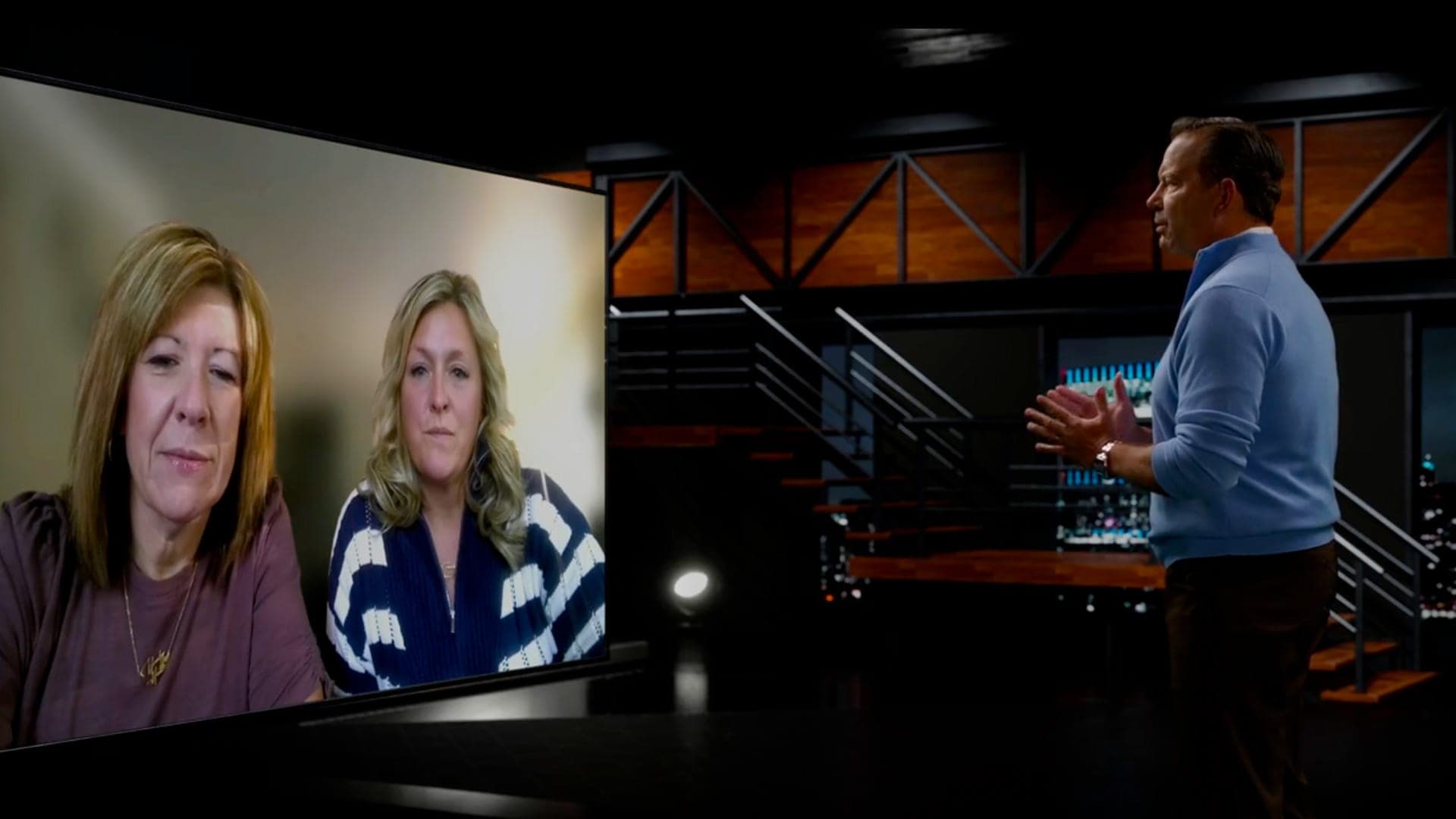
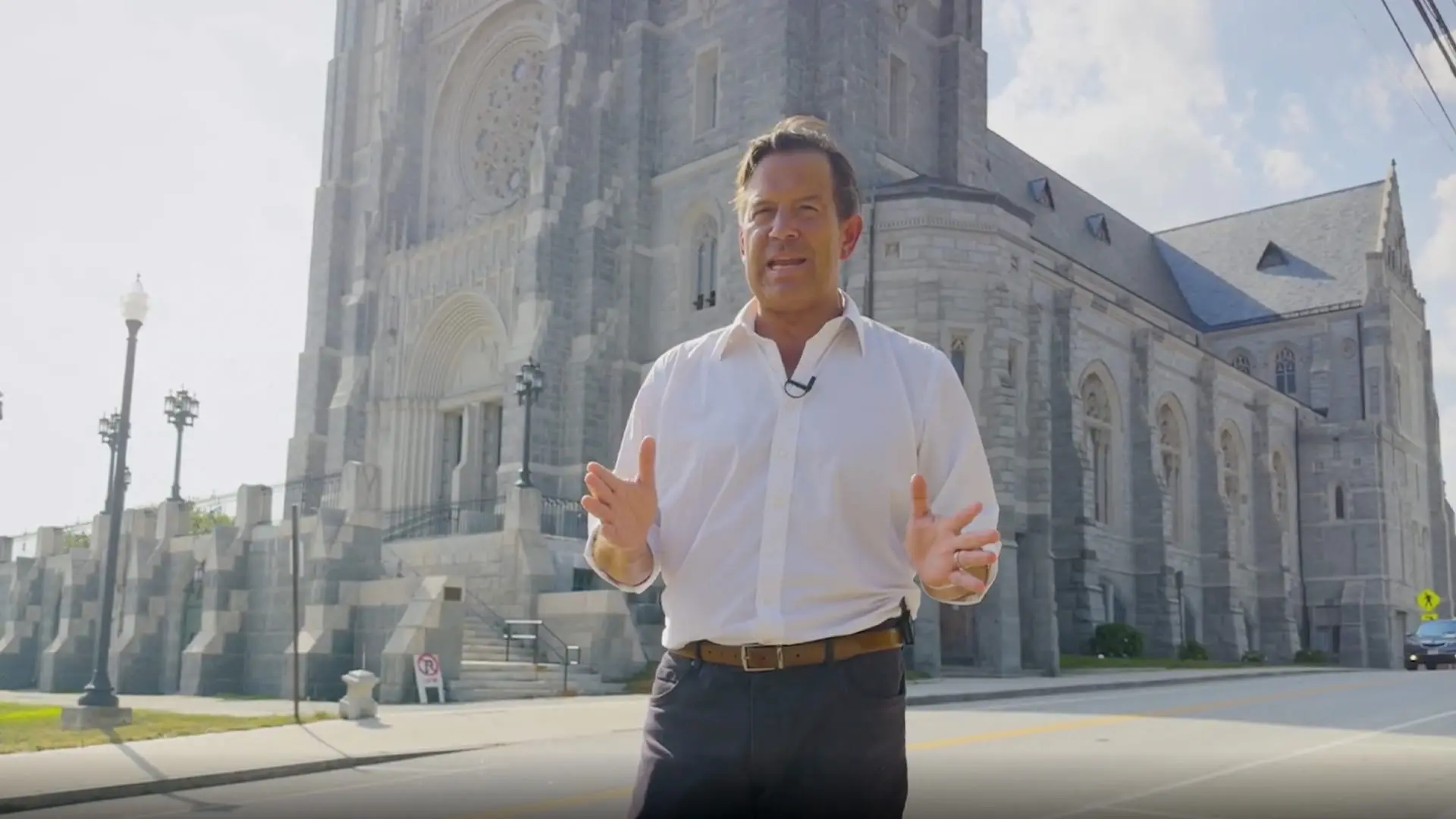
Join Steve Cortes on a visit to his hometown of Chicago, where an independent school called Hope Academy is providing an alternative for children who might otherwise be lost to Chicago’s rampant crime and failing public schools.
Transcript
Read the full transcriptAuto-generated · 5,112 words
The hand that rocks the cradle is the hand that rules the world. That axiom, it's undoubtedly true, particularly as it relates to the irreplaceable value of mothers. But what about the hands that teach the cradle? What about the system that is supposed to form young minds and prepare our children, our treasures, for lives of success, virtue, and dignity?
Well, the sad truth is that our educational system in America, it is failing our children, and it is failing our families. There are bright spots, to be sure, but overall, the undeniable reality is that American education, on the whole, is simply not producing the kinds of young adults a healthy society needs. Our children are not being prepared academically with the skills they need to thrive in a digital age, and they are not being formed with the character to function as responsible and loving adults capable of forming a high-trust society.
And perhaps worst of all, they are subjected, increasingly subjected, to toxic indoctrination. That teaches them a series of woke myths, lies, such as making young Americans feel guilty about some characteristic they were born with. For example, being a male who happens to have white skin, or even just being a male at all. Now, far too many American families, they are trapped, quite literally trapped, in failing and in even abusive school systems.
That work well for the bureaucracy, and for the corrupt organizations that benefit, especially teachers' unions, but doom precious children to lives that will never live up to their full potential. Far too many of these parents have been told that education is simply not their expertise, and to kindly butt out of it.
Think I exaggerate on this point? Well, here's the former chairman of the National Democratic Committee, Terry McAuliffe. I don't think parents should be telling schools what they should teach, but I'm not going to let parents come into schools and actually take books out and make their own decisions.
McAuliffe's dismissive attitude and almost cruel approach to children, it's unfortunately not rare. Among the power brokers of the educational systems of America. Now, I mentioned the teachers' unions, which mostly have an incredibly corrupt and poisoned leadership group. Now, let me be clear on this point. The vast majority of actual teachers, they are caring and dedicated public servants who love children and want the very, very best for them. But those very teachers, in fact, masses of them, they too, they too are trapped in a terrible system that is subject to unwell tyrants like Randy Weingarten.
Here's a sample of her temperament. Choice. Rental rights. Those same words that you heard in terms of wanting segregation post-Brown v. Board of Education, those same words you hear today, the same words, an attempt to divide parents versus teachers. In that point, it was white parents versus other parents, but it's the same kind of words.
Now, before I detail some of the metrics that prove my points about broad educational failure, let me highlight one bright spot. I'm now here in Chicago, my hometown. There's a lot going wrong with Chicago. Unfortunately, it's become the poster child for the scourge of lawlessness, unsustainable debt, and just general urban decay. Sadly... My hometown, Chicago, it deserves that reputation. But one Chicagoan has dedicated his very life to reversing that trend, to making sure that no talent is wasted, and no one's soul, no one's spirit is neglected.
Bob Mazikowski, he's a dear friend of mine, but more importantly, he's a true pioneer in education. His conversion to Christianity is the most important thing in my life, and I think that's the most important thing in my life. It changed his heart, and it changed his life, and set him on a mission that led to founding one of the most impressive schools in America, a place where academic excellence is expected and realized, and students are showered with love and timeless gospel truths.
We will visit Hope Academy, in part to be inspired about what is possible. But also to be reminded of the contrast, of how badly most schools are failing our families. Nestled in Chicago's west side, just blocks from some of the most dangerous streets in America, is Chicago's Hope Academy. More than just a school, it's an island of hope, and a model for what schooling can be. Students come here from all walks of life, but once here, they learn common values, like working hard, respecting others, and giving back for what you...
Which is exactly what the school's founder learned in his life. We were married about eight months and moved here. We had new job offers, and I just felt it would be better to be out of New York City.
So, we moved here, and by mistake, take a rehab brownstone two blocks from Cabrini Green Housing Project, which at the time was one of the worst housing projects in America. This is 1989. And because you didn't know the city, you didn't know to avoid this area. Beautiful. Fireplace, you know, two-story. I mean, I remember I was sitting on my deck, and I hear bum, bum, bum, bum, bum, and I thought it was fireworks.
But it was shooting. So, on the corner, and this is how I eventually meet you, on the corner were two baseball diamonds, and I started to have a catch with some boys. I bought some baseball gloves. I was just goofing around. No kids at the time. Just boys hanging around. You don't know them. No. I had seven or eight boys, and I said, take these flyers. I printed up 40 flyers, Little League tryouts, Saturday morning at 10. I'm trying to get seven more kids so we can have a team and play my friends in the suburbs.
And 300 boys show up. You were looking for eight, 300 kids. Yeah, so now I've got 300 kids that signed a Little League baseball Williamsport form to play. You're a businessman. I'm a financial planner. I'm with Northwestern Mutual. This isn't my fight. What started as a baseball little league for neighborhood kids eventually led Bob to create an entire school. Seeing the plight that inner-city kids faced, he felt this was his calling.
I think the west side of Chicago is the worst neighborhood in America. Yeah, right? Generally. We're the new schoolers. That's why we're there. We've got the devil right where we want him. Right. So, you want to move into, that's our, let's move, because I tell the young, I spoke at Wheaton College. I said, look, get a good job, get a good spouse, and move to a bad neighborhood. If it's a good neighborhood, it doesn't need you. It seems like, in American society, it's almost expected to run away from human need, and you run right toward it.
I mean, we have a nice brownstone. It's a big house, because I have a whole lot of kids in it, and a bunch of other kids live there. Great. Well, that is a fair question, you know. You know, I'm not Mother Teresa, but at least we could downsize it, right? And I've been blessed to make some good money, right? Yeah. If you cap your income, that frees up a lot of money. Sure. Right? So, we were looking to start a school.
By the way, you say you're not Mother Teresa. I think you kind of are, but with a bad mouth. Well. Right? You're Mother Teresa with profanity. Yeah. A little more attitude, a little more edge. Yeah. So, we've been thinking of doing a school for a long time. So, we bought the school where we're sitting in right now from the Archdiocese for $1,950,000. So, I put down seven. This was a closed Catholic school. Yeah, and I put down $750,000 and borrowed the rest, and I had to personally guarantee a note.
So, and I'm just thinking this is what God wants us to do, and we open with about 80 or 90 freshmen and sophomores the first year, 20 years ago. He may not be Mother Teresa, but Bob Muzikowski did start one of the most impressive high schools in America.
While Chicago's public schools are failing our children, Hope Academy is finding their potential and changing their lives. A full 90% attend college after graduation. A statistic in stark contrast to the neighboring public schools. You're winning titles in basketball. You're sending your best students to the best universities in America, Ivy or equivalent, and you're training kids who don't have that goal or maybe don't have some of those scholarly abilities. You're training them to make really solid livings once they graduate from here to trades.
I mean, you're humming on all cylinders, but it seems to me, well, what's the problem? What's the rub? It's money, right? It's financing. It costs about $16,000, the average family. Pays about three, and it's based on need. We turned on over 100 kids last year, right? Because we just don't have the space, and that's tough. Hope Academy thrived under an Illinois program called Invest in Kids, a law signed by former Governor Bruce Rauner that let individuals and corporations steer their state income tax into scholarships for poor kids in failing districts.
Ninety-nine percent of the students at Hope depend on significant financial aid, and the program was a godsend until billionaire governor J.B. Pritzker, whose own kids go to private school, killed the program. After year five, the new governor, Pritzker, they just didn't put it in the budget. And here, they're putting in like a couple hundred million for Venezuelan immigrants, and this thing brought in like, it might have been 40 million for the investing kids. So, to the state budget, it was immaterial, but to the schools...
We were the number one, we were the biggest receiver. So, and then they just didn't put it in the budget and canceled it. Why? Because the unions pressed them. Siobhan Stevens, who goes by Peaches. sent two of her children to Hope Academy. She is now an employee in the front office of the school, and she knows firsthand what J.B. Pritzker's politics will mean for Chicago kids.
I like to share my story because it's a walking testimony, and what God says. In the Bible, it tells you, tell everyone your testimony. So that they can learn as well, and they can see your healing, they can see your restoration, you know, your joy. So, you raised on the West Side, long-time West Side Chicago resident. Tell us about the alternatives here to Hope, particularly Chicago Public Schools.
What are the alternatives like for these young people if they weren't here at Hope? Oh, man. I mean, you have some that will survive, of course, but for the majority of them, from their backgrounds that I know of, it's like that would kind of diminish their spirits.
Let me ask you about, so Governor Pritzker took away a voluntary tax scholarship program that was incredibly beneficial to Hope and schools like it. It was immaterial in the state budget, but it mattered a lot to places like Hope. Governor Pritzker took that away. He lives in the city of Chicago. Now, he was born into enormous privilege. His kids go to Francis Parker, which is one of the most expensive private schools in the city. Does that strike you as hypocritical, that his children are afforded those opportunities, and then poor black children on the West Side are not?
Well, he's a rich man, you know, and in his mind, he figures that that's what's best for his kids. It may be, but... Everyone doesn't have his funds. Everyone doesn't live exactly where he lives. His trials and tribulations aren't ours, but he has to have empathy. You know, if you don't have empathy in your life, of course, you're just going to think that everything that you're doing is what's supposed to be done, you know? So, Peaches, I know you don't work in politics, but you made a trip to Springfield to effectively lobby to make the case for Hope Academy.
Tell us about that. So, I packed up me a thousand snacks in my car. Filled up the tank, and I told my husband, come on, you got to go, too, because he needs to see a man. Get on in this car, and we're going. So, we all got in the car, and we rode on to Springfield. My goal was to talk to the governor, and so we had waited around and waited around for him to come to the office. His secretary kept saying, well, he's not here just yet, you know.
You guys have to wait. So, he eventually came. And I just, I went over there so fast. Governor, Governor, hi, nice to meet you. I would like to talk to you about, and he says, okay, I don't have that much time, but nice to meet you. And then he walked away, and I was like, I didn't get to say no. I'm going to leave him a note. Yeah, and I left him a note, but no response.
What did the note say? It said, can you please give me a call? And I put my phone number on there. What would you tell him if he called? If he'd have called me, I'd have told him, hey, what is your mission? In your campaign, you said that you were here for the people. We are the people, and we need to be heard by you. We need you to do something. These are children.
So, right there, that corner. Halloween 2023, I think there was 15 people shot on that corner. Fifteen? At a vigil. A vigil for a grandma. A vigil for a deceased grandma? Yeah, a woman had just passed away. This is Manly High School.
About 120 kids go to this school. And how many was it built for? What was the enrollment? 1,400. 1,400 too, wow. Okay, and why then does the Chicago Public Schools system continue to operate, rather than merge these schools that are nearly empty?
The strength of the teachers' union. The Chicago Teachers' Union is incredibly strong. They get what they want. Bob Mazikowski's son, Ike, left a lucrative career path in finance to become principal of Hope Academy. He drove us around the Westside neighborhood, where hope calls home.
Most of our kids are coming from Chicago public schools. These schools have not produced the results to change the career and life trajectories for families to break out of a low-income space to join the middle class. And so when you're seeing that year after year after year after year after decade after decade, There does need to be a reset. If you are growing up on the Westside, going to a Westside high school, you have less than a 10% chance of graduating from college.
When you think about education being the great equalizer, it is more of the great solidifier. You are most likely to be a product of your environment. So, you don't want kids to be defined by their zip code, but based on how it is set up, they are most likely going to.
The U.S. presently spends more on education than every single country on earth, except for tiny Luxembourg, and not just in absolute terms, but also as a share of GDP. We spend more per person, per pupil, than, say, Japan or Germany.
Even though those peer nations produce far superior education outcomes by any metric versus the United States. In 2022, nationwide, we spent $20,000 per student when all levels of government spending are included. That's up over 20% from the levels of just two decades ago adjusted for inflation. During the ridiculous and totally unnecessary COVID panic, We spent $200 billion, that's with a B, $200 billion on education, only to see students regress in every possible way since the senseless lockdowns, draconian measures that were largely compelled by, you guessed it, the teachers' unions.
Now, despite those mountains of money spent, your money, and really money borrowed because we do not even have the revenues, despite all of that, we, the United States, rank 28th out of the 37 most advanced nations in the world for math scores. 28 out of 37. Now, aside from global comparisons, Let's just look domestically at our own performance versus previous levels of American educational attainment.
The widely followed National Standard, NAEP, the National Assessment of Education Progress, it shows right now that a stunning 40% of fourth graders in America are not even at the level of basic in reading. 40%. That percentage of failure is up 29% since pre-COVID panic levels.
For 8th graders in math, it's a similar and dismal story. Here are the numbers. 39% of 8th graders in America are not proficient in math, and that level of failure, that's up 50% in the last decade. What are we truly teaching our young?
What are we passing on to them? As Aristotle often opined about, what is the telos, the telos, the final cause? Why do we educate it all? What values do we seek to inculcate? How do we measure our progress?
The numeric failures, they provide an indispensable guide, but the larger failures actually are better described than shown on a spreadsheet. Do our children feel loved? Are they emotionally stable? Are they confident? Are they physically and mentally fit? Do they feel safe and protected? On that point of safety, consider the absolutely appalling trend of fighting in American schools and the viral nature of those videos that add social media fuel to this very vicious trend.
I'm showing you just a few snippets here, a few terrible snippets of what I am talking about, because I don't want to show actual videos at length, because tragically, that's exactly the goal of a lot of these attacks, to get clicks and to go viral.
But know that this dreadful trend, it's not rare at all, and it's not just confined to inner-city schools. So, if our children are not safe in school, If they are being taught cultural garbage, and if they are not learning the math and reading skills to prepare them for success in the marketplace, then what are the solutions?
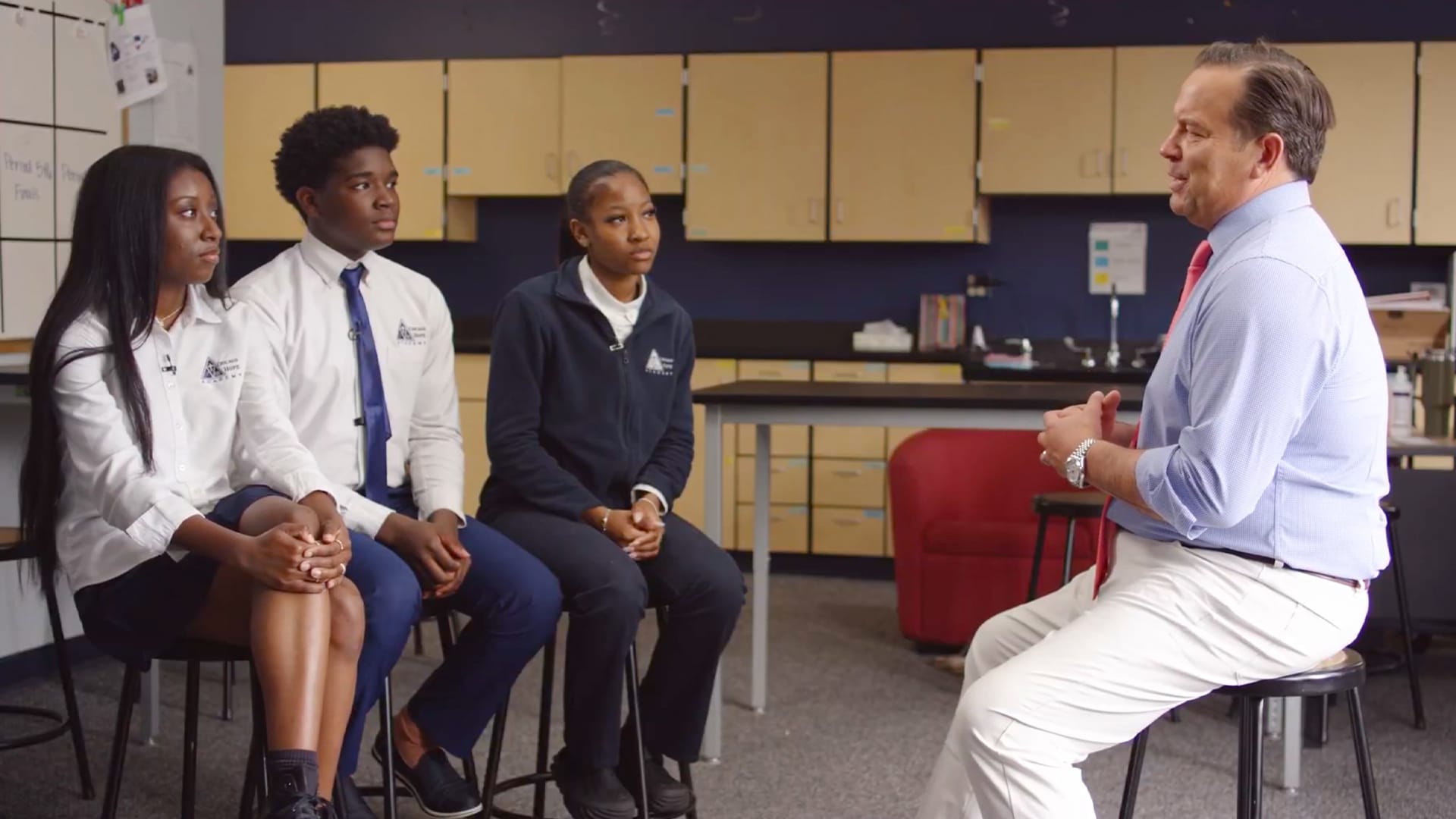
After all, the good book says, don't just curse the darkness, rather light a candle. Those scenes of violence and disrespect are in stark contrast to the respectful and disciplined attitude. We saw at Hope Academy. We sat down with three students who are lucky enough to be on scholarships not revoked by J.B. Pritzker. Autumn, Tim, and Jada.
This school does something that not too many schools do, although I think they should. They take your phones away, right? Yes, they do. Tell us about that. At the start of the school day, every day at 8 a.m., we must turn our phones in to our first period teacher, pair it off.
Also, with personal devices, if you have an Apple Watch, you must turn it in. There are no personal devices allowed during the school day. It's solely just with the devices that the school gives us, and that helps us to be more focused in school, be more interactive with one another. When I first got here my sophomore year, when I transferred in from Philmo, High school. It was kind of weird to me, because I'm like, I went from somewhere where I could have my phones with me all day, but then I also noticed how I wasn't really productive, or I would just waste time where in class I should be taking notes, but I'm here watching Netflix, and I'm not paying attention to class, and I can find myself out in behind where here, I'm more interactive with my school day.
I'm asking questions. I actually know about the lesson. I actually know about the lecture, because I'm there. I'm listening. I'm aware of what I'm learning about, so I actually do enjoy it. Let's talk about classes. Let us get into the academics here, because I know it is a demanding place, not an easy school to go to, right? I mean, there are a lot of great benefits, but I know it is demanding.
So, Autumn, what is your favorite class, and what is the hardest class, if those are different classes? Favorite class, hardest class. Okay, so my favorite class is CTS, Career and Technical Science, which is what I, like, maybe want to become an electrician. But comparative religion, I feel like that is the most challenging class in a way. Not, um...
Not content-wise, but with the work that we have to do. So, Tim, it seems not just in sports, but in all kinds of activities here at the school, outside of the classroom, things like school plays, the arts, certainly sports, faith, that there is a real energy. It is palpable. You feel it as soon as you walk in here, that there is an energy in this place. There is a real school spirit. What do you think is producing that energy and that spirit?
One thing Hope does really well is... Keep everyone involved. It is almost impossible to be like an outsider or not be seen at Hope. I feel like that we are anchored in our religion, and I actually just learned this in my sociology class. One of the fruits of the Spirit is joy, so I feel that this school has just a lot of joy to bring to each other, even if you are down, it is just unconditional. If you are down, someone else to have joy to give it to you.
We always have joy to share with others. It brings the Spirit up. What's up, dude? How are you feeling? Feeling great. Nice. What's up, Trent? Now, every school day here starts with you greeting the students. Pretty animated greeting, right? Tell us about that. Yeah, so, I don't know. I think intercepting kids at the door and making sure the first interaction they have is positive.
And so, if I don't bring that positivity, they might not see it at the start of the day. It doesn't matter if it's winter out time, it's tough when it's... Yeah, in Chicago in January. Five degrees outside. What's up, AG? I think that's special. I think it gains trust. It builds rapport. As much as I'm welcoming the students to make them have a better day, I'm letting the parents know, hey, I've got your kid. Like, they're with us, they're going to be safe, and they're going to be treated fairly.
So, creating a sense of belonging by speaking their name. What's up, Lewis? Nice to see you, buddy. To truly love these children is to also be demanding, right? To expect excellence. Oh, for sure. I think it's super important to have standards for kids.
Incredibly valuable to create guardrails for students. When you work in a middle school, little kids, little problems. Or in high school, big kids have big problems. You're one decision away from ruining your life. I don't want to be bleak or pessimistic.
But you really have to make sure students understand that they must avoid big mistakes. There's so much that kids can't get into. There's so many negative influences on the streets, and so for the seven hours that we have them in the school, and the three or four we have them for sports or extracurricular activities, we want to make sure that we're hands-on, we're present. But I also want to talk about the funding, then, because you're surrounded by public schools very near here.
You drove us past some public schools that are generally failing, right, on any metric. Very few students there. Terrible test scores, extremely high absenteeism, truancy. These are systemic problems, right, at your surrounding schools. It seems like if some of those resources that all taxpayers are paying, if those resources were dedicated to Hope and to other schools like it around America, we'd be a way better society, and it'd be a way better investment. Your thoughts? Yeah, I think what's tough about our admissions reality is that when kids aren't accepted here.
Some of their only options are the underperforming local public school. And so, kids and families feel a little trapped. If they can't get into Hope, if they can't get the scholarship, or they don't get recruited for being a top athlete, they're going to be stuck. We have about 75 seats available for freshmen. We'll have about 350 kids apply. And so, the wait list gets kind of long. If you're a 9th grader starting high school at 10 Westside. I think, allowing parental choice for private schools is an initiative we haven't tried in Chicago.
But when you think about a lot of politicians or members of the Chicago Teachers Union, they send their kids to private schools. And so, private schools shouldn't just be for wealthy kids. Let us be clear on an important reality, though. The problems in education, they are hardly confined to just poor inner-city schools and neighborhoods.
The academic inadequacies are more pronounced in those places, to be sure. But some of the cultural failings? The indoctrination of young minds and souls with toxic, Marxist, anti-American, nihilist garbage? Well, that problem? That disease? It normally actually gets worse the wealthier the school district. So, on a lot of fronts, so much work to do, and such a dire need for parental choice, not just school choice or vouchers, which are great and clearly part of the fix, but instead a much broader, holistic empowerment of families and children through parental choice.
And through reforming and revitalizing standard public schools in America, which will surely remain the dominant force in education for the foreseeable future. So, Austin, tell us the circumstances right now and the metrics and the results. What should people know nationwide about the success or failure of Chicago Public Schools? So, Chicago Public Schools are spending around $30,000 per pupil per year. You're looking at about a third of kids who can read or do math at grade level across the system in any given year.
So, we're here at Chicago Hope Academy. Obviously, the kids here are doing just fantastically well. Those same kids are from the same neighborhoods that are going to a nearby school like Manly, which was built for more than 1,500 students. Only around 150 students are going there now at any given time. Fewer than 10% can read or do math at grade level. And in terms of per pupil spending, you're looking more at like the $50,000, $60,000 range. So, when you look at those schools that are really empty because parents have chosen something else.
And not for lack of funding. Not for lack of funding, and we have a mayor, Brandon Johnson, who came out of the Chicago Teachers Union, and Brandon Johnson said something really interesting at the start of his term, which is that he's not here to grade the system, he's here to fund the system. So, to an outsider, they might say, this is just a Chicago problem. Is Chicago just so poorly run and peculiar that these are just Chicago problems? I don't think it's just a Chicago problem, and it's not even necessarily a low-income student problem.
I think you have a lot of public schools in Illinois, across the state, not just in our big city, but across the country, that are really underperforming. And I think that is why it is so encouraging that you do see school choice flourishing across the country, really growing in a big way, because you shouldn't have to wait on that system to reform itself. You should give families the power to choose something that they think works better for them. State after state, you are seeing universal school choice programs pass, which is really a totally new thing in the last 10 years.
Millions of kids now across the country have access to the school of their choosing, which is amazing. But here in Illinois, And really, it affected the school, Chicago Hope Academy. We were the first state and only state to date to actually kill a school choice program. What would be your message to a progressive who is well-meaning, who really cares about helping disadvantaged people in society? What would be your message to them, to sell them on the idea of choice? If you believe that education is a human right, you should not trust politicians to be the ones deciding.
Who gets it? What the quality is? Being able to redline, essentially, families into neighborhoods where they can only have one choice in school, if you believe that that is a foundational human right, you should believe in giving the parents the choice of an education that's best for their kid. And I think what everybody can agree on is that monopolies are bad. And we don't want to have a monopoly in one of the most important things we do as a society, which is educate young people.
You want to have competition. Now, what does parental choice mean? School vouchers, yes, for a start. Allow all parents and students to make the kinds of choices that wealthy parents can now make among various public schools or private schools. But even more than vouchers, true empowerment.
Through ESAs, for example, educational savings accounts, which spread rapidly across America right now, thankfully, where education dollars, they flow from taxpayers straight to families, who are then allowed to use those resources broadly on education, from tutoring to school uniforms to online courses to a tuition plan that saves for higher learning.
We will also not ignore public schools. No matter what reform looks like, most American children are going to be educated in public schools. Therefore, we must intervene. We must run for school boards and pressure elected officials to create and oversee curriculum programs that foster true intellectual development and not propaganda, plus a love of our country and an environment of safety and authentic learning. We can fix this problem. We must. Our children are counting on us. Now, let's get to work.