ANALYSIS | Mike Rogers distances Senate campaign from AIPAC as young Republicans sour on Israel
While Israel and Palestine have reshaped the Democratic Party’s politics, proximity to Israel may also hamstring GOP candidates.
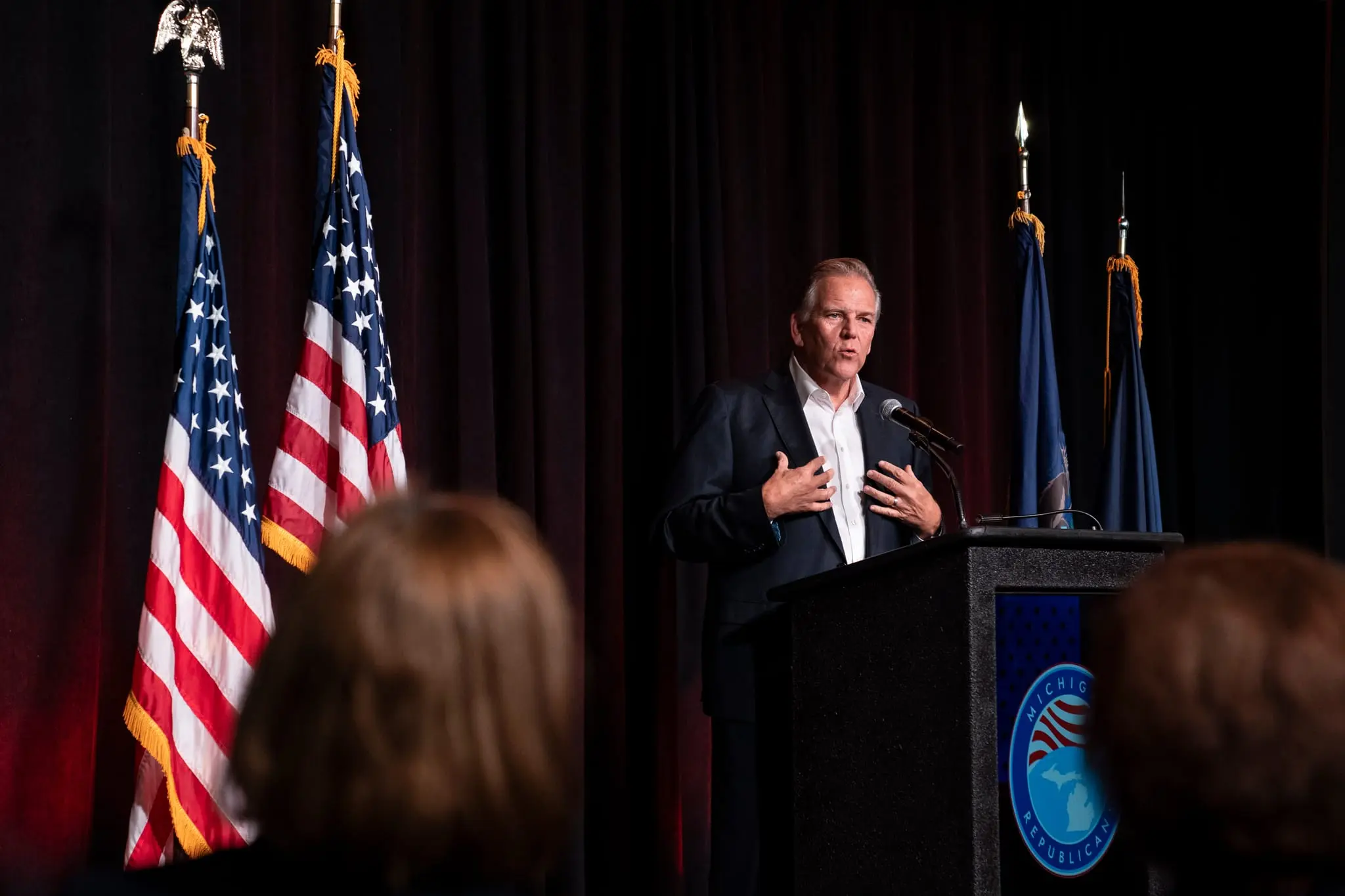
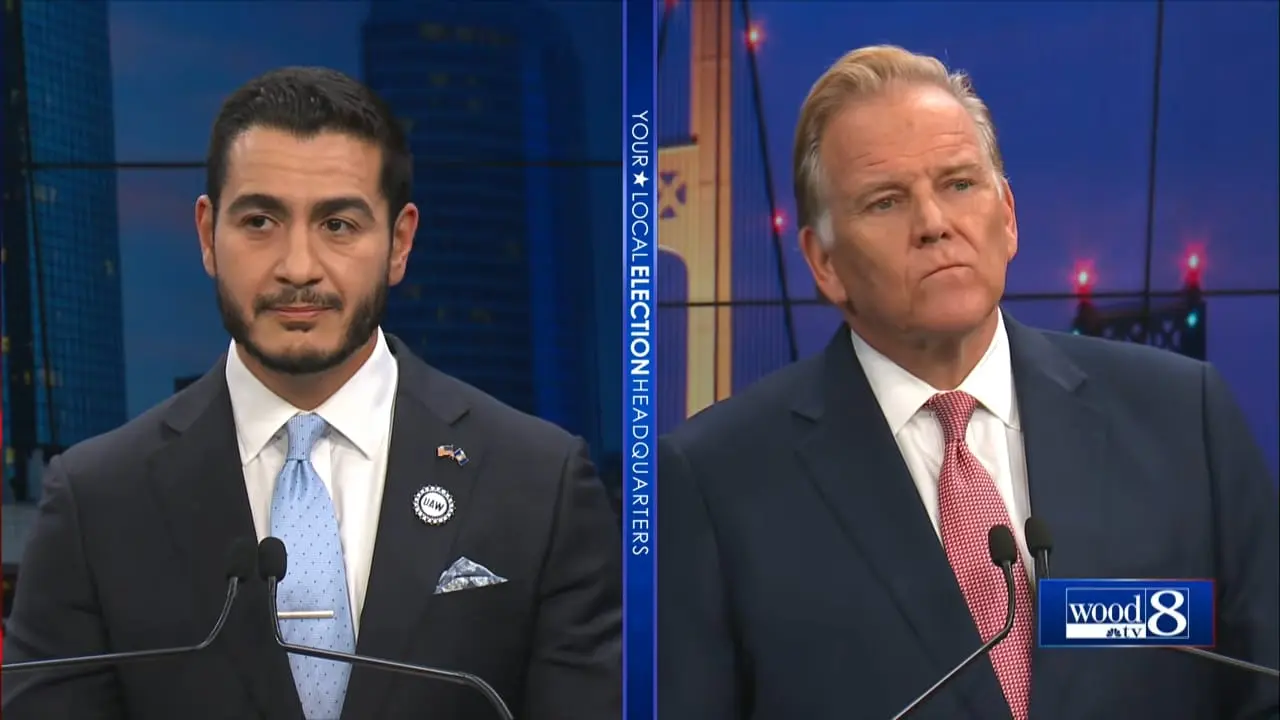
A Republican Senate candidate with a history of support for Israel is now distancing himself from one of Israel’s most powerful lobbying groups. Michigan’s Republican Senate nominee Mike Rogers reportedly requested that the American Israel Public Affairs Committee (AIPAC) not campaign on his behalf against the state’s Democratic Senate nominee, Abdul El-Sayed.
According to Axios, Rogers and his allies asked AIPAC not to campaign or air ads for Rogers under the AIPAC name, fearing that affiliation with AIPAC may actually damage Rogers’ campaign, despite the fact that the lobbying group has raised an estimated tens of millions to spend on the race.
Rogers met with AIPAC chairman Michael Tuchin earlier in the month, after which the Israel-aligned lobbyist “shelved” a completed ad promoting Rogers over El-Sayed.
The issue of AIPAC featured prominently in El-Sayed’s primary contest against Rep. Haley Stevens, D-Mich., with El-Sayed emphasizing that Stevens had allegedly accepted roughly $30 million in campaign funds from the pro-Israel organization. Stevens lost the primary, despite nearly a decade of congressional experience.
AIPAC spending as a detrimental factor is not relegated to Michigan. In New York, incumbent Democratic Rep. Dan Goldman was defeated in a Democratic congressional primary by New York City Comptroller Brad Lander, a former member of the Democratic Socialists of America (DSA) who was endorsed by Mayor Zohran Mamdani. Similarly, incumbent Rep. Adriano Espaillat, D-N.Y., lost his primary race against DSA-aligned newcomer Darializa Avila Chevalier.
Both Goldman and Espaillat were endorsed by AIPAC and the lobbying group spent millions on campaign ads targeting Lander and Chevalier, but the incumbents still lost. In Massachusetts, Democratic Rep. Seth Moulton actually returned campaign funds donated by AIPAC.
Support for Israel was once a bipartisan issue, one of the few policies that both Democrats and Republicans regularly agreed on, even as the two parties grew increasingly polarized on nearly every other issue, from immigration and the economy to abortion and sex and gender issues.
In recent years, the Democratic Party’s more progressive arm has taken left-wing anti-colonial ideology to its natural conclusion and turned against Israel. College students, professional activists, and elected officials have participated in or supported rallies, protests, riots, and encampments combining support for the suffering in Gaza with condemnation for Israel — and at times crossing the line into threats or violence directed at Jewish people.
The vitriol directed at AIPAC and its endorsees among Democrats is expected, particularly as socialist and Islamist candidates come to the fore. Recent studies, however, have suggested that Republican voters are also souring on support for Israel and questioning U.S. involvement in the Middle East.
An April survey from the Pew Research Center found that favorable views of Israel have fallen steeply since 2022, while unfavorable views have risen, with 60% of American adults now reporting a negative view of Israel and its government. Nearly as many (59%) shared that they do not trust Israeli Prime Minister Benjamin Netanyahu to “do the right thing regarding world affairs.”
While a majority (59%) of Republican voters still said that they have a very or somewhat favorable view of Israel, nearly 60% of Republicans under the age of 50 said that they view Israel negatively, a nearly 10% spike over the past year alone. Nearly two-thirds of Catholic voters (65%) also hold negative views of Israel.
A University of Maryland Critical Issues poll found that roughly half of Republican voters between the ages of 18 and 34 described Israel’s activities in Gaza as unjustified, while fewer than one quarter (22%) described Israel’s actions as justified. More than 10% described Israel’s actions as “genocide,” 22% characterized them as “major war crimes,” and 14% classified them as “unjustified but not major war crimes.”
The data suggest that while young Republicans hold a range of views on the gravity of Israel’s actions in the Middle East, most view those actions negatively and generally do not support U.S. involvement in those actions.
University of Maryland Professor Shibley Telhami, director of the Critical Issues poll, told Zeale News that young Republicans are increasingly rejecting broad support for Israel for two chief reasons.
“The first is the Israeli brutality in Gaza, over a sustained period of time that was hard to miss,” he explained. “The issue was not just that young Republicans (including young Evangelicals) disapproved of what Israel was doing in Gaza, but also a sense that these actions were enabled and empowered by American military and economic backing, deepening the anger.”
“Doubling the frustration was a pervasive sense that Israel dragged Trump into the Iran war which has been perceived to be detrimental to American interests,” Telhami continued. “In that sense, Israel became not only a foreign policy issue but also a pocket book issue, especially for young Americans, Democrats and Republicans alike.”
>> Israeli police arrest soldier suspected of shooting Palestinian child in West Bank <<
A Gallup survey earlier this year further found that support among independent voters for Israel over Palestine has plummeted in recent years, falling from a high of 63% in 2013 to less than half (47%) by 2020 and now standing at only 30%.
While Rogers has distanced his campaign from the AIPAC name in a likely bid to shore up support among young Republicans and independent voters, Axios noted that the Republican Senate hopeful has still welcomed AIPAC’s campaign advisors and has even suggested that AIPAC funds earmarked for his campaign be funneled through other political action committees (PACs), in order to keep AIPAC’s name away from Rogers’s image.
According to the New York Times, however, AIPAC has not agreed to refrain from campaigning or airing ads supporting Rogers. Some AIPAC strategists have suggested that funneling funds into other PACs could be considered deceptive.
Regardless, any campaigning for Rogers against El-Sayed would be only the second time ever that AIPAC has involved itself in a general election, as opposed to a primary.




Comments