Bishop Varden at Vatican Lenten retreat: Prelates must be prayerful friends of Christ
Bishop Varden encouraged Vatican prelates live prayerful, virtuous lives in friendship with Christ in order to better carry out their duties.

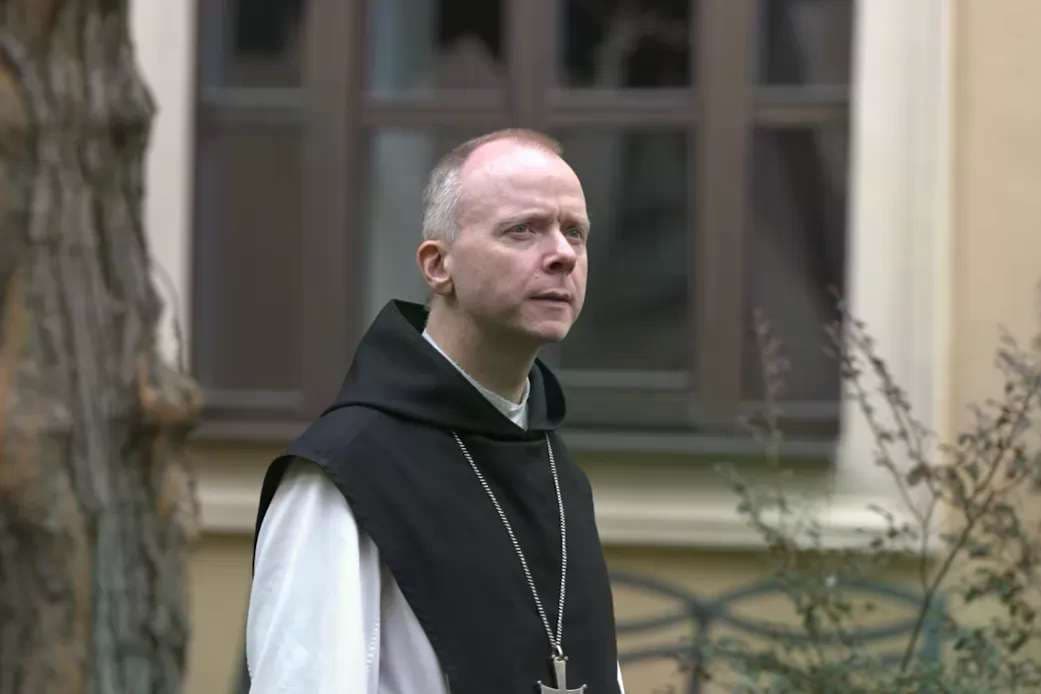
At the conclusion of a week-long retreat led by the Norwegian Bishop and Trappist monk Erik Varden, Vatican prelates were encouraged to live prayerful, virtuous lives in friendship with Christ in order to better carry out their duties.
The cardinals residing in Rome and the heads of dicasteries in attendance reflected on the theme “Illuminated by a Hidden Glory,” which included the teachings of Cistercian monk Saint Bernard of Clairvaux.
In his penultimate address at the retreat, Bishop Varden spoke about St. Bernard’s treatise “On Consideration,” which the saint wrote to his confrere Bernardo dei Paganelli, who became Pope Eugene III in 1145.
The treatise deals with the institutional problems of the Church, and while St. Berard gives no institutional remedies, he advises Pope Eugene to surround himself with good people, according to Bishop Varden.
“The qualities Bernard asks him to look out for and cultivate are immortal,” Bishop Varden said. “Needed are collaborators ‘of proven sanctity, ready obedience, and quiet patience; […] catholic in faith, faithful in service; inclined towards peace, and desirous of unity; […] farsighted in counsel, […] industrious in organisation […], modest in speech’.”
St. Bernard wrote that these people devote themselves to prayer and place their confidence in prayer rather than their own abilities.
“In so far as the Church operates in these terms will she reflect the organisation of the angels’ hierarchies. Whoever considers her then will see her principal mission: that of giving God glory.” Bishop Varden continued. “To consider earthly necessities rightly, we must seek, through them, what is above. This is not, Bernard tells Eugene, somehow to ‘go into exile: to consider in this way is to return to one’s homeland’.”
Bishop Varden then advised prelates that to carry out their responsibilities, they need to be virtuous, but they also must be “the Bridegroom’s friend, delighting in sharing that friendship with others.”
God Himself, Bishop Varden reflected, created man to desire Him and to share in His divinity.
“He broadens us to receive him, justifies us to merit him. He leads us in justice, moulds us in benevolence, enlightens us with knowledge, preserves us unto immortality,” the Bishop said. “Whatever else prelates have to think about, and it is much, they must consider these things first. Thereby their consideration of practical matters, too, will be illumined, ordered, blessed.”
The bishop referenced St. Augustine, who compared the priestly office to the bundles that Roman soldiers carried on their military campaigns. The image, the bishop said, is tied to the austerity and fear the soldiers experienced in their desert marches and battles.
“Though the pastoral burden does have a fearful aspect, it is fearful only if we fail to notice who puts the burden on our shoulders,” Bishop Varden said. “For it is no less a participation in the sweet yoke of Christ, who lets us discover that the cross-bar entrusted to us is luminous and light, that a share in it is joyful.”



Comments