Cardinal Timothy Dolan retires: A quarter-century titan of the American Church steps aside
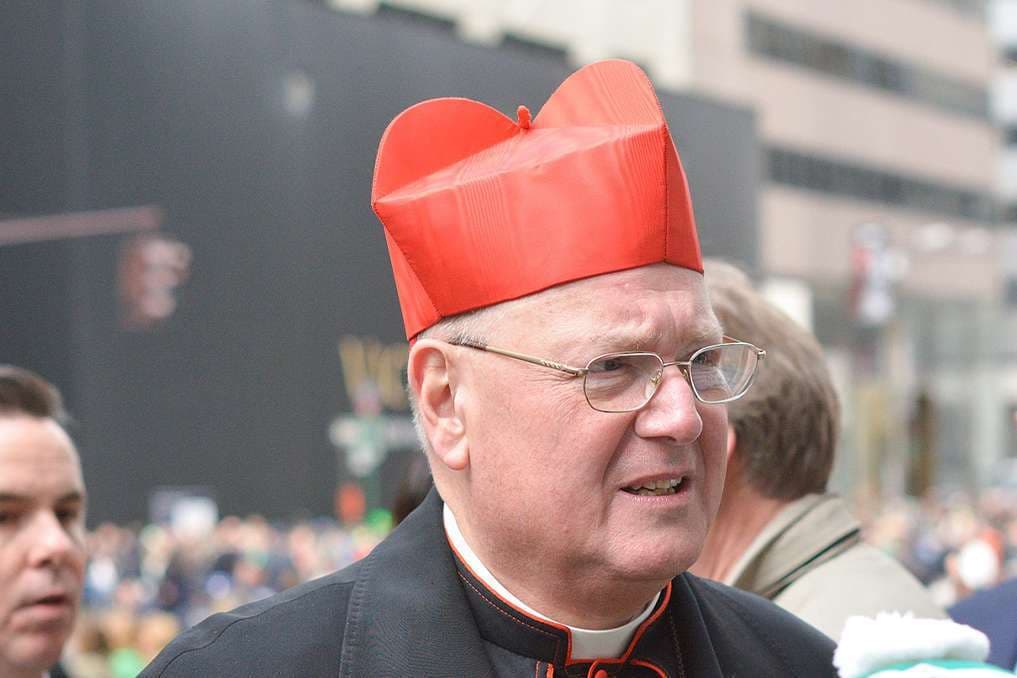
With the retirement of Cardinal Timothy Michael Dolan as archbishop of New York, the Catholic Church in the United States closes the chapter of one of the most consequential episcopal careers of the past 25 years. Few American prelates have shaped the Church’s internal governance, public witness, and political engagement as visibly as Cardinal Dolan has since the turn of the millennium.
Cardinal Dolan became a national figure and, at times, the unmistakable public face of American Catholicism: jovial in temperament, rigorous in conviction, and unapologetic in defending the Church’s moral and institutional freedom.
Born February 6, 1950, in St. Louis, Missouri, Timothy Dolan was ordained a priest for the Archdiocese of St. Louis in 1976. His early years were marked by academic seriousness and pastoral sensibility, culminating in a doctorate in Church history from the Catholic University of America.
In 1994, Pope St. John Paul II appointed him rector of the Pontifical North American College, a post then-Father Dolan held until 2001. Those years proved formative — not only for him, but for an entire generation of American priests who encountered him in Rome as a priest-formator with a deep love for the universal Church and an instinctive loyalty to the papacy.
In 2002, Dolan was appointed archbishop of Milwaukee, where he was quickly embraced for his Midwestern style and his down-to-earth demeanor.
But it was also in Wisconsin where he faced the earliest and most turbulent phase of the clergy sexual abuse crisis. Though later scrutiny would revisit aspects of Church governance in that era, Archbishop Dolan emerged nationally as a bishop capable of articulating reform without collapsing into cynicism or capitulation.
In 2009, Pope Benedict XVI named him archbishop of New York, one of the most prominent sees in the Catholic world. Two years later, in 2012, Pope Benedict elevated him to the College of Cardinals, ensuring Archbishop Dolan a role not only in American Catholic life but in the governance of the universal Church.
Cardinal Dolan would go on to participate in two papal conclaves — electing Pope Francis in 2013 and Pope Leo XIV in 2025 — a distinction shared by very few American prelates.
Champion of Life and Moral Clarity
Long before he became president of the United States Conference of Catholic Bishops (USCCB), Cardinal Dolan played a central role in shaping the Church’s pro-life witness. He served as chairman of the USCCB Committee on Pro-Life Activities, where he helped frame abortion not merely as a political issue but as the radical human-rights crisis of American public life.
Under his leadership, the bishops’ conference emphasized the inseparability of Catholic moral teaching from public policy, resisting efforts both inside and outside the Church to reduce pro-life advocacy to a partisan talking point.
Elected president of the USCCB (2010–2013), Cardinal Dolan assumed leadership at a moment of intense confrontation between Church and state. The Obama administration’s Department of Health and Human Services issued a contraception mandate requiring all employers, including religious groups like the Little Sisters of the Poor, to provide for the drugs. It became the defining conflict of Cardinal Dolan’s tenure as head of the USCCB.
He responded not with accommodation, but with clarity. He framed the dispute as a matter of religious freedom, not sexual ethics, arguing that no government has the authority to coerce religious institutions into violating conscience. His leadership helped galvanize the bishops, giving rise to the Fortnight for Freedom campaign for religious liberty and a renewed national conversation about the First Amendment.
At a time when some religious leaders retreated from the public square, Cardinal Dolan stepped forward as an articulate, accessible, and unembarrassed voice of the Church.
Despite his firm moral positions and accusations of him being a “culture warrior” launched by a small but vocal circle of pro-abortion Catholics, Cardinal Dolan consistently resisted ideological captivity. Nowhere was this clearer than in his stewardship of the Al Smith Memorial Dinners, the premier Catholic civic event in American political life.
Thanks to Cardinal Dolan’s adept handling of the event, the dinner retained its character as a place where political rivals sat at the same table — often uncomfortably — under the banner of Catholic charity, humor, and moral seriousness. In an era of escalating polarization, he insisted that the Church neither withdraw from politics nor become owned by it.
That instinct was most publicly tested in 2012, when Dolan was invited to offer the opening prayer at the Republican National Convention. Facing criticism, he made a now-famous condition: He would pray at both conventions, or neither. When the Democratic National Convention extended the same invitation, Cardinal Dolan accepted both, underscoring his insistence that the Church serve no party, even as it challenges all parties.
Internationally, Cardinal Dolan became a prominent advocate for persecuted Christians, particularly in the Middle East. He used his platform to highlight the suffering of believers ignored by geopolitical powers, insisting that religious persecution was not a relic of the past but a defining injustice of the present.
At home, he remained a consistent defender of the unborn, the elderly, immigrants, and the poor, arguing that Catholic social teaching is not a menu to be selected from but an integrated moral vision with binding authority.
Charismatic without being shallow, orthodox without being rigid, and media-savvy without being trivial, Cardinal Timothy Dolan shaped how Catholic bishops speak to the nation and how the nation hears the Church.
As he retires from New York, he leaves behind not just an archdiocese but a model of episcopal leadership: confident, joyful, intellectually serious, and unafraid of conflict when the Gospel is at stake.
The Church in the United States will feel his absence, even as it looks forward in hope that he will continue in good health and intact wit to be a force for good in the Church and the world for years to come.

Comments