Catholic World Report op-ed criticizes Detroit archbishop for remarks at mosque opening
After Detroit Archbishop Edward Weisenburger attended the opening of a major Islamic center and mosque in Michigan, a Catholic World Report op-ed criticized his presence, arguing that his remarks blurred important theological differences between Catholicism and Islam at a time when his archdiocese is preparing for major parish cutbacks.

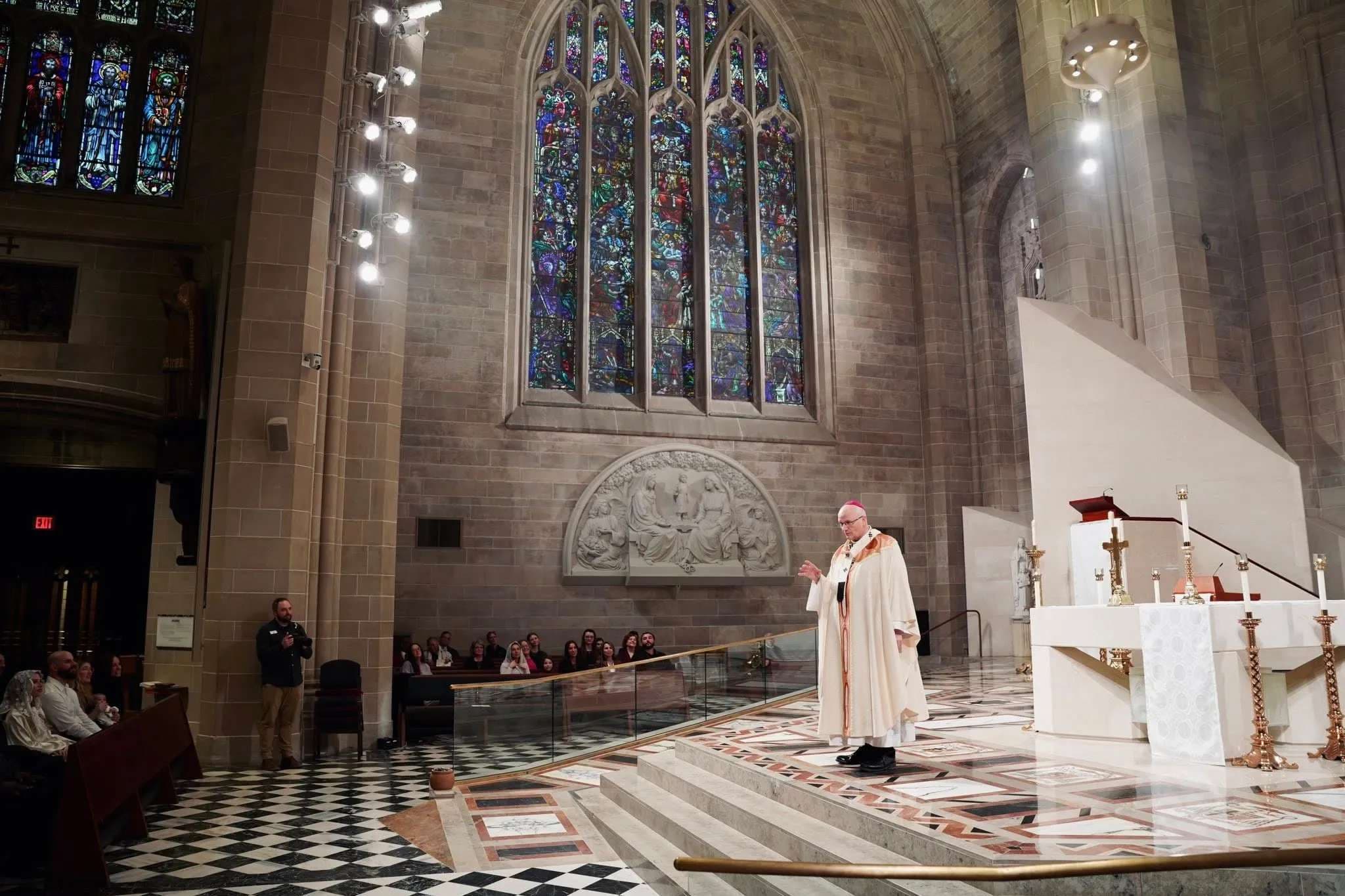
After Detroit Archbishop Edward Weisenburger attended the opening of a major Islamic center and mosque in Michigan, a Catholic World Report op-ed criticized his presence, arguing that his remarks blurred important theological differences between Catholicism and Islam at a time when his archdiocese is preparing for major parish cutbacks.
According to the June 21 op-ed, written by Timothy Lusch, Archbishop Weisenburger attended the June 6 opening for the new $16 million headquarters of the Islamic Institute of America and the inauguration of the Imam Al-Hasanain Mosque. The complex sits on seven acres and includes golden domes that have made it a prominent religious landmark in Metro Detroit.
Archbishop Weisenburger called the center a “truly wonderful and sacred place” during the ceremony, saying he hoped it would bring “all of humanity” into a “deeper communion with our one God,” according to the report.
“There is no place where I feel more respect, fraternity, and kindness,” Archbishop Weisenburger said, according to the op-ed. “From the moment I entered this beautiful site, I felt a profound divine presence. We are members of the same human family. All churches, all mosques, all synagogues, all places where God reaches out and touches with his finger are sacred.”
Lusch sharply criticized those remarks, arguing it “should be obvious — even to those given to this kind of One God, Many Paths nonsense” that a Catholic archbishop should not find “‘more respect, fraternity, and kindness’ in a mosque” than a Catholic church, nor should an archbishop “publicly proclaim the presence of the divine in such a place.”
“For unless he equivocates on the nature of the One he calls divine, it is obvious that the Triune God is not present in a mosque,” Lusch wrote, saying “all Muslims” and faithful Catholics would agree with him on that point.
Lusch noted that sacred space is not created simply by religious sincerity or interfaith goodwill, but through the sacramental ministry of the priest in persona Christi capitis. But Archbishop Weisenburger, he wrote, “apparently thinks sacralized matter pops up elsewhere — like a mosque.”
“Did Archbishop Weisenburger cause scandal with his remarks?” Lusch said. “Absolutely, as he did not witness to Christ Crucified, and he concealed the true nature of the Triune God either to avoid offense or encourage Muslims in their faith.”
Lusch wrote that while Archbishop Weisenburger may have seen the ceremony as an opportunity to witness to the Catholic faith and engage in religious dialogue with Muslims, his comments instead reflected a “muddled messiness too often found in seminaries in the immediate” years after the Second Vatican Council.
“It simply shocks one to think that the archbishop preached on Trinity Sunday only to equivocate on the nature of that Trinity days later,” Lusch said.
The mosque’s opening ceremony came as the Archdiocese of Detroit has begun a major restructuring effort due to long-term decline. The archdiocese plans to suspend or eliminate weekend Masses at up to 90 parishes starting in 2027 as part of efforts to address financial deficits and shrinking congregations, according to the report. It faces $94 million in unfunded maintenance costs and an $18 million budget deficit.
According to Lusch, the contrast between the archbishop’s celebration of a growing Islamic complex and his leadership of a shrinking Catholic archdiocese would not be lost on Catholics in Detroit.
“The Mass is the source and the summit of our faith,” he wrote. “How, one might ask, does a parish have life if the very source of that life is diminished?”

.jpg&w=3840&q=75)
Comments