Day 6 of Iran War: Trump says he will help choose Iran’s next leader as US strikes continue
As the U.S.-Israeli war against Iran continued into its sixth day March 5, President Donald Trump said he must be personally involved in choosing Iran’s next supreme leader and reiterated that the U.S. is “far ahead of schedule” in its operation.

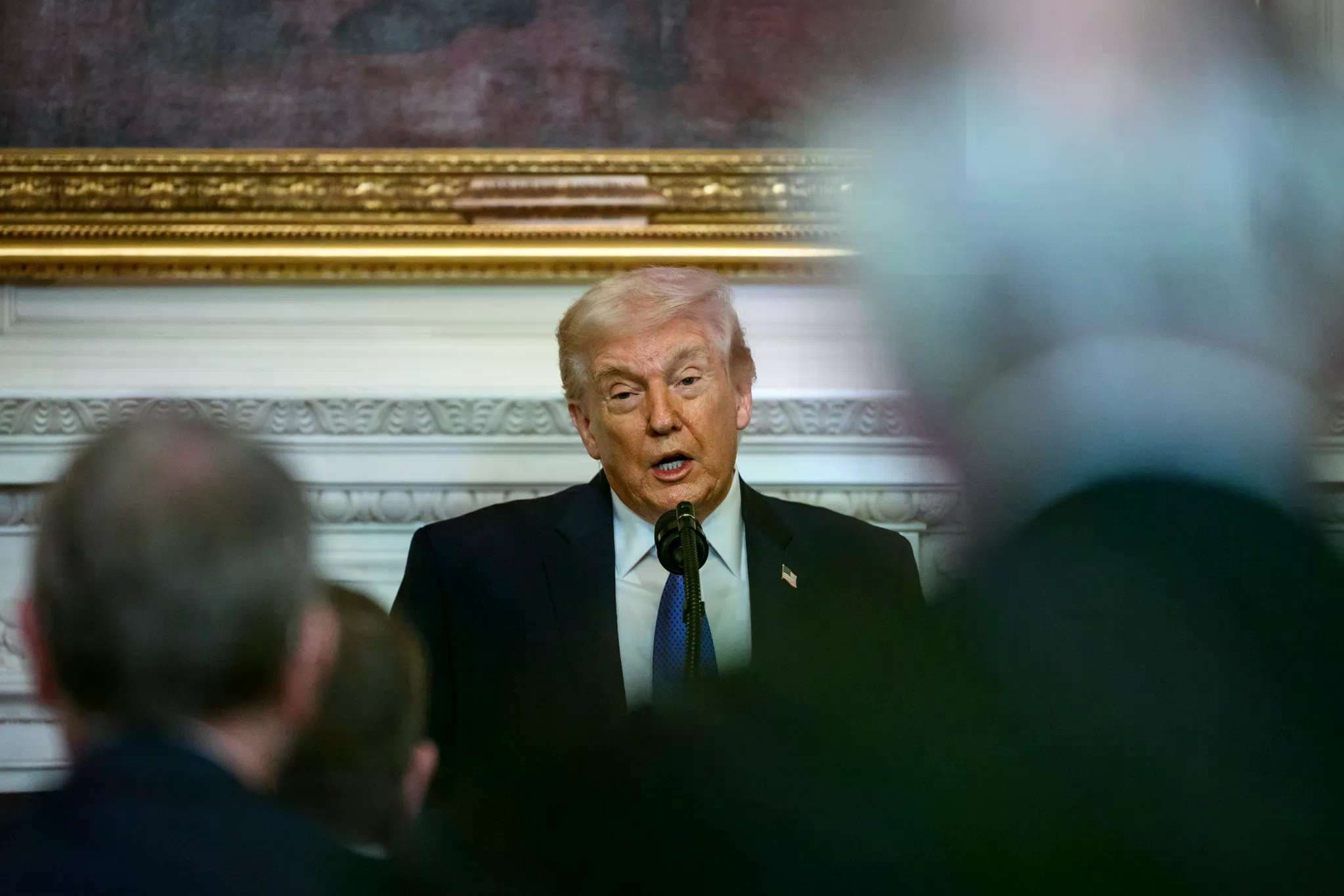
As the U.S.-Israeli war against Iran continued into its sixth day March 5, President Donald Trump said he must be personally involved in choosing Iran’s next supreme leader and reiterated that the U.S. is “far ahead of schedule” in its operation.
In an interview with Axios published March 5, Trump said Mojtaba Khamenei — the son of the late Ayatollah Ali Khamenei, who was killed in the initial U.S.-Israeli strikes on Iran — was the most likely to succeed his father, but that the pick would be “unacceptable” to him.
“We want someone that will bring harmony and peace to Iran,” Trump told the outlet. “They are wasting their time. Khamenei’s son is a lightweight. I have to be involved in the appointment, like with Delcy [Rodríguez] in Venezuela.”
As Zeale News previously reported, Rodríguez, Venezuela’s former vice president, became the country’s leader after the Jan. 3 U.S. military operation that ousted then-President Nicolás Maduro. There have since been signs of some cooperation between the U.S. and Venezuela.
While administration officials have maintained that regime change is not the U.S.’s primary goal, Trump has repeatedly urged Iranians to rise up against their government.
Trump told reporters March 3 that the individuals he had “in mind” to lead Iran had already been killed in the strikes. He added that he believes “someone from within Iran who is popular” would be best suited to take power and ruled out exiled Crown Prince Reza Pahlavi, the son of the former U.S.-backed shah who ruled the country before the Iranian revolution in 1979.
Speaking to “NBC Nightly News” March 5, Iranian Foreign Minister Abbas Araghchi dismissed the report, saying that the selection of the next leader is “absolutely the business of the Iranian people, and nobody can interfere.”
Araghchi also said Iran is prepared for a potential ground invasion by the U.S., saying, “We are confident we can confront them, and that would be a big disaster for them.”
While the U.S. has not ruled out a ground invasion, White House Press Secretary Karoline Leavitt said March 4 that it is not part of the “current plan.”
Trump’s latest comments
Trump, speaking at an unrelated event March 5, said that the U.S. military operation is “far ahead of schedule” and Iran now has “no air force, they have no air defense, all of their airplanes are gone, their communications are gone, missiles are gone, launchers are gone.”
He called for members of the Iranian Revolutionary Guard, the military, and the police to lay down their arms and warned that if they don’t, “they’re only going to be killed.” Trump also encouraged Iranian diplomats “around the world” to seek asylum and “to help us shape a new and better Iran with great potential.”
Trump said that Iran has reached out to make a deal to end the war, but they’re “a little bit late, and we want to fight now more than they do.” Hours earlier, Araghchi told NBC News that there is “no request for a ceasefire by us.”
U.S. gives update on war, signals ongoing strikes
In a March 5 press briefing, War Secretary Pete Hegseth said Iran is “hoping we cannot sustain this, which is a really bad miscalculation.” He added that the U.S. military has “only just begun to fight and fight decisively.”
Speaking alongside Hegseth, Adm. Brad Cooper, commander of U.S. Central Command, said Trump has ordered U.S. forces to “raze or level Iran’s ballistic missile industrial base.”
“We’re not just hitting what they have, we’re destroying their ability to rebuild, and so as we transition to the next phase of this operation,” Cooper said, “we will systemically dismantle Iran’s missile production capability for the future, and that’s absolutely in progress.”
Israel’s top general, Lt. Gen. Eyal Zamir, similarly said March 5 that his country’s military is moving to the “next phase of the operation.”
“In this phase, we will further dismantle the regime and its military capabilities,” Zamir said, according to AP News. “We have additional surprises ahead that I do not intend to disclose.”
Cooper said that the campaign “will take some time.” While officials originally projected the U.S. operation would last about four weeks, Hegseth said March 4 that it could take eight weeks and emphasized that the U.S. is setting “the pace and the tempo.”
As Zeale News previously reported, Trump on March 2 laid out four objectives for the war in Iran: destroying Iran’s missile capabilities and launch capacity, sinking Iranian naval vessels, ensuring the regime never obtains a nuclear weapon, and preventing it from continuing to “arm, fund, and direct terrorist armies outside of their borders.”
Cooper said “combat power is building as Iranian combat power declines,” describing a wave of U.S. strikes over the past 72 hours that targeted nearly 200 sites across Iran. He said two bombers in the past hour dropped “dozens of 2,000-pound penetrator bombs targeting deeply buried ballistic missile launchers.”
He said strikes also hit Iran’s equivalent of “Space Command,” which “degrades their ability to threaten Americans.” The Iranian navy has also suffered major losses, with more than 30 vessels sunk or destroyed, Cooper added.
“In just the last few hours, we hit an Iranian drone carrier ship, roughly the size of a World War II aircraft carrier, and as we speak, it’s on fire,” he said.
International response
Meanwhile, several European nations have been drawn into the conflict. According to The New York Times, Italy announced March 5 that it is deploying naval assets to Cyprus — which has been hit by Iranian drone strikes — and air defense weapons to Arab allies in the Persian Gulf. In doing so, Italy joins the Netherlands, the UK, Spain, France, and Greece in sending resources to blunt Iranian attacks on its allies. Still, the European nations are attempting to maintain a defense posture, the Times reported.
Announcing the move, Italian Defense Minister Guido Crosetto said the war “began without the world’s knowledge” and “we now find ourselves having to manage, like the rest of the world.”
Senate rejects measure to block U.S. involvement in Iran war
In Washington on March 5, the House failed to pass a measure that sought to curb Trump’s authority to wage war in Iran without congressional approval. The vote failed 212 to 219. On March 4, a similar resolution failed in the Senate.






Comments