EXCLUSIVE | Ascension CEO on historic new Liturgy of the Hours edition
As Catholic publisher Ascension prepares to launch the first new English edition of the Liturgy of the Hours in 50 years, the company’s President and CEO Jonathan Strate spoke with Zeale News about what is new in the volumes and how Ascension is working to support religious communities with the financial side as thousands of religious and clergy prepare to adopt the change.

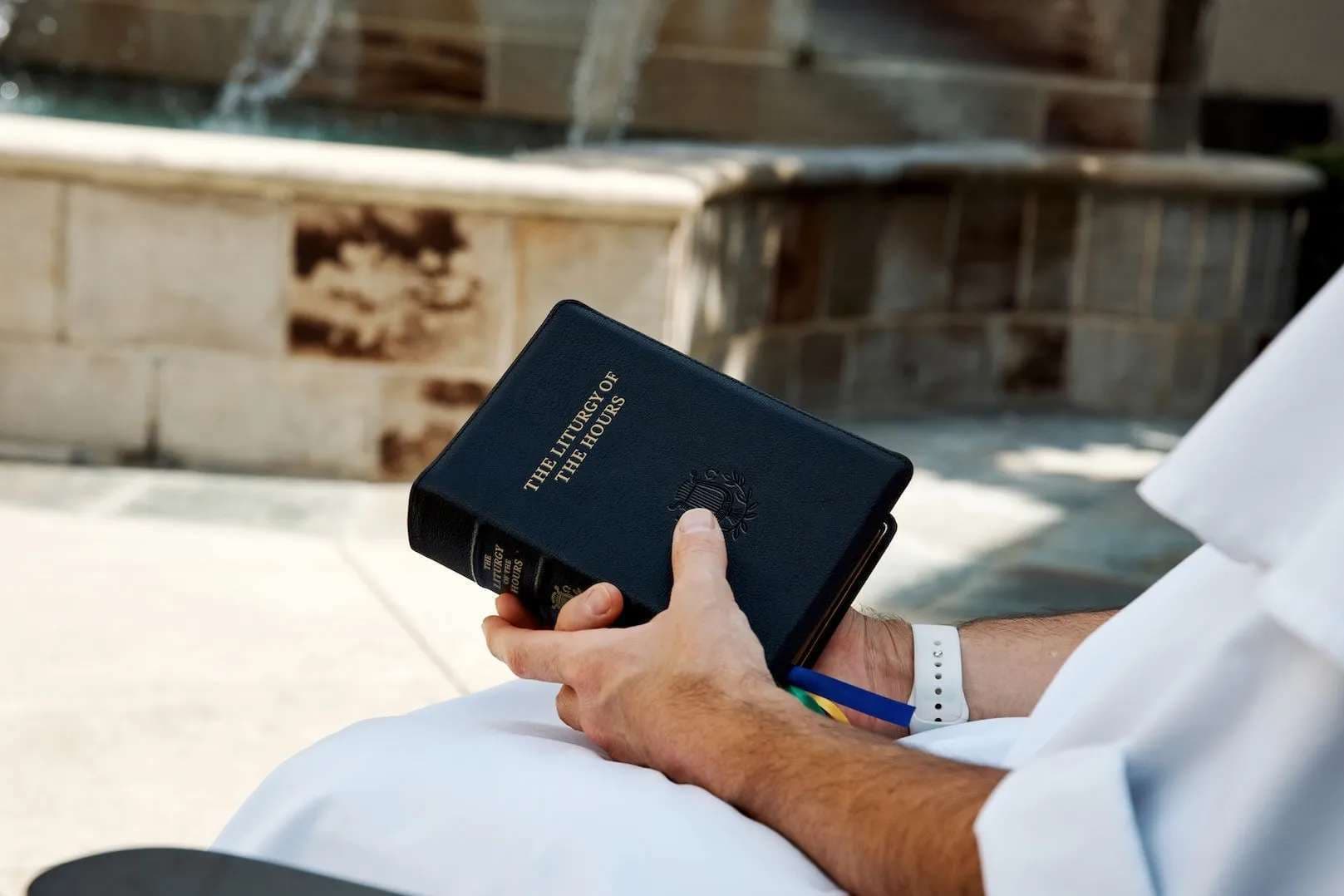
As Catholic publisher Ascension prepares to launch the first new English edition of the Liturgy of the Hours in 50 years, the company’s President and CEO Jonathan Strate spoke with Zeale News about what is new in the volumes and how Ascension is working to support religious communities with the financial side as thousands of religious and clergy prepare to adopt the change.
The Liturgy of the Hours is a set of prayers, psalms, and readings that are prayed at different times throughout the day, sanctifying and orienting all moments of the day to God. Religious communities and clergy are required to pray it daily, and lay people are invited, and even encouraged, to pray it.
The United States Conference of Catholic Bishops chose Ascension and Word on Fire in 2025 as the two publishers of the new edition. Ascension’s version includes a number of updates, such as new artwork, revised antiphons, and almost 300 Latin hymns translated into English for the first time, Strate told Zeale News in a June 23 interview.
On the same day, Ascension announced the launch of the Liturgy of the Hours Assistance Fund, which Strate explained is a need-based program to support Catholic religious orders in purchasing the new edition, pre-order for which begins July 1.
“The transition to a new edition is a major moment for the Church,” Strate said, “but in speaking with many institutions, we learned it may create a real financial burden for religious communities, seminaries, houses of formation, smaller dioceses, and institutions that need many sets at once.”
Laypeople are invited to donate to the fund to support the religious. Strate said that Ascension “saw an opportunity to invite the wider Church to help support the communities that faithfully uphold the Church’s daily prayer.”
“In that sense,” he added, “the fund reflects the nature of the Liturgy of the Hours itself: This is not merely private devotion, but the prayer of the Church.”
How might a busy layperson incorporate praying the Liturgy of the Hours into their day?
Unlike devotions such as the rosary, novenas, or other personal prayers, the Liturgy of the Hours is a public prayer that joins together all participants throughout the world, the same way the Mass does.
Strate told Zeale News that laypeople can incorporate the Liturgy of the Hours into their days according to how their circumstances allow it, whether that is by oneself, or with a family, parish, clergy, or religious.
“The goal is not to add a burden but to let the prayer of the Church sanctify ordinary daily life,” he said. “The Liturgy of the Hours reminds us that our prayer is never isolated. When we pray them, we are joining Catholics across the world in the Church’s daily prayer.”
>> Living every weekend in the Triduum’s rhythm: What I’ve learned from Liturgy of the Hours <<
He noted that a misconception “is that it takes ‘hours’ to pray” the Liturgy of the Hours, which is false. For example, Night Prayer, also called Compline, takes about five to 10 minutes.
A family interested in adding Liturgy of the Hours to their habit might consider starting with Night Prayer, Strate noted; whereas a busy professional might consider adding Morning Prayer, called Lauds, before the start of their workday. A parish could look for a time to regularly hold Evening Prayer, also called Vespers.
Of all the times of day to choose from if one cannot add all of them, Strate noted that Morning and Evening Prayer “are the two principal hours of the day.”
“They are sometimes called the ‘hinges’ of the Liturgy of the Hours because they consecrate the beginning and close of the day,” he added. “For beginners, Compline, or Night Prayer, is also a wonderful starting point. It is short, peaceful, and, because it often takes only five to 10 minutes, easy to make part of a bedtime routine.”
What is different about the second edition?
Strate told Zeale News that because this is the first time in more than 50 years the English edition has been updated, “it is a significant moment for the Church in the United States.”
Designing the new version took time and research.
“We spent a lot of time listening,” Strate said of what the company did to find out what people wanted in Ascension’s edition.
Priests, deacons, religious, and lay people all shared input, and “the feedback was consistent: People wanted readability, durability, beauty, quality materials, different type sizes and price points — and, very clearly, more ribbons,” Strate said.
Liturgy of the Hours is a four-volume set that typically has five or six ribbons that help the person stay organized and know where to move to if there is a specific feast day, liturgical season, or recurring prayer, for example. Ascension’s second edition will have eight ribbons: black for Requiem prayers, white-gold for feasts, mulberry violet for advent and Lent, cypress green for Ordinary Time, burgundy for Pentecost and Martyrs' feast days, rose gold for Gaudete and Laetare Sundays, saxe blue for Marian feasts, and bridal white for Christmas and Easter.
The new edition also includes readings from the forthcoming Catholic American Bible, updated U.S. propers, The Abbey Psalms and Canticles, as well as “Gospel Canticle antiphons that align more closely with the three-year Sunday Lectionary cycle, and an overall text more closely aligned with the original Latin,” Strate explained.
Why beauty matters in a book of prayer
“For Ascension’s edition, we wanted to pair the Church’s new translation with a book that is readable, beautiful, durable, and worthy of daily prayer,” Strate said. “That led us to focus on expert typesetting, original sacred art, and high-quality materials that help priests, deacons, religious, and the lay faithful enter more deeply into the prayer of the Church.”
The development of the new edition also focused on heightening the beauty and design of the books itself. Ascension partnered Danish designer Klaus Krogh and 2K/DENMARK, a widely respected biblical typesetter company, Strate said, and collaborated with Ruth Stricklin’s New Jerusalem Studios for original sacred art to fill the pages.
“Beauty reveals truth, and beauty matters for these books because the books of the Liturgy of the Hours are more than simply ‘content,’” he said. “They are books of prayer, and their design should reveal the sacred reality of the words they contain.”
Strate noted that people who pray the Liturgy of the Hours will use the volumes’ pages “thousands of times over a lifetime.” As such, he explained, the goal with commissioning New Jerusalem Studios was to ensure the books had art “that is timeless, reverent, rooted in Catholic tradition, and worthy of repeated encounter in prayer.”
“Beauty has a way of opening the heart,” he said, “and in a book of prayer, that really matters.”


.jpg&w=3840&q=75)
Comments