Exclusive: Leading Catholic thinker outlines case for ‘minimal Catholic Zionism’
A Catholic theologian argued in an interview that Catholics can entertain Zionism while also refusing to give unconditional moral support to the modern Israeli state.

A prominent Catholic theologian argued in a Feb. 19 interview with Zeale News that Catholics can entertain the Zionist position that Jews have a theological claim to the land of Israel while also refusing to give unconditional moral support to the modern Israeli state.
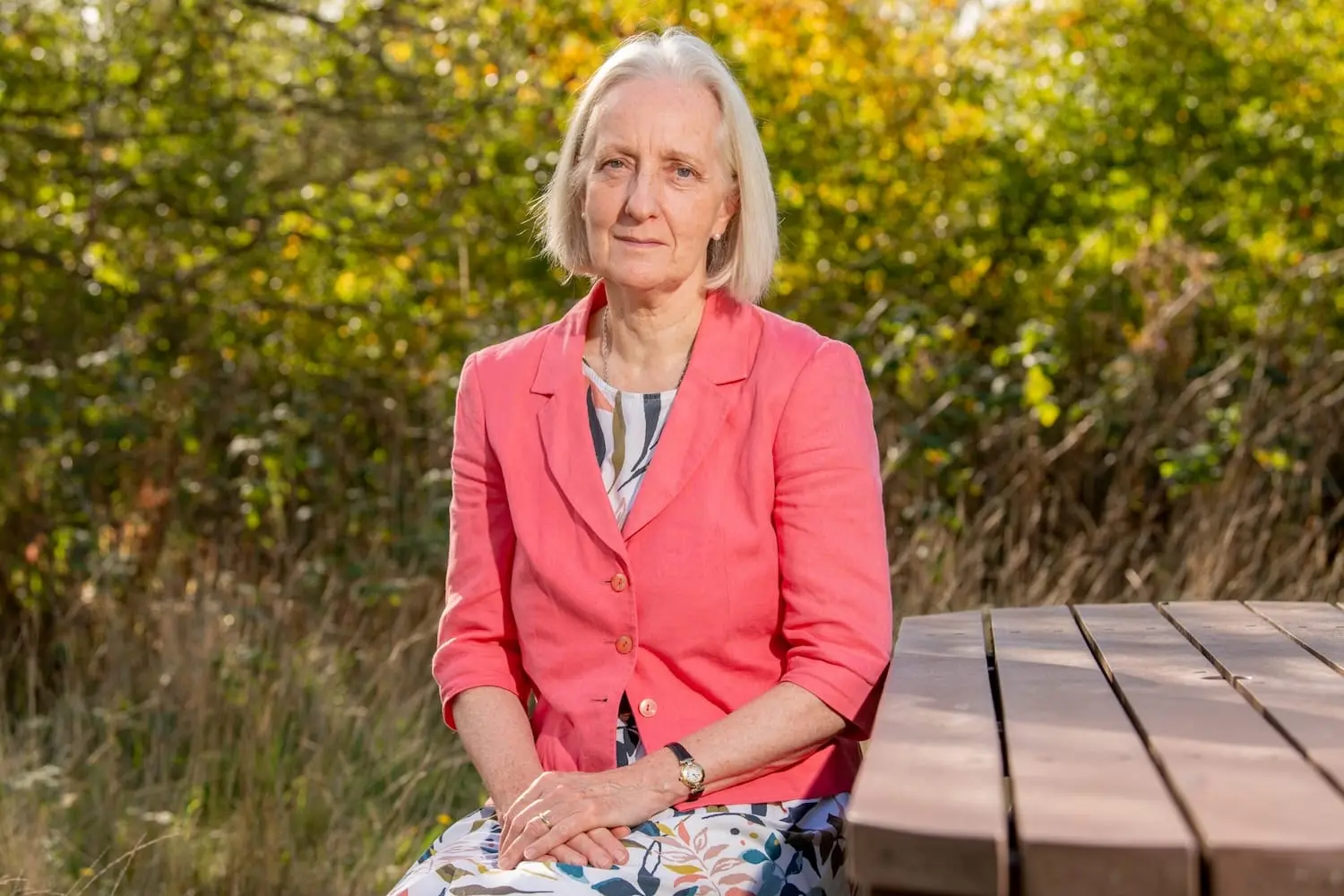
Professor Gavin D’Costa is a professor at the Pontifical University of St. Thomas Aquinas in Rome, Italy. He has written extensively on Catholic doctrine and its relationship to Jewish and Zionist thought, including in the 2019 book “Catholic Doctrines on the Jewish People after Vatican II” (Oxford University Press). He recently delivered a lecture for Philos Catholic, now calling itself Two Hammers, on Catholicism and Zionism.
Speaking to Zeale’s Stephen Herreid, D’Costa described the “minimalist Catholic Zionism” he advocates for, presenting it as a post-Vatican II approach that rejects both unconditional Christian Zionism and supersessionism — the traditional Catholic belief that the Church is the New Israel and the fulfillment of God’s covenant with the People of God recorded in the Old Testament.
“The kind of Catholic Zionism I’m advocating is maneuvering between natural law to argue for Palestinian rights [and] theological, Biblical affirmation of the Jewish right to a homeland,” he said.
Readers can find a lightly edited transcription of the entire interview here. A report of its highlights can be found below.
A ‘minimalist Catholic Zionism’
D’Costa described his theology as a “post-supersessionist” Catholic theology, meaning it rejects the older Christian idea that the Catholic Church replaced Israel in God’s covenantal plan. He said his position draws on Vatican II’s retrieval of St. Paul’s teaching in Romans 11 that God’s covenant with the Jewish people and its promises are “irrevocable.”
“That means in effect that the Jewish covenant is still valid,” he argued. “It doesn't finish.”
D’Costa contrasted his view with both traditional Catholic supersessionism and Protestant dispensationalism. He defined supersessionism as the historic view that Christ’s incarnation, death, and resurrection replaced the Old Covenant with the New, transferring Israel’s inheritance to the Catholic Church — the “New Israel.” On the other hand, dispensationalism is a largely modern Protestant framework that often translates in its popular evangelical form into a Christian Zionism that advocates for an “unconditional support” for the State of Israel, “because that is actually God’s plan.”
Explaining his own position, D’Costa said post-supersessionist thinkers in the Church have “argued since 1980 that this covenant, the Jewish covenant, which of course the Church also inherits, but the Jewish covenant is also inherited by rabbinic Judaism and therefore, if you like, gives a validity to rabbinic Judaism, but not [as] an end in itself – the whole picture is still Christological.”
“So my Catholic Zionism fits into that intersection,” he continued. “It argues that unquestionably … in the Old Testament we find the promise made to the Jewish people … and as part of the covenant is the land.” He noted there are “lots of different maps that could be drawn of what this land is. Okay, so we leave that aside.” Nonetheless, “it means that if the Jewish covenant is valid, then this promise still exists. And then one might say the in-gathering of the people, of the Jewish people, to the land of Israel could be – notice my delicate expression: could be – part of God's plan.”
“Now, that would mean the people, the Jewish people, do have a theological connection with the land, but my position is very, very reticent about giving a blank check to Israel as a state,” he emphasized. “Catholic theology has never divinized the state and has criticized all attempts to do so. So that’s one part of the minimalism.”
Does the Church officially embrace Zionism?
D’Costa readily acknowledged that the Church has never formally endorsed Zionism or adopted post-supersessionism. He cited political and pastoral concerns affecting the Church in the Middle East as likely barriers to “the Church going that direction.” He pointed to vulnerable Christian communities in the Holy Land and strained diplomatic relations between the Holy See and Israel.
“Historically, the Church has definitely supported Palestinian refugees and supported the Palestinian right to a homeland,” he said, adding that the Church has done so “without in any way supporting Palestinian forms of terrorism, which should include Hamas right now.”
On post-supersessionism itself, D’Costa mentioned that a 2015 Vatican document rejected “replacement theology,” but he noted that the document carried no formal magisterial authority.
Since the document was issued by a magisterial body, however, he argued it was “pretty near to coming towards magisterial authority” in his opinion. He conceded nonetheless that “it would be wrong to say there is clear, unambiguous magisterial authority behind the position of post-supersessionism.”
D’Costa also noted that his post-supersessionist view represents a break from much of Catholic thought historically, which has been shaped by supersessionism from the fourth and fifth centuries onward.
Asked what he might say to Catholics who object, asking why they should accept post-supersessionist thinking given the fact that it differs from most of Catholic thought that came before it, D’Costa said that his position is “to some extent a novelty” and the objection is a “genuinely good question.” However, the novelty of post-supersessionism is, to his mind, a “retrieval” of Pauline and early Christian thinking that had been underdeveloped in Catholic theology despite its basis in Scripture.
Responding to criticism
D’Costa acknowledged that critics of both Zionism and post-supersessionism “have their points.”
It is “very difficult to argue that somebody who is not a Christian Zionist is therefore anti-Jewish or an anti-Semite,” D’Costa said when asked about debates among American Catholics after Carrie Prejean Boller’s remarks at a White House Religious Liberty Commission hearing.
As Zeale News previously reported, Prejean Boller argued that her Catholic faith does not require support for political Zionism and that criticism of Israel’s actions in Gaza should not automatically be labeled antisemitic. Her remarks ignited widespread debate, and two days later, Republican Texas Lt. Gov. Dan Patrick said he was removing her from the commission.
In written follow-up remarks, D’Costa clarified that neither those who are anti-Zionist nor those who are supersessionists are inherently antisemitic unless they hold their positions based on the “intention and grounds” of denying Jews the right to exist.
“While she can't speak for all Catholics,” D’Costa said of Prejean Boller, “neither can I.”
“I think we're a community in the middle of a very tumultuous debate, which has historically been exaggerated because of the Middle Eastern political events,” he said. “I don't mean exaggerated in a bad sense, but it's just got a lot of headlines.”
Condemning violence in Gaza and the West Bank
The conversation repeatedly returned to ongoing violence in Gaza and the West Bank. Herreid — who has interviewed Catholics living in the Holy Land — referenced recent Zeale News coverage of statements coming from Catholics in the region. In one example, Bethlehem Mayor Maher Canawati, himself a Palestinian Christian, said Palestinians “have a problem with Zionism” and with “those who want to kick us out, who want us gone.”
Similarly, the Patriarchs and Heads of the Churches in Jerusalem issued a Jan. 17 statement calling “Christian Zionism” a “damaging” ideology that “mislead[s] the public, sow[s] confusion, and harm[s] the unity of our flock.”
In an article responding to the Church leaders’ statement, D’Costa asked why the leaders rejected Christian Zionism “while remaining silent about political Islamist ideologies that also seriously threaten Christian life and institutions across the region….”
Herried asked D’Costa what he would say to critics who argue that Church leaders should be able to talk about Zionism without first having to prove they’re not “pro-Islamist terror.”
D’Costa said he thinks the Church leaders’ statement is “aboslutely right” but said he was instead opposed to them grouping all “different types of Christian Zionism” together. He added that his other concern is that “there’s more than one enemy” targeting the Christian population in the Middle East and suggested leaders should also address the threat of radical Islam to bolster the integrity of their statements.
D’Costa acknowledged that Arabs are “being obliterated, they’re being cleansed, they’re being moved out, they’re being persecuted in cruel and illegitimate ways. I want to say that clearly and unambiguously.”
He argued that there can be no long-term solution “unless both groups accept the right of the other to share the land while ensuring safety for the other. And that's where we've got into an intractable mess.”
When asked whether Catholics should join the Holy Father in condemning Israel’s actions in Gaza and the West Bank, D’Costa replied, “My view is yes.” He added that papal statements on the conflict are prudential judgements rather than binding dogma, but certainly Catholics should read those statements and assess them.
The Holy See’s consistent defense of Palestinian rights flows from natural law and international law principles, and Catholics should “ask themselves why these things are being said,” D’Costa stated.
During the interview, Herreid also cited an August 2025 poll from the aChord Center at the Hebrew University of Jerusalem that found that 62% of Israelis agreed with the statement “There are no innocents in Gaza.” Among Israeli Jews, the agreement rate was higher – at 76%. That public sentiment is reflective, Herreid pointed out, of rhetoric from some Israeli officials who have been widely criticized for their language about Palestinians during Israel’s military campaign in Gaza.
D’Costa sharply criticized Israel’s current leadership. Israeli Prime Minister Benjamin Netanyahu and Finance Minister Bezalel Smotrich represent “extreme forms” of Zionism, D’Costa said. “We’ve got to remember these people had been declared unsafe to hold office and declared to have terrorist opinions,” he said. “Now they're running the place!”
The interview also turned to the 1948 Nakba, the mass displacement of Palestinians following the founding of the State of Israel. Herreid cited statements from Pope Pius XII, who in 1948 and 1949 said refugees had been “forced by the disastrous war to emigrate and even live in exile in concentration camps” facing “perils of every sort.” The pope lamented that “in the land in which our Lord Jesus Christ shed His blood to bring redemption and salvation to all mankind, the blood of man continues to flow” and urged that “justice may be rendered to all who have been driven far from their homes.”
D’Costa agreed the Nakba was a “disaster” and a “massive human tragedy.”
He also added that the historical moment was not a one-sided episode and instead involved “surrounding Arab states” launching simultaneous “military action aimed at destroying the newly formed Israel.”
“But human suffering has to have the last word,” D’Costa said. He later added of Pope Pius XII’s statements, “The words are wise. And I say amen to it, having added my little codicil.”
Does Zionism need reform?
Toward the end of the interview, Herreid asked whether Zionism as it currently exists in public rhetoric is in need of reform or reexamination, especially in light of what critics describe as morally indefensible actions carried out in its name.
“I think absolutely,” D’Costa responded. He argued that Zionism has taken many historical forms, including early secular versions that envisioned land-sharing with Palestinians, and warned against equating the entire concept with its most hardline political expressions.
“Return to Zionism, look at the different types, point out the dangers of certain sorts, but [do] not throw the entire baby out with the bathwater,” he said. “Why? Because I'm saying this is part of a biblical theological legacy that the Church needs to retrieve in its understanding of the Jewish people,” while also having “equal concern for the rights of the Palestinians and their future.”
Again, readers can find a fuller transcription of the entire interview between Zeale News and Professor D’Costa by clicking here.



Comments