EXCLUSIVE | ‘There was no explanation’: Catholic doctor recounts St Charbel healing and its lasting impact
The restoration of Dafne Gutierrez’s sight led Dr. Anne Borik to bring faith more fully into her professional life — carrying it into her care for patients and a worldwide community of prayer.

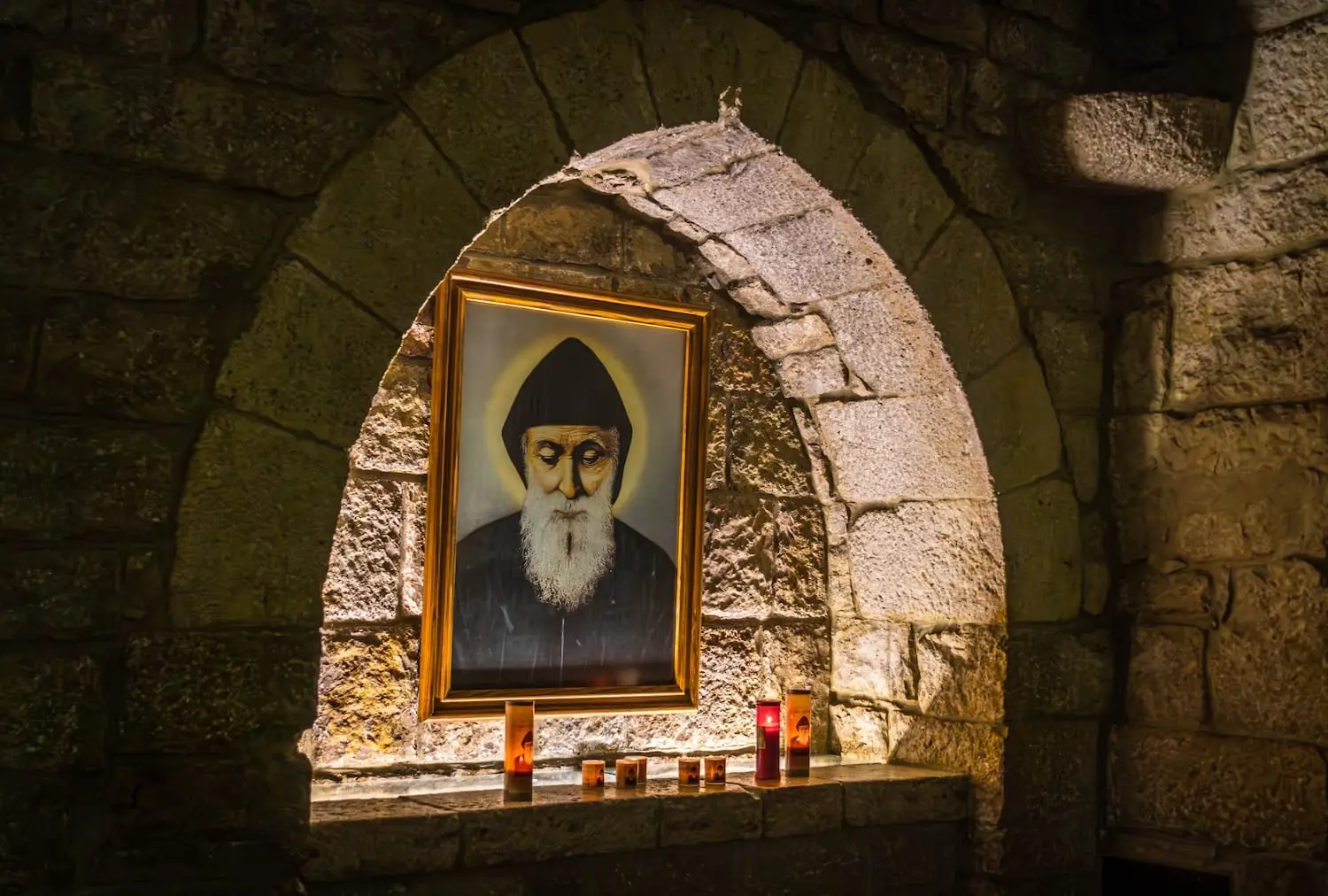
The Catholic physician who investigated a blind woman’s miraculous healing through the intercession of St. Charbel is inviting the faithful to look to the saint’s life of prayer as an enduring witness that continues to shape her own faith and medical practice.
Dr. Anne Borik, a board-certified internal medicine physician and hospitalist in Phoenix, spoke with Zeale News in a Sept. 10 interview about heading the medical committee that examined Dafne Gutierrez’s 2016 recovery of sight and the devotion to St. Charbel that followed. Borik now also directs the Saint Sharbel Spiritual Life Center in Pittsburgh, her hometown.
“Today, St. Charbel is considered one of the great healing saints,” Borik said. “A lot of people in our Catholic Church don’t know him, which is really kind of amazing, but I think this might be the time for a lot of Catholics to get to know who this great saint is.”
St. Charbel was a 19th-century Lebanese Maronite monk and hermit whose life was marked by prayer, fasting, and devotion to the Eucharist and the Blessed Virgin Mary. He died in 1898 and was canonized by Pope Paul VI in 1977, Borik explained.
Borik’s medical inquiry centered on Gutierrez, who had lost her sight by age 31.
“[Gutierrez] wasn’t born blind,” Borik said. “She had gone blind from a condition called intracranial hypertension, where the pressure in the brain was so high that it basically caused the optic nerves to die. It’s irreversible. Once that happens, there’s no recovery of sight.”
In January 2016, St. Charbel’s relics came to Phoenix. Though unfamiliar with the saint at the time, Gutierrez visited St. Joseph Maronite Catholic Church at the encouragement of her sister-in-law, who had heard of a boy’s healing in Mexico attributed to St. Charbel’s intercession.
“She went to confession, she received the Holy Eucharist, and she was blessed with the holy oil of St. Charbel,” Borik said. “The priest blessed her eyes that night.” Borik explained that the oil used to bless Gutierrez had been touched to a bone relic of St. Charbel.
After returning home, Gutierrez experienced severe pain and, despite having been completely blind, began seeing shadows. She contacted her ophthalmologist and was examined, Borik said.
“They brought her back 48 hours later without any other intervention, and her vision was 20/20 — completely restored,” Borik said.
After her sight was restored, Gutierrez called Father Wissam Akiki, the St. Joseph priest who had blessed her eyes. Father Akiki brought the case to Borik for medical review.
“We put together a medical committee, which I headed, and we got all of her medical records,” Borik said. “I took her to three other specialists — neuro-ophthalmologists who specialize in this disease process — and there was no explanation. To this day, her vision is 20/20. It’s just a beautiful, miraculous healing through the intercession of St. Charbel.”
Borik also worked directly with Gutierrez, gathering her testimony and speaking with members of her family, including her children, as part of documenting the healing.
After the same relics traveled to New York that April, Borik accompanied Gutierrez from Phoenix to visit them again.
“By then, her vision had been restored,” Borik said. “It was the first time that Dafne actually had her eyes open to see what St. Charbel looked like and what the relics looked like. So that was a beautiful opportunity to have her experience that blessing.”
The case also drew Borik’s Catholic faith more fully into her practice.
“As a medical doctor, I was raised Catholic, but I never really brought my faith to the bedside,” Borik said. “I would practice my faith in church, and then I would work, and it would be kind of separate. [The healing] really changed me in a way that I started introducing prayer at the bedside and offering prayer with patients. That was a little miracle for me — a deeper transformation in that sense.”
That change took shape in simple encounters with patients.
“For me, it’s a matter of courage,” she said. “Sometimes we’re not courageous enough to step out and ask somebody, ‘Would you like me to pray for you?’ or ‘Are you Catholic or Christian?’ Even walking out of a patient’s room and saying, ‘God bless you,’ or just sparking a conversation. And when we do that, it’s amazing how people are just so open, people from all different faith backgrounds.”
As her own devotion to St. Charbel and her life of prayer deepened, Borik founded the St. Sharbel Global Prayer Net, an online community whose members carry one another’s intentions in prayer.
“People from all over the world join, and every night we pray the Chaplet of St. Charbel or the Rosary live,” Borik said. “Somebody’s praying for you, and you’re praying for somebody. You’re connected with people all around the world.”
That community reflects the deeper life of prayer Borik hopes St. Charbel will inspire among Catholics.
“There’s too much noise in our world,” Borik said. “It’s so chaotic and so confusing. St. Charbel is the perfect example of silence, of entering into that quietness and contemplative time, even if it’s just for a few minutes a day. We’re really called to listen to God’s voice and grow stronger in our Catholic faith.”







Comments