Holy See urges UN to confront homelessness as ‘grave affront to human dignity’
Monsignor Robert D. Murphy called secure housing essential to the common good and urged nations to address poverty, addiction, family breakdown, displacement, and conflict.
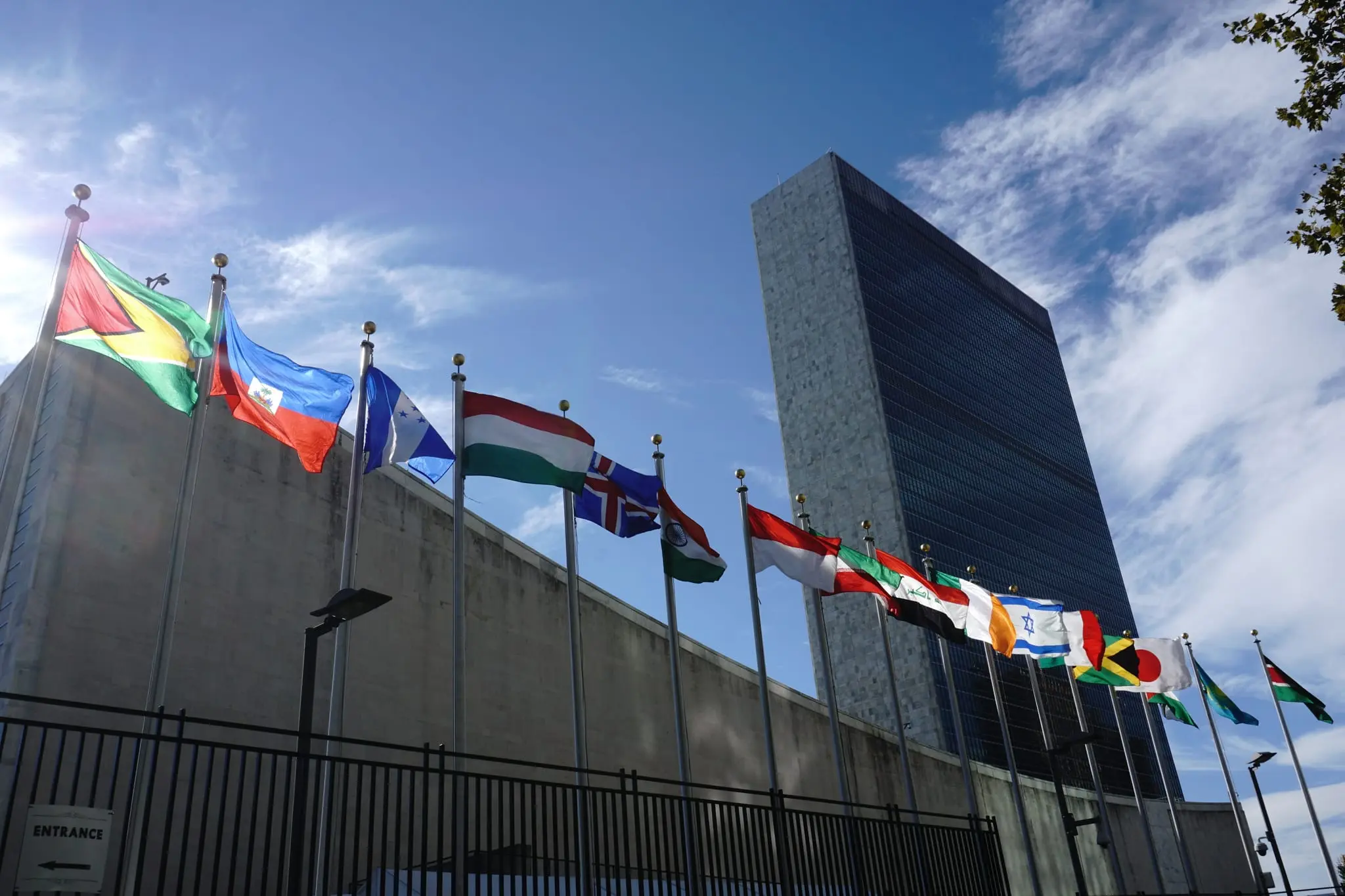
The Holy See urged nations July 28 to treat homelessness as a test of whether cities truly serve people, calling for greater investment in affordable housing, integrated social services, and remedies aimed at the forces that push individuals and families out of stable homes.
Monsignor Robert D. Murphy, chargé d’affaires ad interim of the Holy See’s Permanent Observer Mission to the United Nations, delivered the statement during a resumed session of the UN General Assembly’s 2026 high-level meeting on the New Urban Agenda.
“The persistence of homelessness should trouble the conscience of the international community,” Monsignor Murphy said. “Everybody deserves a place to call home, where they can build relationships, nurture family life, and participate fully in their community.”
He added that housing should be “viewed not just as a commodity or financial asset, but as a cornerstone of society at the service of the common good.”
The meeting came nearly 10 years after the UN member states adopted the New Urban Agenda at the 2016 Conference on Housing and Sustainable Urban Development in Quito, Ecuador. The framework is intended to guide governments in planning cities and human settlements that are inclusive, safe, resilient, and sustainable.
At the 2026 meeting’s July 16 opening, General Assembly President Annalena Baerbock said roughly 3 billion people lack safe, adequate, and affordable housing, more than 330 million are homeless, and more than 1 billion live in slums or informal settlements.
Monsignor Murphy argued that urban progress cannot be judged simply by the height of a city’s buildings or the strength of its economy. Its true measure, he said, is whether every person can flourish, take part in society, and contribute to the common good — and whether a city can confront poverty, persistent inequality, and environmental damage.
“Among the many challenges facing urban development, homelessness undoubtedly stands out as a grave affront to human dignity,” Monsignor Murphy said. “Not having a home means more than just lacking shelter; it means being deprived of security, stability, privacy, and a sense of belonging.”
He said homelessness undermines a person’s ability to exercise fundamental human rights and can trap “individuals and families in cycles of exclusion and poverty.”
The Holy See called for greater investment in affordable, adequate housing and in social services that work together rather than in isolation.
“Urban planning should also address the root causes of homelessness, such as poverty, unemployment, drug addiction, mental health issues, family breakdown, displacement and conflict,” Monsignor Murphy said.
He also said people who have experienced homelessness should help shape the policies intended to serve them, alongside local communities, civil society, and faith-based organizations. Housing policy should account for its close relationship with education, employment, and health, he added, helping to prevent exclusion and segregation.
The statement called for renewed international cooperation to help developing nations manage rapid urbanization. Monsignor Murphy specifically cited the financing and capacity gaps faced by the least developed countries, landlocked developing countries, and small island developing states.
“It is vital to continue supporting these countries through enhanced international cooperation, technology transfer, capacity building and adequate financing if we are to build cities that are inclusive, safe, resilient and sustainable for all,” he said.
Monsignor Murphy grounded the appeal in Pope Leo XIV’s May encyclical Magnifica Humanitas, which teaches that “development is truly human when it places people at the center.” The Pope also wrote that a just society needs vigilant civil institutions capable of resisting a narrow focus on efficiency and directing resources, rules, and creative solutions toward the vulnerable.
>> ‘Magnifica Humanitas’: Pope Leo’s first encyclical places AI at service of humanity, not power <<
The statement’s concern with displacement, belonging, and participation echoed the Pope’s remarks during his June visit to Spain’s Canary Islands. As Zeale News previously reported, during a June 12 visit to Tenerife, Pope Leo warned of a “silent shipwreck” that can occur when migrants survive a dangerous journey only to be left isolated, without work, ties, or security in the city where they arrive.
“Integration is a reciprocal journey,” Pope Leo said. “Those who arrive learn to inhabit a new land, and those who welcome them learn to expand their own homes without diluting their identity or closing their hearts to the encounter.”
The Holy Father placed responsibilities on both sides: Migrants should learn the language, respect the laws and customs of their new home, participate in community life, and offer their gifts with gratitude, while receiving societies must fulfill their responsibilities to newcomers without erasing their own identity or allowing isolated parallel communities to form.
In concluding his address, Monsignor Murphy said that cities shaped by “solidarity, inclusion, and care for those most in need” can become “places of encounter, fraternity and hope,” and this principle should guide the implementation of the UN’s New Urban Agenda in the decade ahead.
-1.jpg&w=3840&q=75)

.jpg&w=3840&q=75)



Comments