Israeli forces seal off key entrances to Bethlehem governorate, Catholic group reports
Israeli military forces closed multiple entrances to the Bethlehem governorate in the West Bank Feb. 24, according to the Vulnerable People’s Project (VPP), a U.S.-based Catholic apostolate supporting Christian communities in Gaza and the West Bank.

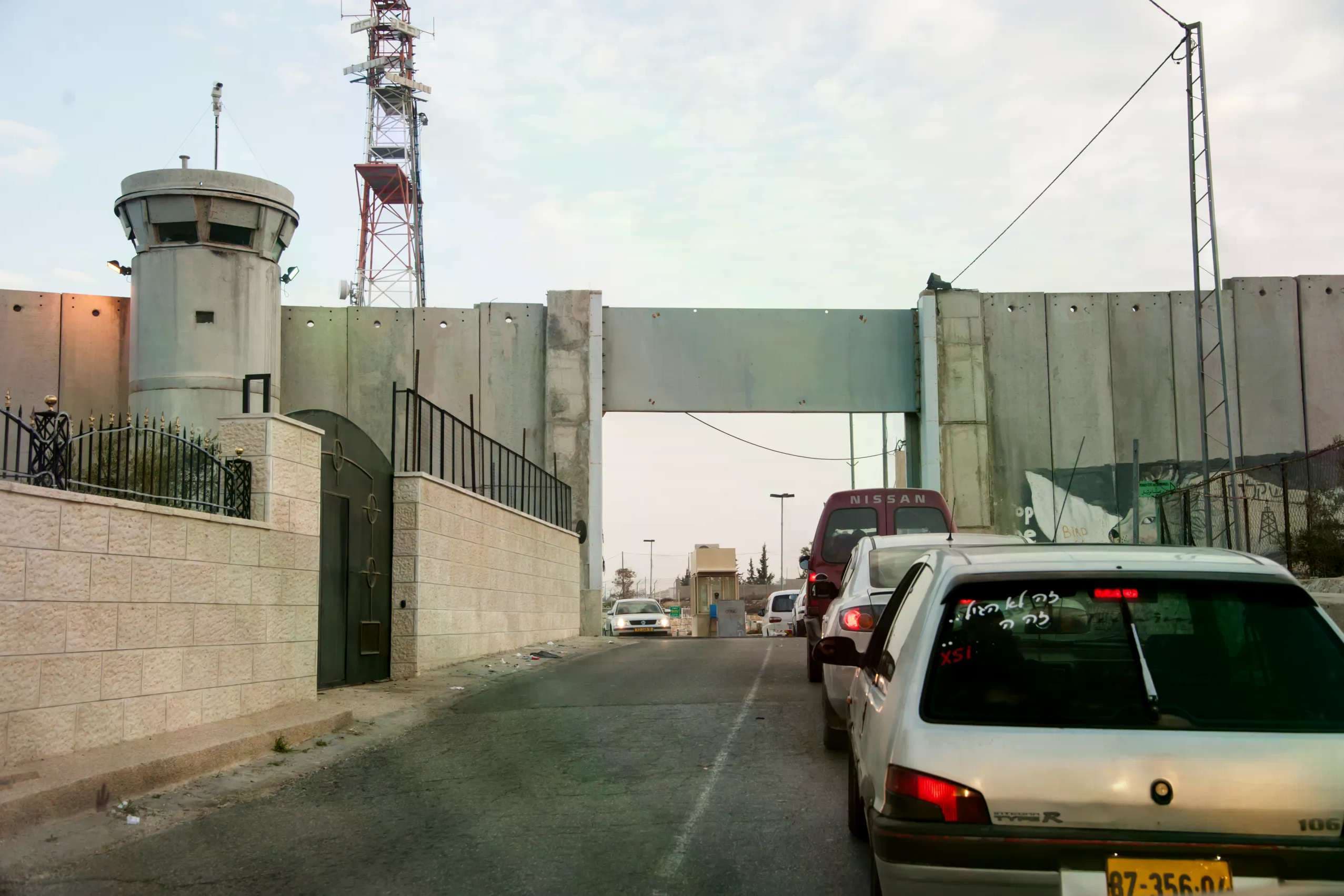
Israeli military forces closed multiple entrances to the Bethlehem governorate in the West Bank Feb. 24, according to the Vulnerable People’s Project (VPP), a U.S.-based Catholic apostolate supporting Christian communities in Gaza and the West Bank.
The closures have reportedly restricted movement for more than 200,000 residents of the Bethlehem governorate, raising concerns about the population’s access to essential services. Residents rely on these routes for daily travel, work, commerce, medical access, and family visits.
VPP reported that the closures affected northern, southern, and eastern access points, effectively cutting off traffic in and out of the area. The group said Israeli forces closed the “Container” checkpoint northeast of Bethlehem, one of the main routes connecting the southern and central West Bank.
“The daily reality on the ground – closed roads, sealed towns, and restricted movement – must not be abstracted into talking points,” said Jason Jones, the founder and president of VPP, in a press release. “Every shut entrance is a closed opportunity for normal life, and every checkpoint reinforces a system that deprives ordinary Palestinians of dignity and freedom of movement.”
Local sources said Israeli authorities imposed the closures in response to an alleged vehicle-ramming attack near the “Tunnel Road” checkpoint south of Jerusalem, according to VPP. The suspect reportedly fled toward Bethlehem after the incident.
VPP also reported that Israeli forces entered the town of Doha, west of Bethlehem, but the organization said it received no reports of home raids or civilian detentions.
Jones shared a post on X by Ihab Hassan, a Palestinian-American Christian commentator who studied human rights at the Catholic University of America, that included an image of a closed checkpoint.
“The Israeli army has sealed off the Christian city of Bethlehem,” Hassan wrote. “All entrances and exits have been closed. No one can enter or leave.”
The tightened restrictions in Bethlehem come amid broader international scrutiny of Israeli actions in the West Bank, where residents have faced violent Jewish settler attacks, land incursions, and increased movement restrictions in parts of the territory for years.
U.S. Ambassador to Israel Mike Huckabee recently suggested in an interview with Tucker Carlson that Israel could legitimately claim a right to much of the land in the Middle East, Zeale News reported Feb. 22. His remarks drew criticism from several Arab countries, which reaffirmed their “firm rejection of any attempts to annex the West Bank or separate it from the Gaza Strip” and warned that Israel’s continued “expansionist policies and unlawful measures” would “inflame violence and conflict in the region and undermine the prospects for peace.”
On Feb. 15, Israel’s cabinet decided to begin land registration in West Bank Area C, which includes part of the State of Palestine, Zeale News reported, citing The Times of Israel. The move prompted concern over what critics call a “de-facto annexation.”
The Trump administration has publicly opposed the annexation of the West Bank. President Donald Trump said in September 2025 that he would “not allow Israel to annex the West Bank.” In October 2025, Vice President JD Vance told reporters that he was personally offended when Israel’s Knesset signaled they would advance a plan to annex the West Bank and reiterated that the Trump administration’s policy is that “the West Bank will not be annexed by Israel.”
However, the U.S. Embassy in Jerusalem has now indicated that it will offer consular services for the first time in an Israeli settlement in the West Bank. In a Feb. 24 statement posted to X, the embassy said officers “will be providing routine passport services” to U.S. citizens in the West Bank settlement of Efrat Feb. 27, followed by similar outreaches to other settlements. The embassy said the measure is part of its “effort to reach all Americans.” Israel’s Foreign Ministry welcomed the “historic decision by the U.S.” to extend services to the region, which it identified as “Judea and Samaria.”
Huckabee also argued in his recent interview with Carlson that Area C of the West Bank is effectively part of Israel. In a 2017 CNN interview, he similarly claimed there is “no such thing as the West Bank” and instead called it “Judea and Samaria.”
“There’s no such thing as a settlement,” he added of Israeli settlements in the territory. “They’re communities. They’re neighborhoods. They’re cities. There’s no such thing as an occupation.”
Church leaders have also criticized the continued expansion of Israeli settlements in the West Bank and what they describe as a refusal on Israel’s part to protect rightful Palestinian residents. They argue that the settlements — which are considered illegal by most of the international community — contribute to Palestinian displacement and threaten the livelihood of Christian communities in the region.







Comments