Pope Leo decries civilian deaths in West Bank and Gaza, renews call for peace throughout Middle East
The Pope called for negotiations founded on “equal dignity and equal rights” as settler violence surged in the West Bank and the U.S. and Iran observed a fragile pause in attacks.
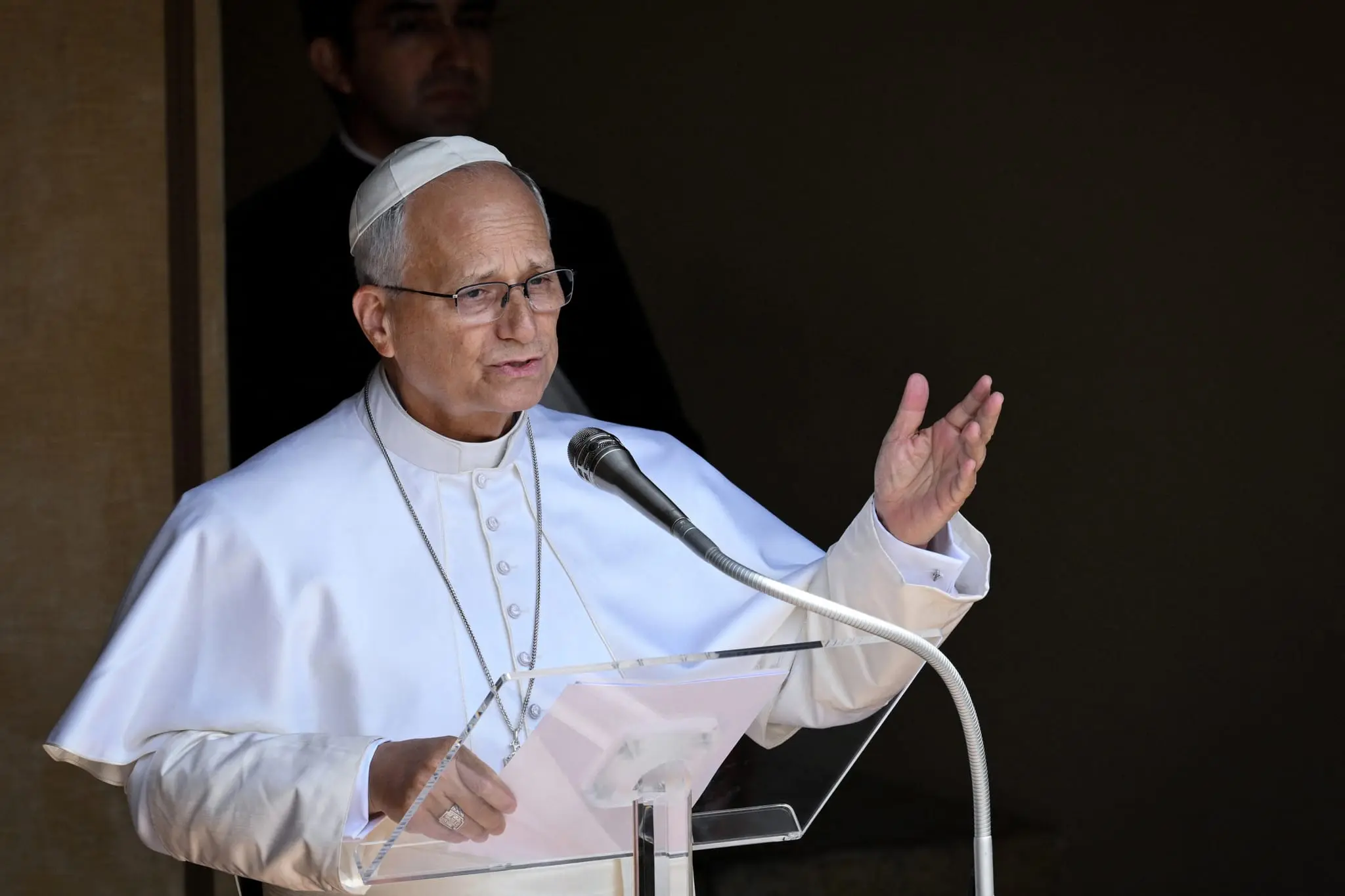
Pope Leo XIV spoke out against “ongoing and escalating violence in the Holy Land” July 26, calling for negotiations founded on “equal dignity and equal rights” for Palestinians in the West Bank and Gaza as settler violence surged in recent days. The Holy Father also renewed his calls for peace throughout the Middle East as the U.S. and Iran observed a second consecutive day without strikes after a dramatic reentry into the protracted war that began in late February.
Pope Leo made the remarks after leading the Angelus Sunday in Castel Gandolfo. The Pope began the address by acknowledging the beatification in Lebanon of Blessed Elias Hoayek, who served as the Maronite Patriarch of Antioch during the early 20th Century. “May the prayers and intercession of the new blessed … obtain the gift of peace for all the people of Lebanon, a country dear to my heart,” the Holy Father said.
The Pope continued that he was following “with deep concern the ongoing and escalating violence in the Holy Land,” where, “in recent days, many civilians, both in the West Bank and in Gaza, have once again fallen victim.”
“I make a heartfelt appeal for a return to negotiations to achieve a just political solution, founded on the equal dignity and equal rights of every human person,” he said.
Pope Leo also urged the rejection of “further military actions and unilateral decisions,” particularly those “that violate the respect for and the status quo of the holy places of every religion.”
The appeal came amid a deadly wave of violence in the occupied West Bank. As Zeale News reported, four Palestinians and two Israelis were killed July 24 after a group of settlers, some armed, entered the Palestinian village of Tell, near Nablus, setting off a confrontation with residents that left two Israelis and four Palestinians dead.
Israeli forces launched a broad operation in the area, while retaliatory settler attacks spread to neighboring villages. By Sunday, suspected settlers had set fire to two mosques and marked one with graffiti invoking “revenge.”
The violence followed months of escalating attacks and encroachments by settlers, including against Palestinian Christians in Taybeh, the last entirely Christian town in the West Bank. Settlers set fire to Taybeh’s agricultural land, threw Molotov cocktails at homes, and attempted to burn a gas station in June, according to residents and the Vulnerable People Project, a U.S.-based Catholic apostolate monitoring the area.
Cardinal Pierbattista Pizzaballa, the Latin Patriarch of Jerusalem, described conditions in the West Bank at a June 29 event in stark terms.
“There is no rule of law,” he said. “The law does not apply, and even if it does, it is not meant for Palestinians. Israeli settlers are allowed to do anything.”
Pizzaballa also called Gaza “a disaster” following a June visit to the territory. “The cities have been razed to the ground, leveled, wiped out,” he said, describing children playing beside sewage and being bitten by rats.
Israeli strikes have continued in Gaza despite an October ceasefire. Gaza health officials say more than 1,190 Palestinians have been killed in Israeli attacks since the ceasefire took effect.
The Pope broadened his appeal beyond the Holy Land July 26, warning that intensified military operations across the Middle East were again bringing “violence and destruction,” endangering civilians, and worsening shortages of drinking water and electricity.
“From the depths of my heart, I exhort all parties involved to suspend the attacks and urgently reopen paths of dialogue and diplomacy, so that the longed-for peace for the entire region may be achieved without delay,” he said.
His remarks came as the U.S. and Iran held fire for a second consecutive day following 13 nights of U.S. and Iranian strikes. U.S. Ambassador to the United Nations Mike Waltz said President Donald Trump was giving negotiations “a little bit of room.” A senior Iranian official told Reuters that Tehran would keep its attacks paused as long as Washington did. The lull had not become a formal ceasefire, and major disputes remained unresolved.
Pope Leo has repeatedly challenged governments to abandon war for negotiation throughout the Iran conflict. At a worldwide prayer vigil held as U.S.-Iran talks opened in April, he declared, “Enough of war!” and told political leaders to sit “at the table of dialogue and mediation, not at the table where rearmament is planned and deadly actions are decided.”
Before his renewed appeal Sunday, Pope Leo reflected on Christ’s parables of the treasure and the pearl of great price. The Kingdom of God, he said, calls rich and poor, young and old, and people of every background to renewal.
“God has no favorites,” the Pope said, “but instead offers his love freely, especially to the little ones or those cast aside.”
He closed by asking Catholics to continue to pray for those suffering because of war and that God would “touch the hearts and enlighten the minds of those in power, so that reconciliation and peace may soon prevail.”



Comments