Six killed after settlers enter West Bank village as reprisal attacks spread
The violence at Tell prompted settler raids on neighboring Palestinian communities and an Israeli military crackdown, amid Church warnings that the same pattern is threatening Christians in Taybeh.
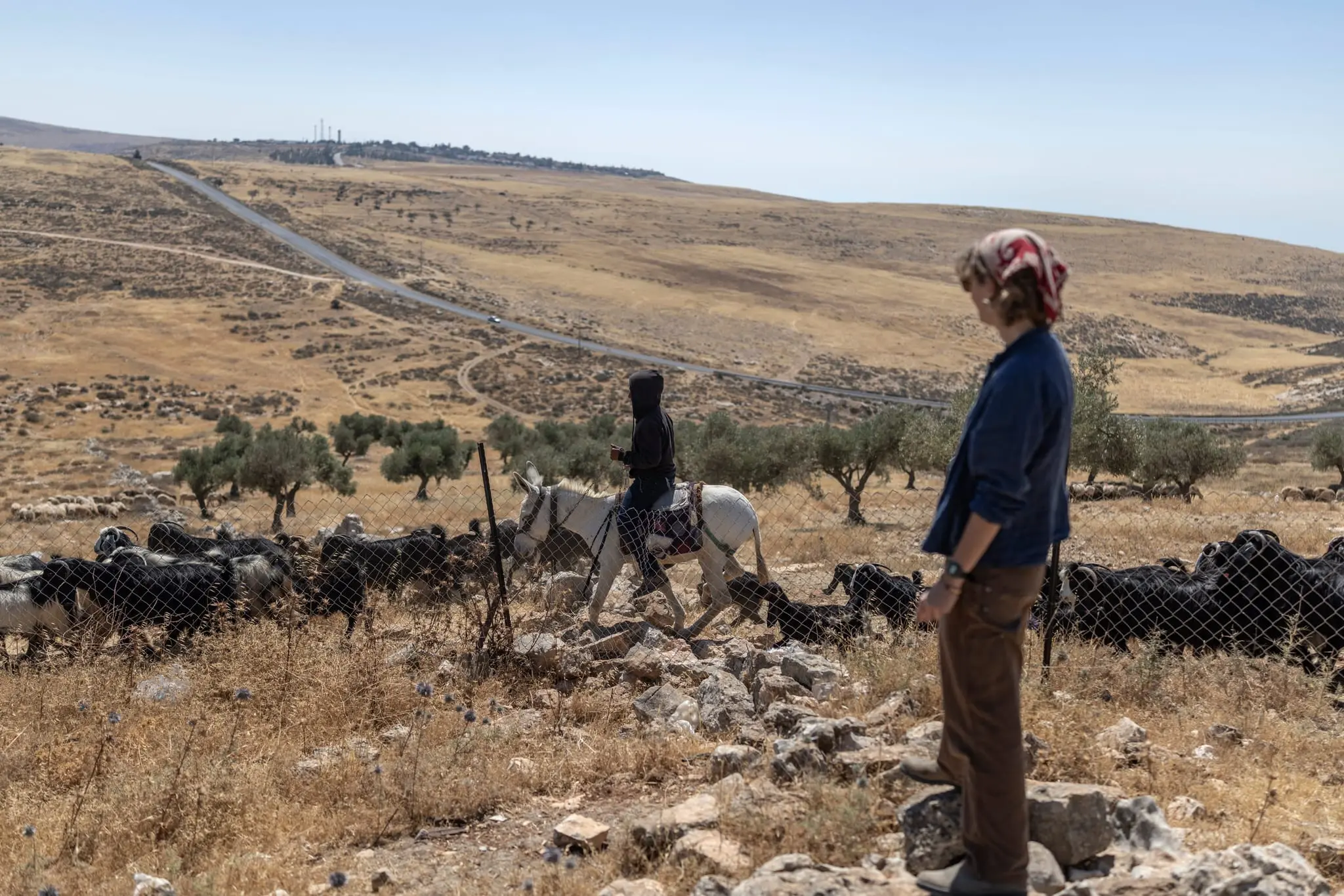
Four Palestinians and two Israelis were killed July 24 in a gunfight that began after dozens of Israeli settlers entered the Palestinian village of Tell without the required military coordination, as retaliatory settler attacks spread across the northern West Bank.
A preliminary Israeli military investigation found that the group, which included armed men, minors, and other settlers, entered Areas A and B, where Israelis ordinarily are prohibited from traveling without prior coordination.
Essam Saifi, a local Palestinian official, told Reuters that approximately 25 to 30 settlers initially entered the eastern side of Tell, tried to break into two homes, and opened fire when residents confronted them. According to Saifi, the group later returned and attacked another part of the village.
The Israeli military confirmed that settlers fired into the air during the confrontation. A Palestinian man then seized a rifle from Benayahu Mellet, 32, a reservist and member of the nearby Havat Gilad settlement’s security team, and opened fire. Mellet and Israeli army Maj. Yuval Ezra, 27, were killed.
Israeli forces shot and killed the Palestinian gunman. Three other Palestinians also died, but the military said it was still investigating who shot them. Two Israelis and four Palestinians were wounded.
A separate video reviewed by AP News and confirmed by the Israeli military showed soldiers firing repeatedly toward Palestinians who were already on the ground. The military did not immediately explain why the other three Palestinian men were killed.
Settler reprisal attacks followed across the region. Hundreds of settlers reportedly entered Far’ata, Jit, Sarra, and other Palestinian communities, setting fire to buildings, vehicles, farmland, and olive trees. The Palestinian Red Crescent reported that at least seven Palestinians were injured in Far’ata.
The Israeli military deployed five additional companies, canceled soldiers’ leave, closed Tell and access routes around Nablus, and announced preparations for an extensive operation. Israeli commandos also entered a Nablus hospital and detained two wounded Palestinians whom the military accused of participating in the confrontation.
Following a security consultation, Israeli Prime Minister Benjamin Netanyahu and Defense Minister Israel Katz ordered the demolition of the alleged gunman’s home, additional weapons raids, and the revocation of Palestinian work permits. They also announced that Israel would accelerate the legalization of existing settler outposts and establish new ones.
Most of the international community regards Israeli settlements in the occupied West Bank as illegal under international law.
Israeli Finance Minister Bezalel Smotrich called for Tell and nearby Palestinian villages to be evacuated and made to resemble refugee camps subjected to previous Israeli demolition operations. He also advocated transferring land from Palestinian civil administration to full Israeli control so a new settlement could be constructed near the site.
Shin Bet chief David Zini, meanwhile, urged Israelis “not to take the law into their own hands” and to leave the response to state security forces.
The latest deaths came amid a sharp increase in settler attacks. In a report published July 23, the United Nations Office for the Coordination of Humanitarian Affairs said it documented 50 attacks involving casualties or property damage between July 14 and 20 alone.
More than 1,330 such incidents have been recorded across 250 Palestinian communities since the beginning of 2026 — an average of more than six per day. Approximately 880 Palestinians have been injured in connection with settler attacks, including 720 injured directly by settlers.
Before Friday’s violence, 18 Palestinians had been killed in incidents connected to settler attacks this year: 12 by settlers, three by Israeli forces, and three in cases where responsibility remained disputed. That already exceeded the total for all of 2025.
Violence reaches Taybeh’s doorstep
Five days before the deaths in Tell, settlers and Israeli forces carried out a deadly operation in Deir Jarir, a Palestinian village adjoining Taybeh, the West Bank’s last entirely Christian Palestinian town.
The Vulnerable People Project (VPP), a U.S.-based Catholic apostolate, issued a live alert from Taybeh reporting that armed settlers entered Deir Jarir, fired toward residents and homes, and took approximately 70 sheep. Two Palestinians were killed, another was critically wounded, and Israeli forces closed Karamilo Gate, Taybeh’s main entrance, according to the alert.
The subsequent U.N. report said Israeli forces shot and killed two Palestinian men and injured two others during a settler attack in which dozens of settlers, some armed and accompanied by soldiers, attempted to seize sheep.
One victim was Odeh Farajna, a village council member and flower-shop owner who helped maintain the local cemetery. Video reviewed by The Guardian showed a settler, accompanied by four Israeli soldiers, leading a sheep away from a Palestinian home. The Israeli military acknowledged escorting settlers who claimed their livestock had been stolen, but said soldiers opened fire after Palestinians threw stones and concrete blocks.
The violence has intensified concerns among Taybeh’s Christian residents. As Zeale News previously reported, the town has faced repeated incursions, attacks on its farmland and homes, restrictions at its entrance, and settler attempts to seize economic and agricultural property.
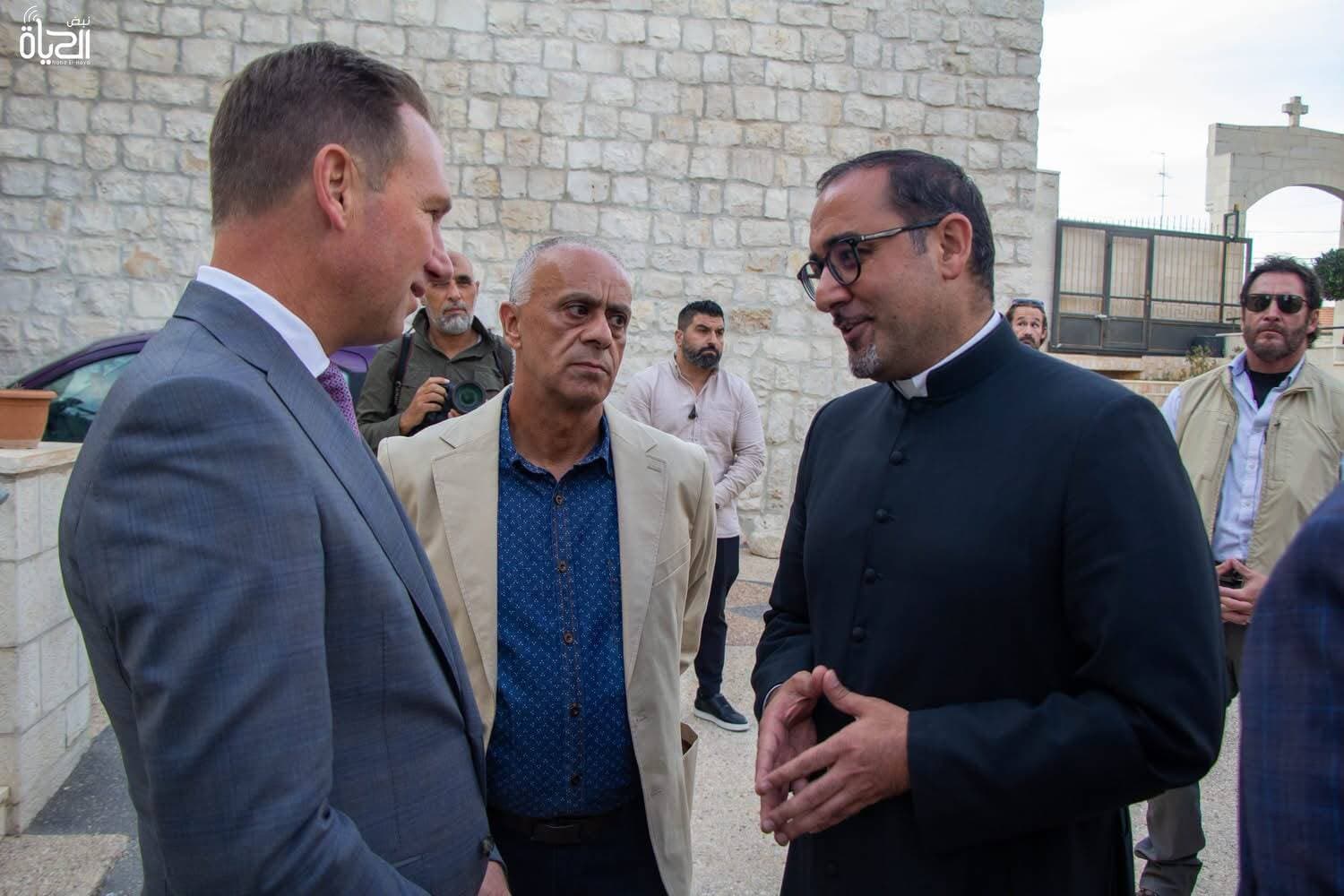
In early July, Taybeh’s Latin Catholic pastor, Father Bashar Fawadleh, warned that settlers appeared to be constructing another outpost on Jabal Al-Massis, village land located only yards from Palestinian homes. He said the expansion could cut farmers off from their fields and pressure Christian families to emigrate.
Cardinal Pierbattista Pizzaballa, the Latin Patriarch of Jerusalem, offered a similarly stark assessment in June.
“There is no rule of law,” he told an audience in Italy. “The law does not apply, and even if it does, it is not meant for Palestinians.”
Father Fawadleh called for action before further settlement expansion becomes irreversible.
“The Holy Land cannot be preserved through words alone,” he said. “It must be protected through concrete action. … The time to act is now.”

.jpg&w=3840&q=75)






Comments