Pope Leo urges Catholics not to remain ‘silent spectators’ at liturgy
The Holy Father traced Vatican II’s reform through the Church’s living tradition and emphasized pastors’ responsibility to safeguard the liturgy.

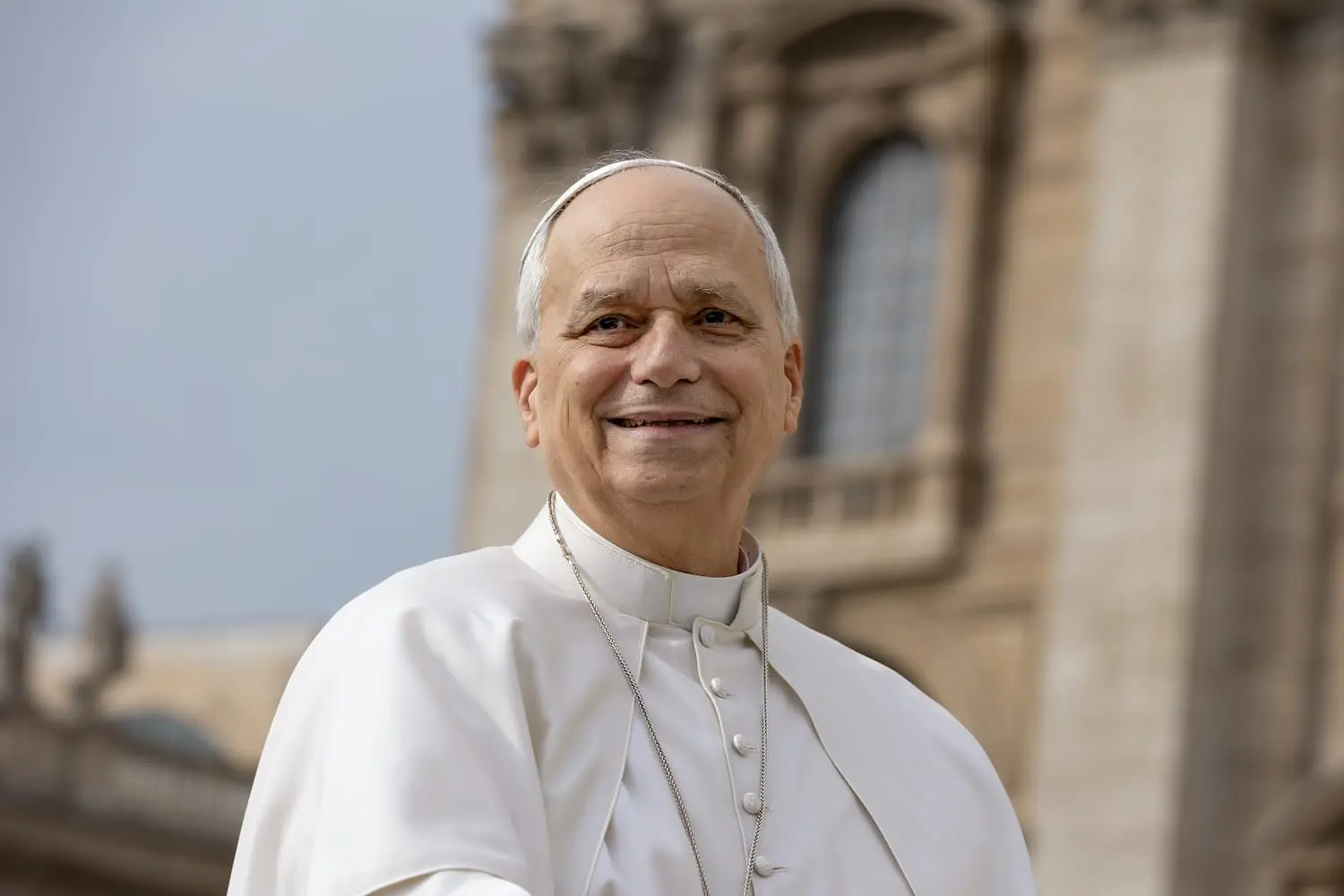
In his Aug. 26 General Audience, Pope Leo XIV urged Catholics to enter fully into the liturgy, saying the Second Vatican Council’s reform sought to draw the faithful into a true relationship with God rather than leave them passive observers.
His address concluded his catechesis on the council’s Constitution on the Sacred Liturgy, Sacrosanctum Concilium, focusing on the motivations behind the reform.
“The Conciliar reform,” Pope Leo said, “placing at the centre that which constitutes the heart of the ecclesial experience, was intended to allow the liturgy to shine forth as ‘the primary source of that divine exchange in which the life of God is communicated to us.’”
The Pope said that understanding of the liturgy requires more than physical attendance. He pointed to a 1962 letter from Cardinal Giovanni Battista Montini, the future Pope St. Paul VI, who called the faithful to participate more fully in the liturgy.
The faithful “cannot and must no longer remain silent and passive,” Pope Leo said, quoting the late pontiff. “Their physical presence cannot be reconciled with their spiritual absence.”
Pope Leo noted that the same concern later appeared in Sacrosanctum Concilium.
“The Church … earnestly desires that Christ’s faithful, when present at this mystery of faith, should not be there as strangers or silent spectators,” the Pope said, quoting the constitution.
He continued, adding, “The Conciliar reform, by placing at the centre that which constitutes the heart of the ecclesial experience, was intended to allow the liturgy to shine forth as ‘the primary source of that divine exchange in which the life of God is communicated to us.’ [3] From this conviction arose the need to make the richness of the biblical texts and prayers more accessible to all the faithful, and to streamline the order of the celebration compared with that set out in the liturgical books then in use.”
The Pope emphasized that those revisions belonged to a longer movement within the Church, pointing to earlier reforms under Popes Pius XI, Pius XII, and St. John XXIII.
“Indeed, since the liturgy is a living entity, throughout the centuries it has always been subject to developments and changes,” Pope Leo said. “The Magisterium adapted its forms to the needs of different eras. It is therefore not surprising that the Second Vatican Council too, with the utmost respect for the heritage of tradition, and precisely in order to make it more accessible, considered it necessary to revise the liturgical books.”
He continued, adding, “The liturgical reform promoted by the Second Vatican Council, is thus firmly rooted in the living tradition of the Church.”
Pope Leo also emphasized that the liturgy belongs to the entire Church and must be understood within her communion.
“Liturgical services are not private functions, but are celebrations of the Church,” he said, quoting Sacrosanctum Concilium, “which is the ‘sacrament of unity,’ namely, the holy people united and ordered under their bishops. Therefore liturgical services pertain to the whole body of the Church; they manifest it and have effects upon it.”
A proper understanding of the reform, the Holy Father added, also guards against its distortion.
“A correct understanding of it,” Pope Leo said, “also enables us to reject the abuses that occurred in certain sectors of the Church during the post-Conciliar period, and which, unfortunately, still occur from time to time today, where some of the principles underlying the reform itself have been taken to extremes or misunderstood.”
The Holy Father concluded by addressing the responsibility of bishops and priests for the Church’s liturgical life.
“It is therefore the primary responsibility of pastors, of bishops but also of each individual priest,” to safeguard and promote a liturgy which, while respecting liturgical norms, shines with noble simplicity,” he said. “Such a liturgy will also be a fundamental vehicle for evangelization, the instrument of grace through which, as the Council teaches, we may learn to offer ourselves and, through Christ’s mediation, be perfected in unity with God and amongst ourselves.”


Comments