Report: How Islamic leaders see political office in America
RealClearInvestigations examined Muslim political organizations’ efforts to fund candidates, turn out voters, and elect more Muslims to public office, prompting debate over whether those efforts represent ordinary civic participation or an effort to advance Islamist priorities.
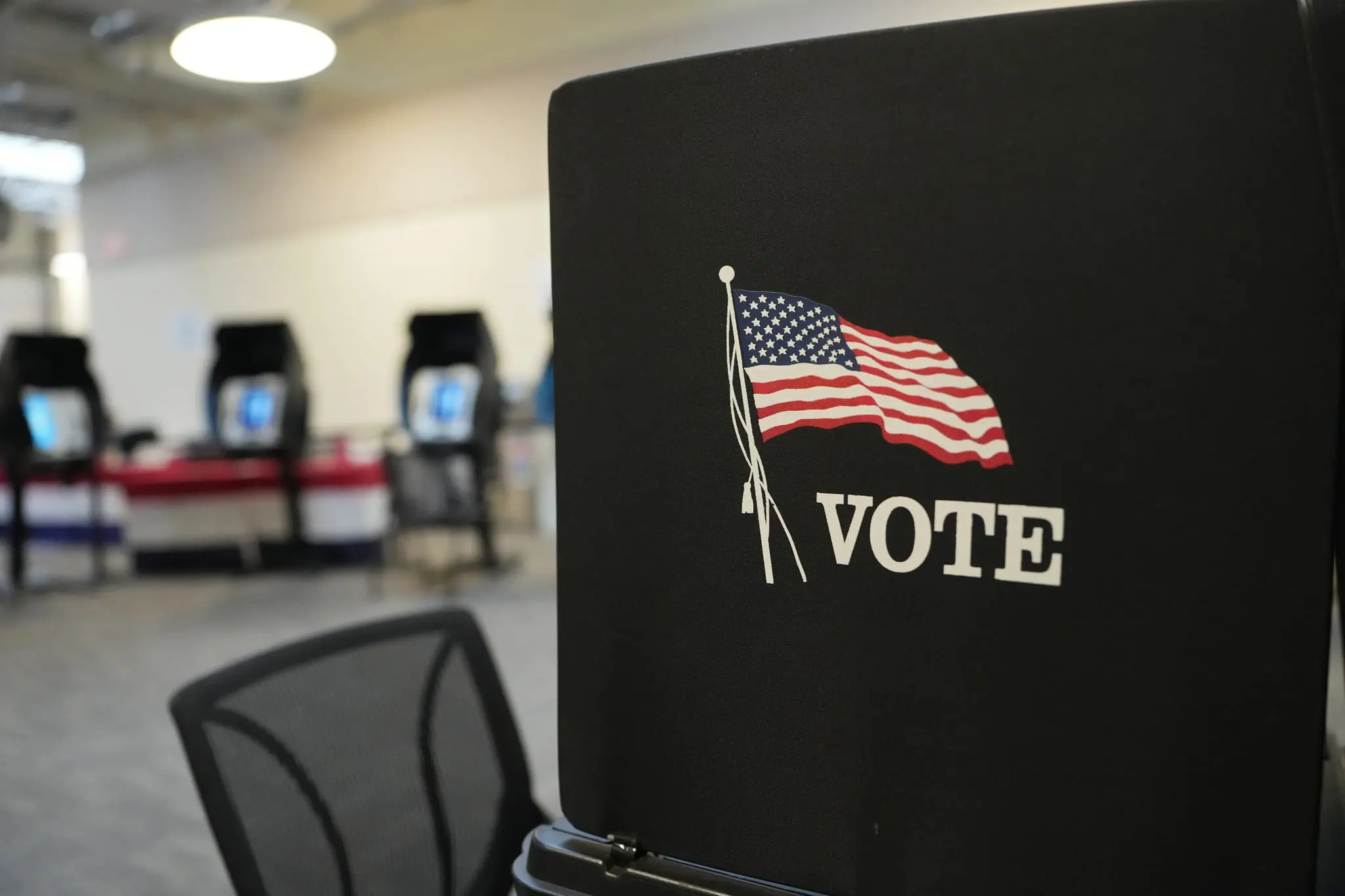
Some Islamic leaders and political organizations are increasingly using elections, campaign spending, and other parts of the American political system to build influence and advance objectives that critics argue conflict with American laws and institutions, according to an Aug. 18 RealClearInvestigations report.
“In one sense, this is just the continuation of the country’s deep tradition of offering newcomers the opportunity to contribute their own customs to American society. But some critics say this iteration of the immigrant story offers a distinct challenge,” investigative reporter Paul Sperry wrote.
The report focused partly on Muslim candidates whose progressive political supporters or past associations have drawn scrutiny, including Michigan Democratic Senate nominee Abdul El-Sayed and New Jersey congressional nominee Adam Hisham Hamawy.
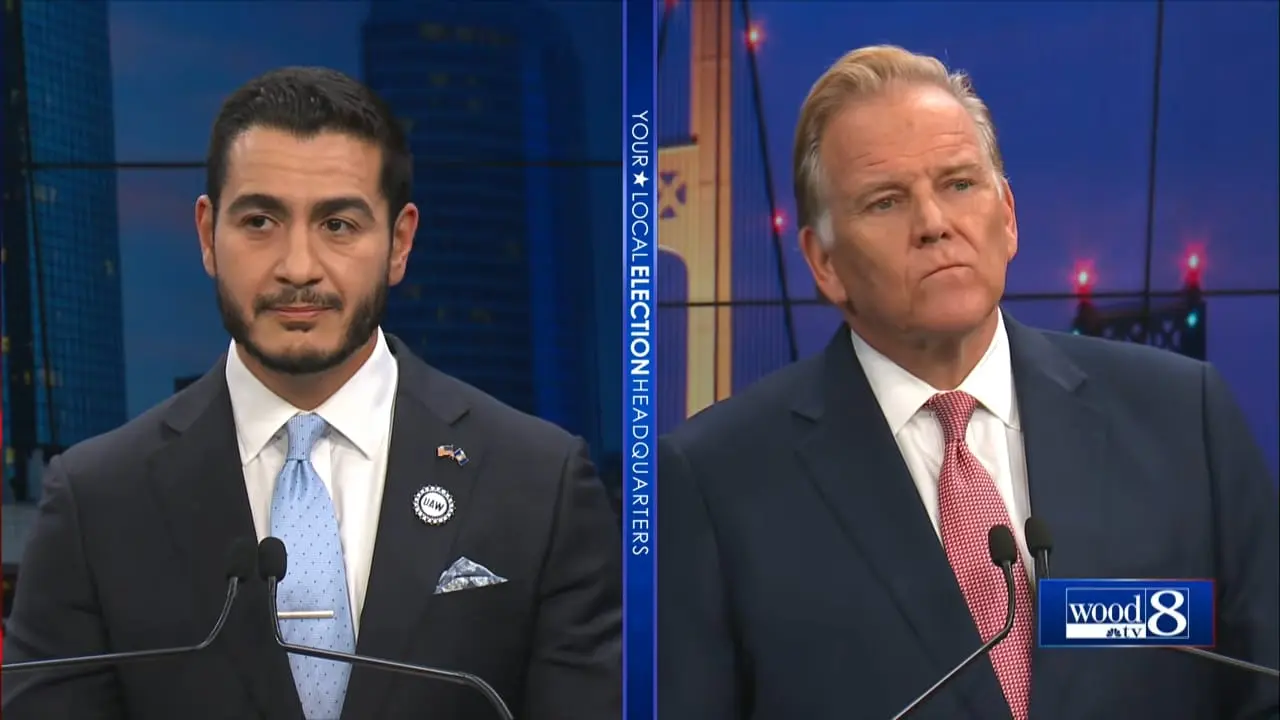
Sperry reported that at least $315,000 from donors he characterized as tied to Muslim Brotherhood–linked organizations supported El-Sayed during his successful Democratic primary campaign. El-Sayed, who won the nomination Aug. 4, will face Republican former Rep. Mike Rogers in November.
Turning to Hamawy, the Democratic nominee in New Jersey’s 12th congressional district, Sperry wrote that he “once maintained close ties to the late al-Qaeda ‘Blind Sheikh,’” Omar Abdel-Rahman. Abdel-Rahman was convicted of participating in a plot to bomb several New York City landmarks.
Sperry presented the two candidacies as part of a larger effort by Muslim political organizations, including groups he characterized as Islamist, to accumulate influence through American elections.
“Islamic organizers are advancing a nationwide plan to back Muslim and other Islamic-friendly candidates,” he wrote, estimating that organizers could potentially draw from more than $140 million in annual donations to mosques and other Muslim organizations.
A January religious ruling could give those organizations access to a new source of political funding, according to the report. The Fiqh Council of North America and the Assembly of Muslim Jurists of America ruled that Muslims may, under certain circumstances, direct zakat — obligatory Islamic charitable giving — toward efforts to influence public policy.
The ruling said that “giving one’s zakat for influencing political causes is warranted.” Sperry characterized the decision as opening Muslim charitable giving to political use for the first time, with the stated goal of “empowering” Muslim communities in America. He further argued that the money could support candidates who favor “criminalizing criticism of the Prophet Muhammad and Islam in general.”
He connected the ruling to the political fundraising efforts of Muslim-backed groups such as Fighting for Michigan PAC, which supported El-Sayed, and the Unity and Justice Fund. According to Sperry, the Unity and Justice Fund is soliciting money from mosques and Muslim organizations to support Democratic candidates in November and has connections to the Council on American-Islamic Relations (CAIR).
CAIR, one of the country’s largest Muslim advocacy organizations, which Sperry said has ties to Hamas, is also working to elect more Muslims to public office, according to the report. Sperry wrote that the group is preparing more than 200 Muslims to run for state and local positions and cited a longer-term effort to elect 30 Muslims to Congress.
>> CAIR relaunches Muslim voter campaign targeting 12 priority states <<
The report cited a 2020 survey finding that 54% of U.S. mosques organized voter-registration drives and 51% hosted politicians as speakers during that election year. Ninety-five percent of mosque leaders surveyed said Muslims should participate in American politics.
According to Sperry, critics argue that the political effort is seeking not only greater Muslim representation but also greater Islamist influence over American government.
“This is all about political power,” Robert Spencer, a senior fellow at the David Horowitz Freedom Center, said in congressional testimony cited by Sperry.
Sperry argued that this political organizing is occurring alongside efforts to establish more distinctly Islamic communities in some parts of the country.
As an example, he pointed to The Meadows, a planned 402-acre development originally known as the “East Plano Islamic Center,” outside Dallas, Texas. Texas officials have alleged in court filings that the project’s organizers sought to create a “city” that would become the “epicenter of Islam in North America,” according to Sperry.
The developers reject allegations that they intend to establish a separate Islamic enclave or an area governed by Sharia law, saying the project seeks to meet demand for housing among Muslim families.
The report also raised concerns about Sharia arbitration councils affiliated with mosques in cities with large Muslim populations. Sperry described the councils as “all-male Islamic tribunals” that resolve internal disputes, including some family matters that otherwise might reach civil courts.
“Based on the Quran and other holy Islamic scripture, Sharia regulates Muslim worship, dress and diet,” Sperry argued of Sharia law. “But it also sanctions practices at odds with not only American culture but also the U.S. legal system — including domestic violence, polygamy, female circumcision, forced child marriage, honor killings, and militant jihad.”
Such religious arbitration cannot override federal or state law, and Sperry acknowledged that American Muslims currently lack the numbers to fundamentally alter federal law. Critics cited in the report nevertheless argued that Muslim officeholders could gradually reshape local ordinances and government practices.
Sperry cited a recent speech by former National Intelligence Director Tulsi Gabbard, who said CAIR had issued a “call to action to use American legal and political systems to implement Sharia law.”
Former FBI agent John Guandolo, another critic cited in the report, argued that some American cities are following a pattern he sees in the U.K., where Muslim communities have gained substantial political influence. Guandolo claimed that Muslims had effectively “taken over” at least five British cities and that Sharia practices were encroaching on British law.
Muslim advocacy groups, however, have pushed back against claims that Muslim political participation is part of an effort to impose Sharia law or undermine American institutions.
“There is no evidence that American Muslims are trying to impose religious law on the United States,” a CAIR spokesperson said, according to RealClearInvestigations. “But there is clear evidence that some are using misinformation, racism, and anti-Muslim stereotypes to attack our communities.”
Sperry nevertheless concluded that some elected officials and religious leaders, supported by funding he linked to extremist organizations, are seeking “to carve out their own societies within the United States.”
“And while many Muslims are assimilating more traditional Western values,” he wrote, “there is also a strong push to recreate communities based on the values and cultures of their former homelands.”



Comments