Saint Paul
This engaging retelling of the story of a most unlikely Apostle brings to life the man who witnessed the death of Christianity’s first martyr, met martyrdom himself years later, and left behind a remarkable legacy of faith.
Transcript
Read the full transcriptAuto-generated · 740 words
Today, we'll delve into one of the most dramatic episodes in Christian history, the martyrdom of St. Paul, the man who went from persecutor to the greatest missionary, and who paid with his blood for his faith. Imagine Rome in the first century AD, a city full of life, but also ruthless.
It's under the rule of the Emperor Nero, a name that evokes terror. It's the year 67 AD, and the persecution of Christians is in full swing. Among them is Paul of Tarsus, a man who underwent a radical conversion. From a fierce persecutor of the followers of Christ, he became one of his most devoted apostles, traveling relentlessly to spread the message of the gospel.
But who was Saint Paul? Paul. Originally known as Saul, was a Pharisee, born in Tarsus, a city in modern-day Turkey, and raised as a Roman citizen, a rare privilege for a Jew. He was brilliant, educated, and a fervent defender of the Mosaic law. It was this zeal that initially led him to persecute Christians.
He was present and consenting to the stoning of St. Stephen, the first Christian martyr. But then, something extraordinary happened, something that would change his life forever. Paul was on his way to Damascus to arrest Christians, when suddenly he was blinded by a light from the sky. He fell to the ground, and a voice said to him, Saul, Saul, why are you persecuting me? It was the voice of Jesus. Paul, blinded and confused, asked, Who are you, Lord? And the answer was clear.
I am Jesus, whom you are persecuting. From that moment on, Paul underwent a radical transformation. From persecutor, he became an apostle. For decades, Paul traveled across the Mediterranean, preaching the word of Jesus, writing letters to Christian communities, letters that we still read today as part of the New Testament.
But his zeal didn't go unnoticed. His preaching irritated many, including the political and religious powers of the time. After being arrested several times, Paul found himself under trial in Rome. His status as a Roman citizen allowed him to be treated differently from other Christians, but it wouldn't save him from the fate that Nero had in store for those who opposed imperial power.
It was the year 67 AD. After the great fire of Rome, Nero needed a scapegoat, and who better than the Christians? He accused them of all sorts of crimes, and among them was Paul, one of the most important leaders of the fledgling church.
It's said that Paul was imprisoned in the Mamertine prison, an ancient, underground, dark and damp jail where condemned men awaited their execution. There, Paul awaited his fate. The sentence was clear. Paul was to be beheaded. As a Roman citizen, he was spared crucifixion, a punishment reserved for non-Romans.
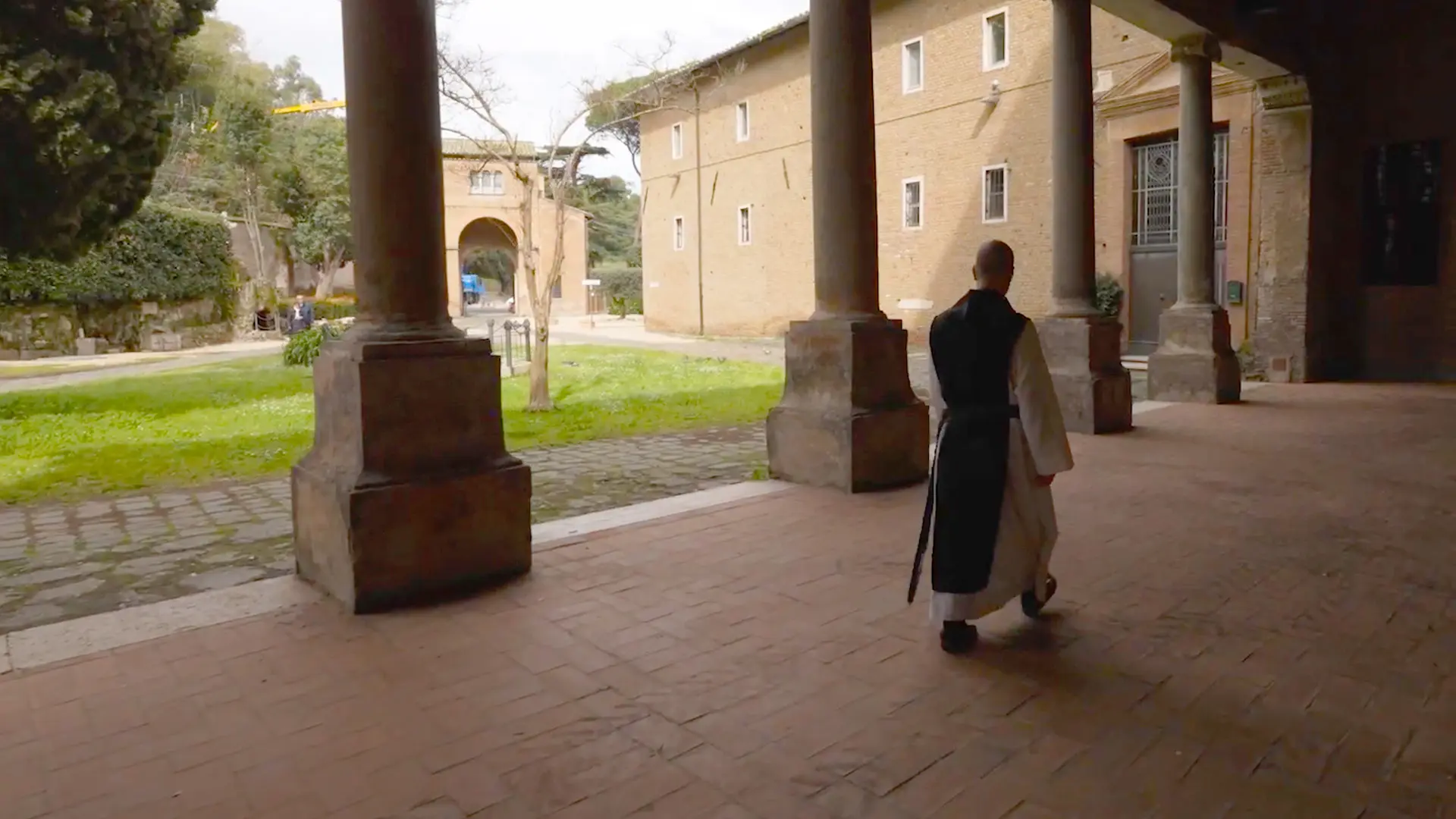
He was taken outside the walls of the city, along the Ostian Way, towards the place of execution, today known as Tre Fontane, the place of the three fountains. When the sword fell, something extraordinary happened. According to tradition, Paul's head bounced three times on the ground, and each time it touched the earth, a spring of water gushed forth. This is where the name Three Fountains comes from.
Thus, Paul died, but his sacrifice was not the end. It was only the beginning of a story that would change the world. His message, his letters, his travels are today the foundation of Christian doctrine. Paul, through his martyrdom, consecrated his life to Christ, and his memory lives on today.
But how is St. Paul remembered today? Every year, on June the 29th, the Church celebrates the feast of Saints Peter and Paul, recognized as the two pillars of the Catholic Church. In Rome, Paul is venerated in a special way at the Basilica of St. Paul outside the walls, built at the place where his body is believed to be buried.
It's a sacred place, visited by millions of pilgrims every year. There is another detail worth mentioning. In the Basilica, there's a chain that, according to tradition, was the one that bound St. Paul during his imprisonment. This chain is displayed as a relic, a powerful symbol of what Paul endured to carry out his mission.
His example teaches us... That faith and courage can change history. Today, St. Paul continues to inspire anyone who fights for the truth, even at the cost of their own life.