Church, Conflict, and Community (Iris Bahr, Father Rick Riccioli & Rob Long) | Ep. 03
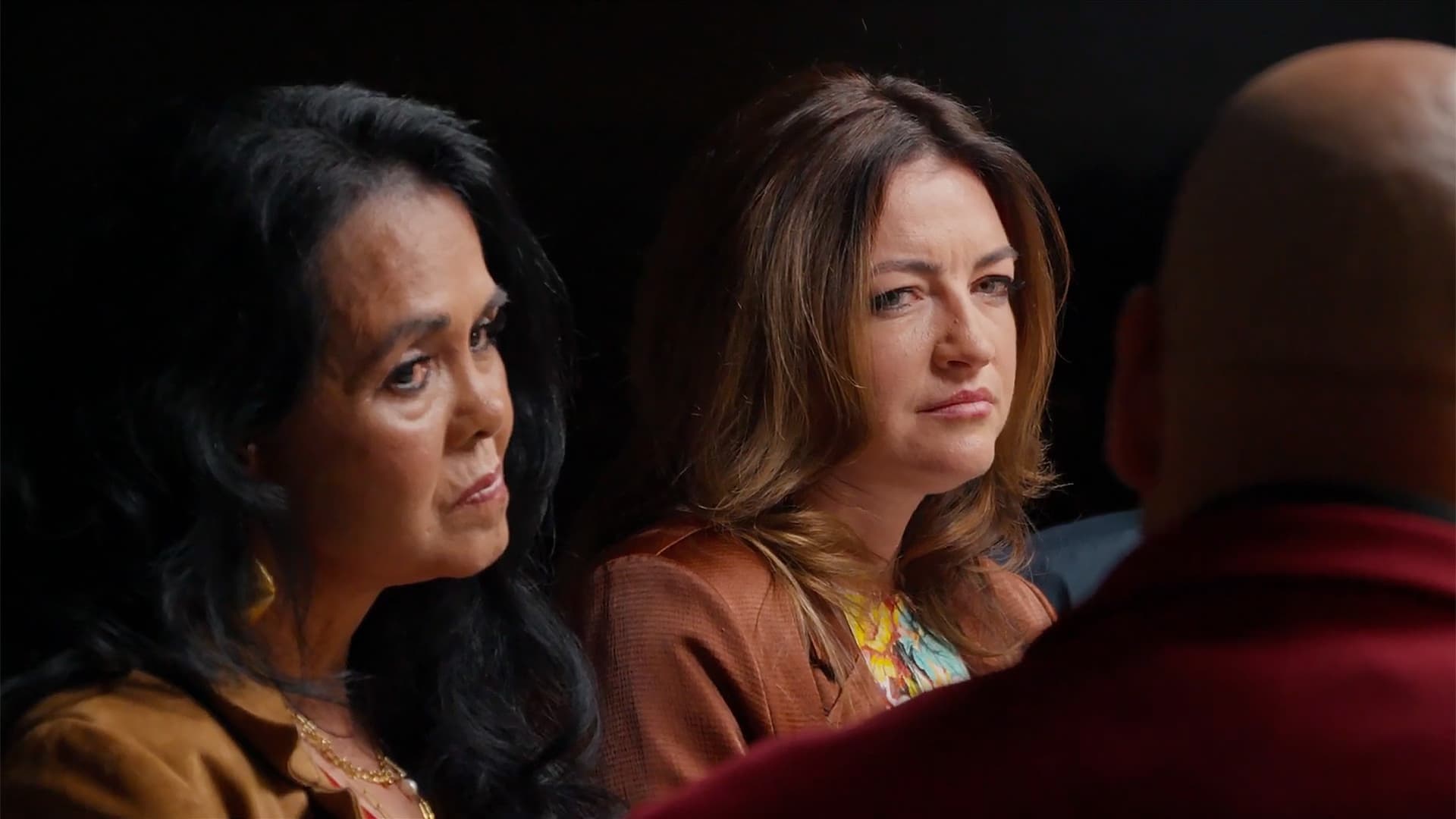
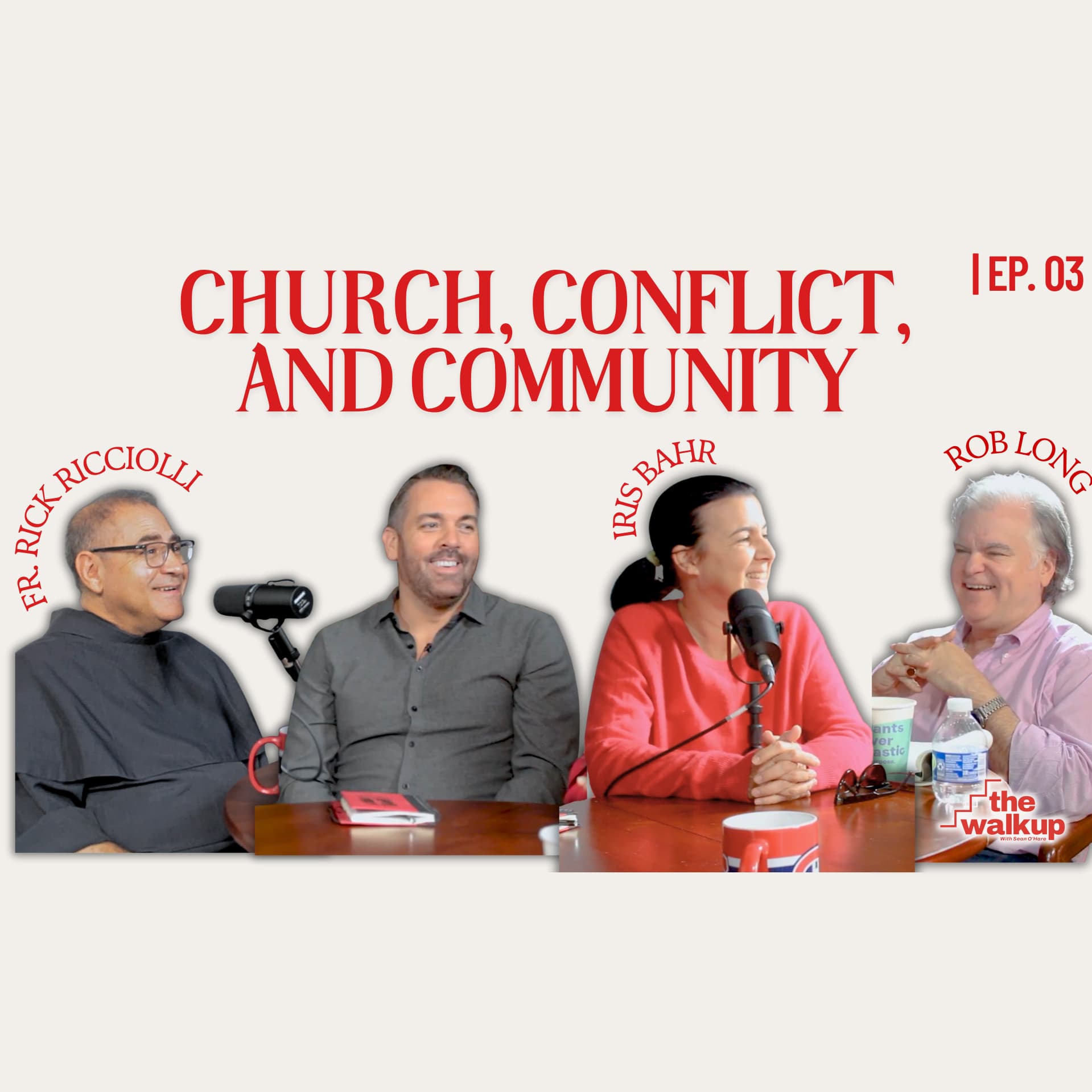
In this episode of The Walkup, Sean O’Hare brings together an unexpected trio: award-winning actress and writer Iris Bahr, Brooklyn-based priest Fr. Rick Riccioli, and Hollywood veteran Rob Long (Cheers, George and Leo).
Together, they explore the shifting role of the church, the emotional weight of service, and how institutions of faith can either heal or harm. Rob shares stories from behind the scenes of network television and his own search for spiritual grounding. Fr. Rick reflects on what it means to serve a broken world, while Iris wrestles with her own relationship to tradition and belief. The conversation moves from substance and spirituality to humor, healing, and the idea of the church as a “hospital for the broken.”
Subscribe on YouTube: @TheWalkupPodcast Follow on Instagram: @thewalkuppodcast
Transcript
Read the full transcriptAuto-generated · 17,327 words
When you sort of accept that gift, right, we say what is given was given to be given again. So, what are you going to do with that information? And so, part of it was like, well, I'm at a string for making stories up that I don't care about, and I'm really, I mean, I'm just too old. I can't do it anymore. If you look at a lot of the...
The Protestant churches or mainstream Anglican, Episcopal, Methodist, whatever, some of whom have become very adaptive, their numbers are declining. Very fast. Talk to me about that, because obviously Judaism is not a converting... So, this is why... I mean, I think it's amazing, because it's created this powerful... But does it ever strike... Does it ever not resonate with you, that aspect? Can I just... Before we go there, can I just... Please, correct me if I'm wrong. Can I talk a little bit about Judaism a little bit?
Yeah. Welcome to the Walk Up Podcast, where we explore the intersection of faith and culture. My name is Sean O'Hare. On today's episode, we have comedy writer and podcast host... Rob Long, Franciscan priest Rick Riccioli, and Jewish actress and comedian Arise Barr. We explore Rob's journey from writer and producer on TV shows such as Cheers to entering the Princeton Theological Seminary, and Arise's journey from serving in the Israeli Defense Forces to starring in shows such as Curb Your Enthusiasm. We hope you enjoy.
I think a lot of people are always wondering, what is this podcast about? I know we are. And this is, I think, in a perfect and strange way, the exact encapsulation of what we want this podcast to be, which is, we live in New York City, we have the opportunity to meet people from every faith background, every perspective, and what's not happening enough in the world is people that disagree or have different perspectives. Talking to each other, laughing with each other, learning from each other, and so here we have.
A couple of Christians. A couple of Christians of various denominations, which we'll help define. Thank you. Yeah, I heard Anglican. I'm like, what now? This is actually the opening of a joke, right? This is like the... Yeah, the... An Anglican, a Lutheran, and a Presbyterian.
The friar, the Jew, the Catholic, and the soon-to-be Anglican priest. Well, I'm an Episcopalian, yeah. Episcopalian, yeah. I will be going to seminary in September. You are? Yeah. Isn't that wild? Wow. So, maybe you want to explain for Elise and for Friar Rick's... A perspective of how you decided on such a strange course, because usually, the amount of people that write and produce for the TV show Cheers that become Episcopalian priests is pretty common. Yeah, it's about 40%. Yeah, 40%, a little less now.
38% now, right? Yeah, if you live long enough, you end up having to ask yourself big questions. Some place you can go and get the answer. Not the answers, but where the questions are sort of celebrated. And so, I just started doing that more and more, and I started going to, you know, Episcopal faith is very, extremely groovy, right? Okay, okay. Is it Protestant? It's Protestant, yeah. It's sort of the original Protestant.
The Breakaway Church. The Breakaway Heretics Church. Henry VIII wanted to get a divorce, and the Pope said, uh-uh. And he said, all right, well, guess what? I'm going to pick up my church stuff and go. And then there followed almost 100 years, maybe, a little less, of incredible bloodshed in England, and then incredible bloodshed in Europe, while they sorted these doctrinal things out. And then, where did the Anglican and the Episcopalian options? Well, the Anglican, it used to be all the same.
So, basically, the Episcopal Church was in communion with the Church of England, with the Anglicans. So, the Archbishop of Canterbury, we call it in communion. So, the Archbishop of Canterbury is sort of like first among equals, although I'm sure the presiding bishop in the United States would be like... You know, we're kind of, we all talk, you know, we're all the same. And then there was recently a sort of, as this happens, there's a schism in the Episcopal Church a little bit in 2000-something.
The Episcopal Church center of it became a little too liberal for some people, and they decided to sort of break off and become more the, it's got some dumb name, Anglican Church of America or something, I don't know what it's called. Anglican something. And so they have another group there that are just a little bit more. More conservative than I am. I am an Episcopal, so I am a member of the Episcopal Church of the United States. And so, the Catholic Pope is the main dude.
Do you guys have a main dude? We have a presiding bishop, but we don't really have a main dude. His name is Michael Curry right now. That sounds groovy. Yeah, he is good. He performed the wedding ceremony between Harry and Meghan. Okay. I have lost the perspective now. Let's move on.
He is just the front. He doesn't set the cast. Right. Was he the guy that had the most outrageous eyebrows? Oh, does he have festive eyebrows? He probably does. Yeah. Oh, I got to, can we? Dude, you're, like, on the world scene, like, you know. Like, easy enough to trim. These are not. Yeah, right. But there's something about that. Michael Curry? Michael Curry. Genetic condition. Is he the Archbishop of Canterbury? No, the Archbishop of Canterbury is another guy whose name I don't know.
Michael Curry is an American, so he's the presiding bishop of the American. Oh, the American. Oh, true, true, true. So he, just because Megan is an American, so he went over and. And his actual, his sermon, wedding sermon, was kind of like in the more black church tradition. Oh, he was the preacher. He was a preacher. It's this guy, isn't it? That's him, yeah. He looks lovely. So, it was kind of wild to like have this guy, you know. I was thinking of the Archbishop of Country Grove.
Because his eyebrows are fantastic. They're very well sculpted. He actually preached really well. It was great, right. So, I like him. But it was a new experience, I think, for many of those people in Westminster Abbey. Yes. Right. To have some guy like, yeah, which is kind of cool. And within the Anglican community, so Catholics, we do not necessarily see Anglicans as Protestants. It is a different tradition.
There was not the same kind of revolt, a doctrinal revolt. It was more disciplinary about marriage and this and that, and obviously the indissolubility of marriage. But we hold the Anglican community in a bit of a different place.
But within the Anglican community, there is a lot of diversity. I mean, I have been to… In Toronto, when I lived there, we used to go to Smoking Toms, which was an Anglican church that had adoration of the Blessed Sacrament and benediction, and like incense galore, and you'd go there, and every religious, because it was the university area, all the religious students, Catholics, would be there, because it was just so freaking beautiful. They did such a nice job, you know? And that's why it was called Smoking Toms?
Smoking Toms, yeah, because it was the incense. Yeah, we used to call it Smells and Bells. Sometimes. And if you go to a high church, high Episcopal church, it is very close, and actually has gotten closer over time. So, as the Book of Common Prayer, which was written by Thomas Cranmer in the late 16th century, which is sort of the foundational book of Episcopal Anglican liturgy, over time, it has gotten a lot more Roman Catholic.
Okay. Because, you know, you're like, oh, we kind of like that part. Oh, we kind of like that part. We kind of like that part. I mean, it has progressive elements, and it's been rewritten, and it's been sort of redesigned a bit over time, and I think they're going to vote in the summer to start a new version of it again. Do you find that, and maybe this is a question for both of you, but can I call them branches? I don't know, sect branches, but what branch has adapted more?
modern times in order to sustain a congregation that, you know what I mean? I don't know where the gay marriage stands. I know that the Pope has obviously opened up to certain things that are unprecedented. Not gay marriage, I imagine, but other things like... Well, I mean, in the Episcopal Church of America, gay marriage is celebrated. Got it. Okay. Not in the Anglican Church of America, which is one of the reasons why they split. Okay. Which is why there is an Anglican Church, because of that.
So, adapting is an interesting question. If you look at a lot of the... The Protestant churches or mainstream Anglican, Episcopal, Methodist, whatever, some of whom have become very adaptive, their numbers are declining very fast. Right. And we, you know, the Catholic Church continues to have substantial numbers in certain parts of the country. Some of them are former Anglicans, former Episcopalians who are not happy with the way the Episcopalian Church is going, which is not always a benefit for us, I've got to be honest, because if you're coming because you don't like women in power or in authority, And you're joining the Catholic Church for that reason?
Right. You're going for the negatives. Yeah, that doesn't help us, you know? I think it's where we tend to focus on the Church in the West, and I actually just saw recently the most recent census, or however they come up with these tabulations, that the Church globally has actually grown over the last couple of years. The Catholic Church, yes. As a primary Africa, Southeast Asia, where I think it was one point.
Three, two, and now it's 1.4 billion, or whatever it is. And so, we tend to focus it specifically because it's what we know in the West, but globally, you know, the church is continuing to grow. But maybe I think it might be interesting to hear your decision to enter seminary, which sounds like you're leaning toward a decision on which seminary, and then maybe contrast that with... Your process of how you enter something. Sure. Yeah, mine is a little late in life, and I don't have to give up a lot of stuff.
I just have to move to Princeton. We're just giving up a lot. It's kind of nice, actually. Princeton is nice. For me, it was really more like, okay, well, I've done stuff, and I've written stuff, and I continue to want to do that, and so how do I integrate this? Part of me and part, I think, of the world, faith, into the stuff that I write.
We tend to, I think in our culture anyway, in American culture, to hive off. Faith, because it's dangerous and complicated, and people get offended, right? So, it's like this weird secret thing that you do, and you don't really bring it up, because it's embarrassing, and people will get offended. And that's just something people do when they're around neighbors. They kind of hide their stuff that they don't want to talk about. Right. But it feels to me like, especially now, that that is something that people are looking for.
We are an extremely rich A country, even a society, the world is very, very rich now. We have everything. The idea, I always say this to people, like, if you went 30 years ago, and you said to people 30 years ago, time travel back, and say, by the way, in the future, the poorest Americans will be fat. You're talking about America specifically, obviously. The one I live in, right.
That's crazy. What are you talking about? Poor people aren't fat. No, they are. That's a kind of abundance. Now, it's a negative kind of abundance, but it's abundance. Yeah, it's food deserts. You have everything you want, right, except why are we sort of medicating ourselves and anxious and all these things? And I think it's because you don't really have everything you want. Everything you need.
We're missing one part of it. I certainly felt that in my life. Okay. Then, when I follow, I think it's St. Augustine. I think it's St. Augustine? Yeah. What do you want to do? Do you want to preach the gospel of Jesus Christ every day?
Not with words. Well, that is St. Francis. St. Francis. Well, that is neither. I knew that. Neither one of them. I knew that. I knew that. Was it major? Really? Well, Francis never said that, but he lived that, basically. It is a good phrase. Well, long story short, he took one of the young friars with him to go preaching, and they went through a town and never said anything, and the young friar was like, I thought we were going preaching. He says, well, the way we act with people, that is the most powerful preaching we can do, how we treat people.
On that note, I have a question. Yes. It is a big question. I am going deep right in. Okay. One thing that I have always, you know, missionaries, right, and going into every corner of the earth and converting people to the faith. Does that ever, is there any internal conflict in terms of, let me, I do not know how to phrase this. I am going to try and go around it, but.
People are living their life, and you can go there and make their lives better, and let them sustain their belief systems, and just provide, as you say, you know, but what is this move of converting? To the faith, as opposed to, you were born, you have this faith that you've established, this culture, this world, we're going to give, we're going to help, we're going to, whatever, food, water, clean, whatever things you do, but the conversion. Talk to me about that, because obviously Judaism is not a converting, so this is why, I mean, I think it's amazing, because it's created this powerful, but does it ever strike, does it ever not resonate with you, that aspect?
But can I just, before we go there, can I just, please correct me if I'm wrong. In Judaism, when they did attempt to proselytize, and it was during the sort of like first millennium, maybe, first, second, early second, like the middle age, high middle, low middle ages. Big fail. A big fail, but here is why, because in the Silk Road trade routes. Yes. You really could only trade with a co-religionist. You really only trust, you know, Christians only trust Christians, and Muslims only trust Muslims, and so Jews had like, well, they were actually a going concern, and they had nobody to trade with, so they actually tried to do outposts in Central Asia, and there are still synagogues.
There's a Kerala, there's a Jewish community. I don't think it's there anymore, but there is a beautiful old synagogue in Bukhara. I think there were maybe like eight Jews in Bukhara for a while, and there was a huge Jewish population in Harbin, China, and originally, they were sent there as banking, because you needed people to trust to honor your accounts receivable, stuff like that.
And then I would say, the second thing that is interesting about Judaism is that when the second temple was destroyed, I mean, but basically, the Hebrew Bible, the Tanakh, is like mostly about laws and freedom, and when are we going to build this damn temple? Like, you've got to build it, you've got to unbuild it, you've got to build it, you've got to build it. That's mostly what it is, right? Pardon.
When it's destroyed, the second temple is destroyed in 70 by the Romans, all of those rituals had to come home. And the great, I mean, if you ever, I mean, I don't know if you have, but if you ever been to one of the most moving religious rituals is the Shabbos dinner or the Seder. It's incredibly powerful. And it's at home. It's with the family. The strength of Judaism, I think, is this building block of family. And it's also its weakness because, you know, you're not building a sharp cathedral to, like, bring people in.
There's nothing majestic about your dinner table. But on the other hand… How did these people, who were never powerful, who never had an empire, really, who were pushed around by the Egyptians and the Greeks and the Persians and the Assyrians and the Romans and then everyone else, how did they last?
How did, why is it that the foundational text for the three biggest, at least two biggest religions in the world, Islam and Christianity, are the Jewish books, and not, you know. Whatever Nebuchadnezzar believed, that he had more power. Why not ISIS?
So, there is some foundational thing there that is very powerful. Now, I believe it is because that is true, and the other stuff is not true. But a lot of it is like... When you start coming home, you get really strong, but you don't necessarily get big.
That's my theory. I'm sticking with it. And with us, it's like the opposite, right? We started as a Jewish sect in a way. Very much based as a house religion, and we grew out into the basilicas and the large churches, and the initial kind of proselytizing was, for the Christians, you know, people want to become part of this Jewish sect called Christians, and they are like, oh, you have to be circumcised. And the Greeks were like, yeah, we are going to do what?
I do not think so. Let us rethink this process. But back to your question. Make sure they know, St. Paul said, they do not have to do this. Required. Quickly, because I do want to talk a little bit about, I want to hear more about your decision to the seminar, because what you are describing is similar to so many of us who do that, but also very much to St. Francis of Assisi, you know, kind of this discontent with life, with a disquiet.
Like, I have everything I want. And yet I want more. What is it that I am looking for? How do I find that? For Catholics, in terms of missionary stuff, the Catholic Church went through a huge shift. Initially, it was like, well, Jesus is the Savior. The only way you can get to heaven is through Jesus. So, we want to share that. We want to make everybody get to heaven. But do you get points? Every time you convert, do you get a point towards heaven in a way?
You know, it is funny. It is like in Judaism, in Kabbalah, like the sparks, right? Anytime you do them, it is like you get a spark. So, my family, you know, my family is from Istanbul, and the Muslims there, and the Greek Orthodox believe the friars' knots were about how many people they got into heaven. That is a lot of knots. You know, and it is like, wow, no, no. So, you know, because Jesus is the only way you can get to heaven.
Okay. And so, you have to be baptized to get to heaven. And then… At Vatican II, when the Church, which was about 50, 60 years ago, the Church reflected an experience and said, well, wait a second, that Jesus is the ultimate moment in the history of salvation, in the history of creation, and the moment of his sacrifice on the cross was, not to use a horrible expression, but like a nuclear blast. The positive effects of that.
...tore through time and space, and affected all of history. And the Church believes now that every person who genuinely, honestly follows their conscience and does what they believe is right, who don't reject the Gospel, but just honestly feel called to a certain religion, they can find grace. And in a way, they can get to heaven.
Christ redeems them as well in a different way, right? They have access to that. So, a person who is... A Jewish person can go to heaven. A Buddhist who grows up in Cambodia, who has never encountered a Christian. So, that is the belief, then. I am just trying to clarify. You are saying that only if you find Jesus, or accept Jesus as your Savior, can you go to heaven. But you are saying that if someone is living, you know what I mean, according to the moral...
To where you are supposed to live, you can still go to heaven. Yes. Like, I am okay. Well, you are not okay. Okay. You specifically, that is the whole thing. We do not have time for that. Okay. But, yes. You know, and so it is, we talk about evangelizing.
Yeah. Helping people to come to know Jesus. So, to propose Jesus to you and to say, this is the path that God has revealed. And to allow you to encounter Jesus and to follow him, that is what Catholic evangelizing means now. We don't do proselytizing. That is kind of a no-no now. Okay, so if you are going to an outpost far off, Niger, and people are living according to their belief system.
Does the Catholic, I could say missionary, observe and say, you guys are good, no need to convert, or are you going to try and convert regardless? Well, there is always going to be an invitation. Yeah, it is not a, I would say neither. It is we are going to witness to our faith. We are going to live our faith, and live as we are meant to be, which is as brothers and sisters with you, and to care for you, and to be present to you.
And hopefully that lifestyle that... Kindness, that love, will attract you to say, what is going on there? I want some of that. It is an invitational thing. To put it in the Jewish context as well, the covenantal relationship, and if you are just thinking about the commandments, if we think of the commandments as a good, as a guidepost for how to live your life. The commandments, in some degree, are no different than wanting to teach people writing arithmetic. This is going to help your life.
Understanding that this is a way that you should treat people and that you should want to be treated is going to make for a healthier society, right? And so, now it is that you cannot force that upon people. In South America, they have found Jesuit missionaries who Take the time to learn the most local indigenous language, then translate it into the Bible to be able to, as opposed to like, hey, convert or die. It was like, hey, I am going to take the time to understand you, understand your culture, understand how you think, and then give you an invitation to become… And learn from that culture.
Yeah. And learn from those other religions, too. But when you are learning the history of religion, Catholicism, and you are also in your process… Is there an objective also look at how this was manipulated or bastardized or, you know, okay, we're doing this for power, we're doing this to expand the power of the church and the corruption, and so is that part of it and also talked about and discussed in a way, in a critical eye? When I was, the schools that I went to, that was very much a thing.
Okay. Because, you know, obviously from the outside, you look at it and you're like, okay, this is the idyllic version. But I think that's a real struggle in the Catholic Church today, and it's some people... Want to go to seminaries to go back to being schools of catechism, where you teach people, this is the truth, this is what you need to believe, this is what you need to do to baptize a baby, and don't worry about the rest. Whereas, if you are going to a school of theology and you are becoming a theologian, you need to be critical, and to look at critical sources, and to look at people who disagree with what the church teaches, and understand what is the point of view?
Why is there this debate? And okay, what do I think about? How does it feel with me? As a person of faith, you can do that. You cannot be scared of the questions, and you cannot be scared of the truth. Sometimes, the truth is ugly. It is like we talked about on another date, the sex abuse scandal. You cannot talk about that openly and directly, or else it is going to become a worse disaster than it is.
Hiding stuff does not help. And also, acknowledging human nature, you know, and seeing that there's many ways to look at certain situations, like given, you know, the counter to, oh, they're manipulating, let me learn your language. You know, I'm saying there's a dark, cynical way to look at it, and there's a beautiful way to look at it, right? Let me contribute, you know, let me get into your language, let me get in there so I can bring you in, or there's appeal here, let me help you so I can.
So, it's always challenging, right? But you see, especially, so much of that work was also done by women religious. And their compassion and kindness and connection with people was so genuine, right? And it still is. Women religious are, I think, one of the great treasures of the Catholic Church and of the Christian Church. They are very sincerely sisters to others, you know? And service. Service is a big part of it. I think probably the most successful of those sort of missionary enterprises were basically service-based.
Opening a school, opening a hospital. American Saint Cabrini, good movie out, Cabrini. She came and served. So, the example is the most powerful thing. Nobody pays for homework, put it that way, right? You just go in there and give them homework. They are not going to do it. But if you go and you exemplify.
And you try to live in the path, that is going to be the most appealing thing you can do. I mean, there is a St. Teresa prayer, which is that Christ has no body now on earth but yours. He has no, yours are the eyes with which he looks at the world, yours are the feet with which he walks, he has no body, you are his body.
And so, if you really kind of wake up in the morning and think, okay, I got to do that, you are not necessarily compelled to preach, you are just compelled to be. Yeah, and I think also the challenge of the call to it is that oftentimes, as a Christian, what is demanded of you, or at least you have a calling to try to do, is at a human level, very uncomfortable, right? I mean, serving your family members, serving a friend.
Okay, you have a familial angle to that, but then, okay, I am going to serve the less fortunate. Now, I am going to serve the poor. Now, I am going to serve the one who has got literally sores on his body, worms coming out of his sores. That is a level of service. I am going to India.
A few weeks, and we're working with this priest, where that is, talk about a Christian minority, it's 3% of the country. Yeah. And the reason I'm going there is because the Catholic schools were shut down by the Indian government, and now they're trying to convert those schools into homes that can save women from being trafficked.
This is not a lot of glory there. No one is getting named Maharaja after going down there. This priest is actually, they had to take his YouTube video off where he talked about what is going on in India because he was getting threatened by the government. This was last week. So, I guess my point is just like, It has to go both ways, or not both ways, but it has to be open to, you know, I don't remember if this is where I got this in my Catholic formation, but to live out the full Christian call.
It might mean no glory, no honor, no money, no status, and the world will hate you, and you still have to want to do it. So, that is us at our best, of course, and there are plenty of examples of us less than our best, but it is... So, you are converting it? I am in. Jews for Jesus. To me, everything you said is the most powerful if you add at the end.
Anonymity. Do you know what I mean? Like, giving without anyone knowing the church you're affiliated with or with any agenda whatsoever. He does say that. But I don't think it is exercised, right? No, no, no. Because it is still a business, and there's still an organization involved. In the Anglican or the Episcopal liturgy, every week there's a reading. I think it's probably the same in the Catholics. Every church is going to have the same reading. Right. And I go to St.
James in Manhattan, and you make a pledge, you know, the year, and then they give you envelopes with a number, and so when the collection comes, you put... Oh, yeah. That is different than what we do. I like that. So, you know, you keep stuff. And I forgot the envelope one week. I had the money, but I forgot the envelope.
I'm like, well, you know, if I just give them money now, it's not going to count against my pledge, and I just don't know if I'm going to do that. So, I was thinking about it. I'm thinking, you know what, I'll just do it later, online or something. Yeah, yeah. And that day, that reading, that Sunday was, and I'm going to mess it up, because you'll correct me, was Jesus saying, You're more blessed when you do something anonymously, instead of just in front of your neighbors so everybody can see it.
Yeah. I was like, oh, damn. But you hate it when that happens. I hate it. It's like, I've got to give the money away now. I just don't pledge, and then I'm fine. Right, right. And I don't deal with the issue. Or leave a post-it note, just like, okay, it's envelope 72. My name happens to be there.
What's funny is now that we have Venmo and all that, it's like, there's something. Yeah, there's something about the literally dropping the money into the basket. It's like, so do I time my scanning the Venmo? So, they're looking at me when I'm… No, no, I'm not texting somebody. Oh, got it. Venmoing money right now. Yeah, this is not… Well, there was…I saw this thing. It was great, and I wanted to get it, but it's still…it's a collection basket thing, so we passed the basket around, and it has a tapping feature right in the basket.
Like a square reader? Yeah. That's brilliant, right? I like it. But they found that it takes… A little bit of too much time. Oh, yeah. It's slowing down the basket run. Those old people are like, I don't know how you do it. We don't want to hover with the baskets. We want to hover it, though. I still want to, I have a question, a burning question for Rob. In terms of you going to the seminary, what's your vision of your eventual ministry?
Do you still want to direct and do what you do now? Yeah, I think. And integrate that with your vocation? Definitely. That's fascinating. I think what I wanted to do was to sort of like, Like, I, um. At a certain point, you can make a really nice living in Hollywood and never really be yourself.
And so, part of the call for me was just that, you know, the central tenet, I mean, I think it is true in Judaism, too, is that God already knows all about you. He already knows everything. You are not a stranger to him. You are only a stranger to yourself. And so, part of what he wants is for you to be in relationship to him so that you will know yourself the way he knows you, because he already knows everything. And when you sort of accept that gift, right, we say what is given was given to be given again.
So, what are you going to do with that? information. And so part of it was like, well, I'm at a string for making stories up that I don't care about. And I'm really, I mean, I just, I'm just too old. I can't do it anymore. But I would like to write stuff that I do care about. You're that old. Well, you know what I mean? I started, I've been doing it for 34 years. Right. So I'm out of, I'm out of.
Ideas? Fake ideas, yeah. So, at the end of it, you just got to write yourself. And so, what do I really care about? What do I really want to write about? So, that is kind of where it is going to be. So, my dream vision would be that I would go all the way through there and keep writing, keep writing, and then get ordained and then be like the associate rector at some church in Manhattan where I fill in when they need somebody to fill in, but I can still do my writing and maybe live in this really cool old rectory.
How does, how do your... Because I know, when I moved here to Brooklyn, I'm 62 now, I was 60 when I moved, my brother-in-law, who his hope was eventually we'd both retire and travel and play golf and do whatever, and he's like, you're starting a whole new job in a new city, living with new people, doing a new parish, and they're like, I am getting ready to retire, and he is like 55, you know? So, how do your friends, your contemporaries feel about you starting this great adventure?
The weirdest thing was some people said, what? What? But some people I know very well, apparently, said, oh, I see that. Yeah, I get it. Really? Because I'm surprised by it. I don't know why you're not surprised by it. I think when you decide that you don't have to do the thing anymore that you've been told to do, and you can kind of follow your own call, there isn't a retirement.
What are you retiring from? I mean, I guess you're retiring from this obligation that you did, and you saved money, and now you want to play golf, and I understand that. But I find people who do that, I think they miss a lot of their life, because I don't think you go from doing something to doing nothing. I think the doing nothing part isn't. I don't think that's a good idea. You just go, do something else. You do something you really want to do.
I think you get really weird. Yeah, yeah. You know, if you've been to those, like, not to pick on the villages, but those adult communities in Florida, where all, they have nothing else to do but, like, how short did the guy cut the grass?
There's also a very high percentage of STDs. They get laid a lot in those communities. Is that true? It's true, yes. Did you see that 60 Minutes thing? It was pretty interesting. No, it's true. Is that true? Yes, yes. They're getting laid all the time. I don't know that. A lot of sex workers going in and out of these communities. I don't want that image in my head, though. It's more swingers. I think it's swingers. Oh, swinging. I don't know about the swingers.
Really? No, I think it's people getting called in and something. I don't know. Good for them. I know this, but there's like, they have the golf carts, and there's a whole system of like, you signaling. Oh, like the flag on the cart? What do they call those things that you scrub with? A loofah? Yeah, well, not loofahs, the spongy things. Anyways. The different colored ones for codes and stuff. Holy moly, this is fantastic. Different catheter, different catheter colors. When I hang out a full catheter, I'm ready to go.
Hey, I have a question for both of you. I have a question for both of you, as men of faith. Not for you, Sean. I don't really care. Yeah, that's fine. A lot of people, I have a friend who, he went to India, he was a very secular Israeli, as most Israelis are, and he was a Reiki master, and he went to India. This is when we were like, you know, right after the army, and then he meditated a Vipassana for like 21 days, and he found God.
And because he grew up in the Jewish faith, I think that was the God that was accessible to him, right? If he had grown up in the Philippines, something else might have happened. So, he became an Orthodox Jew, he was a very popular rabbi, and I was like a groovy rabbi, you know, 96 kids, whatever, did the whole thing.
But sometimes people find the faith and go hardcore when they feel meaningless, right? They're searching for meaning, and then sometimes God appears to them, and sometimes it seems like this is more of like an intellectual, I mean, also from the heart, but it's also like, it's not like you were miserable or feeling like it was meaningless, but you did get to some point of discontent, right? And I kind of want to hear both of your journeys. Like, was it something where you're like, this is not, no, there's got to be something more, I'm going to...
Take it this notch, or is like, you know, God has fully shown themselves to me. This is it. I got to go all the way in. Does that make sense? Yeah, I didn't have a convert. You know, I wasn't on the road to Damascus and suddenly heard God's voice and fell off my horse or my camel or whatever it was.
No, I just, as I got older, I just got... You're more disillusioned? Well, I just, or less satisfied, right? There's only one moment I point to, which is that I was walking, it was here, it was New Year's Day in 2012, and I was in New York, and I had just seen some friends of mine on New Year's Day, that's the Feast of the Holy Name, we call that, and I think we call it that because it was the bris, Jesus' bris.
What is New Year's? The birthday? Isn't the birthday Christmas? What is it? He's talking about New Year's Day. New Year's Day. No, I know, but New Year's Eve. I mean, you say, like, what is... Oh, Christmas Day. We don't have that. There's no... Sylvester in Israel, they call it. Oh, they said Sylvester. They call it St. Sylvester. That is... They call that in France. Right, so what... Okay. St. Sylvester is the New Year's Eve. So, January 1st is what, in terms of religious...
How do you know that? We call the Feast of the Holy Name... Because in Israel, it's called Sylvester. Yeah. Really? Yeah, they don't call it New Year's. They call it Sylvester. For us, it's the Feast of Solemnity of Mary. Mary, a world day of peace, but since the very year's eve? When they start the calendar, what is the meaning of starting the calendar on that day, is what I'm saying. January 1st? Yeah. I don't remember the story. It's Roman. Sylvester. Okay, okay.
So, it's not like Jesus is. This is not a... It's a Roman thing. The calendar itself is classical. Got it, got it. Okay. It's not Levantine. Thank you. I'll put it that way. Anyway, so I was walking down the street, and I had been to this church a bunch of times to go to weddings, and it was a Sunday night.
And it was cold, and I was, like, super lonely, because I was in New York City, and New Year's Day, and my friends had their kids, and they were walking around, and I was just like, what am I doing? And I walked across the park, and it was freezing, and I thought, oh, man, I'm cold. I didn't even bring a sweater. And then I passed the Ralph Lauren store. They were having their January 1, New Year's Day sale. And that's when I found Jesus.
And I walked in there, and I got this great sweater that was, like, super cheap, and I put it on under my jacket. I was warm. And then I walked out, and I... I took a left down Madison Avenue, walked two steps, and there was this older lady standing at the foot of the steps of St. James Church with the candles lit, because we have 6 p.m. candlelight communion on Sundays, and she said, are you here for the service? I was like, sure, what the hell?
So, I sat there, and it was great, and there was one... That is classic. Yeah, there was one piece of... I had gone to that church many times, but I'd never been called to that church. It's different. And there was just one piece of the thing they say, which is not a Roman Catholic idea, but it's a very groovy Episcopalian idea, which is after the Eucharist, where they call you to the table for communion, they say, everyone's welcome.
This is Christ's table. It's not ours. Christ invites you here. But then there's a little phrase. It's not in the Book of Common Prayer. I don't know where they got it. They say, come, those of you who have come often and those of you who have not been here for a long time. Come, those of you who have a lot of faith and those of you who would like to have more. Come, those of you who follow Jesus and those of you who have failed.
You are all welcome here. It is Christ who invites you. Oh, that's beautiful. It's beautiful. And I was like, well, I... I'm definitely in the failed category, so I should just do that. And then I thought, oh, I like this place. I feel like if you walked by a shul, maybe, you know, things would look different. Yeah, but it is like the weird language, left to right to left. But also the woman on the steps who… Woman on the steps, right?
Right. And if you had not bought the sweater, you know what I mean? If I had not bought the sweater, I would have missed it. The sweater was the key part. The sweater? Yeah, right, right, right. Ralph Lauren. It is very Episcopalian that I had to go buy a sweater. Ralph Lauren. Yeah, that is right. It is big grade. We have got a good deal. It is about as Episcopalian as you can get. I hear you. I hear you. Wow. So now, maybe talk about what you are trying to do here with like… You're coming in at six years old, trying to kind of brighten up this parish community in Brooklyn.
Well, it's already a very lovely community, and it's been around since 1841. It's an old parish, and the two first pastors are buried in the basement. I think... I don't believe in any of this stuff. The two first pastors are buried in the basement. Oh, good night.
That's when you know you've got a good spot. And, you know... They were dead first, right? Yes, they did die. That's nice. Can you hear them? I don't specify that. Listen closely. And they were pretty prominent people in the Catholic Church of Brooklyn.
Father Raffiner was a priest from Germany who was a surgeon and a soldier, and founded some of the early German parishes in Manhattan, came here. Both the land from Mr. Messerol built the church, then it was the gangs of New York, you know, they were attacking churches, so he had a little guards troop that was guarding our church, and he was pretty famous. So, anyways, he is buried down there, and Monsignor May, who is the second guy who built the current church, was dedicated in 1891.
We have his chalice, which is kind of, I get emotional when I say, like, this guy. This is just chalice, and I'm using it. Anyways. Chalice is what we celebrate Mass with every day. Yeah, the cup. The blood of Christ. Got it.
Just the blood of Christ. Anyways, years previous, I was here during Hurricane Sandy, because I was on the way to somewhere else, and we're all stranded. So, we stood here, and I was sitting in the living room, and all of a sudden, I saw somebody's face on the side, and I'm like, whoop. What's over there? And they're like, that's a closet. I'm like, well, I just saw some guy's face. And they're like, no, you didn't. I said, yeah, I did. I did have a bottle of wine.
I mean, you know, because it was, it was. I've had wine. It was a story. I've seen the big surprise. But anyways, and they said, oh, well, you know, there is a story. This place is haunted. Monsignor May, maybe, whatever, whatever. Anyways. A few months ago, I was looking through the historical books of the church, and I saw pictures of the first two pastors, and it is Father Raffiner. No. Yeah. Oh, exactly. And I am like, oh, he was checking me out.
He may be in the fullness of time. He kind of knew who was going to come. He said, who is this guy? He is going to be pastor. So, I have been putting flowers and stuff, taking care of his tomb extra now. Yeah, that is right. He gets a little extra, extra, yeah. Well, they say that management style management by walking around. Yeah, yeah. That's a version of that. Management by haunting. But, ultimately, it's about...
And this is the reality of the Catholic Church, I think, overall, the Christian Church, I think. How do we become, in other words, not relevant, but accessible to people who don't like the institution, do not understand what we believe, are very critical, and have a lot of questions, right? So, just saying the same things over and over again, like we've done it. Saying it louder.
Excuse me, bishops of the United States. Having more processions is not going to do it. We have to find a new language, a new way of expressing ourselves, and becoming a little bit more hospitable, a little bit more humble. And so, there are different programs in the Catholic Church that help you do that. Divine Renovation is one of them. Alpha is another program which comes out of the Episcopal Church. I just talked to the head of Divine Renovation yesterday. Yeah, I mean...
Which, well, the head head, or the USA? The guy in Nova Scotia, or whatever. Father? No, the lay guy, what's his name? I don't know. Daniel Rourke. Okay, okay, I think he's the, he's in Nova Scotia. I thought he was the founder. No, Father Mallon is. But anyways, it's all about how to become welcoming and inviting, and it's a different way also of leadership in the church, one that includes more people. The pastor still has a sense of vision, but... It empowers people to lead and create a community of faith that is welcoming, and that is the key.
If people can come, and it is embodying Pope Francis' vision that the church is not a country club for the perfect, but a field hospital for the broken. Come as you are. It does not mean you stay where you are. We are all called to holiness. We have to grow.
But we don't judge people what their starting point is. How do you reconcile that with, and tell me, first, if you can break down the views of the Catholic Church on homosexuality, and then how, in terms of, no, I'm just going into populations where, well, I'm just saying, like, we're all creatures of God and love and accept, and not necessarily try and change, but accept into the faith. Can you break that down for me a little bit? And I'm sure there's different views and different sects of Christianity, but obviously, I'm going to the more extreme.
Let her rip. No, not really, but you know what I mean, a little bit like that. But obviously, that is something that rubs, you know, and many people do, so I am trying to understand, because you seem like such an accepting, loving human, not like, oh, they are just, it is not, oh, they just have not found their way, and I am talking about really accepting and saying, this is the life, this is their true self, and they are... Having worked with young adults, and I will tell priests that, just, you know, you can believe what you believe.
But I just would not start off preaching about gay people, abortion, about women, without really having a lot of credibility with that community. There are times when you have to address some of those topics, and people are not coming to the Church of Rick, they're coming to the Catholic Church. So, I'm not here to preach my beliefs, I'm here to preach the Church's teaching.
I can preach them in a way that is respectful and kind, okay? But I have to have some cred with people. They have to really trust that I'm a loving person, and that, as you said, I'm not just pretending to be nice. I really value the dignity of each person. But I can say, this is the church's vision of human sexuality.
Is it perfect? I would say no. Like, the church really believes that human sexuality is best expressed in the relationship of men and women together, you know? What does it do with gay people? Well, that is what Pope Francis is saying. Like, he is saying, we cannot redefine marriage, but we cannot also exclude these people, right? Like, these are our family. These are our brothers and sisters, our... This is us. I mean, the number of Catholic clergy that are gay is not insignificant.
Right. Like, at some point, we have to address that dissonance in our church teaching, you know? But is it seen as a sin, and these people need to be redeemed, or is it seen as they are not sinners? Being gay or lesbian is not a sin, right?
Just recently, the Pope was talking about transgender people, and he is complicated. He is a Jesuit, right? He is complicated. That is right. He differentiates between… Yeah, sorry. Even I get it. Jesuits! Jesuits! Well, the Jesuits are fantastically great. I mean, they are really fascinating. They are. They are. They are great minds. By the time you look at this, you are like, is it a square? Is it a rectangle? Is it a square? It is all of them. It sounds like my people.
So, he differentiates queer ideology, transgender ideology, which I have an issue with, with the actual reality of a transgender person. The Catholic Church, a lot of the latest documents say they can be godparents, they can be confirmed, they can be accepted as members of our community respectfully, right? But there is an underlying... He perceives underlying effort in society to just extinguish all differences between people, you know? And I do believe this. I mean, I think the church has to catch up scientifically with the issue of gender orientation.
Some of our notions, I think, are not scientifically based anymore. But I think we also have to realize there is something uniquely significant about a man and a woman being able to produce a child, and to form a union, that nobody else can do.
Two guys, two women cannot have a child. They can find, create ways, but that is not the normative way, right? There is something unique about a man and a woman. To say that that is precious and significant and at the core of our sense of family is not meant to diminish other people, but I think to just eradicate differences is not a solution either.
And how do you negotiate, you as Friar Rick, because you said you are not representing. You have to represent the church. What do you do when there is your own disagreement? Do you stifle that disagreement and just preach what the status quo is and the word from above, or do you break away? Do you ever speak your mind if you are not in agreement with what you are supposed to be?
I think, well, we are not talking about major doctrinal questions. We are talking about exercise of, most often exercise of discipline and how to interpret doctrine. I have to find that balance. I cannot be true to myself. In the Catholic Church, in the Christian tradition, your conscience is the ultimate thing you have to follow above anything else. You have to be true to your conscience. So, I cannot do something that is against my conscience.
And I won't. At the same time, at 62 years old, I've realized that I'm not the smartest person in the world, and I don't have 2,000 years of history behind me, right? So, I may not always understand what the church is pointing to. I'd rather be with the church, and perhaps not totally comfortable.
Yeah, and I think the other thing, too, is that when these questions come up about theology, philosophy, sexuality, human nature, all these things, the church takes it very seriously to study these things, to bring in experts from all over the world. I mean, when there's... When there are topics on poverty, it is often the Vatican that is hosting world leaders to come together and talk about how do we alleviate poverty. Human trafficking, the first thing I asked when I started working with this priest, I said, who is your contact in Rome?
I just want to see if we know some of the same people. He is like, oh, yeah. They just had a conference on it. Here is who is working on it. Here is my liaison there. So, the way to look, I think, sometimes at the... Inherited wisdom, not just of Christianity, but Judaism as well, is 3,000 years of the study of the human person, and I think what Friar Rick is saying is that more often than not, it is likely that this 3,000 years of inherited wisdom might have a little bit more to share with us than we know in our limited scope of things, but I will let Rob speak to it from his perspective.
No, I think that is really true. The idea that sex is best is at its most holy in a somewhat defined committed relationship, which is sort of, over time, it's become marriage, but whatever it was. That is much closer, I think, everyone, not everyone, but many, many, many people feel of all different faiths, much closer to the truth than it's better when there's no commitment at all. So, directionally, it is correct. We may argue on the legal terms of what that commitment is, but that is an expression of our time and our place.
Jesus basically said there are two commandments. Depending on how you look at it, I look at it like Jesus is like, you people cannot handle any of these complicated rules clearly, so I am going to simplify it for you.
Love God with all your might, in your heart and your soul. And the second one, he says, is very much like the first one. Love your neighbor in the same way. That's it. Like, he also says, you know, you have two coats, give one away. And for 2,000 years, people have been trying to figure out what he must mean. When Ralph Lauren has a sale. Yeah, right. So you don't give that one away, though. Yeah, but that's right. We have 2,000 years, people have been trying to figure out what he could possibly have meant.
Right. Other than give one of your coats away, because that's, I like my coats, right? I have nice coats, like I don't want to give, so maybe if I'm just like more extra zealous in some areas, or I'm extra tough on the sinners in my life, or I'm like, that'll like somehow alleviate for me the responsibility that's very, very simple, which is simply to love your neighbor, and see his face, Jesus' face, not just in the person who's like covering sores, which is true, but also the person that you hate.
Like, that also is a question. Absolutely. That is so true. And that is super hard. So, instead of doing the super hard thing, we're human beings, we try to, we come up with things that aren't that hard to do. Well, especially also in terms of talking about, you know, accepting homosexuals in the community and transgender, but stuff like abortion, which is obviously even more challenging, where it veils into actually, as people from the outside see as harm, do you know what I mean, and dogma and insanity, you know?
And so, how do you... But don't you want to have something, and I'm basically pro-choice, right, and pro-gay marriage, so don't you want to have some institutional, some cultural... I mean, we can't force groups saying, slow down on some of this stuff, because we can do anything now. I mean, it is amazing that if you're 12 years old and you decide you want to change your gender, we can do that. I mean, we can't really, but you can do that. And isn't it nice that there's somebody saying, can we just take a minute here?
Just because we can do something doesn't necessarily mean it's the right thing to do. I think take a minute is fine, but I think I'm not talking about that. I mean, saying, oh, you want to seek counseling before you have an abortion, fine, but I'm talking about, like, in Judaism, again, there's a lot of arguments of... If, and I don't want to quote exact, and obviously, you know, there's rabbis and everything, but there's the belief that if not having an abortion is more detrimental to the mother than having the abortion, the mother takes precedence, and so there's a humanity there.
Now, again, whether you agree with it or not, but there's, and so obviously, as a woman, there's other points of other people. It's a very touchy subject, and I don't want to, you know, but I'm curious to hear what you guys, because I see two humans in front of me that seem like... Loving, rational beings, but when does that suddenly, because then suddenly something takes over, and I'm like, what just happened here? Do you know what I mean? And that's, I think, the big failure of the Catholic Church is that we don't understand its connection to how women see themselves and their dignity as persons, right?
That you cannot separate those two issues. Mental health, I mean, and choice, and just as a human being, yes. No, just that. For men, our sexuality is very different. You know, we can go around, do whatever we want, and the consequences are not there.
In traditional sense, right? Yeah, yeah, yeah. Spiritually, we believe as Catholics that there is very much a consequence, right? Your immortal soul is on the line. But from a societal perspective, I'm moving on. Whereas a woman is stuck with it, right? And I've heard very coarse things said by priests, too, like, well, just keep your knees together. You know, you won't have that problem. Delightful. It's like, really? Yeah.
That's not the way to encourage somebody to chastity, right? So, personally, I believe that we should focus more on empowering women. And a little bit of the, and this is not the Catholic position, it's my position, you know, but the Barack Obama model, right? Make abortion the last resort, right? So, provide healthcare for women, provide equal pay for equal work, make it so freaking easy.
I should say easy. Make it possible for women who choose to have their children. Because I don't think women tend to have abortions for fun on a Saturday night. Absolutely not. Right? Right. So, approaching it with a great sense of respect for women and compassion, it doesn't change that we think, we believe, not think, we believe that the killing of a human life is bad. It's always bad.
It doesn't mean that we don't understand it and have compassion on women who make that choice. Should we criminalize it? I'm not sure that's the solution either. I don't think that's the way to convince hearts. It's not only that. It's about, and I think that, I'm sure that, I don't know if Jesus, but we all have choice.
We can choose between, even if you believe something is bad, there's a human right to choose between good and bad and make the choice. But the flip side of that is... You know, and not to be too pointed about it, Nazism, right? Yeah.
They decided this is a life and that is not a life. You know, and when you are being told that you are following orders kind of thing, right? Right, but I don't see, I mean, I feel like that is not. Well, if you know. Obviously, there are certain things that you can deem evil. Yes, you believe, and the Catholic Church believes that abortion is evil. It is evil, so do I cooperate with that? Okay. You know, it is killing somebody. Yeah, right, but the solution is, if you feel it is evil, the solution is.
Not going to be legislated. The solution is already in the Second Commandment, which is the solution is love. So, in thinking about what faith is, what is, you know, the ways of describing it. One, faith is, I believe these sort of doctrinal things, I believe these things happen, I believe these things happen a certain way. That is one way of looking at faith. The other way of looking at faith is sort of, I have faith that this gift I have been given, which is...
Boundless love, grace, and forgiveness by God, that if I give that gift away, it will be a forced multiplier, and if we all do it, and I do it, not just for an hour and a half at church, but do it all the time, and try really to do it all the time, that some of these issues that we think are moral or emotional or social… They're going to lessen, by definition. They're just going to go away faster, because I've decided it's up to me to follow the second commandment, rather than to send money to a...
Political Action Committee that agrees with me. I mean, it's a trickier subject to unpack, but obviously, saying things like, should we criminalize it? Obviously, I don't think we should, and I don't think that there's a difference between genocide and slaughtering of people, as opposed to a woman who got pregnant by whatever circumstance, by choice, by rape, by a child that wants to sustain her own well-being, mental health, and make her decision. I think it's very, very different. And of course, when it's men, it's even more challenging, men making these decisions.
Yes, absolutely. It's like it's a whole other thing. When I'm dealing with two humans in front of me, I'm curious to know how you reconcile that, because that is a challenging thing, and I know you have the church, but I can't imagine that you don't have, you know what I mean, that you're not torn on that.
You deal with it. Women and men come to confession and confess that, and it is like you have to balance and to say, okay, what has happened here? When they share their life, it is very hard. People have some very hard situations they put up with, and so when they make choices, they may not be, in the church's perspective, ideal.
My response has to be the response of Christ, right? They've got to see, in my face, the face of Christ, absolute, unconditional love, no matter what happens, no matter what they do. Always, always, always. I mean, that is the ultimate Catholic teaching, right? And especially in the Sacrament of Reconciliation, there's a sense of absolute forgiveness, no matter what. But I think, more profoundly, Whether it's the abortion debate or a lot of the stuff that society is dealing with today, a lot of it comes from the sin of Adam and Eve, right?
It's a sense of, I want to be in control of my life. I want to decide how my life flows, what I do, what I do. I want to be in the driver's seat. And that's ultimately what... You know, eating from the tree is about, right? I'm going to be God. I know you said don't touch it, but I'm in charge now. I want to know. I want to have the control, and we don't.
Well, it's the nature of concupiscence. The fallen nature is that we're always going to be struggling with this desire to want to be like God, and to be more obedient, and to die to ourselves. A constant struggle, and that is why over time, institutions were developed to provide for that journey, right? In the Christian tradition, we talk about the sacraments being things that provide the grace to be able to ...assists through those times, whether it is the Sacrament of Reconciliation, or the Eucharist, or Baptism, or...
Or Anointing of the Sick. Anointing of the Sick is a big one. So, there is another Jesuit, I forgot his name, James Emper, that is his name, who wrote a book on the Sacrament of the Sick, Prophetic Anointing, and he is like, you know... I guess, technically, the only one who is supposed to anoint the sick, because there is a special sacrament of healing, is the pastor of the church, not just any priest, supposed to be the pastor of the church, because it is a vocational anointing.
So, when somebody is sick, you draw them into the center of the community, and you make them witnesses, right? So, what are they witnessing to? The loss of control. That ultimate vulnerability and dependence on God, in the sense of availability to God's will. Like, I... That's what I'm going to do now. Yeah, like I've got cancer, and yes, we believe in medicine, right? We're scientific people. Bring in the medicine, bring in the doctors, whatever, but there's a profound, I'm not controlling this situation, right?
You know? People who are ill remind us, because we're in good shape, we have the illusion that we're in control, they help us remember that, no, we're not. This is just, God's ultimately in control. And that is 2,000-year-old insight, but it's in the literature of illness right now. I mean, there's not a doctor worth his salt who wouldn't agree that...
There is an invisible third part to your healing that has to come from somewhere, and it is not going to come from the chemo, or it is not going to come from the surgeon, it is not going to come from the medicine, it is going to come from somewhere else. And if you are a person of faith, you believe it is going to come from God.
I mean, the modern world now is so complex. I mean, I have a friend who has this very good, really, he's a tech entrepreneur. He's got a very, very good way of looking at it. He goes, there are really only three things you need to know to be a modern person, to be prepared. He says to his daughters, there are three things you need to know. You need to know about the blockchain. You need to know about machine learning.
And you need to know about Jesus. Wow. When you think about it, it's like that is real. I feel like there's a T-shirt in there somewhere. It's super profound, right? The blockchain, universal ledger thing, we're all linked together. Universal ledger, very interesting technology, right? I mean, it's crypto now, but that's not where it really is going to be.
Machine learning is going to be, when we all chat GPT, is pretty good. It's going to get better. Like, that's a person in there. People say, I say thank you to chat GPT. Yeah, it lies, right. But it's going to get, they're going to figure that out, right?
So, what do you need that is going to, what is missing from those two things, right? And what is missing from those two things is the thing that is missing from everything, which is God. And if you don't know that, then you are going to, you are going to be easy to push around, you are going to be easy to lie to and be lied to, it is going to be easier for you to lie and to... Be a liar. It is going to be easier for you to live a life that is probably ultimately hollow.
It is sort of a really interesting way to look at it, and I have been saying it over and over again. My theology is really simple, right? We accept that God loves you, and if I accept that God loves me, from up there, He loves me, but He also loves you. Right. So, that is half a circuit. If I am going to complete this circuit, I have to love you, too.
That's completing the circuit. If it's just, I'm not doing that, it's not a circuit. It's not actually working. I mean, that's the, someone said, I think some Episcopal bishop or Episcopal priest said that, you know, it didn't, saying God loves you didn't mean anything unless he loved you too.
And that was the circuit part that he needed to complete, which I think is kind of powerful, and extremely hard, and he'll fail at it every day. I fail at it all the time. But that's the story of what we're here for. Right. Yeah, and I think the church's role in society and culture throughout history is different based off of the time period, the region, all those sorts of things. I think in the West, particularly in the States, we're… Learning, we're starting this transformation, or this transition, I should say, from a maintenance model, right?
Like, 100 years ago, or even my mom's generation, less than that, in the 1950s, she grew up in Brooklyn. She was born into a Catholic family, went to a Catholic school, married a Catholic, had Catholic babies, and that was the system. That was the model. Well, one generation later, now all of the kids in her family are still Catholic, but almost none of my cousins are. None of them go to church.
One generation. That worked for several hundred years. Yeah. Catholics marrying Catholics, having Catholic babies, going to Catholic schools. Now, it's like, whoa, we've got all this beautiful infrastructure, these beautiful churches that were built 100 years ago, but they're not just automatically going to, the pews are not automatically going to fill, because there's a lot competing for the attention of the average churchgoer that wasn't there maybe 100 years ago. Now, in other parts of the world, it's... Why don't we save this girl from being trafficked, and then we will figure out the next step later?
Why don't we just stop her from being turned into a sex slave, or a child laborer, or whatever else, and then we are not going to worry about filling the pews just yet. Or, in Haiti, when Father Louis Morosene was on here, he was like, I am just worried about giving a basic education to the kids in my church. Start there. Let us get them the ability to...
To provide for themselves and for their families. So, the mission is, at a grand level, or at a broad level, is to love. The application of that is what I think the church has. When you talk about adapting, I think that is the aspect that I find compelling about the way the church has adapted. Well, if you look at Jesus' first miracles, right, I mean, they are all about an abundance of God's goodness in wine, in bread, and fish.
Right? So, he's always moved by the lack of people, right? And the first time, his mom has to, you know, Jewish guilt him into it. Yeah, yeah. Like, you know, woman. He says, woman. I love that phrase. Why are you bothering me? Like, what's it to me? It's a great scene. It's one of the funniest scenes ever. It's a wedding at Cana. Do you know the story? I don't. So, the wedding at Cana. It's his first miracle. Do you know where Cana is?
Cana is a small valley. Oh, I've been there. I've been to that area with the bread and fish sermon. Been there, done that. Been there, done that. And they run out of wine, and so his mother basically says, Mary, Jesus, tell my son.
And he says, woman, this is not my time yet. And she doesn't even answer him. She's so tough. She just turns to the people and goes, he'll do it. She kind of walks away. It's a great moment. It's a lot of funny stuff. Have you seen that in The Chosen?
Which I thought was kind of, you know, I wasn't sure about the Chosen One. It was pretty good, though, right? Yeah, it was. It really was, but that scene especially, it moved my heart, because it was just like a mother's look, like, just do it. Just do it. And you change that, and then when they're hungry, when they have no food, right, and all of a sudden, he multiplies it, and of course, leftovers are 12 baskets full. Right. And there's two versions of the story.
One version is that the disciples have, well, this is all we have. But there's the other version, I don't know which gospel it's in. It's actually a kid, a boy, it's like his lunch, he brought his lunch, which I prefer that, because I like the idea that... That your lunch, your dinner, can be multiplied. The little you have is enough. Well, I think we know the disciples generally were unprepared, so it is probably more likely the little boy needed to take the little boy's lunch.
And the other thing about the disciples, which I think is great, because the traditional story is that, oh, they are very simple, very simple men, you know, they are very simple, very, you know, salt of the earth. But actually, they are the worst. They are the worst. They like bicker, and they like on the road when he is on his way. To the passion, and they're talking, and he goes, what are you guys talking about? And they go, well, which one of us do you love the most?
And you're like, are you kidding me? And then he asks them, can you just stay awake? He doesn't even say why stay awake, just stay awake. I've got to go pray. Clearly, stuff is going on. Just stay awake. They fall asleep all the time. Like, sorry. Like, they are the worst, but they're no worse than I am.
That's why they're there, I think. You had a question. Oh, just a question to observe it, you know, as someone, again, who is not of the faith. Yeah, you're coming. I just think, I think it's... So are you there, actually. Yeah, exactly. No, but I, again, I think I spoke this about last time, about how, to me, the meaning of good deeds feels more powerful when it's anonymous, and it's also not coming from any notion of reward, or someone else's words, or even God's words.
It's just inherently, like, to help, just to help. Even if you have no faith, even if you're agnostic or an atheist, but your life is dedicated to helping people. You can define it if you want, but these are very detailed stories and narratives that are attached in order to facilitate, I think, which again is, I think, the power of... But this innate goodness you're talking about, where is it coming from? I don't know, but again, I think that it makes it more accessible when there's narratives attached, which are powerful, right?
I mean, even the Old Testament, the stories are amazing, and there's meaning, and we resonate with stories, right? That's what I think gives us a kind of… Well, that's what we get from you guys. Well, yeah, exactly, but tangible means to process, right? If you go into Jewish mysticism, and there's different levels and ways to access, but we need that story. And as humans, you know, I remember having a neuroscientist on my… because I did neuroscience research. Before I became an actor, and I was always fascinated with the brain, and there is an area in the brain that if you stimulate, you believe that someone is watching over you.
There is literally an area in the brain that if you stimulate, you feel that something is watching. So, this is obviously part of our evolution as creatures, that we need this feeling of this protector, and we need it. We need it as human beings to make sense of otherwise, you know, and again, you see people that have faith and are lost and are tortured. You see people that don't have faith and are lost and are tortured. Obviously, faith is not a recipe for meaning.
It's always tricky, but I think that for the good, I look at when you guys speak, you know, and obviously we have three lovely individuals here, like in any group or faith, you know, part of me feels like...
You need identity, and you need a group to belong to. There is that inherent need to belong to a group, and that also gives a sense of safety and community, and that gives you that, and it also gives you a framework with which to do good. You have these institutions that are everywhere, that you have these missions and funding, and you can go do that.
And then on the other side, obviously, there is a dark side, and there is also division and separation. You talk about coming together as God's creatures, but again, there is the woman outside the church, and there is the rabbi outside the church. And it separates in a lot of ways, and the only thing I think that does unite, in my view, in a perfect world is that sense of helping each other, and sadly, a lot of religion doesn't end up achieving that and sometimes preaches otherwise, right?
And that's the other that I think is the danger, and so how do you, and when you speak, I go, wonderful, like, you know, and you're coming from the right place, but there is that, right, there is that identity, that voice that automatically creates a separation of, we're children of God, but. This is us, you know, we accept Jesus, and these guys don't, not in a bad way, but... You're saying, like, tribally? Yeah, I mean, it's beyond tribalism, though, because I think that within a tribe, there's, and even within religions, right?
You two guys, you're, you know, and in Judaism, there's a million different... And so, to me, that's where, but that's natural, that these stories, you interpret the story this way, and this way, and that way, and I feel like simplification is the key, right? When we come to the real core of what... As humans on this earth, can we find meaning in the most simplest, purest of helping each other?
The shmagegies around it, because I think it is all that, and the specificity that actually creates divide, in a way. You know what I mean? I think that that, so I see that, and I am like, this is great, but then I see, and we see it in, I mean, that is why Israel is torn apart, you know? You have the Orthodox, like everything in Israel is revolving around, again, yes. It is weird, but think about the other, though. It actually isn't traditionally that the people that you despise the most are the other.
The Irish Protestants and Irish Catholics are very similar. Interesting. The people living in Yugoslavia side by side, secular Muslims and secular Orthodox Christians for a hundred years suddenly exploded into... Horrible. Horrible. And I say, but that is what is coming from your losing sight of the simplest tenets of... I asked a friend of mine, I asked an Arab friend of mine, I said, so how come you Arabs, why do you hate... Palestinian so much, because they do. It's understood. And his response, well, you know, here's the tradition.
The tradition was, if you're on the Hajj, it was the Palestinian merchants, rootless merchants, who would upsell you on supplies. And so they've just traditionally, over, you know, 800 years, they just became this, like, people that you just were always kind of rootless merchants. I thought, that is what anti-Semites say about Jews.
And he said, yeah. It's like, the Semitic cultures are sort of similar, but so naturally, they're the ones who hate each other. Right. Like, it's kind of normal, right? I mean, it's not great, but it's kind of normal. It's not this other person. Like, when people come from outer space, they're going to be so different. It's like, you know, I hate my brother. Well, it's just that fine line between I'm right, I see the light, and you don't. Right? That's the danger of I see the light, and you don't.
And let me help you see the light is already coming from a place of power, as opposed to I don't know. You don't know, and I don't know. And that is what… Sorry, my son texted me, so I am going to… Let us find that in your mind. I can multitask. But that for me is what keeps me in the church, is that Jesus flips that, right? His approach to being present to people is by washing their feet. Mm-hmm. He's not like, oh, I know, or, you know, like, lording it over people.
It's start by washing people's feet. Just service. Just simple love. And as Rob was saying, it is the person close to you, right? With all due respect, going to India is lovely, right? But it is that person on the bus that stinks, that you just want to scoot over and look like, I wish they were not on the bus with me. That is the person I need to love. Let me ask you a hypothetical, and this is, I know it is hard to answer a hypothetical.
But do you, if you really have these tenets ingrained in you, regardless of, if this was discovered from an archaeological scientific perspective, that Jesus was actually a conglomeration of 40 different people over the course of a thousand years that were constructing these, how would you reconcile and say, okay, so maybe Jesus is not, you know what I mean? We talked about the Holy Spirit that you talked about, right? And this was just an anthropomorphization of it to help.
How would you reconcile that? This was not the word of God coming through one person that appeared, but this was just people of different, I don't know, different faiths, tribes, putting this together, creating this narrative. I would just use the words of St. Paul. Then we are the biggest fools. It's over, yeah. That's the ballgame.
What do you mean it's over? Well, because, first of all, there's an abundance of historical proof about the person of Jesus. As a religious Franciscan, and as a priest, I kind of put my life on the line for my faith, and try to live by it. If the resurrection from the dead is not real, Then this is all a farce. Really? Oh, yeah. You don't believe that if the preachings of this representation of Jesus is the way to live life and make the world a better place and more meaningful, why would that disrupt your...
It's not seven habits of highly effective people. This is not a creed. It's not a philosophy. Interesting. It's a personal relationship with somebody who is scared shitless. Who did not want to do it and said, Father, I'd rather not do this, but lay his life on the line out of love, and that sacrifice changed human history and brought him back to life.
If that's not true, if it's just a fuzzy, warm feeling that he continues in our hearts and in the way we live our life, screw it. Oh, interesting. See, that's not the answer I was expecting, to be honest. I am so Jewish, so fast, you have no idea. That's really, really interesting. What answer were you expecting?
I think I was, I don't know, I was expecting that it's really about the meaning. Of the teachings, and not the essence of whether this story is true or not. Because at the end of the day, it's on a day-to-day basis of how you live your life, it's about the teachings and that spirit. It's not necessarily the story that he sacrificed his life and died for our sins, because that's not really translatable into actionable. What would be actionable is really, you know, again, preaching the teachings of being a good human on the earth.
Right. But that is one of the problems with all of our Christian denominations, is that people mistake the teachings for the substance. The teachings are the way of living the substance. The substance is the relationship with Jesus. If you do not have the relationship with Jesus Christ, game over. I think that is a lot of what we have in the West nowadays. The elements of Christianity, so much of the teaching of Christianity, have been adopted by culture, right? Okay. Hospitals, and feeding the poor, and justice.
Well, the notion of staccat in Judaism, I mean, there is not. Yeah, I mean, let's just go back. Jesus was a Jew. Let's not forget that. I'm just saying, I'm just putting it out there. That's the headline of the podcast. Jesus was a Jew. And that's where we get this return back to a more relational thing, is when the Catholic Church's return to Vatican II is more to our Semitic and Judaic traditions, right? As opposed to that more Greek philosophical understanding of Christianity, like, you know, they were debating how many angels can dance on the head of a needle, and it's like, no, that's not.
So, how does that apply? Because I'm still trying to wrap my head around your relationship to Jesus. You're saying that that's the key. It's not like a Buddhist philosophy, or like, it's not the teachings, it's the relationship to Jesus. How does that manifest in any tangible, besides just believing it in yourself? How does it manifest? You're only asking the small questions today. No, I'm just saying. No, but I'm really trying to wrap my head around it. No, this is the foundational question.
Because I don't, because it seems like it really is, the only way it can manifest is through action on earth, and you can have your own personal belief system, but you can also have it, but the, so explain to me what, because you're saying, no, it explodes the whole thing. I'm becoming, you know. There's something about the resurrection. Okay. That is.
Foundational, maybe ultimately foundational. I mean, in Islam, Mary was born without original sin in Islam, in the Qur'an. Jesus is the Messiah in Islam. He is the Messiah. He is crucified in the Qur'an. Okay. He's not buried, and he's not resurrected. He's taken from the cross into heaven. So, you think, well, that's… Well, I mean, it's super close, right? I mean, it's close. For me, the meaning of the resurrection and the meaning of the story, because I'm too wrapped up in my own head, I can only think of things with meaning, is that...
Is that your worth and your wealth as a person isn't wrapped up in your life, in the lifeness that you have. It's something bigger. You've been given a bigger gift. And so the great moment of Easter is this release from fear of death.
Not because it's not death as a person, but because it's not... It is not the end. You are bigger than that. The whole world, the universe, God's plan is bigger than that. It is to ask you every day to live in a bigger world than you live in, which is why it is so funny when you go to the Episcopal Church on Easter, everybody is dressed up, they all look great, right? And then you watch the YouTube on Orthodox Easter from the The Church of the Resurrection in Jerusalem, and it's bananas.
I mean, they're like lighting things on fire and screaming. It's like Burning Man. Oh, it's crazy. Like Burning Man, there would be fire marshals there saying you can't do this. Like, this is pandemonium, and it's like, it's the most amazing thing I've ever seen, right, on YouTube. I haven't been to, I want to go see it, but, and you just think, oh, that kind of, that's. That is the joy, right? That is the joy that you are being called to feel, and I think you feel that in two ways.
I think you feel that because you are released. You are released from the fear of dying. You are released from the idea that your life is very short and meaningless, and you are also released from the idea that you need to do all sorts of things you do not need to do, and you need to have all sorts of things you do not need to have to be a very, very present.
Living, loving person. I mean, what keeps you from loving others, right? It's the sense that there's only so much anyway. It's the psychology of scarcity. I can't really give you any love because I only have so much. But what is the New Testament in terms of, and I don't know if this dealt with Christian mysticism, but in terms of this bigger world, in terms of this afterlife, which is bigger than you, how detailed does it get into this world that it creates, you know, that is bigger than you?
Like, does it go into that, or is it this abstract, like, you live life now, but no fear of death, because there's a bigger, what is that bigger? Does it delve into that? Read Revelation, I guess, but... Yeah, well, Revelation is more about... The contemporary struggle of Christians to live their life. It has been kind of symbolized and made to be about the future. It is not. It is about what they were going through. I think the tradition speaks more about that, and for Catholics, the Bible is the absolute word of God.
It is true, and it is infallible, but it is not necessarily historical always. People forget that the Catholic Church existed before the Bible. There was a period of time when there was no Bible, right? And people still used their faith and came together and told the stories and narratives. So, we don't just rely on the Bible, we rely on tradition. But the sense of heaven is a place of...
Oneness with God. We talked about that we understand God as a trinity of persons. It is relational. There is a movement to it. There is a dance to it. And all of creation is groaning for its fulfillment. We are all destined to be there. And Catholic theological...
Development has said that it is not karma. It is not just we are devoid of our identity. We just become one with the Godhead. We still are who we are, and there is an element of physicality. Of the resurrection of the body. Of the body, yes. So, hopefully, it is not just this body, but there is some material reality. You definitely get an upgrade. Like, yeah, I do want more hair. It is automatic hair removal, hair addition. It is a whole thing.
Exactly, right? There is a material quality to it, so it is real, and this world is meant to be redeemed. And that is why, for Catholic theology, caring for creation is so important, because this is the world God has given us, and we must care for it. Somehow, it is going to be transformed as well. And Catholics, contrary to many of our Protestant brothers and sisters, also believe that our...
Cats and dogs and pets will meet us in heaven as well. Well, let us hope. All of creation. Protestants are anti-pet? No, they don't have souls, so blah, blah, blah. Oh, okay. You know, it is like. Scratch that. All of creation. I thought they were going into the Eucharist. We still go. We still get our pets blessed, by the way. Oh, they are blessed, but they are not coming over. We stole that from St. Francis. It is not the same. We want.
We want. Loyalties on that. You should get royalties on that. That is right. And the only other, I think, I don't know if they call them Protestant, but the only other sect that believes you get your pets back is the Mormons. All right. I'm taking more of this. And they're not really Christian. Yeah, that's right. I know. That's right. Can I... Yes, please. I was going to say... And then I have to... Then you've got to go. Now that we've talked about the meaning of life.
Since we're talking about the differences in the Koran, there's a great surah in the Koran that really makes no sense if you listen to it. It's like number six, I think. God created us all, man and woman, from every nation and tribe.
That we may recognize each other. Which doesn't really make sense, right? Except if you realize, if you accept the fact that God created us differently and different, and made it slightly more difficult to recognize each other. But our goal, he wants us to recognize each other, despite.
Man, woman, tribe, nation. So, he created us different so that we would recognize each other, which I think is kind of a beautiful thought. Yeah, I think it's just like you need hardship to experience joy, you need the other to kind of differentiate, you know, to know yourself better, too, I think. If everyone was all identical, there wouldn't be no compare-despair, so to speak, or just in general compare. No, I think that... And the call is to see past all that.
Yeah. Well, to wrap it up, I was reminded when you were talking, we were talking about the, does it really matter if Jesus was actually a historical figure? That blew me away. It blew my mind today. It blew my mind. That's great. It was a college professor. He used to open every one of his talks thinking of a theology professor. Every one of his lectures started with, truth exists.
And the Incarnation happened. And I used to think, what is that about? And what he was trying to say was basically the Greek part, the theological, that we can reason towards truth with the mind that God gave us, but the foundational, the transformative thing was that God became man, and the Incarnation really happened. Because if it didn't really happen, then... You're coming over to Archer. Welcome. No, I'm kidding. Exchange from different viewpoints to kind of give people a glimpse into what maybe it is like more for people in New York City on a regular basis.
We hang out with people from different backgrounds, so I think we have demonstrated that quite aptly here today. No, I love talking to you guys, but just to pull a little bit, I had a teacher at university, a Kabbalah teacher, but came from a very philosophical, and I don't know if this relates, because in Judaism… Wait, you said Kabbalah? Yeah, Kabbalah. It is not Kabbalah. No, that is like… Kabbalah, okay. That is Madonna. Yes, Madonna. But just in terms of, because Judaism doesn't believe in Unio Mystica.
I know that you are saying that we become one, but in Judaism, there is the infinite God and the creator God, and it is the same God, and how do you wrap your head around that it is one God that has these two?
And, you know, in Judaism, you go into the actual shapes of the letters, you know, and the first word in the Old Testament is bereshit, in the beginning, and it is a bet, which is the second letter of the alphabet, because the first letter is ensof, which means aleph, which means infinite, and there is a whole thing. It goes down, that creation is, this is the thing we can access, but in terms of wrapping our head around this two parts of God, he says there is two, like, I don't know if metaphors, but one is the coal to the flame.
Where the coal and the flame are the same, but the coal has no use for us. The flame is what has use for us, but it's one stemming out of the other, which I always loved. But the other one I loved is that, you know, we look at our body, and we can understand how each part works, but we still don't know how the whole thing works. Nobody works. Nobody, you know what I mean? Like, what is it? We can try and analyze the brain, and this controls this, but the outlet, really that whole gestalt of how, and I think that that's, again, the access to the infinite that we can never, never really know, and Kabbalah deals a lot with that infinite, and kind of defining it, and all that, which I think is fascinating.
So, I don't know. There's obviously a lot of correlations, and you're talking about, you know, what you can access and understand, and again, for me, this Jesus, sorry, I don't mean that in disrespect. This Jesus. ...person, son of God, which I learned about, you know, again, you're a nice Jewish boy, but I'm saying I didn't know that it was the actual, I just thought, whatever. Anyway, I was a heretic last time, and you put me in my place, and now I've been corrected.
But the point is that that's the accessible for you, right? Just like we have, and that's why Judaism is a much more, like I said, a challenging religion, and that there is no, there is... No one accepts. It is all unknown and in the ether, but it comes through, again, like you said, family traditions. But ultimately, we all need humility, right? Because we are to be so proud to think that we have it all figured out. Yes, of course, and we all know nothing.
Right. I mean, you know, we know some stuff, but I think that is how it makes it possible to walk together and to talk to each other, because we are continuing to grow, and I think… If you stay humble, then I can listen to you, and not just because I'm tolerating you, because you have something to offer to me. You have something to offer me. We're really listening to each other. I think that's what makes this thing really good. And I think it's beautiful that you have faith that's strong enough that you're okay without getting defeated.
Like you said, it's the people whose faith is shaky that's like, whoa, hey, easy. I don't know what you're talking about, but there's a piece to it that's... That's nice, and hopefully not dogmatic, you know what I mean? Like, in some things, by nature, you're going to have these beliefs that you stand by, and I'm going to be like, ah! But in the end of the day, you know what I mean? As long as I can use the classroom here for my acting classes, that's really the point of the church, is all this real estate.
Good God! That's another... Jesus Christ, sorry, but oh my Lord, with the empty spaces. It's saving us. What the heck? You know how hard it is to get a proper studio space? We've got a deal for you. Okay, I'm coming in. I'm coming in. Well, thank you to Father Rick, to Reese, and the future Father Rob. Are we out, right?
But maybe. Who knows? Or Rabbi Rob Long. We don't know yet, folks. Stay tuned. I'm not learning Hebrew. I am not learning Hebrew. All right. Thank you, Sean. Thanks. Boom.