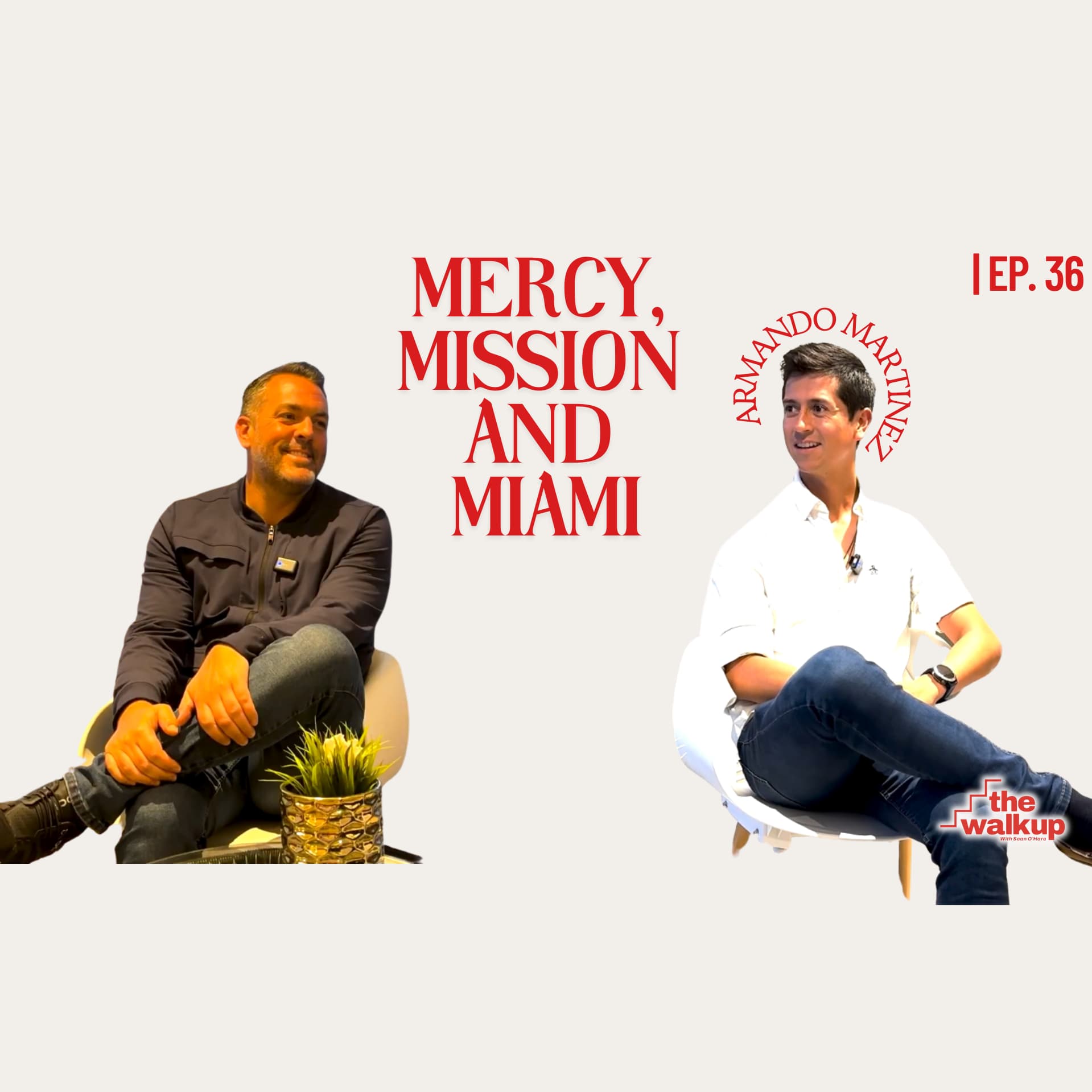
Armando Martinez is the founder of Sueños de la Calle, a nonprofit born from his own journey through addiction, homelessness, and healing.
In this episode, he shares the story of how charitable work became a path to freedom—not just for himself, but for countless others. From New York to Colombia, and rehab to Proyecto Guajira, Armando's life testifies to the power of mercy, transformation, and calling.
Transcript
Read the full transcriptAuto-generated · 10,982 words
Well, welcome to the podcast, Armando Martinez. Thank you for agreeing to be interviewed, and there's lots of things I would love to talk to you about, but first, just kind of give us your background, and then how you decided to start your non-profit. Sure. Thank you for having me, Sean. Happy to have you here in Colombia.
I'm 36 years old now. I'm married. We don't mention ages here. Everyone's... Because then I'm forced to share my age, and then it's all over. For the audience. So, 36 years old, married. Yeah, I work in advertising. How many kids? I have four kids. Three boys and the little princess, a baby, 10 months. So, yeah, very happy with my family. We are Catholic. We became Catholic like 10, 11 years ago. Okay, well, we'll get into that.
I work in advertising. I started working in advertising in Miami. I actually lived there since 2015 until 2019, and I started working in advertising. I work in an agency, a media agency here in Colombia. And I started Proyecto Guajira, the non-profit, in 2016. Actually, I was living in Miami when I started that project. So, what was the motivation? I mean, you're not even at that time living in Bogota or in Colombia, so why start this? What's the motivation? So, when I was about to get married, when I was engaged with my wife, I always felt the need to do something for the people in need, and in Colombia, we have a lot of People living in extreme poverty.
So, you grow like seeing different situations in Bogota, in different cities. I was involved in Regnum Christi with different missionary activities. And just to define what is for people, they don't know what Regnum Christi is. Sure. So, I am part of Regnum Christi, which is a Catholic organization that has different activities for youth, for adults, and for children. And we, you know, do missionary activities across the whole world. So, I started joining that organization in 2011, maybe, helping kids in need, and that was like one of my happiest days in my life.
I never did that before. Until I was 29, I never did anything for anyone else but myself. So, that day, it was... 100% selfish. Yeah, I was not Catholic, I was living only... I'm still there, so this is a good inspiration for me. So, yeah, it was a great experience. I was dating a girl in those days, and she invited me to those activities, so I went, and I found the joy of, you know, serving dealers, and since... And how do you explain that to people?
Because... I know that it's very, sometimes we get very, oh, I feel so good, I help somebody else, but really they give back to me. But then, when you actually do charitable work, it's uncomfortable. I mean, it depends, but if you're helping somebody who is homeless, who is very poor, I mean.
There is a discomfort there, because I don't know this person, they are, you know, maybe haven't had a shower in many weeks or many months, and we can't communicate. So, it sometimes sounds like, oh yeah, we help people, they help us, but there is like, what was it like the first time, like to try to confront, I imagine there had to be some fear. Or maybe you're fearless. I don't know. Maybe it is. It was actually a very interesting experience because I was never in contact with a kid before, you know, with someone so young before, because in my family, I don't have little brothers or little cousins.
So, you weren't really around younger kids at all, like nieces, nephews, cousins? Nothing, never. So, I was just scared of that because I wasn't, you know. So, we are going to talk about how we used to experience or hang around with kids. So, it was like a new experience. We went to this park, and the mission was just to make that little girl happy, just for that day.
And it was uncomfortable, and I experienced that later, doing other missionary activities in other cities, where there was no bed, there was no shower, there was no electricity, there was not the best food. I wasn't used to that. There was on vacation time, where I was supposed to be resting, partying with my friends, drinking, everything. But at the end, I think the experience is at the end of both, you know. Well, I think the first thing is the experience. When I ended up doing those missionary activities, I was so happy, so full of joy.
And when I was ending those weeks of partying and hanging out with friends, it was an emptiness. It was an emptiness in my soul. So, I experienced that when you go to the streets, to the homeless people, when you go to La Guajira, to sharing with the people, to the prison.
You get to experience that joy. It is something that is hard to explain, but it is something that you experience when you help other people. Yeah, and there is this gap. It is that initial leap you have to take, and this is where we need friends. We need somebody, or maybe a girl who you are trying to impress. Whatever the motivation is, it is good, right? So, then it started there, and then… But then, this is at the same time that you are discovering your faith as well?
It was at the same time, so it was very similar. I was doing those activities with with Brigham and Christi, but I was also attending Holy Hour, adorations, you know. Is it Bible study groups? And I was discovering my faith. Because you had grown up Catholic at all or no? Not really. So, my family, both of my parents were, you know, Catholic, but not, but more for tradition that for, you know. Culturally Catholic. Yeah, culturally Catholic. So, you were like baptized, but not going to church much.
Exactly. We didn't go to mass or anything like that. I didn't learn anything. I never read the Bible or pray the Rosary. Basically, you had to have some image of the Virgin Mary in your house. I had, yeah, and I saw my mom a couple of times praying novenas, so I had those kind of approaches, in a sense, but it was until I had that experience when I was about 21 years old that I went to this adoration hour, and it changed my life, you know, forever.
I was full of emptiness. I was having a lot of troubles. with school, with my family, with friends, like, it was all messiness, and I found, like, Jesus, like, himself, I discovered the love of Christ in my life, and it changed everything. So I started going to these activities, with Soñar Despierto, which is this apostolate that we do here with kids in need, and then I... I started working in my professional life, in agencies. I mean, I didn't like it at the beginning.
You know, it was so empty. It didn't make any sense. I didn't want to spend my whole life just helping big companies to sell more. I wanted to do something different for people in need. So, that desire, I think God put that desire in my heart, but it was until like four years later. That I started the project of Guajira. At the beginning, when I... And Guajira is a location, is a... What does it mean? Yeah, Guajira is a region. Okay.
It's a region in the... It's actually the northern point of South America. Okay. It's a... It's getting near... Cartagena. So, it's Cartagena, and then you have La Guajira at the north. So, even further north and west. North and east. North and east, ah, okay. Yeah, north and east. So, I'm getting towards Barranquilla.
It's even further. Yeah, it's even further. You're impressed with my knowledge of geography of Colombia, right? So, it's actually, you have La Guajira here, and you have the ocean, and if you go through the ocean, you get to Miami. Ah, okay. Yeah, I think so. Not exactly sure, but you know, it's the ocean, and you don't have like... There is really nothing in between. Yeah, there is nothing in between. Okay, but why that area? I mean, you were born and raised in Bogota.
Yeah, I was born and raised in Bogota, and when I started working, I had this ritual that every time I opened the news and I read the newspaper, right? Yeah, you are in an agency, you have to know everything that is happening. You have to be involved with everything, so... I remember this day, I was reading the local news, and I saw an article saying that in La Guajira, more than, I don't remember the number, but it was like hundreds of kids dying of hunger, of malnutrition.
And I was like, whoa, is this serious? And I opened the article, I read everything, and it shocked my head. It was hard to believe that in a world with so many things. Yeah, so much abundance. Yeah. So much technology investments in, I mean, we send rockets to the moon, but we have children dying of hunger. That was like something that couldn't fit in my mind. So it was something that triggered my heart that day with La Guajira, but I continue reading the news and there was this article about Papa Francisco.
Bob Francis, saying that he was inviting Catholics to serve people in extreme poverty, like going... Yeah, his thing was to help the people on the edges, on the fringes. Yes, that was the message. So, I was like... There has to be something here, but then I was engaged, I got married, I went to live to Miami, and I remember this day I was watching Netflix, and I saw this documentary of Mother Teresa, The Letters.
And it caught my attention that she started the missionaries of charity with nothing, you know. She had no funder members, she had no investors, she just went to the streets and started helping people, and now, you know, it is one of the biggest organizations around the world, so that was very inspiring for me, and I told my wife, like, we have to do something, because this year was very good. You told her you wanted to become a nun.
Almost. But then you found out that it wasn't allowed. She told her I was crazy, yeah. So, what was that conversation like? She used to say... She was pregnant with Juan Pablo, our first child. So, my parents were living in Santa Marta, which is, you know, like a six, eight-hour drive to La Guajira, and I called my mom and I told her, like... Look, I want to do this, I want to... I was visiting them in December, you know, to spend the holidays with them in Santa Marta, and I told her, like, I want to do something for La Guajira, because I know there is, like, a lot of poverty there, I want to bring water, some food, some, you know, something small, but I just want to do something.
Let's do something, yeah. Yeah, and she got in touch with a priest of La Guajira, Uribia, one of the little towns in that area. And we got in contact, and I visited the first time La Guajira with my father, actually, and we just brought money to purchase, you know, some groceries for the people, some water, and we started doing, you know, we started visiting the communities.
La Guajira is a very particular place because it's a desert area where indigenous people live, so it's like going back. In time, like 50 years, because they don't have electricity, they don't have water, they don't have big houses, they don't have schools. It's a very ethnic population. That live in extreme poverty. And is the government, is there any government assistance to that area? It is. It is, but there is a lot of corruption, you know. Unfortunately, in Latin America, corruption and politics is something very common.
And in La Guajira, you have like... So many things that have happened with politics and help and aid to these communities. So, in theory, you have and you see some things, but in reality, most people are living under extreme poverty. I remember that the first day that I went to La Guajira, I was visiting the communities, and I saw a nun serving in those places, and she told me, I don't know why people in Latin America want to go to serve to Africa if we have Africa in Colombia.
Wow. And I was like, that was really powerful. And that's how I started Proyecto Guajira. I saw a need. When I left, I was crying because I couldn't believe everything that I saw, like the kids literally dying of hunger. The houses, they need nothing around them to help them.
So, that's how it started. Like a few months later, I had a wedding in Santa Marta, and I was leaving Miami. I started my first fundraising at the office. I did a GoFundMe. People started helping me, and that's how it started. Wow. So, that was, and that was what year? That was 2016. 2016, okay. So, that was December 2016.
And then the wedding was in May 2017. Okay, so we're in eight or nine years now. Yeah. And then what does the program look like on a regular basis? So, what we are trying to do right now is having Helping kids, our main purpose is to avoid kids of dying from malnutrition. That's the main purpose, and that's the reason that we exist in Proyecto Guajira. So, what we do is that we have a dining room for kids in one community. In La Guajira, there could be thousands of communities.
We are attending one community at this point, where we attend like probably 80 kids. And we have a dining room. We built a school. There is a place for dining, there is a place for studying, and we're trying to build an entrepreneurship program for adults, which is not easy because one of the hardest things to see in La Guajira is that adults, they have malnutrition where they were growing. The recognition, things that didn't connect, so understanding problems. Yeah, some learning disabilities, yeah.
Yes, yes. So, it is very hard to make them understand that we are there to help, to teach them some new things. It is very, very difficult to work in La Guajira. Because what are the opportunities for income there? If people have a job, what is it that they are doing for income? So, usually, you know, you have the ocean, so they go fishing, that is one of the main things. There are some very small activities in tourism, so there are people working in hotels, in restaurants, but, you know, very...
Very, very small. Because tourists would go there for the beach, I guess? For the beach. It's beautiful. La Guajira is one of the most beautiful places I've ever been. It's so nature, because you don't have huge hotels, huge food chains. Everything is very natural, and the beaches are impressive. You have the desert, you have the beach, you have the sea, so it's beautiful. Is that a surfing area? No. No, but they're doing kite surf. So, actually, in one of the towns, El Cabo de la Vela, where we're building our second project, it's a very popular area, and it comes people from Israel, from different places around the world.
Because there's very strong winds as well? Okay. There's always winds. You need the wind, and you don't need the waves, but you need the wind. Yeah, you don't have waves, but you have the winds for kitesurf. You know, towns, it's more popular, so it could be tourism, it could be fishing, and they have these animals, chivos.
So, they use the chivos. What are those? Some kind of goats, I think. Okay. So, the animal, they take the fur. Yeah. I don't know what type of animal this is. Like a goat. Ah, okay. Like a goat. I'm not sure of the name of the animal in English. But they eat the chivos. And they use the fur for... Yes.
Clothing. Yeah. Or blankets, things like this. Okay. So, limited economic opportunities. Yeah, and handcrafting for women. They do mochilas, they do, you know, some basic things like that. And what is a mochila? It is like a bag for women, like a purse, but, you know, handmade. Oh, cool. Yeah. So, you are trying to address both. At the first priority, malnutrition of children, to stop the malnutrition, then to help the adults to be able to provide for themselves, to create opportunities, and then they can provide for the children as well.
And then education. So, we try to... In front, this situation in the short, middle, and long term. So, in the short term, dining room, just give them the food so they can eat. In the midterm, schools. No, sorry, in the mid-term, entrepreneurship, so the adults have incomes, and they can provide for their houses, and in the long-term, education. So, they have varied opportunities for the future. They can go to study, you know, high school, universities, learn new things, bring... Yes, so, we've got a lot of projects, but we have a lot of issues.
So, we have a lot of issues. We have a lot of issues. Okay. Why is that? It is very hard. Like, having a nonprofit in Colombia, in my experience, is not that easy, like doing the fundraising. We've had lots of problems with the communities because they fight a lot. They have lots of issues when every time they see someone trying to help or every time they see money or... Okay. You know, AIDS coming to the communities, there is a fight between them.
So, we've had so many experiences in that, that it's, you know, delaying all the projects, keeping, you know, all the donations and the income coming is not that easy. Because you have, or you're able to have local representatives, or maybe the church? We did. We hired a few white... So, we hired a few Guayus, which is actually the community, the name of the community, the indigenous community in La Guajira, Guayus. So, we hired a few Guayus working with us, and it's working well, you know, day to day with the dining school, but I think then the bigger donations from companies and people here to keep them, you know, flowing, it's not that easy.
So, we've had some issues in that end. So, the ideal scenario would be one in which you're able to have more resources. Is the critical need more people that you can hire? Is it better partnerships? Obviously, more money always helps everything, right? But, I mean, in terms of, is it personnel? What are the key factors you think are going to help?
To make it even more impactful. Yeah, I think like every community, we have projects in two communities right now, like the one that is operating and the one that we're finishing the construction. So, I feel in both cases, there has to be sustainable. So, we need to be able to create projects. For the communities, you know, to generate the income, because it's not easy to find people that it's always giving you money.
So, I feel that partnerships that help us to make these programs sustainable will be great. And I think that's where we failed the most. Like, we created a brand to sell the hand crafting and all those kind of things that we didn't sell as we expected, so we had to close that project. So, I feel that better partnerships… To develop more projects to make it sustainable will be the ideal scenario. Yeah, it's tough. I mean, I've been exposed to a number of projects in different parts of the world, and we recognize that from a dignity standpoint, people can't be in perpetual aid they can't always just be receiving money forever because that creates a mentality of being dependent right and we want we believe that they are of course capable of providing for themselves right but then it's easier We have to find a consumer for this business, and there are only so many types of products that can be made, right?
I was looking at this project in India, and we are talking about, I don't know, 10,000 people in these schools to provide education that would… Allow them not to be vulnerable to being trafficked, because if they have some job opportunities, some education, then they won't be in an economic difficulty where they might take a job, but it turns out to be something where you're... Essentially, a slave to this company, or to move to a family, or even sex trafficking. It can be very dangerous, but I am like, man, 10,000 people, trying to do the math here and figure out how we can do this.
And then we are trying to think about different industries, what industries could... Could be developed. So, I guess that is a long way of saying, I feel your pain. Not to the acute level that you have been involved. But then, what do people in your workplace think of this?
Do they think, oh, that's really sweet, or they think you're crazy, or they think it's a distraction? What do they think of your nonprofit work? They usually, like everyone, feel that it's great. I would say that most of the people in Colombia have heard about La Guajira. They know about the difficulties that they have in this region, and everyone loves it. But not everyone is like, what do you need? Take this donation for the dining room. Can I work for you, like in the non-profit?
Can I volunteer for these projects? It's not that easy. So, everyone loves the idea, everyone loves the project, but not everyone is involved in helping us. So, that's a big challenge that we have in evolving this. Right now, we are trying to create some efficiencies, because we started with Felipe, a friend of mine, and Nelson, another friend. We created another organization to help homeless people. Sueños de la Calle. Sueños de la Calle, yeah. Which I got to visit last week. So, tell people, Sueños de la Calle means dreams of the street?
Dreams of the street, which means like, with Felipe, like probably 10 or 12 years ago, we did a lot of volunteer in, you know, feeding the homeless people here in Bogota. And we were, like, very connected to that situation, and then 10 years later, we started that because my experience or my version of this story, I remember I was going to church, you know, to Mass on a daily basis, and there was a homeless guy outside of the church, and this guy was, like, you know, crazy.
Yeah, he has this crazy hair, he had no teeth, and one day, I invited him to have breakfast with me. And we were, you know, talking, and I asked him how that happened, that he ended up living in the streets, and he had a terrible experience in his life, and he was telling me that, I see you coming with your children and your wife, and I want that life for me, but I'm too far for that.
And that broke my heart, you know? And I asked him, like, do you want a new opportunity? Like, will you take it? And he told me, of course, I want it, of course. I don't want to keep living here in the streets.
So, we started Sueños de la Calle because of those dreams of these homeless people that want to get back their lives again, that it was taking away from their addiction to drugs. So, we created Sueños de la Calle. We're going every two weeks to the homeless people. I'm not as involved right now in Sueños de la Calle because I'm more involved in Proyecto Guajira, but I was part of the founding team, and I helped with all the process. So, now what we're doing is merging...
Both organizations on one holding, like, you know, because sometimes we have issues in non-profit, like accountability, like, you know, who's paying the bills, who's paying taxes, like all those kind of things. There are, you know, you have to do that. So there are still taxes on non-profit organizations? Some taxes, yeah. You have to pay some things that you have to pay, like, legally to the state. Because you are an organization, and you have to do that. I've learned that. I've worked in...
I did a project in Brazil called The Beautiful Lives. Festival, and we did this big, big festival for people with disabilities and special needs to bring together, like, government leaders and business leaders and cultural leaders and all of this. And, yeah, I learned there was a tax to send money down there. I was like, I'm just trying to send, I'm trying to do a non-profit thing. I think, I forget, we had to figure out a workaround, because if I sent it normally, I was going to lose, like.
10% or 20% or something, just transferring the money down there to pay for the project, and we found a way around it to only pay 5%. Okay. Man, you guys are making it hard to help people here. You know, accountability and those administrative tasks of non-profits are a nightmare, because you're trying to focus your time on helping the communities, on raising money, that you don't get the time to work on these kind of things. And it's time-consuming, it requires... So, we're building this holding to create efficiencies in those areas, marketing, social media, administrative tasks, so we can, you know, leverage on each other on these tasks, so we can fundraise for both organizations, and, you know, we're trying to...
On the streets here in Bogota is also a lack of education and opportunity. Now, you mentioned addiction, because that is a big part of people that find themselves in a homeless situation. Of course, we have... A big homeless situation in New York City, where I live, and I've been getting more involved with an addiction recovery group there, and I've learned a lot. I don't think I realize that, I don't know, probably 90%, if not more, of those on the streets.
We are suffering from some addiction, and then the same thing in those in prison, and I think we just sometimes are overlooking how big of a problem addiction is. Yeah. I mean, it's just, you know, and it's, how do I say, like...
It's equal opportunity. It can affect anyone. Anyone. It doesn't mean, you know, if you're from a good family, or you have opportunities. The stories that we've heard in visiting the homeless, in Colombia, in Bogotá, I would say that 100% of the population of the homeless people are addicted.
Wow, okay. 100%. So, the main reason of homeless people here is addiction to drugs. And you meet people like from, you know, doctors, lawyers, like every kind of people that you never expect to have them there. I remember one time, one volunteer found a friend from his school.
Oh, somebody he knew that he grew up with. Yeah, and it was very, very impressive. Absolutely. That experience, because it was like anyone could be there. I remember once I went to the streets to get food, and there was this guy dressed like you or like me, you know, with bags, and I was like, what happened? My wife kicked me out today from my house because she found me cocaine, and now I have to live on the streets, and this is the third time that happened to me.
So, it can happen to anyone. And it is a very tough situation because they lose their freedom to their addiction. They are not able to choose, you know, and so we are helping them for those that want to have a new opportunity. We have a partnership with this place where they go and they do a process of rehab. Like a rehab center, yeah. A rehab center. How long is the rehab?
One month? Surprisingly, it is only two months. Oh, that is still pretty good, though, two months. Yeah, two months. I was very accepting of that at the beginning because I thought it was like, you know, you need like a year or six months or eight months, but this program is very strong. Like, I think six people of Sueños de la Calle have been in that process, and they are, you know, clean today. So, it is two months, living there, having, you know, therapy with different professionals.
Getting back in contact with our families. The challenge with Buenos de la Calle is what happens after they are back in the streets, right? So, we are trying to create entrepreneurship, to create jobs for them. So, we are partnering with some companies to find jobs for them, because that is the main need, because nobody wants to hire a homeless... And oftentimes, they would probably have a police record, something where they might have, you know, at some point gotten arrested, so that makes it even more difficult.
Yeah, and after 15 years of doing drugs, you see the consequences. So, it has to be some very basic tasks, very basic jobs that they can, you know, focus on. And this was the, is this part of the recycling program that I saw? Is that connected? That's not really, but recycling is the main source of income of homeless people. Okay. So, they are in the streets, you know, recycling, and they sell their recycling products.
And they use that, you know, to live. Yeah, okay. So, connect these things for me. You're growing up, you're having kind of like a normal... Going to school, have friends, partying, enjoying yourself. A lot of partying. A lot of partying, okay. Well, we can get into that if you want to have a whole separate podcast about that.
So, you are having kind of a, shall we say… An indulgent life. I apologize, by the way. This is what happens when the guy who comes straight from the winter to Colombia. I forgot how close you guys are to the sun with the elevation. I did two interviews in the sun, and now my whole face is like peeling.
Yeah, we call it Soroche. Soroche? Soroche, yeah. So, you feel the altitude, and you get dizzy, and you know. Yeah, well, my colleague here got a little elevation. It's like this yesterday, he slept for the entire day. But then we started getting the coca, to chew on that and have the tea, and that helps. Yeah, it helps. But anyway, so you have this, shall we say, like an indulgent, kind of like self-centered, or not necessarily overly selfish, but just enjoying yourself.
Overly selfish, yeah. From there to… Finding your faith, to finding a wife and a family, to spending time helping poor people in northern Colombia and those suffering from addiction in homeless communities here in Bogota. So, how do those things connect? How do you go from here to there? I think it was my conversion process. You know, like, having that experience of finding Jesus in my life was the best thing that ever happened to me, and He took me through the path.
I didn't plan, like, I want to have that. A family, like four kids, I want to work in advertising, I want to have a non-private, none of this was planned. You know, I just went to this adoration night, and it changed everything. I found Jesus, I started praying, I fell in love with God, I started living by His commandments, and everything, and He started organizing my life. Like, He put all these desires in my heart. I met my wife in a reggaeton concert.
It was pretty funny. She was not Catholic. We were drinking aguardiente, and, you know, doing some perreo in a party. Aguardiente. I've sampled it a few times, yes. So, and then we started dating, and I told her, like, this is my life. I'm Catholic.
This is my lifestyle. If you're on... We can, you know, continue this more seriously. If not, you know, it's not going to work. And at the beginning, she was very scared because she didn't know anything. Her story is very similar to mine. Her parents are, you know, Catholic by tradition, but not, like, you know, active. So, we started dating, but God put my wife in my life. I didn't plan to go to a reggaeton concert to meet my wife and the mother of my children, but God put everything in order.
He put the desire of us to go to a reggaeton. I don't think a lot of people say, I'm going to the reggaeton concert to find the mother of their children. That's not... I'm sure it happens a lot, but... It sounds crazy, you know? That's great. And we're going to, you know, this year is our 10th anniversary. Wow, that's awesome. So, it's working very well. We still go to reggaeton parties, you know, to live the old times, but she's everything in my life, and she's been with me through all this process in work, with the Proyecto Guajira, with Sueños de la Calle, she's been there.
For me, so, but at the end, going back to your question, I think that God put everything, every single stop in my way. He organized everything, and He put everything in order, so we have a family now, and it is impressive to see the work of God in everything. I remember when we were married, we could not have, you know, like the pregnancy at the beginning was challenging. Oh, okay.
And I remember that we were trying and struggling with that. I was reading. It was like six months of trying to having a baby, and it wasn't happening. It was in Miami, in one event of Raymond Christie, that I met Monsignor Ron.
And we were having a discussion, he was asking me, like, you know, a conversation, and I told him, like, please pray for my family, because we're trying to have a child, and it's hard, it's not working, and he told me, like, call your wife, I don't need to pray for this, you know, I don't need to go to church for this, and he just put... His hands on Malou. He started doing some prayers in Latin, then in English, and three weeks later, Juan Pablo was in Malou's body.
So, I really see God's hand in everything in my life, in my work, in the nonprofit, with my friends. So, I think he is the answer of everything in my experience. So, how do you make that relatable? So, I live, as you know, in New York City, and I Wonderful place, and I love it. I'm not originally from the city, but I consider myself a New Yorker now. But it's not necessarily a place that's filled with practicing Christians, right? And so, therefore, the majority of my friends that I have in the city are not religious, are not Catholic.
i can i can imagine them listening to this and going come on yeah oh just give your life to god everything gets great you know like like it sounds like um like uh what's like a like a infomercial late on television you're selling me something and they're waiting for i i my my cynical friends um or you know i want to say cynical they're They have a healthy skepticism, right? They are questioning. They are saying, like, what is the catch?
It sounds like too good to be true. This can't actually be real, right? Like, I was living this one way, then I have this powerful experience at adoration, and then my life takes on a whole different course. Like, how do you make that relatable? How do you make that not seem...
Like, crazy. I think they see that as crazy, and I think it was, you know, when I was having those experiences, I was in the university here in Bogota, and I think they saw the change. I didn't have to say anything.
They were, you know, used to see me drunk every week, three times a week, suffering, having bad times, you know, and suddenly, I went to an oration night, and everything changed. Like, you know, the expression of my face. So, we were having lunch at the university, and I was like, I'll be back, I'm going to mass, and they were like, what? So, for people that aren't, Christian or Catholic, how do you explain what adoration is? So, an adoration is a moment of prayer that usually happens on Thursdays, nights in the Catholic Church.
Well, any time, but here in Bogota, Thursday night is the night. It's the night, but yeah, it could be any time where you go to church to adorate the Eucharistic, which is... The presence, the living presence of God. In the Eucharistic, yeah. It still looks like a piece of bread, but actually... It looks like a piece of bread. It feels like a piece of bread, but actually, the presence of God is there. So, you go to church, they expose the Holy Sacrament, and you just go into prayer with the Lord, and you have different experiences in adoration.
Yeah, I took a friend of mine who is, shall we say, very skeptical. And we went into adoration and he is asking me questions. What are you feeling? What is happening now? Are you talking to God? I said, yeah, I'm talking to God. He said, what are you telling him? And I said, I'm telling him, my friend is bothering me right now. I'm trying to pray. And he was there for, and later on, he said, yeah, I don't think that adoration thing works.
I said, well, you know, you have to stay for more than three minutes, usually. But like, it's weird, because it's silence, usually. I mean, sometimes music, of course. But it's like, This dialogue that is happening here, and it is hard to explain to people. It is very hard to explain, and you have to experience it, too. And not everyone experiences God in adoration. That was my experience, but most of my Catholic friends, they did not have the same experience when they went to their first adoration.
They experienced God in the streets, in Buenos Aires de la Calle, or they experienced God in the Bible study. That we do every week, you know, or maybe in going to Mass in a very single and specific moment. So, I think for everyone, God has different moments and speaks to everyone in different ways. In my experience, I was that friend, you know. I was dating this girl. She invited me. I was, you know, open to going because I wanted to continue.
You want to impress a girl? Yeah, it's like, if you go to that, I'll go, but she explained to me, and I was, you know, I didn't know what to expect, and we were praying the rosary. I've never prayed the rosary before in my life, but I went into it. I put on my knees, and I said a prayer, like, I don't know if you're here, but here I am.
I've been living for myself. Let me be this hour with you to see what happens. And it was crazy what happened. It was crazy. It changed my life. Like, in that night, everything changed. And I think what, sometimes the way I try to explain it is, you know, we know that we believe that God is love, not that he...
Well, I think that the person who represents love or that he has a lot of love to give, he is love itself. But what is it to be loved? To be loved is to be seen, is to be understood, is to have an identity. I imagine when you look at your children, you know them, you've seen almost every moment of their lives.
are so invested in their happiness right you want you want nothing but joy for them right um and it's like that but times yeah infinity right and i think for in in my experience it was mercy because i i was i was i was suffering a lot i was a very sinful person And I think my sadness and my emptiness was because of sin. You know, I was hurt, and I was sad. I was a sad person. And when I went to find with God, to have that, to encounter Jesus in church, what I found was mercy.
You know, I was feeling guilty for all the things that I did in my life, and the answer was I love you, no matter what. It's okay. You don't have to worry about it. I invite you to have a new life, but it doesn't matter what happens. I love you. Despite everything that you did, I love you. And for me, that was the most impactful moment of my life. Well, yeah, we often point to the...
The scripture of the prodigal son, right? Where we have the two sons. One stays with the family and does as his father tells him. Even if he doesn't enjoy it, he does it because it's the right thing to do. The other son goes off and spends all of his... He asks for his inheritance early, basically, and he spends it on gambling and women and all sorts of things. And he's now, at this moment, Working in the fields as one of his father's laborers, because he said, well, my father's laborers, they get three meals a day.
They at least have food, and I have nothing left, so I will do that. And this is the representation of God the Father, is the Father sees him off in the distance and welcomes him. shows him mercy. And not only that, he kills the, the, the fatted calf and they have a feast. And he says, my, you know, my son was lost, but now he's home. Right. And it's like, but the, the, the, the most, um, fascinating or, or, or confounding part of that is God doesn't, he won't force you.
No. So he he's looking, man, I really hope. I hope my son comes home, but he is not going to go out and grab him and bring him home, because the son has to choose that moment to come back, and that mercy that we receive is freely offered, but we have to desire it, and I think there is this idea, because you say, I was living a sinful life.
Again, I'm just imagining what my friends, a lot of times in New York, would say. That's judgmental. You do you. What's wrong? You're enjoying yourself. There's no problem with that. So, how do you answer that idea that you're happier thinking less about yourself, or leaving what you now recognize as a sinful life?
It is hard to explain, because when you are living that kind of life, you probably don't know that that is a sin, that it is bad. There are some things that you know are not correct, but you don't care, and you don't think of that as a sin. So, I think it is the conscience in your head, in your mind, you feel that something is not right. But later, when you start... Reading about the life of Jesus, reading the Catholicism that teaches you what is a sin, what is good, what is not good.
Then you start learning, like relearning in your life experience what you should do and what you shouldn't. And you see that when you go for the commandments of God, your life is better. You still have problems. I still have problems. I still carry my cross, you know, but it is different. The way how you feel every single situation in your life is different. So, now having that view of what is good and what is bad, for me, for the rest of the people, for God.
I think that makes the difference of how you feel doing some things that you used to do. Yeah, and I think we say in the Catechism to form the intellect, so the conscience, and also the will, the ability to say, to do the right thing. And I think that, you know, it is funny that we are talking before about addiction, right? Because, you know, we are talking about addiction, and we are talking about the fact that we We look at those that are struggling with drug or alcohol addiction, and we think, oh, those poor people, you know.
Well, it is only because what they are struggling, their addiction is very visible, right, and it controls them both physically and spiritually and emotionally and all that, but a lot of us have addictions or We can even say we are enslaved to that addiction. And that can be to social media, it can be to our own pride, it could be to drugs and alcohol. But then the freedom, that freedom that it seems like you felt as you started to conform your life more to the commandments and more to virtue.
Is freedom, right? And I think that's usually the puzzling part, the mystery, is that somehow what seems restrictive, right? What seems, I'm not going to do this anymore, or restricting yourself, or judging your own activities, seems like you're confining yourself, right? But yet, it ends up being liberating, because now you're not subject to Whatever the world offers you, you have these guardrails, you have these boundaries, right? And I think that is always, I think for all of us, that point from going from here to there, because it means giving up something, right?
Yeah, and if you go deeper, I think that is what the enemy wants for you, for your soul, to be a slave of sin. And what God wants is to set you free, right? So, I remember I was having this conversation with my spiritual director, which is a priest, a very good friend of mine that helped me. It's like a coach. Yeah, like a trainer, yeah. Yeah, so, and I was asking him, like, why people, you know, that are living in sin are more, you know, have less freedom if they're, you know, not in this, and he told me, like, that's the purpose of Satan, you know, that's...
To make you a slave of sin, on the other hand, God wants you to be free, because I was struggling with my conscience and my will. I don't want to sin, but I still sin. I was like, why is this happening? I don't want to do this. But I was still fighting and struggling with sin, and I was asking Him, why is it not the opposite way? I just want to give my freedom to God and let Him take control of my life, but it's not happening, because I still have...
My will going against what I really want to do. And he was explaining to me that that's the freedom that God wants you to experience, because it's the freedom of love. So, it is very powerful to understand that, and to understand that it is a process of maybe cleaning yourself, I don't know how to call it, but purifying, until you find the freedom of loving God with your heart, with your soul, with your will, with everything that you have. Yeah, and you mentioned something there that we...
We met with Felipe Chavez, who is a seminarian, will become a priest, I think, in another four years, I think he told me, for the Legionaries. Now, he is born and raised in California. He is a Mexican-American, but I said, I want to know the difference between, like, what are your observations of… Colombia, because you come from the States. Yeah, you have a Mexican-American background, so you have some idea of Latin America, but obviously not Colombia. Like, what is it like for you?
And you say, you know, they believe in the devil here. They believe that Satan is real. And in the States, like, it's okay to say that I believe in God, but for some reason, if you say, I believe the devil is real, like, people are... Are you okay? Yeah. And we were talking about it. He was saying, because in the States, we're like hyper-rational, like everything has to be very rational, and so I guess it makes sense to kind of like aspire to love God and become a better person, but to believe in like evil, and to believe in like the devil, that there's this...
Struggle for your soul, that there's like spiritual warfare. Yeah. I mean, people think you're crazy if you say that you believe in the devil. Isn't that wild? Yeah, it is. And I think even in Colombia, they think that's wild and crazy.
And going back to conversations with friends, I think that if I told one of my non-Catholic friends one day, like, you know there is a spiritual war for your soul, he would think that I'm crazy. But he believes that God exists, and he knows that the devil exists, but he doesn't believe that there is a war. That it comes out of that personal level. Because we see evil, right? We can all say that we see... Terribly evil acts, right? Whether it's war or somebody commits terrible crimes.
Even possessions, you know? Whatever proof of the devil that a soul or a body that is, you know, in that situation. But I feel that most people in those cases that know that God exists, that know that, you know, the devil exists.
They just don't seem to care that much. They just want to live their life, you know, relax, having a good time, being selfish, not every time, but most of the times, and see what happens in their life. So, they don't really go deep into those conversations or, you know. Yeah, that sort of analysis is, yeah, and it's a whole different paradigm because...
In the States, and in a lot of the West generally, we are comfortable with therapy, and counseling, and psychology, and psychiatry. That makes sense, that we can kind of analyze our motivations, and our fears, and why do we do these things, but it is still just this like… Bridge too far to say that I'm going to believe that evil actually exists, or that Satan is concerned with my soul.
I don't know that I have the answer how to make that more relatable. I think most people would say they've had some experience of evil, whether you encounter somebody that clearly might have some... Possession? It might be mental illness, but sometimes it is more than that, right?
And so, I always just think it is interesting, especially when somebody like yourself, who is, you know, I am sure when somebody meets you, like, oh, I didn't... You know, very easy to talk to, has a good job, and beautiful family, you know, and then he must be normal, and then they find out, you know, you have these crazy ideas, and you believe in God and the devil. So, talk to me about parenthood. When you, so you have these.
Clarity in your own life, and then in your wife as well. How do you guys approach raising children in the world today? We want to give them all of the right gifts, right, and form them in virtue. So, how do you go about doing that now that you guys are on the same page about wanting to raise children in a Christian home? Yeah. So, I feel very fortunate, and I thank God for my parents. I feel that that was a huge blessing that I had in my life.
I know. Many people didn't have that good experience with their fathers or their mothers. My experience was, and is, incredible. My parents are the living proof of God in my life, right? So, they are always for me. They had mercy when I was in that sinful life.
So, I want to, you know, in some way, give that to my children. What I would like to do with my children is to raise them to believe that there is a God that loves them, no matter what. So, I don't try to make them the number one in math in their school. I don't care about that. I care that they love and that they learn that there is a God that loves them, and that I love them because there is someone that is thinking about them and loves them even more.
That is like they are in a Catholic school, because I want them to learn, or we want them to learn, you know, the basics of faith, like Jesus, the cross, the church, so their rational develops as well in their faith. And in my experience, like Proyecto Guajira, Suenos de la Calle, Soñar Despierto, all those missionary activities, I think that is very important for the faith of a person. So, we are doing missionary activities with them. Oh, so you bring the kids sometimes.
Yeah, sometimes we bring the kids, like the older ones, because like my Juan Pablo is seven years old, Ignacio is five, Agustin is three, and... Fatima is You can tell by my names. Yeah, a little bit, a little bit. Tell me you're Catholic without telling me you're Catholic. Well, here are the names of my kids. Okay. But especially Juan Pablo, Ignacio, and even Agustin, they've been in missionary activities. And we every, like in Christmas and in these special occasions, I want them to be involved in these activities to experience You know, God in those situations.
And other than that, in faith, I love sports. I play tennis. I was a high-performance tennis player when I was, you know, a teenager, and I think that's very positive for everything, like for faith. For Warwick, so we're, you know, helping them to develop, like, sports capabilities. Thank God they're into tennis as well right now. Of course, into soccer because we're Colombians and we love soccer. But I think that that combination of, you know, living your life, knowing that there is someone that loves you and that died for you.
But also, you know, having good times with missionary activities, with sports, I think that is how we are approaching parenthood right now. Yeah, I have been reading and listening to audiobooks, and there is a lot on this, I don't know if it is happening here in Colombia as well, but in the States, there has been a lot more focus on healing ministries, and really understanding kind of... Emotional, psychological wounds that a lot of us have and how to heal from them.
And I think so much of it, as you rightly said, begins with the parents. Get the hand that we're dealt, and sometimes we get great parents. I had great parents as well, and so I'm very, very lucky. I have no complaints whatsoever, so you and I were given a model of love, which is, of course, not perfect because nobody's perfect, and then, hopefully, you fill in the gaps, so to speak, through your spiritual relationship with God, the ultimate idea of God the Father and the love of God, but then so many people are not given.
The same opportunity that we were, and so there is a lot more gaps to be filled, right? And I just think of so many times when you find out people in prison or people on the streets, addiction, yes, but also so many... Bad relationships with their families, oftentimes fatherlessness, right? There are no fathers, and so they haven't been given that model of love and how to be seen and have an identity, and so they go searching for it, right? They search for it, and maybe that leads them to drugs or an identity in in a bad community of friends or or something right um so i yeah i i i'm often reminded of how how fortunate i am you know and yeah but but i i think even like in in in my case with my children that you know my wife also had has because they're still great great parents and she has no complaints about it Even with both of us and our family, that we… We still do healing prayers.
Oh, you do? Yeah. Yeah. Yeah. Because I feel that, you know, in school, there's a psychological point of view that, you know, if your grandfather had this behavior, you could be. Yeah, passed on. Yeah. Passed on. So, actually, we're in the process with one of my children of doing every night, like praying, healing prayers because of that, you know, to break that because we're seeing some. Tendencies. Yeah, some tendencies. Very small, but you know, it's better to be safe right now that he's so little.
But once in a while, you know, they have experiences every day. They cry because a friend was rude. The teacher was really dead. We are in a life, we are in a broken world, that every day happens, you know, these kind of things. So, I feel those healing ministers are coming to Colombia, thank God as well. We are being involved in some of them.
And we are also bringing that to our kids because, you know, I think the Holy Spirit is speaking a lot in healing in the world right now, and we should take that as a gift to bring on to our families. Yeah, and I think I know some parents that have older children, and those children are...
Having difficulties, or maybe away from their family, or away from their faith, and there can be this sense of like, what did I do wrong? What could we have done? And the thing is, we're still... Have free will. It's like, oh, you and your wife, and okay, you guys have this model of how to have a family, and so you're just going to have robots who just all do this. It's not the case. We still have freedom, and we can choose to reject those things or not.
It's just that we have, hopefully, you give your kids a head start. But I have to say, I was a little, when I first learned about this idea that you... I was uncomfortable with that. Me too. It sounds like the, remember in the scripture, when it says the child has a disability or something, and they say, what did their parents do wrong? And I didn't like that. So, how did you approach that? Because I know how I got comfortable with it.
I'm still working on that, to be comfortable with that, because it's hard for me to believe that, you know, that really happens, I don't know, through blood or whatever, but when we were seeing those Like, acts of one of our children, we didn't know what to do, you know? It was like, what's happening? Like, we have four kids, and there's one having this behavior. So, what is it, right? So, we talked to a professional psychologist. She's Catholic, and she told us it could be this, and I recommend you to do this, right?
So, my attitude was just to be humble. I believe that repair that repair, you know, that could be break into break this line to break this line. So I'm still working on it because this is like very recent.
Well, I'll say, I mean, this is and I use this analogy already, which is that like if this is like the fullness of love in this circle here, you know. God is the fullness of that, and our experience given to us by our parents that they got from their parents are back, is maybe some people, there's a big wedge missing, right? And so, it's that they didn't know how to give that idea of love to their children.
And then maybe those children, they fill in some of those gaps. Maybe they have some healing. Maybe they have a good marriage. Maybe they have a good relationship with a guy, and the gap gets a little smaller. There is still a gap, you know? And then the next generation, but at the same time, it is not like it is a static environment. It may be there is a big gap here, but this one, and then they open up a new one, a new gap over there.
So, that is how I got comfortable with it. It was not like... Oh, I need to blame my great-grandfather for this thing. It's like we inherited a gap in love, a gap in the idea of how to communicate love and to be loved.
We pass that along not being aware of it, but it is only when we get into relationships of intimacy, of vulnerability, where they come out, oftentimes, right? And sometimes it is early in childhood, maybe it is when you are getting married, maybe it is when you have your own children or something, then, oh, I found this gap.
But you usually don't know that there's a gap. It's just like, you're having some reaction. And now that you say that, I experienced that. As I mentioned before, I became Catholic. I started living this lifestyle, but I was still struggling with a lot of sins, and it was very frustrating you know, to keep sinning, sinning and sinning, like every week. Two times a week, I was trying to find an answer of that behavior, and it was through healing that I found this is why, and this is how you heal that, and you approach it, and you overcome those situations.
And I remember in the healing process that I had to forgive generations above of things that they probably did. It was that good. It wasn't that good, you know? But it was in my own healing experience that I saw that, and it changed everything as well. It was like a second stage of my conversion process. I'm still a senior, of course, right? But it changed, like, the way I live my Catholic faith now. Yeah, and I think one way to think about it, too, is...
You know, I'm lucky to travel, you know, a lot. Culture is such a powerful, powerful thing, right? Because my colleague and I were joking when we came here to Columbia that, like, in the first, like, 30 minutes of spending time with people, there was more physical touch between people than we had, than we, than gringos have in, like, 30 days. It's a lot of touching. You know, it was just like, we're just, we're very close.
I didn't choose that. That's just inherited, right, from going back to my Irish roots, and that goes back to probably being, you know, part of an island that's colder, and you were in smaller communities, and maybe you didn't interact as much. Who knows, right? But that's so embedded into who I am, unconsciously. And if that's the case, just at a... At a cultural, like, how we relate to each other, and how we speak, and how we like to have meals together, or, you know, celebrate, or whatever.
I mean, spiritually, even deeper, I would think. Well, we have to wrap up, but we could keep going on about all of our wounds and our healing that is needed, but we don't have all that time. I just want to thank you for being so honest and open about your own journey, and just your honest approach to like, hey, I am trying to do the best I can with my family, with these projects, and hoping to help people.
Raise a good family, but recognizing that we're all on a journey, and we're all in need of help. So, I think people will benefit from hearing your perspective. So, thank you for talking with us. Happy to be here, and thank you for inviting me. It was a great conversation. All right. Thanks, Armando. All right.
More from The Walkup

Against the Odds: The Samurai Lawyer (Chad Flores) | Ep. 52
Faith, Sexuality, and the Fog of War (Iris Bahr & Father Rick Riccioli) | Ep. 02
E2
Church, Conflict, and Community (Iris Bahr, Father Rick Riccioli & Rob Long) | Ep. 03
E3
Hope, Vocation, and the Global Church (Colm Flynn & Colin Nykaza) | Ep. 04
E4