EXCLUSIVE | New 'Mass in a Month' series walks Catholics through every part of the Liturgy
Many Catholics can recite many of the prayers of the Mass by heart, but – if they’re honest – can’t fully explain them. The Mass is full of deeply meaningful gestures and words that are widely memorized through repetition but may leave most without a clear sense of what is being done and said or to whom.

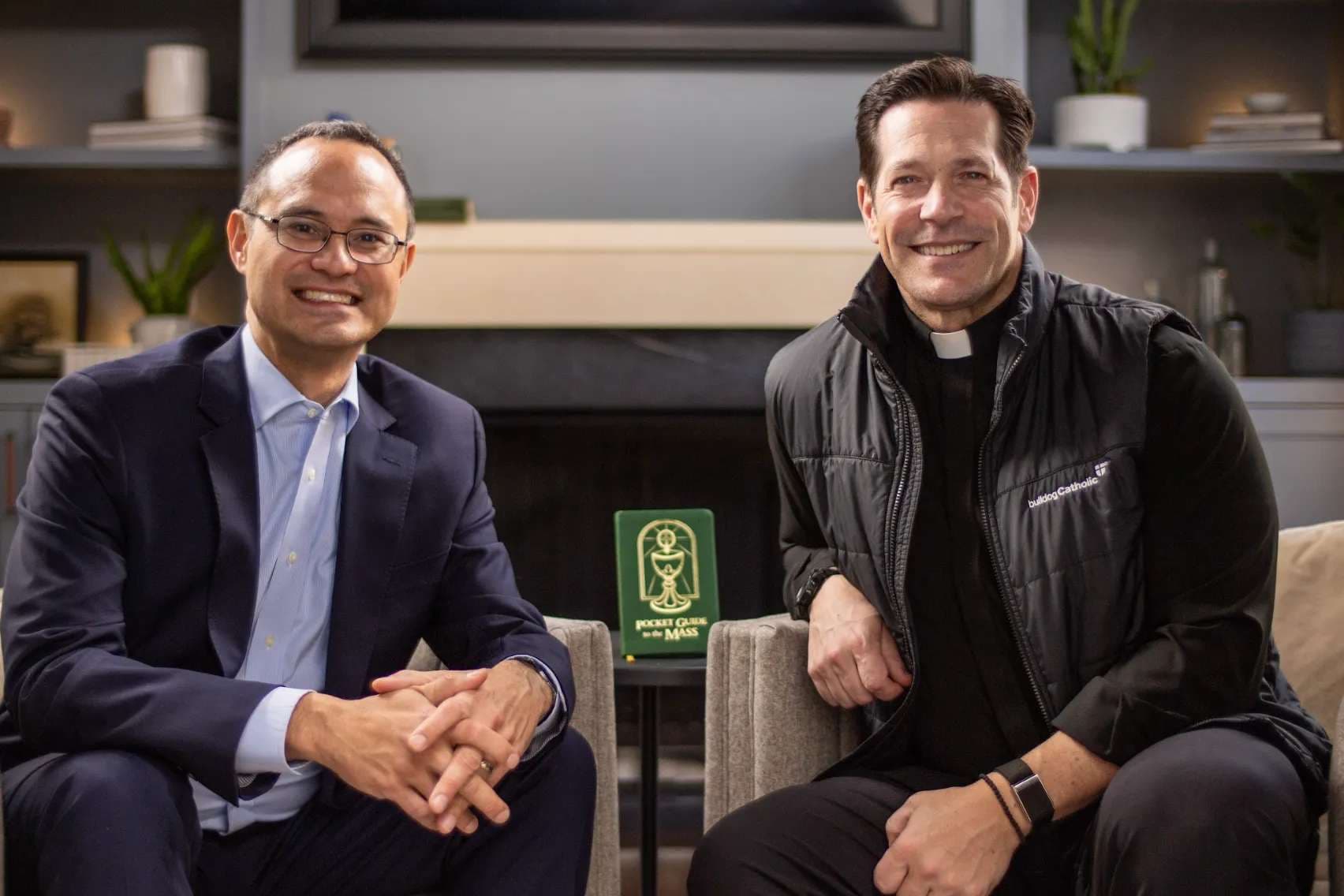
Many Catholics can recite many of the prayers of the Mass by heart, but – if they’re honest – can’t fully explain them. The Mass is full of deeply meaningful gestures and words that are widely memorized through repetition but may leave most without a clear sense of what is being done and said or to whom.
Theologian Edward Sri spoke to Zeale News about how every element of the Liturgy is legible – if only Catholics are given the tools to understand it.
“We go through the motions,” he said. “We show up and we just kind of say the prayers almost robotically. We know they're important, we know it's sacred, but we miss out on how each one of these little prayers and each one of these little liturgical actions is a window into a deeper encounter with the living God.”
The Mass, part by part
Ascension Press, the Catholic media company whose "Bible in a Year" podcast surpassed one billion downloads, is launching a new daily series aimed at helping Catholics understand what they are saying and doing at every moment of the Mass.
>> EXCLUSIVE | Fr Mike Schmitz on lay participation in Mass, ‘The Bible in a Year’ milestone <<
"Mass in a Month," hosted by Sri, launches May 1, with short daily episodes running through the end of the month. The 31-episode series will follow the structure of the Mass itself, opening with the Sign of the Cross and moving through each prayer and ritual in sequence.
"The Mass is one of the most central things we do and experience as Catholics," Sri told Zeale. "And yet many of us Catholics, we show up every week, we stand up, we sit down, we say all these prayers, but we're not sure what it's all about."
Sri, a founding leader of the Fellowship of Catholic University Students (FOCUS) and host of Ascension's "All Things Catholic" podcast, said the series is built around the biblical roots of the Liturgy. Each episode ends with a practical takeaway and a preparation for the next time the listener attends Mass, he said.
"The more we can understand the biblical background of all that we're saying and doing in the Liturgy, the more we can enter into the Mass and encounter Jesus in a deeper way," Sri said.
Sri has spent 25 years teaching about the Mass across parish halls and university auditoriums and said his talks are always met with surprise by ordinary Catholics who have attended the Liturgy their whole lives.
"People will afterwards say, 'I had no idea that when I say these words, this is what I'm really saying,'" he said.
The meaning behind the motions
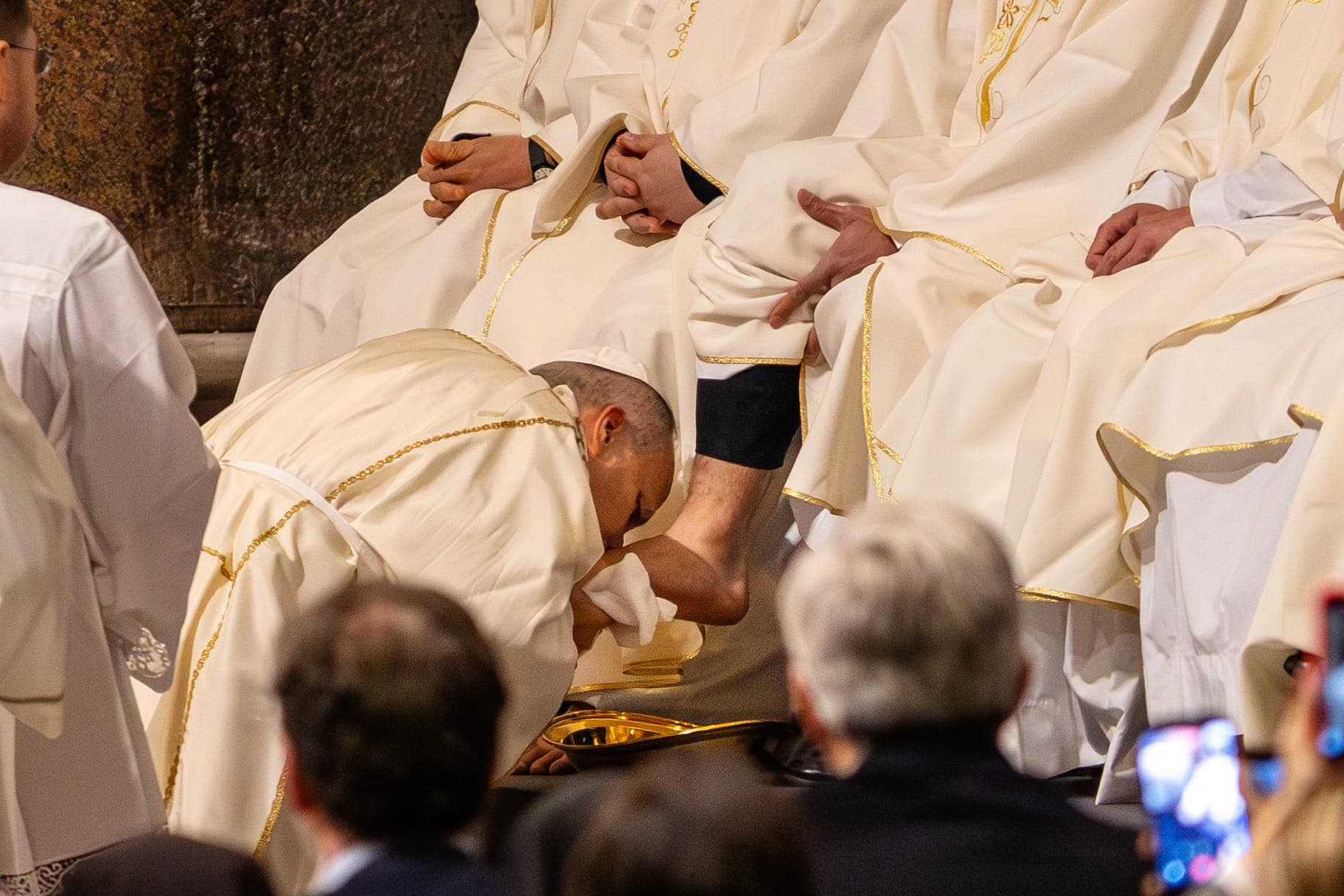
He pointed to the washing of hands at the Offertory as one of the many moments Catholics can be tempted to treat as filler time in between the important parts of the Liturgy.
"Many of us Catholics, we view that as like halftime," he said. "The priest is just up there doing some stuff, and it's not that important."
But Sri said the gesture carries deep scriptural significance, echoing the ritual hand washing of Old Testament priests preparing to offer sacrifice and enter the holy sanctuary of the Temple.
"That's signaling to us, ‘Get ready: This place is about to become a holy temple,’” Sri said. “‘Our God is going to come down on our altars, under the appearance of bread and wine. God is in our midst.’"
He also addressed the Kyrie, the threefold "Lord, have mercy,” saying it’s easy to repeat the words back and forth without even thinking. But in the Gospels, those who cried out to Jesus were bringing everything with them: "Lord, have mercy for my daughter — she's possessed by a demon. Lord, have mercy for my son — he's afflicted with this disease."
Sri said the prayer is meant to carry all of it: sin, sorrow, suffering, and intercession for others.
"With the biblical background in mind, I'm also bringing all of my burdens and troubles and fears and sorrows, and I'm bringing the needs and interceding for others," he said. "Lord, have mercy on these people as well."
Learning to see what the angels see
Sri said the series will cover the theology of the Eucharist, the Real Presence, the Mass as sacrifice. But he said he is most interested in speaking to the Catholic who already believes, who knows the Mass is important and still finds their mind drifting.
The goal, Sri said, is to restore what he called "the eyes of the angels" — a way of recognizing the spiritual realities of every Liturgy that most Catholics move through without recognizing.
“The angels see the supernatural realities unfolding before us at every Liturgy, and these prayers and these rituals and these symbols are meant to open up our eyes to really see God's presence and what God is inviting us to enter into too,” he said.
Catholics "can give themselves more to Jesus at every moment and receive all that Jesus wants to give them," Sri said. "Not just in the Eucharist, which is the climax of the Mass — but God wants to bless us at every little moment of the Liturgy.”
Why young Catholics are hungry for the Mass
Sri, who serves as senior vice president of Apostolic Outreach at FOCUS, said he hears two things consistently from young people drawn to the Mass.
The first is a hunger for rootedness. Many in this generation, he said, have grown up without stable homes, without faith, without a vision for life passed down from one generation to the next — scrolling through social media, comparing themselves to superficial images, and largely on their own.
"They love the Mass because they feel grounded, they feel anchored," he said. "They have this sense: I'm entering into something that's much bigger than me — much bigger than this little community, this year, in my parish. This is something that stretches all the way back to the early Church, to the apostles, to Jesus Himself."
The second is the Eucharist. Sri said that when young Catholics grasp the Real Presence — that this is not a symbol or a remembrance but God Himself, coming down upon the altar — something shifts.
"He comes so close to me that He's actually going to enter into me in Holy Communion," Sri said.
In a generation marked by loneliness and fear of abandonment, Sri said, that is not a small thing.
"Love wants to be near the one it loves," he said. "And our God, who is love, loves us so much — He wants to be so close to us.”

.jpg&w=3840&q=75)
Comments