EXCLUSIVE | What St. Monica teaches Catholics still waiting for a loved one’s return to the faith
Her witness shows that prayer remains fruitful even when its answer is not yet visible.

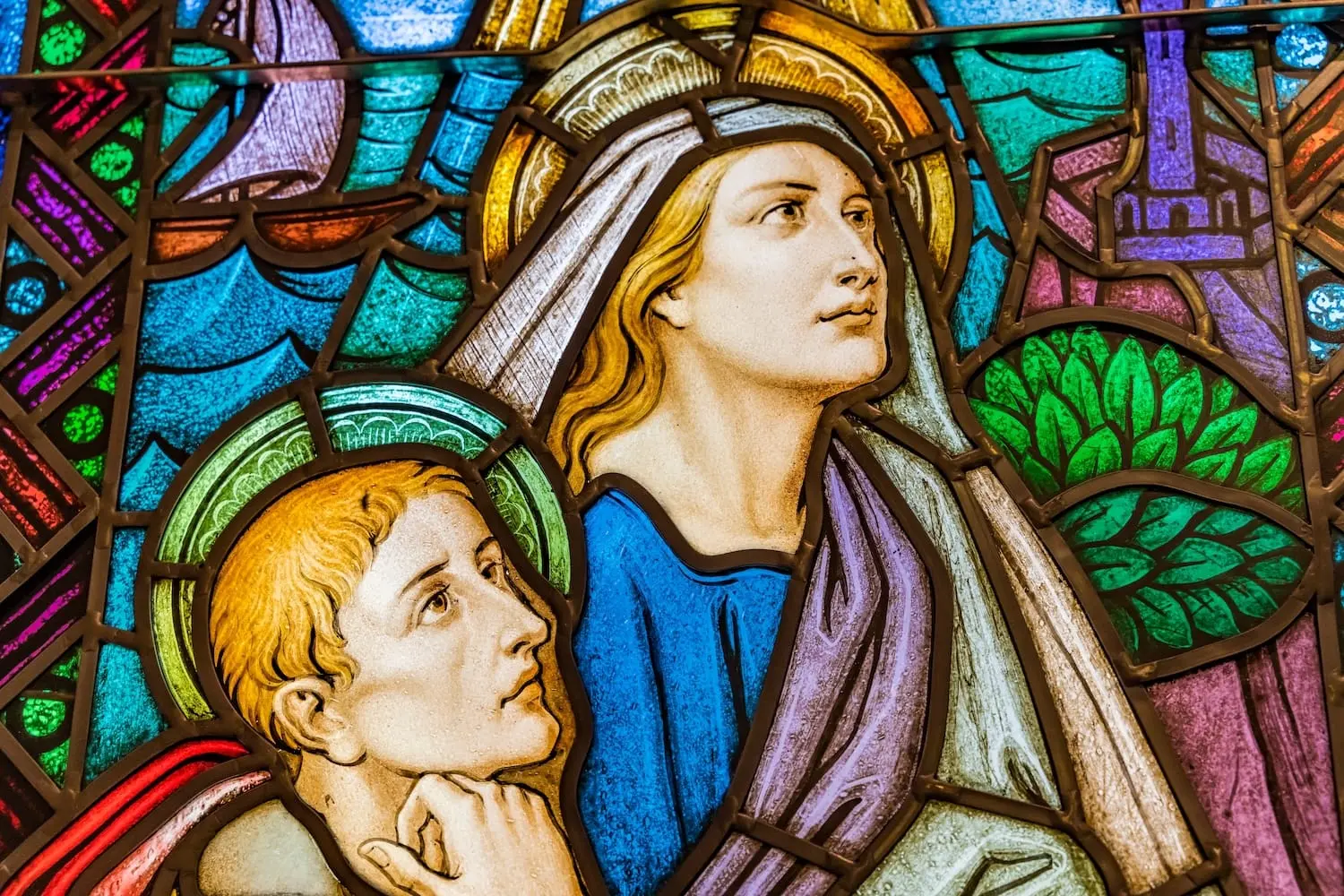
In honor of St. Monica’s Aug. 27 feast day, author Roxane Salonen is inviting Catholics praying for loved ones who have left the Church to see the saint’s long wait for her son’s conversion as a path toward deeper surrender and trust in God.
Salonen, co-author of What Would Monica Do?, spoke with Zeale News in a recent interview about the book, which draws on St. Monica’s example to help Catholics entrust to God loved ones who have left the Church.
Though St. Monica died knowing that her son had returned to Christ, Salonen said, she first endured years of uncertainty and grief over the path he had chosen.
“The story didn’t end with her hanging her head low,” Salonen told Zeale News. “It ended with her becoming all the more determined to turn to Christ.”
Salonen pointed to the path St. Augustine followed before his conversion as one reason his mother’s experience remains recognizable today.
“Her son Augustine was living as a heretic, chasing a type of ‘New Age’ religion, and ignoring his Christian underpinnings,” she said. “Many parents and loved ones are experiencing something similar today. How she traversed this time can be instructive for us.”
For Salonen and coauthor Patti Armstrong, that instruction also became deeply personal as they confronted the departure of their own loved ones from the Church.
“While we were looking at our loved ones’ departure from the Church with great sadness,” she said, “[we learned that] God was calling us closer to his heart.”
“In this way,” she added, “Monica’s story, and ours, was as much about our own faith.”
Salonen said the call to deeper surrender can allow suffering to become an occasion of grace rather than a cause for despair.
“The crosses we bear,” she said, “can become the mercies of God, because they cause us to have to depend on him more and ourselves less.”
That dependence on God, Salonen said, asks Catholics to trust even when there is no visible sign that their loved one is returning to the faith.
“We remember,” she said, “that our children’s names are written in the book of life, that their baptisms and confirmations are not void just because they’ve wandered away for a time; that our prayers have real meaning, whether or not we are a witness to their turning again toward Christ.”
Salonen explained that St. Monica’s example also points beyond sorrow to the quiet witness Catholics can offer through their own lives.
“We can do more,” she said, “through our prayer and our joyful example of living out the faith day by day than through licking our wounds. Our wounds are real and we must take note of them. But then, through God’s grace, step onto a more efficacious path, one of hope and trust.”
For Salonen, friendship with Armstrong also helped dispel the isolation that can accompany the experience of watching a loved one leave the Church.
“Many feel like they need to carry this cross alone, and in shame,” Salonen said, “but nearly every family has experienced the loss of a family member leaving the beautiful Catholic faith.”
“By praying for each other,” she added, “we join our cross with others, and Christ redeems it.”
Salonen said she carried that shared prayer with her to Rome, where she prayed before St. Monica’s remains in the Basilica of St. Augustine for the “Monica moms and dads” bearing the same sorrow.
That spirit of intercession also shapes Ascension’s nine-day “Novena to St. Monica,” voiced by Salonen and Armstrong.
“My co-author, Patti Armstrong, and I will continue to pray for those who carry this cross,” Salonen told Zeale News, “including those who hear our prayers through the app.”
“We hope that they will experience hope, community, and a new energy in their walk with Christ,” she added, “because as long as we’re here, God isn’t done with us yet, and we can better discern our path with others who are praying in community with us.”




Comments