Oklahoma amends law to protect college student organizations from discrimination
Oklahoma Gov. Kevin Stitt, a Republican, signed legislation last week that amends state law surrounding student organizations on college campuses, banning discrimination against them and clarifying higher education institutions’ role in protecting students’ free speech rights.

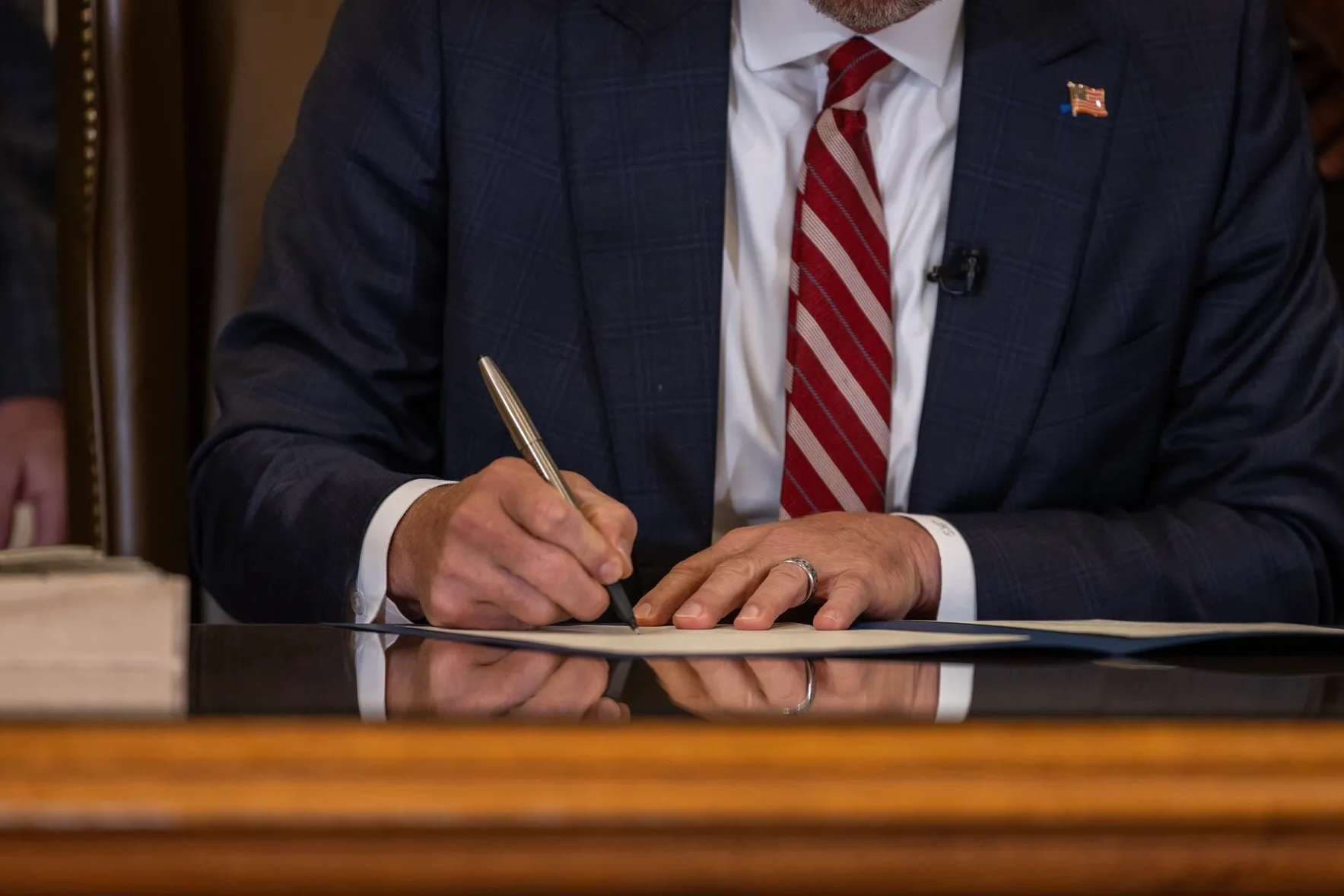
Oklahoma Gov. Kevin Stitt, a Republican, signed legislation last week that amends state law surrounding student organizations on college campuses, banning discrimination against them and clarifying higher education institutions’ role in protecting students’ free speech rights.
SB 1725 amends the law to permit public colleges or universities to charge students a security fee as part of an application to hold an event with “expressive activities.” However, the law explicitly bans schools from charging a security fee based on the type of activities proposed by students, and lays out examples of specific “content-and viewpoint-neutral criteria” that the decision to charge a fee should be based on.
The law also protects students’ free expression from being classified as “harassment” unless their actions fall under the definition provided by the law. By that standard, harassment is determined to be “expression that is unwelcome, so severe, pervasive, and subjectively offensive that a student is effectively denied equal access to educational opportunities or benefits provided by the public institution of higher education.”
Finally, the law establishes the need for a free speech training course that the Oklahoma Free Speech Committee will develop and send to public colleges and universities for all first-year students to complete. Among other concepts, the training will highlight the role of free speech and public forums on campus, clarify what speech is protected by the First Amendment and what is not, and encourage students to participate in public discourse on their own beliefs.
Legal nonprofit Alliance Defending Freedom celebrated the amended law, commending Oklahoma lawmakers for “encouraging a culture of open expression on college campuses.”
“Public colleges and universities are meant to be free and open to the exchange of ideas,” ADF legal counsel Sara Beth Nolan stated in a press release, later adding “This bill helps ensure that Oklahoma’s public universities remain places where intellectual diversity flourishes and all students can engage in the exchange of ideas rather than being censored.”






Comments