In this episode, we’ll explore the extraordinary life of Saint Ignatius of Antioch.
Transcript
Read the full transcriptAuto-generated · 782 words
Welcome, young history buffs and curious minds, to My Daily Saint, the podcast that digs deep into the incredible lives of the saints, those remarkable people who shaped history and continue to inspire us today. Forget dusty old portraits and boring stories. Today, imagine sitting in the dark corner of a creaking wooden ship, the Mediterranean waves slamming against the hull. You are a long, painful way from home. Around your wrists and ankles are heavy iron chains that bite into your skin. Roman soldiers stand guard over you, marching you toward the heart of the empire.
You know exactly what waits for you at the end of this journey. Rome, and a public execution by hungry, wild beasts. How would you feel? Terrified? Angry? Hopeless? What if, instead of weeping, you grabbed a scroll, dipped a quill in ink, and began writing some of the most beautiful, urgent, and courageous letters the world has ever read? This is the dramatic and heroic story of Saint Ignatius of Antioch.
Ignatius was born in Syria around the year 35 AD. That is incredibly early in Christian history. Ignatius belongs to a special group of people we call the Apostolic Fathers. That means he lived in the generation immediately after the apostles themselves. Ignatius wasn't guessing or speculating about a distant memory of Jesus. He stood close to Jesus. Ignatius was born in Syria. Close enough to the apostolic age to preserve its exact tone. He knew the beliefs of the early church firsthand.
Ignatius served as the Bishop of Antioch. This was one of the greatest, busiest centers of early Christianity. It is actually the very city where followers of Jesus were first called Christians. But being a Christian leader in the Roman Empire was highly dangerous. During the reign of the Roman Emperor Trajan, Ignatius was arrested and condemned to be taken to Rome for execution.
This long, brutal journey is what made Ignatius' life uniquely significant. As he was marched toward his martyrdom, he wrote a series of letters to different churches and individuals. These letters survived, and they are like a time capsule showing us exactly what the earliest Christians believed.
In his letters, Ignatius spoke with startling immediacy. He didn't write dry, boring essays. He wrote with burning passion. He insisted on unity with the bishop, condemned false teachings, and strongly affirmed that Christ is truly present in the Eucharist.
But there was one thing he wrote that absolutely shocked the people of his time and still blows our minds today. The Christians in Rome were powerful, and some of them wanted to use their influence to rescue Ignatius and save him from death. But when Ignatius heard about this, he begged them not to intervene. He wrote to them, saying he wanted to be ground by the teeth of beasts so he could become Pure bread for Christ.
To our modern ears, wanting to face wild beasts sounds terrifying. But Ignatius saw martyrdom not as a spectacle, but as the final, ultimate act of discipleship. It was his way of achieving total conformity to Christ. For him, giving up his life was a direct extension of the Eucharistic life. Just as Jesus gave his body for us, Ignatius was ready to give his life for Jesus.
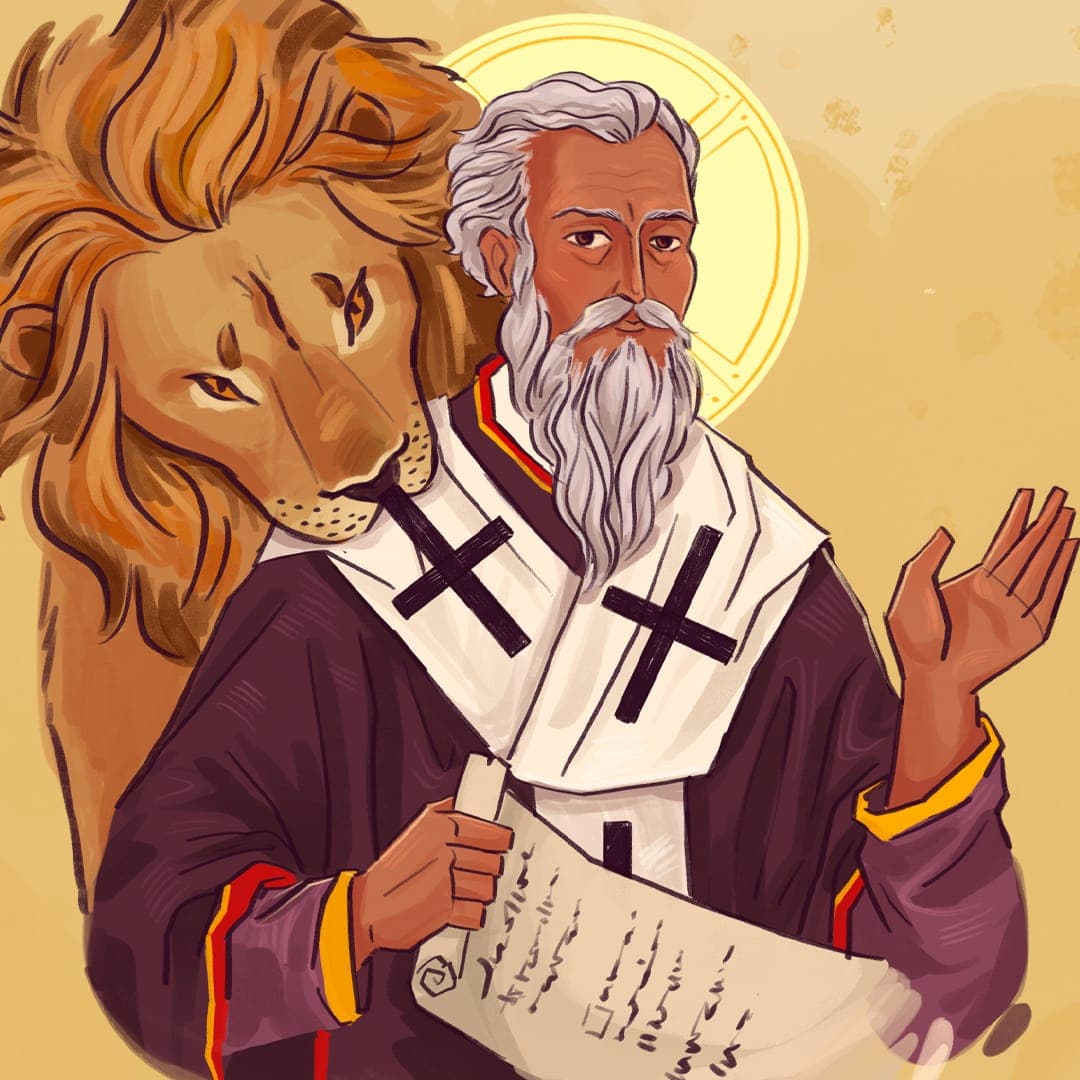
Eventually, Ignatius arrived in Rome, and just as he wrote, his life ended when he was executed, traditionally by wild beasts. His martyrdom sealed what his letters had already made clear. He had spent every last ounce of his strength for unity and truth. Today, the Church remembers him with symbols like bishop's vestments, chains, a scroll, and, of course, lions. Because of his fearless witness, St. Ignatius of Antioch is honored as the patron saint of the church in Syria, those facing martyrdom, and ecclesial unity.
Ignatius cared deeply about unity, about believers actually sticking together, supporting one another, and loving each other. You might not have to face wild beasts, but you definitely face moments of division. Maybe it's gossip or cliques at work or school, or even arguments in your family.
Instead of joining in on gossip or taking sides, be the person who brings people together. Ignatius died for the unity of the church. Today, you can live for it. You can do this by speaking kindly about a classmate when they aren't around, helping someone who is left out, or participating fully in your church community instead of treating your faith like a private hobby. Let's make our faith active. Concrete and united. Thank you for joining us on My Daily Saint. We look forward to sharing another incredible story of faith and courage with you tomorrow.