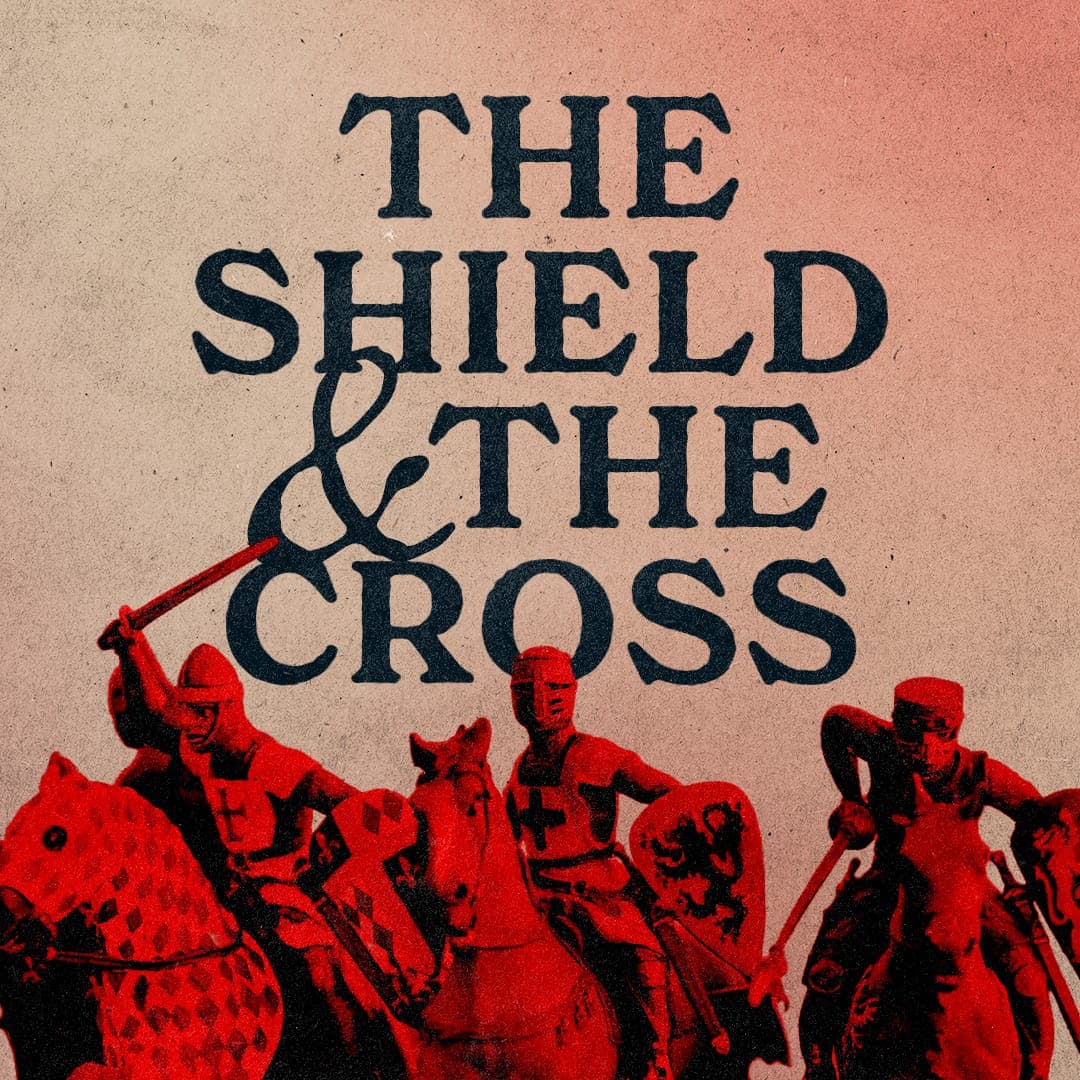
The famed Richard the Lionheart comes to vivid life in this recounting of his victory over the seemingly invincible troops under the command of his enemy, Saladin.
Transcript
Read the full transcriptAuto-generated · 557 words
When the news of Jerusalem's fall reached European courts, it was not just a religious shock. It was a political earthquake. It was 1189, the year the file on the Third Crusade was officially opened. This was no ordinary military expedition. It was the moment Europe put its heavyweights on the board. The three most powerful monarchs of the West, Frederick Barbarossa, Philip Augustus of France, and Richard I of England, forever known as the Lionheart, decided to intervene personally.
But let's look at the facts on the ground. The Third Crusade is often portrayed as a series of romantic duels between Richard and Saladin. The reality, however, is far more pragmatic, and technically fascinating. The turning point came at the Siege of Acre. History here reveals the overwhelming technological and logistical superiority of the West. While Saladin tried to strangle the besiegers from the outside, the Crusaders built siege engines so massive and precise they pulverized the city's fortifications. Richard was not just a brave warrior, He was a master of logistics and poliorcetes, the art of siege warfare.
Under his command, Acre fell in weeks, a feat that had eluded others for years. The true demonstration of military genius came in September 1191, at the Battle of Arsuf. Past historians described Crusader forces as heavy and slow, But at Arsuf, Richard delivered a master class in discipline. He ordered his army to march along the coast in a formation so tight it resembled a wall of iron, protecting the flanks with infantry and keeping his heavy cavalry in reserve. Saladin threw everything he had at them, trying to provoke a reckless reaction.
But the Crusaders did not budge under the storm of arrows. At the perfect moment, Richard unleashed the charge. Saladin's army, once thought invincible, was overwhelmed. On a purely tactical level, the facts are clear. Richard dominated every direct encounter with his rival. Yet one decision has puzzled historians for centuries.
Why, even standing just steps from Jerusalem, did Richard never attack the city? Logic overrode emotion. Richard was a realist. Evidence shows he understood a fundamental truth. Even if he took the city, he could not hold it. Without full control of the hinterland, and with troops eager to return home after fulfilling their vows, Jerusalem would have fallen again within months. Instead of a pointless massacre, Richard chose negotiation.
The final treaty with Saladin was a masterpiece of pragmatism. Christians retained the coastal strip, and most importantly, all pilgrims were guaranteed safe and free access to the holy sites of Jerusalem. Richard left the Holy Land in 1192. He had not retaken the city, but he had saved Outremer from total extinction, securing a Christian foothold that would endure for another century.
The duel between the two titans ended in mutual respect born of strength, not weakness. But while Europe celebrated the return of its heroes, a new chapter was about to open. A chapter that would take the Crusade far from the Holy Land, toward the golden domes of a Christian city no one had ever imagined attacking. In the next episode, we will examine what many consider the Great Betrayal. The Fourth Crusade and the Sack of Constantinople. Was it truly a diabolical plan to destroy the Byzantine Empire, or the result of a chain of mistakes and miscalculations?